

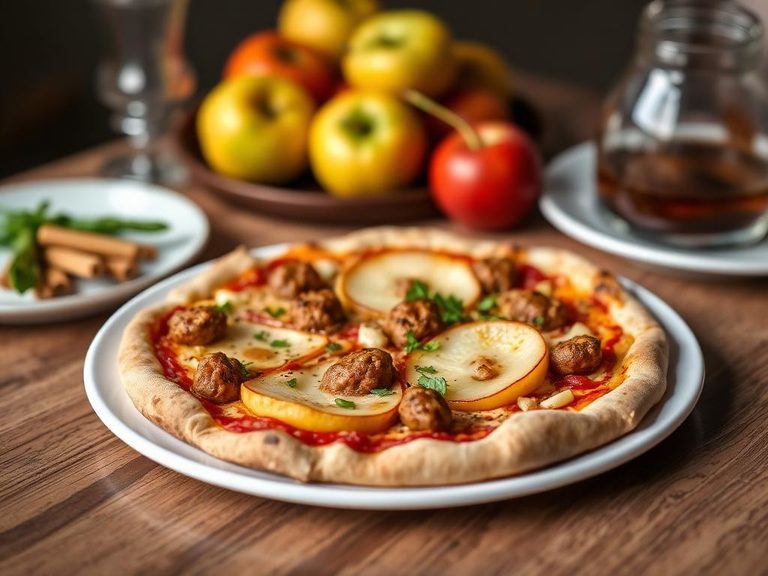
Pizza with meat and fruit, thin crust
Common food

Photo: Wikipedia
This is a modern twist on the classic pizza, featuring a crisp, cracker-thin crust topped with savory meats like pepperoni or sausage and sweet, juicy fruit such as pineapple or figs. The contrast creates a dynamic bite—salty, savory, and sweet—with a satisfying crunch. Nutritionally, it offers a decent protein punch for its calorie count, though the carbs are significant.
Calorie split: 19% protein · 48% carbs · 33% fat
↓ Full nutrition💚 Why it's loved
People adore the sweet-savory flavor combination, a hallmark of many beloved cuisines, which makes each bite exciting and less monotonous than a plain cheese pizza. The thin crust is prized for its lightness, allowing the toppings to shine without feeling overly heavy.
⚠️ Watch-outs & how to enjoy it better
The high carbohydrate content, especially from refined flour crust and sugary fruit, can cause rapid blood sugar spikes. Processed meat toppings are often high in sodium and saturated fat. To counteract, pair a single slice with a large, leafy green salad to add fiber and volume, and choose leaner meats like grilled chicken.
Key benefits
- Provides a good source of protein for muscle maintenance.
- Thin crust reduces overall carbohydrate load compared to deep-dish styles.
- Fruit toppings add natural sweetness and a dose of vitamins.
- Can be a more portion-controlled option for pizza lovers.
🍽️ Popular dishes
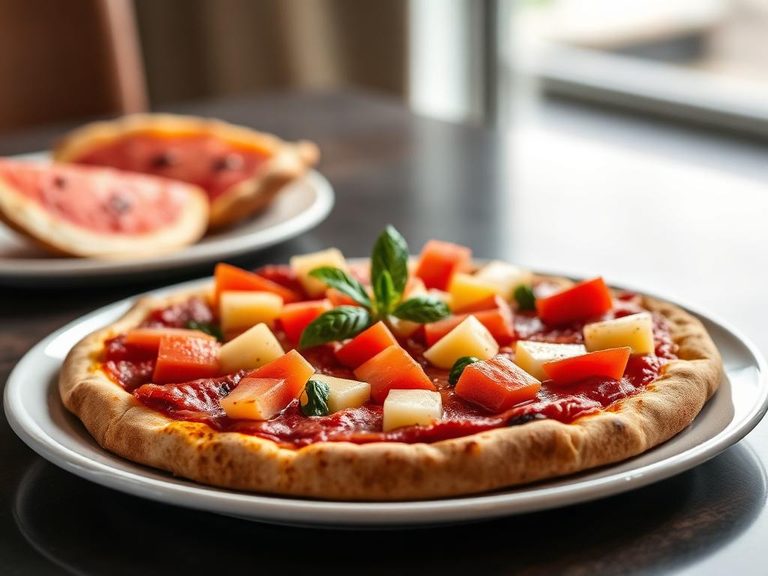
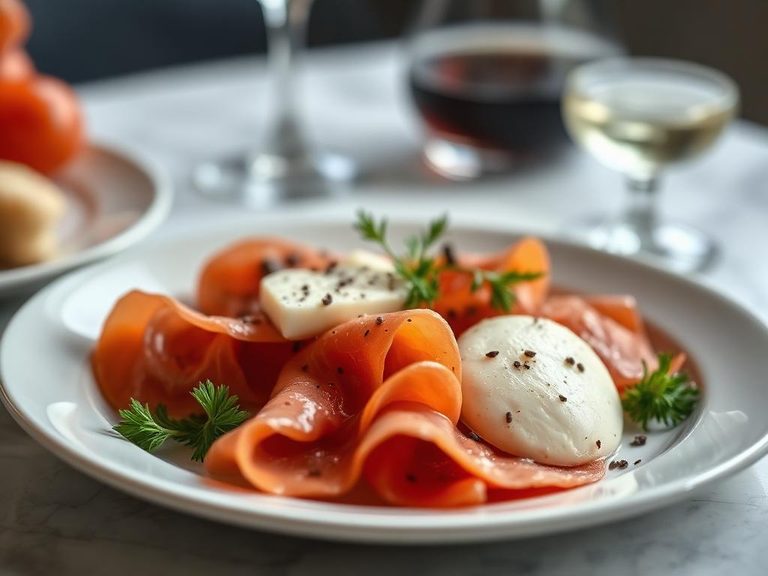
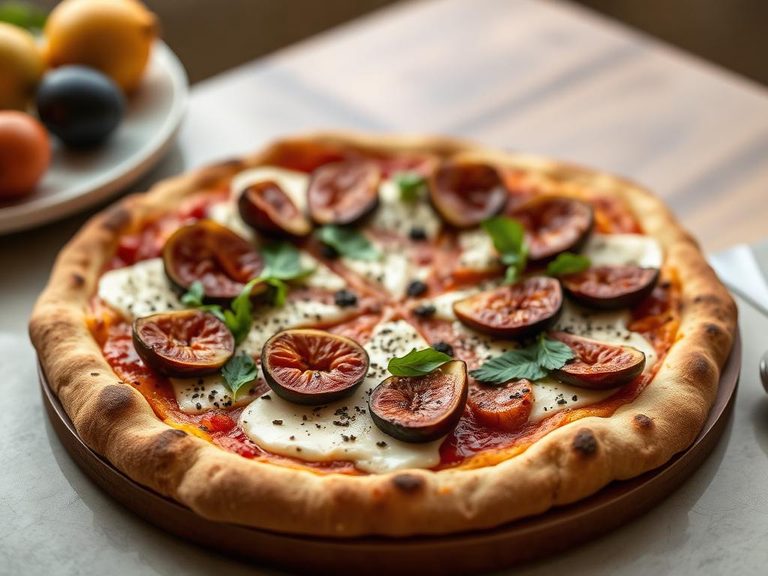
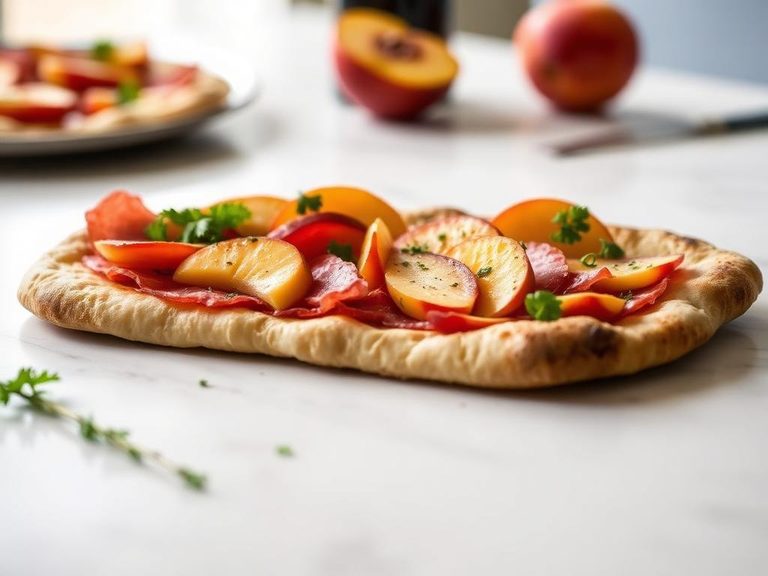
🌍 Where it's eaten
💡 Did you know?
The most famous fruit-and-meat pizza, Hawaiian pizza, was actually invented in Canada by a Greek immigrant in 1962.
Full nutrition (USDA data · scales with serving)
| Water | 51.4 g |
| Energy | 227 kcal |
| Protein | 10.9 g |
| Total lipid (fat) | 8.3 g |
| Carbohydrate, by difference | 27.0 g |
| Fiber, total dietary | 1.8 g |
| Total Sugars | 4.1 g |
| Calcium, Ca | 143 mg |
| Iron, Fe | 2.0 mg |
| Magnesium, Mg | 22.0 mg |
| Phosphorus, P | 192 mg |
| Potassium, K | 182 mg |
| Sodium, Na | 565 mg |
| Zinc, Zn | 1.3 mg |
| Copper, Cu | 0.10 mg |
| Selenium, Se | 17.0 ug |
| Vitamin C, total ascorbic acid | 6.9 mg |
| Thiamin | 0.41 mg |
| Riboflavin | 0.18 mg |
| Niacin | 3.5 mg |
| Vitamin B-6 | 0.12 mg |
| Folate, total | 71.0 ug |
| Folic acid | 39.0 ug |
| Folate, food | 32.0 ug |
| Folate, DFE | 98.0 ug |
| Choline, total | 21.8 mg |
| Vitamin B-12 | 0.41 ug |
| Vitamin B-12, added | 0.00 ug |
| Vitamin A, RAE | 52.0 ug |
| Retinol | 46.0 ug |
| Carotene, beta | 73.0 ug |
| Carotene, alpha | 0.00 ug |
| Cryptoxanthin, beta | 0.00 ug |
| Lycopene | 1434 ug |
| Lutein + zeaxanthin | 43.0 ug |
| Vitamin E (alpha-tocopherol) | 0.65 mg |
| Vitamin E, added | 0.00 mg |
| Vitamin D (D2 + D3) | 0.10 ug |
| Vitamin K (phylloquinone) | 5.1 ug |
| Alcohol, ethyl | 0.00 g |
| Caffeine | 0.00 mg |
| Theobromine | 0.00 mg |
Fat & fatty acid profile (per 100g)
| Fatty acids, total saturated | 3.7 g |
| SFA 4:0 | 0.08 g |
| SFA 6:0 | 0.06 g |
| SFA 8:0 | 0.04 g |
| SFA 10:0 | 0.11 g |
| SFA 12:0 | 0.13 g |
| SFA 14:0 | 0.47 g |
| SFA 16:0 | 1.9 g |
| SFA 18:0 | 0.75 g |
| Fatty acids, total monounsaturated | 2.4 g |
| MUFA 16:1 | 0.13 g |
| MUFA 18:1 | 2.2 g |
| MUFA 20:1 | 0.03 g |
| MUFA 22:1 | 0.00 g |
| Fatty acids, total polyunsaturated | 1.4 g |
| PUFA 18:2 | 1.2 g |
| PUFA 18:3 | 0.15 g |
| PUFA 18:4 | 0.00 g |
| PUFA 20:4 | 0.01 g |
| PUFA 20:5 n-3 (EPA) | 0.00 g |
| PUFA 22:5 n-3 (DPA) | 0.00 g |
| PUFA 22:6 n-3 (DHA) | 0.00 g |
| Cholesterol | 19.0 mg |
Amino acid profile (per 100g)
Estimated from Fast Food, Pizza Chain, 14" pizza, meat and vegetable topping, regular crust — USDA does not publish this profile for Pizza with meat and fruit.
| Tryptophan | 0.11 g |
| Threonine | 0.40 g |
| Isoleucine | 0.48 g |
| Leucine | 0.92 g |
| Lysine | 0.61 g |
| Methionine | 0.22 g |
| Cystine | 0.18 g |
| Phenylalanine | 0.55 g |
| Tyrosine | 0.39 g |
| Valine | 0.58 g |
| Arginine | 0.51 g |
| Histidine | 0.33 g |
| Alanine | 0.45 g |
| Aspartic acid | 0.86 g |
| Glutamic acid | 2.9 g |
| Glycine | 0.42 g |
| Proline | 1.1 g |
| Serine | 0.60 g |
| Hydroxyproline | 0.01 g |
FAQ
Is this healthier than a regular meat pizza?
It can be, primarily due to the thin crust which typically means fewer calories and carbs per slice than a thick or deep-dish version. The addition of fruit also introduces some micronutrients not found on a standard pepperoni pizza.
What fruits work best on a savory meat pizza?
Pineapple is classic for its high acidity and sweetness that cuts through fatty meats. Figs, pears, and apples offer a more sophisticated, less tropical sweetness that pairs beautifully with prosciutto or sausage.
How can I make it more balanced at home?
Use a whole-wheat thin crust or a cauliflower base to boost fiber. Load up on non-starchy vegetable toppings like arugula, bell peppers, or mushrooms, and use a moderate amount of high-quality, lean protein.
Nutrient density (calculated · NRF9.3)
Nutrient Rich Foods index: beneficial nutrients (protein, fiber, vitamins, minerals) minus saturated fat, added sugar & sodium, per 100 kcal.
NRF9.3 index — Fulgoni, Keast & Drewnowski, 2009. Computed from USDA nutrients.
Weight-loss friendliness (composite index)
Energy density 2.27 kcal/g · 19% calories from protein · 1.8 g fiber · 4.1 g sugar per 100 g.
Composite of energy density (Rolls et al., 1999), protein & fiber satiety, minus sugar. A calculated heuristic — ranks satiety-per-calorie, not a clinical measure.
Dietary load (calculated from USDA values)
Potential renal acid load. Positive = acid-forming, negative = alkaline-forming.
Sodium-to-potassium ratio: 3.10 (lower is better — aim for ≤ 1)
Sodium:potassium per WHO potassium guidance. Computed from USDA nutrients.