

Pizza, cheese, from restaurant or fast food, thin crust
Common food
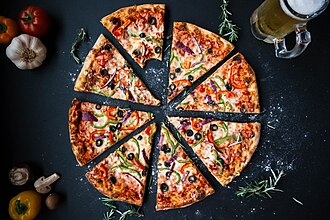
Photo: Wikipedia
A classic thin-crust cheese pizza from a restaurant or fast-food chain features a crisp, cracker-like base topped with a simple layer of melted mozzarella and tomato sauce. Each 100g serving provides a balanced 266 kcal, with a notable 11.39g of protein supporting muscle maintenance and 33.33g of carbohydrates for quick energy. The texture is a satisfying contrast between the crunchy crust and the soft, stretchy cheese.
Calorie split: 17% protein · 50% carbs · 33% fat
↓ Full nutrition💚 Why it's loved
People adore it for the perfect harmony of salty, umami-rich cheese, tangy tomato sauce, and the satisfying crunch of the thin crust. It's a universally loved comfort food that's effortlessly shareable and customizable, making it a staple for casual gatherings and solo meals alike.
⚠️ Watch-outs & how to enjoy it better
The combination of refined carbs and sodium can cause blood-sugar spikes and water retention, and it's a common source of gluten and dairy allergens. To counteract this, pair slices with a large, fiber-rich side salad and lean protein like grilled chicken to slow digestion, and practice portion control by limiting yourself to 1-2 slices.
Key benefits
- Good source of protein (11.39g per 100g)
- Provides quick energy from carbohydrates (33.33g per 100g)
- Contains calcium from cheese for bone health
- Lower in fat (9.69g per 100g) compared to deep-dish varieties
- The thin crust reduces overall calorie density per slice
🍽️ Popular dishes
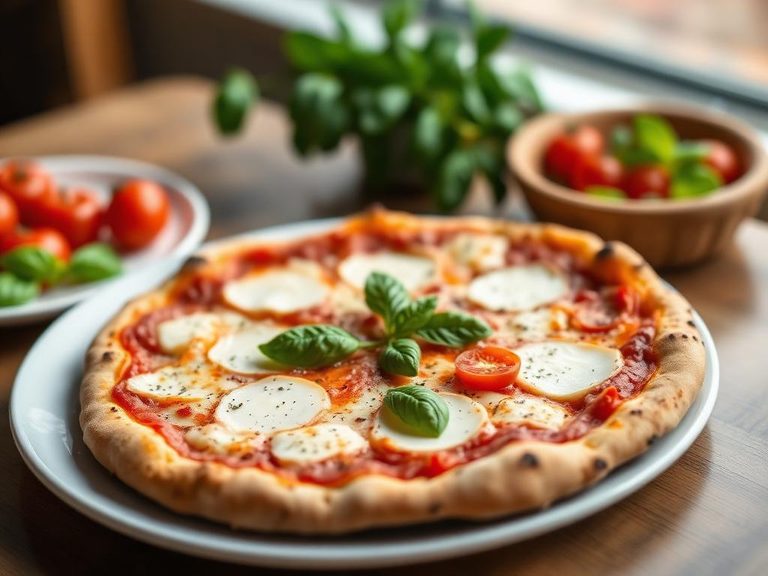
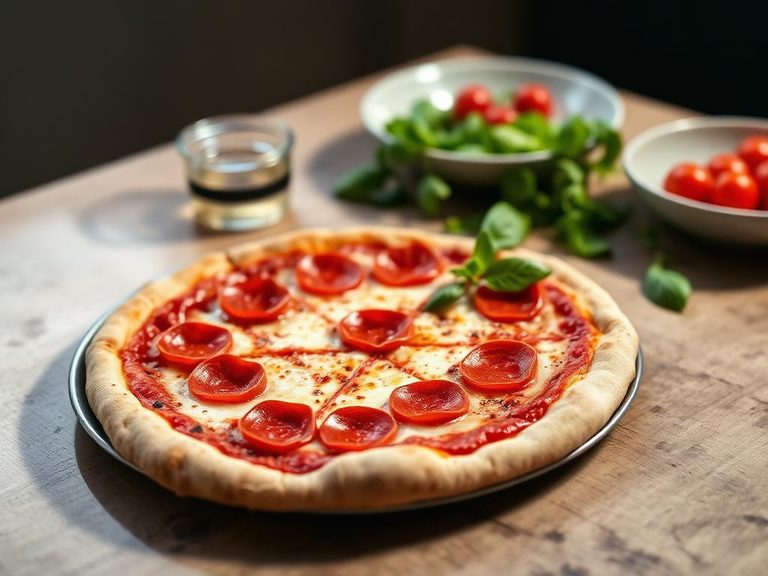
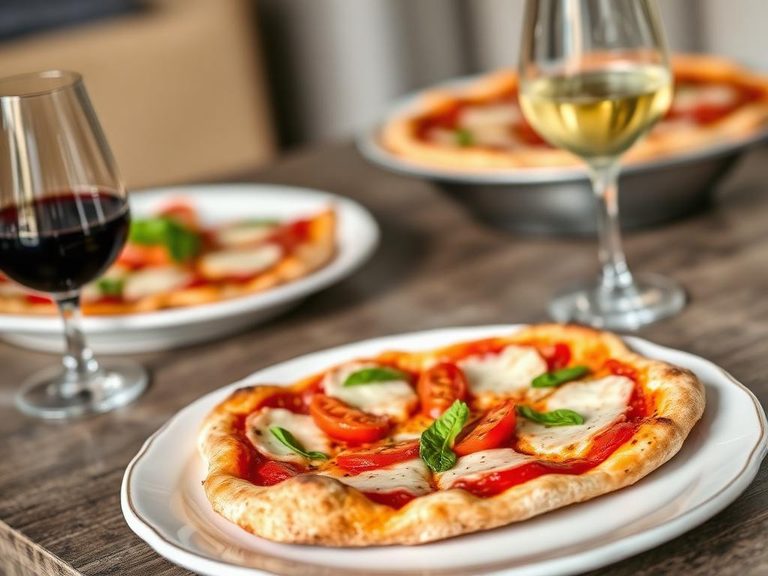
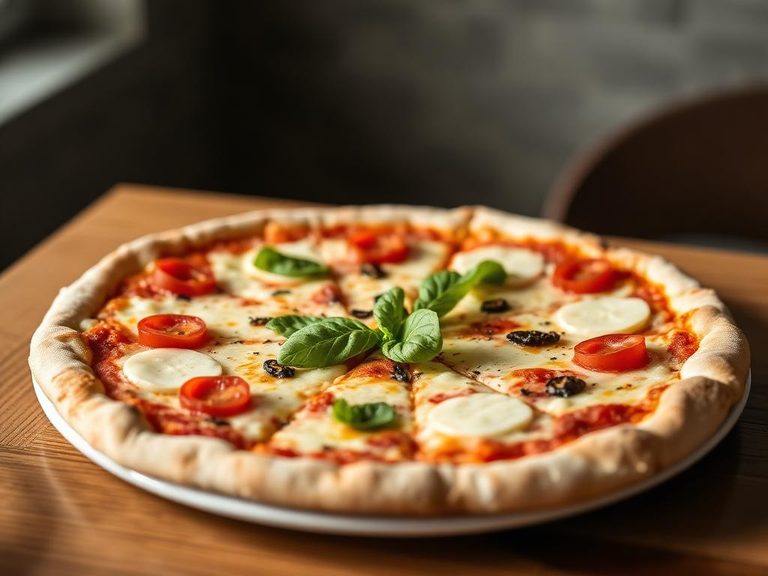
🌍 Where it's eaten
💡 Did you know?
The world's largest pizza, as certified by Guinness World Records, was made in Rome in 2012 and measured over 1261 square meters—roughly the size of two football fields.
Full nutrition (USDA data · scales with serving)
| Water | 43.2 g |
| Energy | 266 kcal |
| Protein | 11.4 g |
| Total lipid (fat) | 9.7 g |
| Carbohydrate, by difference | 33.3 g |
| Fiber, total dietary | 2.3 g |
| Total Sugars | 3.6 g |
| Calcium, Ca | 188 mg |
| Iron, Fe | 2.5 mg |
| Magnesium, Mg | 24.0 mg |
| Phosphorus, P | 216 mg |
| Potassium, K | 172 mg |
| Sodium, Na | 540 mg |
| Zinc, Zn | 1.3 mg |
| Copper, Cu | 0.10 mg |
| Selenium, Se | 19.9 ug |
| Vitamin C, total ascorbic acid | 1.4 mg |
| Thiamin | 0.39 mg |
| Riboflavin | 0.20 mg |
| Niacin | 3.8 mg |
| Vitamin B-6 | 0.08 mg |
| Folate, total | 93.0 ug |
| Folic acid | 52.0 ug |
| Folate, food | 40.0 ug |
| Folate, DFE | 129 ug |
| Choline, total | 16.4 mg |
| Vitamin B-12 | 0.42 ug |
| Vitamin B-12, added | 0.00 ug |
| Vitamin A, RAE | 69.0 ug |
| Retinol | 61.0 ug |
| Carotene, beta | 92.0 ug |
| Carotene, alpha | 0.00 ug |
| Cryptoxanthin, beta | 0.00 ug |
| Lycopene | 1915 ug |
| Lutein + zeaxanthin | 58.0 ug |
| Vitamin E (alpha-tocopherol) | 0.83 mg |
| Vitamin E, added | 0.00 mg |
| Vitamin D (D2 + D3) | 0.00 ug |
| Vitamin K (phylloquinone) | 6.7 ug |
| Alcohol, ethyl | 0.00 g |
| Caffeine | 0.00 mg |
| Theobromine | 0.00 mg |
Fat & fatty acid profile (per 100g)
| Fatty acids, total saturated | 4.5 g |
| SFA 4:0 | 0.10 g |
| SFA 6:0 | 0.08 g |
| SFA 8:0 | 0.06 g |
| SFA 10:0 | 0.14 g |
| SFA 12:0 | 0.17 g |
| SFA 14:0 | 0.60 g |
| SFA 16:0 | 2.3 g |
| SFA 18:0 | 0.86 g |
| Fatty acids, total monounsaturated | 2.6 g |
| MUFA 16:1 | 0.12 g |
| MUFA 18:1 | 2.4 g |
| MUFA 20:1 | 0.04 g |
| MUFA 22:1 | 0.00 g |
| Fatty acids, total polyunsaturated | 1.7 g |
| PUFA 18:2 | 1.5 g |
| PUFA 18:3 | 0.18 g |
| PUFA 18:4 | 0.00 g |
| PUFA 20:4 | 0.01 g |
| PUFA 20:5 n-3 (EPA) | 0.00 g |
| PUFA 22:5 n-3 (DPA) | 0.00 g |
| PUFA 22:6 n-3 (DHA) | 0.00 g |
| Cholesterol | 17.0 mg |
Amino acid profile (per 100g)
Estimated from Fast Food, Pizza Chain, 14" pizza, cheese topping, stuffed crust — USDA does not publish this profile for Pizza.
| Tryptophan | 0.12 g |
| Threonine | 0.39 g |
| Isoleucine | 0.57 g |
| Leucine | 1.1 g |
| Lysine | 0.59 g |
| Methionine | 0.27 g |
| Phenylalanine | 0.64 g |
| Tyrosine | 0.40 g |
| Valine | 0.71 g |
| Arginine | 0.44 g |
| Histidine | 0.32 g |
| Alanine | 0.38 g |
| Aspartic acid | 0.81 g |
| Glutamic acid | 3.4 g |
| Glycine | 0.31 g |
| Proline | 1.7 g |
| Serine | 0.58 g |
| Hydroxyproline | 0.00 g |
FAQ
How does thin-crust pizza differ nutritionally from regular or deep-dish pizza?
Thin-crust pizza typically has fewer calories, less total fat, and fewer carbohydrates per serving than thicker crusts, as there is less dough. This makes it a lighter option, though the cheese and toppings still contribute significantly to the nutritional profile.
Is the protein in cheese pizza complete?
Yes, the protein from mozzarella cheese is a complete protein, containing all nine essential amino acids. Combined with the protein from the wheat-based crust, it makes for a reasonably good protein source for a fast-food item.
Can I make a healthier version at home?
Absolutely. Use a whole-wheat or cauliflower-based thin crust, load up on vegetable toppings like bell peppers, mushrooms, and spinach, and opt for part-skim mozzarella to reduce fat while boosting fiber and nutrients.
Nutrient density (calculated · NRF9.3)
Nutrient Rich Foods index: beneficial nutrients (protein, fiber, vitamins, minerals) minus saturated fat, added sugar & sodium, per 100 kcal.
NRF9.3 index — Fulgoni, Keast & Drewnowski, 2009. Computed from USDA nutrients.
Weight-loss friendliness (composite index)
Energy density 2.66 kcal/g · 17% calories from protein · 2.3 g fiber · 3.6 g sugar per 100 g.
Composite of energy density (Rolls et al., 1999), protein & fiber satiety, minus sugar. A calculated heuristic — ranks satiety-per-calorie, not a clinical measure.
Dietary load (calculated from USDA values)
Potential renal acid load. Positive = acid-forming, negative = alkaline-forming.
Sodium-to-potassium ratio: 3.14 (lower is better — aim for ≤ 1)
Sodium:potassium per WHO potassium guidance. Computed from USDA nutrients.