

Pizza, cheese, from frozen, thick crust
Common food
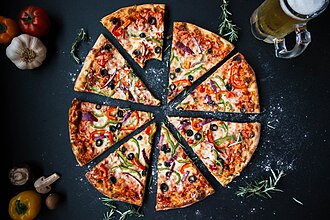
Photo: Wikipedia
A thick, doughy crust topped with a layer of melted cheese and tomato sauce, this frozen staple transforms from a pale disc into a golden, bubbly meal in minutes. The crust offers a satisfying chew, while the cheese provides a salty, savory pull. Nutritionally, it delivers a solid protein punch (10.36g per 100g) but is also a significant source of refined carbohydrates and fats.
Calorie split: 15% protein · 43% carbs · 41% fat
↓ Full nutrition💚 Why it's loved
People love it for its comforting, nostalgic flavor and the sheer convenience of having a hot, cheesy meal ready in under 20 minutes. It's a versatile canvas for adding personal toppings, making it a favorite for quick family dinners or casual gatherings.
⚠️ Watch-outs & how to enjoy it better
The thick crust and cheese can lead to high sodium and saturated fat intake, potentially causing blood sugar spikes due to refined carbs. To counteract, pair a smaller slice with a large, leafy green salad and lean protein like grilled chicken, or blot excess oil with a paper towel after baking.
Key benefits
- Quick and convenient meal solution
- Good source of protein per serving
- Provides energy from carbohydrates
- Consistent taste and texture
- Long shelf life for pantry stocking
🍽️ Popular dishes
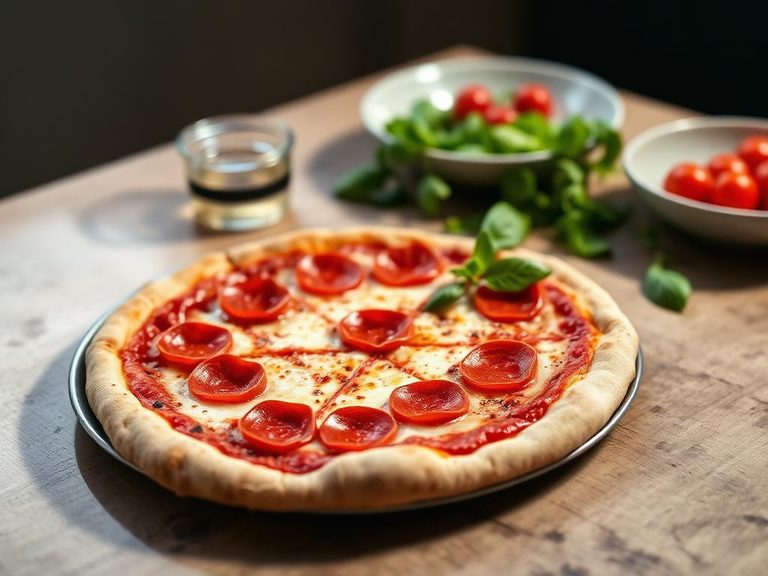
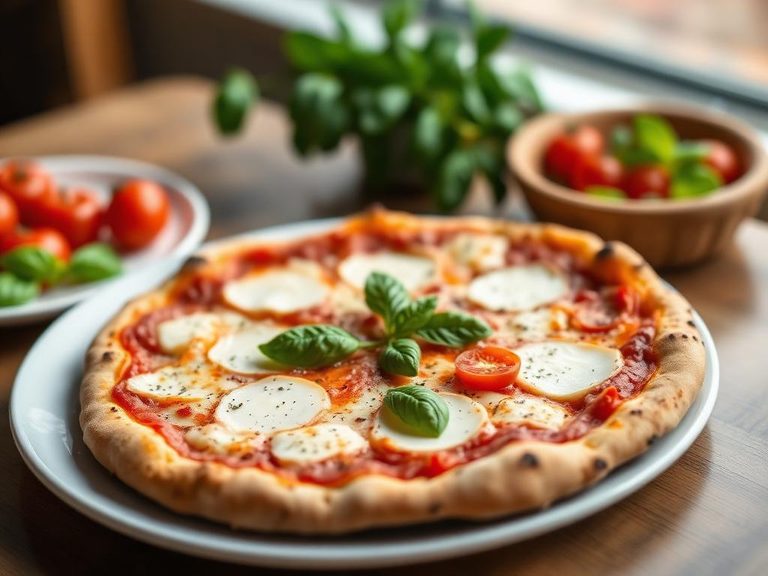
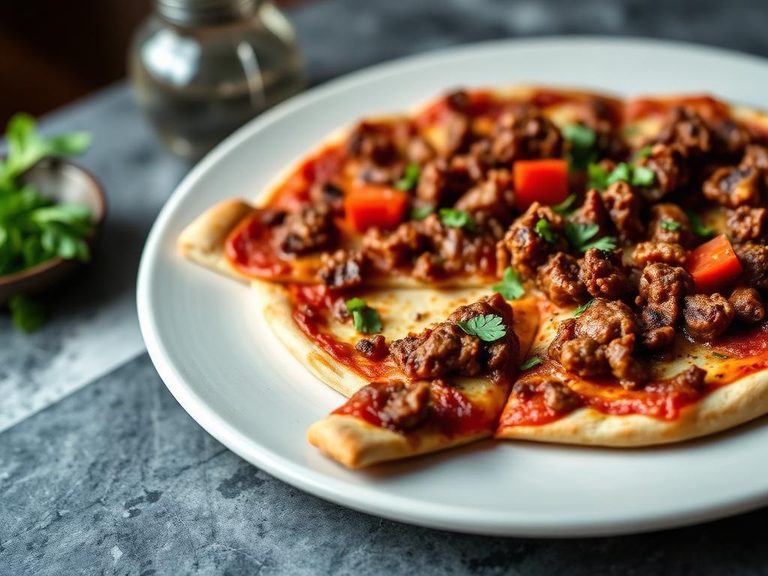


🌍 Where it's eaten
💡 Did you know?
The first pizzeria in the United States, Lombardi's, opened in New York City in 1905, but frozen pizza didn't hit the mass market until the 1950s, pioneered by Rose Totino.
Full nutrition (USDA data · scales with serving)
| Water | 46.3 g |
| Energy | 268 kcal |
| Protein | 10.4 g |
| Total lipid (fat) | 12.3 g |
| Carbohydrate, by difference | 29.0 g |
| Fiber, total dietary | 2.2 g |
| Total Sugars | 3.6 g |
| Calcium, Ca | 179 mg |
| Iron, Fe | 2.3 mg |
| Magnesium, Mg | 23.0 mg |
| Phosphorus, P | 179 mg |
| Potassium, K | 152 mg |
| Sodium, Na | 447 mg |
| Zinc, Zn | 1.3 mg |
| Copper, Cu | 0.23 mg |
| Selenium, Se | 21.5 ug |
| Vitamin C, total ascorbic acid | 1.2 mg |
| Thiamin | 0.21 mg |
| Riboflavin | 0.26 mg |
| Niacin | 2.2 mg |
| Vitamin B-6 | 0.08 mg |
| Folate, total | 38.0 ug |
| Folic acid | 38.0 ug |
| Folate, food | 0.00 ug |
| Folate, DFE | 65.0 ug |
| Choline, total | 14.3 mg |
| Vitamin B-12 | 0.78 ug |
| Vitamin B-12, added | 0.00 ug |
| Vitamin A, RAE | 66.0 ug |
| Retinol | 58.0 ug |
| Carotene, beta | 88.0 ug |
| Carotene, alpha | 0.00 ug |
| Cryptoxanthin, beta | 0.00 ug |
| Lycopene | 1829 ug |
| Lutein + zeaxanthin | 34.0 ug |
| Vitamin E (alpha-tocopherol) | 1.0 mg |
| Vitamin E, added | 0.00 mg |
| Vitamin D (D2 + D3) | 0.00 ug |
| Vitamin K (phylloquinone) | 6.6 ug |
| Alcohol, ethyl | 0.00 g |
| Caffeine | 0.00 mg |
| Theobromine | 0.00 mg |
Fat & fatty acid profile (per 100g)
| Fatty acids, total saturated | 4.3 g |
| SFA 4:0 | 0.28 g |
| SFA 6:0 | 0.05 g |
| SFA 8:0 | 0.08 g |
| SFA 10:0 | 0.11 g |
| SFA 12:0 | 0.15 g |
| SFA 14:0 | 0.45 g |
| SFA 16:0 | 2.0 g |
| SFA 18:0 | 1.1 g |
| Fatty acids, total monounsaturated | 4.2 g |
| MUFA 16:1 | 0.13 g |
| MUFA 18:1 | 4.1 g |
| MUFA 20:1 | 0.03 g |
| MUFA 22:1 | 0.00 g |
| Fatty acids, total polyunsaturated | 1.9 g |
| PUFA 18:2 | 1.7 g |
| PUFA 18:3 | 0.17 g |
| PUFA 18:4 | 0.04 g |
| PUFA 20:4 | 0.01 g |
| PUFA 20:5 n-3 (EPA) | 0.00 g |
| PUFA 22:5 n-3 (DPA) | 0.00 g |
| PUFA 22:6 n-3 (DHA) | 0.00 g |
| Cholesterol | 14.0 mg |
Amino acid profile (per 100g)
Estimated from Fast Food, Pizza Chain, 14" pizza, cheese topping, stuffed crust — USDA does not publish this profile for Pizza.
| Tryptophan | 0.12 g |
| Threonine | 0.39 g |
| Isoleucine | 0.57 g |
| Leucine | 1.1 g |
| Lysine | 0.59 g |
| Methionine | 0.27 g |
| Phenylalanine | 0.64 g |
| Tyrosine | 0.40 g |
| Valine | 0.71 g |
| Arginine | 0.44 g |
| Histidine | 0.32 g |
| Alanine | 0.38 g |
| Aspartic acid | 0.81 g |
| Glutamic acid | 3.4 g |
| Glycine | 0.31 g |
| Proline | 1.7 g |
| Serine | 0.58 g |
| Hydroxyproline | 0.00 g |
FAQ
How does the nutrition compare to a fresh, thin-crust pizza?
Frozen thick-crust pizza generally has more calories, carbs, and fat per slice due to the denser dough and often heavier cheese layer. Fresh versions can be lighter, especially with a thin crust and less cheese.
Is it a good post-workout meal?
It can be, as it provides carbs to replenish glycogen and protein for muscle repair. However, its high fat content may slow digestion. Opting for a leaner topping and pairing with vegetables would improve its post-workout profile.
Why is the crust sometimes soggy in the middle?
This often happens if the pizza is overloaded with toppings or not baked on a preheated, hot surface. For a crispier base, bake directly on the oven rack or a preheated pizza stone, and avoid adding wet toppings.
Nutrient density (calculated · NRF9.3)
Nutrient Rich Foods index: beneficial nutrients (protein, fiber, vitamins, minerals) minus saturated fat, added sugar & sodium, per 100 kcal.
NRF9.3 index — Fulgoni, Keast & Drewnowski, 2009. Computed from USDA nutrients.
Weight-loss friendliness (composite index)
Energy density 2.68 kcal/g · 15% calories from protein · 2.2 g fiber · 3.6 g sugar per 100 g.
Composite of energy density (Rolls et al., 1999), protein & fiber satiety, minus sugar. A calculated heuristic — ranks satiety-per-calorie, not a clinical measure.
Dietary load (calculated from USDA values)
Potential renal acid load. Positive = acid-forming, negative = alkaline-forming.
Sodium-to-potassium ratio: 2.94 (lower is better — aim for ≤ 1)
Sodium:potassium per WHO potassium guidance. Computed from USDA nutrients.