

Pineapple, canned, NFS
Common food
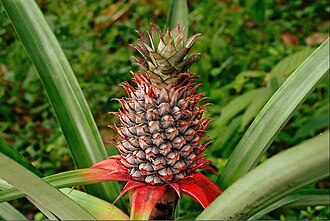
Photo: Wikipedia
Canned pineapple (NFS) is a convenient, pre-sliced or chunked tropical fruit preserved in its own juice or light syrup. It offers a consistently sweet, tangy flavor and a tender, juicy texture that's softer than fresh. Nutritionally, it's a low-calorie source of quick energy from carbohydrates, with minimal fat and a modest amount of fiber.
Calorie split: 3% protein · 95% carbs · 2% fat
↓ Full nutrition💚 Why it's loved
People love it for its bright, sunny sweetness and the instant tropical vibe it adds to any meal or snack. Its year-round availability and long shelf life make it a reliable staple for everything from breakfast to desserts.
⚠️ Watch-outs & how to enjoy it better
The primary concern is the high sugar content (often from added syrup), which can cause blood sugar spikes, especially for those with diabetes or insulin resistance. To mitigate this, choose pineapple canned in 100% juice, practice portion control (stick to about 1/2 cup), and pair it with a source of protein or healthy fat (like yogurt, nuts, or cottage cheese) to slow sugar absorption.
Key benefits
- Good source of vitamin C for immune support
- Contains manganese for bone health and metabolism
- Provides bromelain, an enzyme that may aid digestion
- Quick, portable source of natural carbohydrates for energy
- Low in fat and sodium
🍽️ Popular dishes

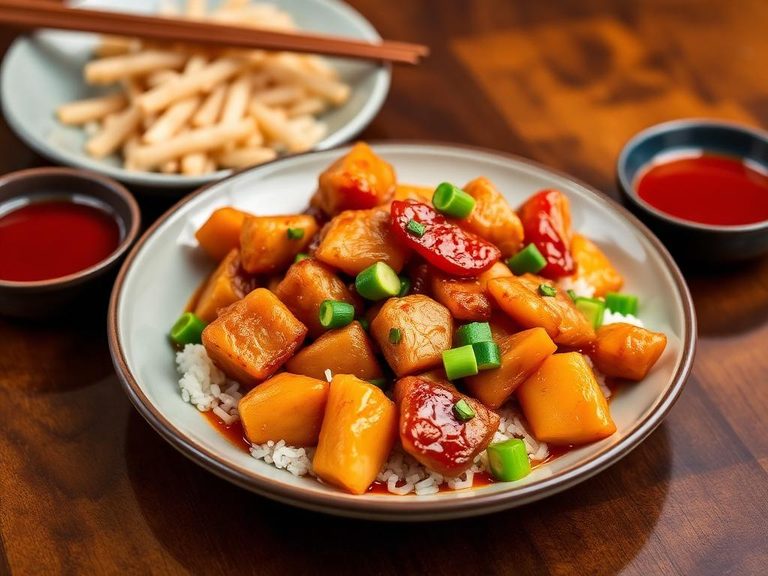

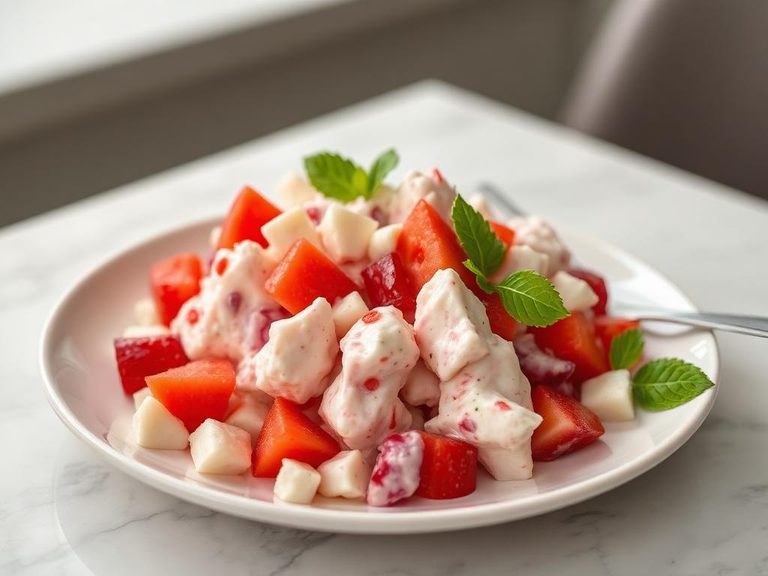
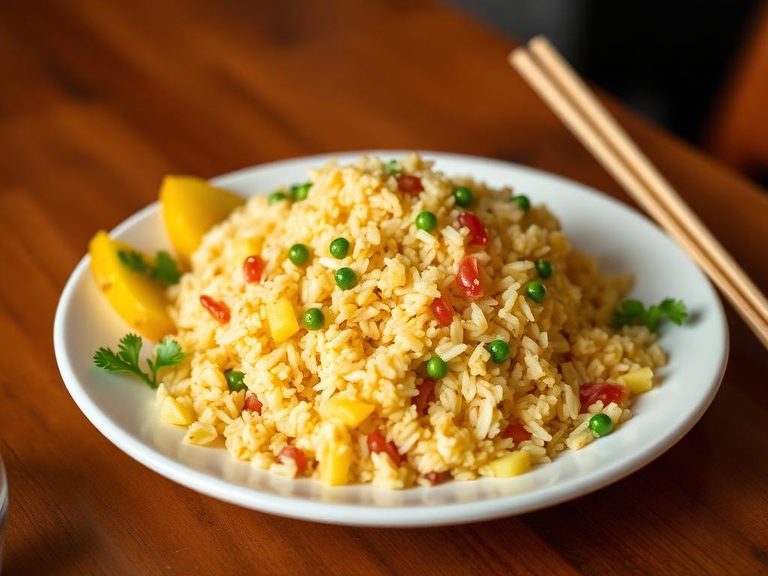

🌍 Where it's eaten
💡 Did you know?
The bromelain enzyme in pineapple is so potent that it's used as a natural meat tenderizer, and it can prevent gelatin from setting, which is why you can't use fresh pineapple in Jell-O—though canned pineapple, where the enzyme is deactivated by heat, works fine.
Full nutrition (USDA data · scales with serving)
| Water | 85.2 g |
| Energy | 55.0 kcal |
| Protein | 0.42 g |
| Total lipid (fat) | 0.12 g |
| Carbohydrate, by difference | 13.9 g |
| Fiber, total dietary | 0.70 g |
| Total Sugars | 13.1 g |
| Calcium, Ca | 15.0 mg |
| Iron, Fe | 0.42 mg |
| Magnesium, Mg | 17.0 mg |
| Phosphorus, P | 5.0 mg |
| Potassium, K | 141 mg |
| Sodium, Na | 2.0 mg |
| Zinc, Zn | 0.12 mg |
| Copper, Cu | 0.10 mg |
| Selenium, Se | 0.40 ug |
| Vitamin C, total ascorbic acid | 7.1 mg |
| Thiamin | 0.08 mg |
| Riboflavin | 0.03 mg |
| Niacin | 0.28 mg |
| Vitamin B-6 | 0.07 mg |
| Folate, total | 5.0 ug |
| Folic acid | 0.00 ug |
| Folate, food | 5.0 ug |
| Folate, DFE | 5.0 ug |
| Choline, total | 3.8 mg |
| Vitamin B-12 | 0.00 ug |
| Vitamin B-12, added | 0.00 ug |
| Vitamin A, RAE | 2.0 ug |
| Retinol | 0.00 ug |
| Carotene, beta | 21.0 ug |
| Carotene, alpha | 0.00 ug |
| Cryptoxanthin, beta | 0.00 ug |
| Lycopene | 0.00 ug |
| Lutein + zeaxanthin | 3.0 ug |
| Vitamin E (alpha-tocopherol) | 0.01 mg |
| Vitamin E, added | 0.00 mg |
| Vitamin D (D2 + D3) | 0.00 ug |
| Vitamin K (phylloquinone) | 0.30 ug |
| Alcohol, ethyl | 0.00 g |
| Caffeine | 0.00 mg |
| Theobromine | 0.00 mg |
Fat & fatty acid profile (per 100g)
| Fatty acids, total saturated | 0.01 g |
| SFA 4:0 | 0.00 g |
| SFA 6:0 | 0.00 g |
| SFA 8:0 | 0.00 g |
| SFA 10:0 | 0.00 g |
| SFA 12:0 | 0.00 g |
| SFA 14:0 | 0.00 g |
| SFA 16:0 | 0.01 g |
| SFA 18:0 | 0.00 g |
| Fatty acids, total monounsaturated | 0.01 g |
| MUFA 16:1 | 0.00 g |
| MUFA 18:1 | 0.01 g |
| MUFA 20:1 | 0.00 g |
| MUFA 22:1 | 0.00 g |
| Fatty acids, total polyunsaturated | 0.03 g |
| PUFA 18:2 | 0.02 g |
| PUFA 18:3 | 0.01 g |
| PUFA 18:4 | 0.00 g |
| PUFA 20:4 | 0.00 g |
| PUFA 20:5 n-3 (EPA) | 0.00 g |
| PUFA 22:5 n-3 (DPA) | 0.00 g |
| PUFA 22:6 n-3 (DHA) | 0.00 g |
| Cholesterol | 0.00 mg |
Amino acid profile (per 100g)
Estimated from Cake, pineapple upside-down, prepared from recipe — USDA does not publish this profile for Pineapple.
| Tryptophan | 0.04 g |
| Threonine | 0.12 g |
| Isoleucine | 0.15 g |
| Leucine | 0.26 g |
| Lysine | 0.14 g |
| Methionine | 0.07 g |
| Cystine | 0.07 g |
| Phenylalanine | 0.17 g |
| Tyrosine | 0.12 g |
| Valine | 0.17 g |
| Arginine | 0.15 g |
| Histidine | 0.08 g |
| Alanine | 0.13 g |
| Aspartic acid | 0.22 g |
| Glutamic acid | 0.95 g |
| Glycine | 0.11 g |
| Proline | 0.34 g |
| Serine | 0.19 g |
FAQ
Is canned pineapple as healthy as fresh?
Canned pineapple retains most of its vitamins and minerals, but it often has added sugar (especially in heavy syrup) and a softer texture. For the healthiest option, choose pineapple canned in 100% juice or water and drain it before eating.
What does 'NFS' mean on a nutrition label?
NFS stands for 'Not Further Specified.' It indicates the data is for the general food item (canned pineapple) without specifying the packing medium (like juice or syrup) or exact cut (chunks, crushed, etc.).
Can I use the canned pineapple juice for cooking?
Absolutely! The juice from the can is a flavorful ingredient for marinades, glazes, smoothies, or cocktails. It's a key component in many sweet and sour sauces and tropical dressings.
Nutrient density (calculated · NRF9.3)
Nutrient Rich Foods index: beneficial nutrients (protein, fiber, vitamins, minerals) minus saturated fat, added sugar & sodium, per 100 kcal.
NRF9.3 index — Fulgoni, Keast & Drewnowski, 2009. Computed from USDA nutrients.
Weight-loss friendliness (composite index)
Energy density 0.55 kcal/g · 3% calories from protein · 0.7 g fiber · 13.1 g sugar per 100 g.
Composite of energy density (Rolls et al., 1999), protein & fiber satiety, minus sugar. A calculated heuristic — ranks satiety-per-calorie, not a clinical measure.
Dietary load (calculated from USDA values)
Potential renal acid load. Positive = acid-forming, negative = alkaline-forming.
Sodium-to-potassium ratio: 0.01 (lower is better — aim for ≤ 1)
Sodium:potassium per WHO potassium guidance. Computed from USDA nutrients.