

Pineapple, canned, in syrup
Common food
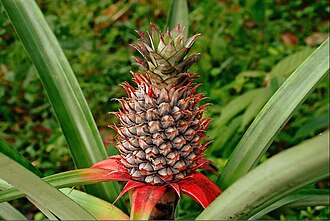
Photo: Wikipedia
Canned pineapple in syrup consists of sweet, golden pineapple chunks or rings preserved in a sugar-laden liquid. It offers a consistent, tender texture and a bright, sugary flavor profile that is less acidic than fresh pineapple. Nutritionally, it is a low-calorie, fat-free source of carbohydrates, primarily from added sugars.
Calorie split: 2% protein · 96% carbs · 2% fat
↓ Full nutrition💚 Why it's loved
People love it for its intensely sweet, tangy flavor and soft, juicy texture, which makes it a nostalgic comfort food. Its versatility allows it to be used in both sweet desserts and savory dishes, particularly in tropical and Asian cuisines.
⚠️ Watch-outs & how to enjoy it better
The high sugar content (nearly 15g per 100g) can cause rapid blood-sugar spikes, making it a concern for diabetics or those monitoring glycemic load. To mitigate this, pair it with protein (like yogurt or nuts) or healthy fats to slow sugar absorption, and practice strict portion control. Additionally, the syrup often contains added sodium, so rinsing the fruit can reduce intake.
Key benefits
- Provides a quick source of energy from carbohydrates.
- Contains a small amount of dietary fiber.
- Offers a convenient, year-round source of fruit.
- Naturally low in fat and cholesterol.
🍽️ Popular dishes

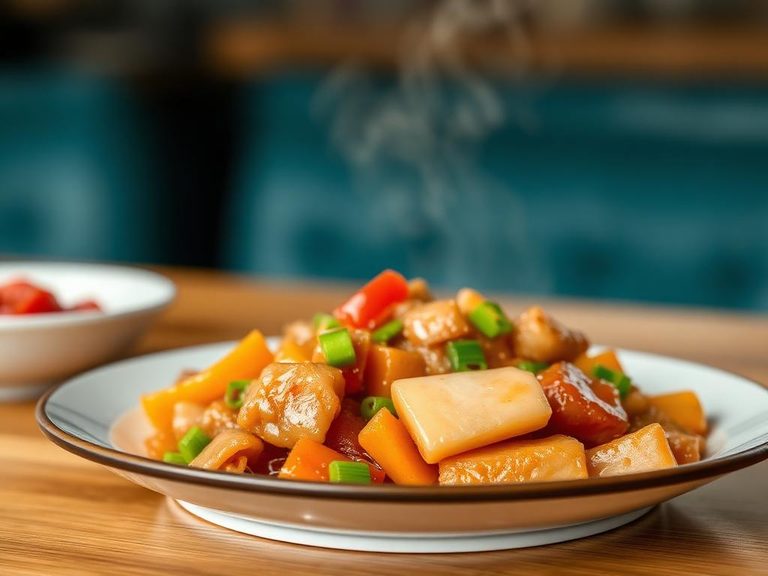
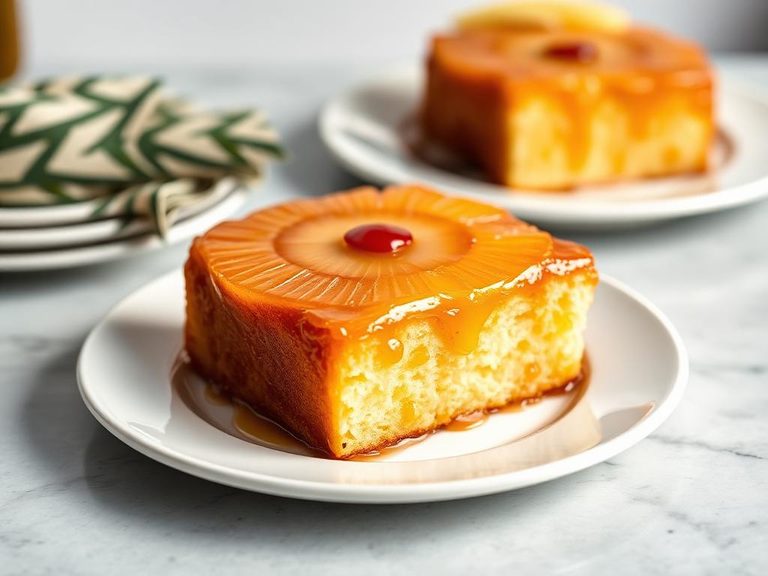

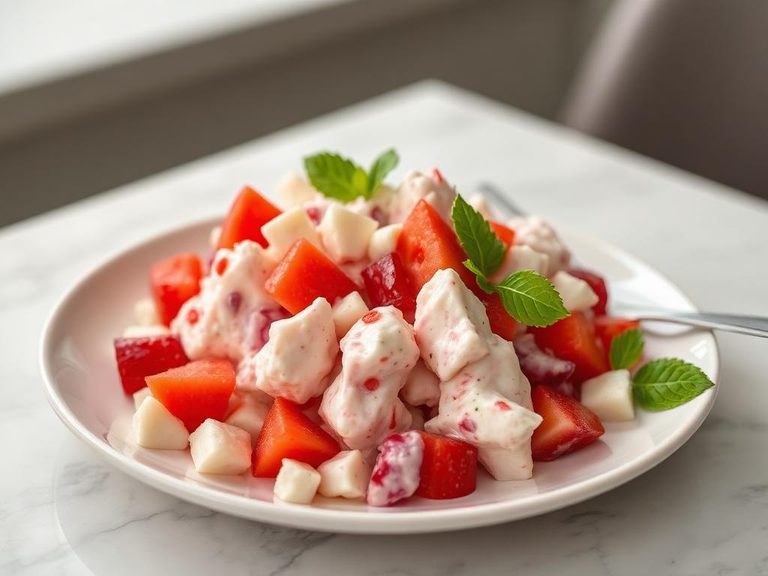

🌍 Where it's eaten
💡 Did you know?
Canned pineapple was first commercially produced in 1903 by the Hawaiian Pineapple Company (now Dole), revolutionizing the fruit's global accessibility and turning it into a staple of 20th-century American cuisine.
Full nutrition (USDA data · scales with serving)
| Water | 83.6 g |
| Energy | 62.0 kcal |
| Protein | 0.40 g |
| Total lipid (fat) | 0.11 g |
| Carbohydrate, by difference | 15.6 g |
| Fiber, total dietary | 0.70 g |
| Total Sugars | 14.9 g |
| Calcium, Ca | 14.0 mg |
| Iron, Fe | 0.37 mg |
| Magnesium, Mg | 17.0 mg |
| Phosphorus, P | 4.0 mg |
| Potassium, K | 117 mg |
| Sodium, Na | 1.0 mg |
| Zinc, Zn | 0.11 mg |
| Copper, Cu | 0.10 mg |
| Selenium, Se | 0.40 ug |
| Vitamin C, total ascorbic acid | 7.1 mg |
| Thiamin | 0.09 mg |
| Riboflavin | 0.03 mg |
| Niacin | 0.27 mg |
| Vitamin B-6 | 0.07 mg |
| Folate, total | 5.0 ug |
| Folic acid | 0.00 ug |
| Folate, food | 5.0 ug |
| Folate, DFE | 5.0 ug |
| Choline, total | 3.5 mg |
| Vitamin B-12 | 0.00 ug |
| Vitamin B-12, added | 0.00 ug |
| Vitamin A, RAE | 2.0 ug |
| Retinol | 0.00 ug |
| Carotene, beta | 21.0 ug |
| Carotene, alpha | 0.00 ug |
| Cryptoxanthin, beta | 0.00 ug |
| Lycopene | 0.00 ug |
| Lutein + zeaxanthin | 0.00 ug |
| Vitamin E (alpha-tocopherol) | 0.01 mg |
| Vitamin E, added | 0.00 mg |
| Vitamin D (D2 + D3) | 0.00 ug |
| Vitamin K (phylloquinone) | 0.30 ug |
| Alcohol, ethyl | 0.00 g |
| Caffeine | 0.00 mg |
| Theobromine | 0.00 mg |
Fat & fatty acid profile (per 100g)
| Fatty acids, total saturated | 0.01 g |
| SFA 4:0 | 0.00 g |
| SFA 6:0 | 0.00 g |
| SFA 8:0 | 0.00 g |
| SFA 10:0 | 0.00 g |
| SFA 12:0 | 0.00 g |
| SFA 14:0 | 0.00 g |
| SFA 16:0 | 0.00 g |
| SFA 18:0 | 0.00 g |
| Fatty acids, total monounsaturated | 0.01 g |
| MUFA 16:1 | 0.00 g |
| MUFA 18:1 | 0.01 g |
| MUFA 20:1 | 0.00 g |
| MUFA 22:1 | 0.00 g |
| Fatty acids, total polyunsaturated | 0.03 g |
| PUFA 18:2 | 0.02 g |
| PUFA 18:3 | 0.01 g |
| PUFA 18:4 | 0.00 g |
| PUFA 20:4 | 0.00 g |
| PUFA 20:5 n-3 (EPA) | 0.00 g |
| PUFA 22:5 n-3 (DPA) | 0.00 g |
| PUFA 22:6 n-3 (DHA) | 0.00 g |
| Cholesterol | 0.00 mg |
Amino acid profile (per 100g)
Estimated from Cake, pineapple upside-down, prepared from recipe — USDA does not publish this profile for Pineapple.
| Tryptophan | 0.04 g |
| Threonine | 0.12 g |
| Isoleucine | 0.15 g |
| Leucine | 0.26 g |
| Lysine | 0.14 g |
| Methionine | 0.07 g |
| Cystine | 0.07 g |
| Phenylalanine | 0.17 g |
| Tyrosine | 0.12 g |
| Valine | 0.17 g |
| Arginine | 0.15 g |
| Histidine | 0.08 g |
| Alanine | 0.13 g |
| Aspartic acid | 0.22 g |
| Glutamic acid | 0.95 g |
| Glycine | 0.11 g |
| Proline | 0.34 g |
| Serine | 0.19 g |
FAQ
Is canned pineapple as nutritious as fresh pineapple?
Canned pineapple retains most of its vitamins (like vitamin C) and minerals, but the syrup adds significant sugar and calories, making fresh pineapple the healthier choice for those watching sugar intake.
How can I reduce the sugar in canned pineapple?
Choose pineapple packed in juice or water instead of syrup, or rinse the fruit thoroughly under water to remove some of the added sugars from the syrup.
Does canned pineapple contain bromelain?
Bromelain, an enzyme that aids digestion, is largely inactivated by the canning process's heat, so canned pineapple has much less bromelain than fresh pineapple.
Nutrient density (calculated · NRF9.3)
Nutrient Rich Foods index: beneficial nutrients (protein, fiber, vitamins, minerals) minus saturated fat, added sugar & sodium, per 100 kcal.
NRF9.3 index — Fulgoni, Keast & Drewnowski, 2009. Computed from USDA nutrients.
Weight-loss friendliness (composite index)
Energy density 0.62 kcal/g · 3% calories from protein · 0.7 g fiber · 14.9 g sugar per 100 g.
Composite of energy density (Rolls et al., 1999), protein & fiber satiety, minus sugar. A calculated heuristic — ranks satiety-per-calorie, not a clinical measure.
Dietary load (calculated from USDA values)
Potential renal acid load. Positive = acid-forming, negative = alkaline-forming.
Sodium-to-potassium ratio: 0.01 (lower is better — aim for ≤ 1)
Sodium:potassium per WHO potassium guidance. Computed from USDA nutrients.