

Pine nuts
Common food

Photo: Wikipedia
Pine nuts are the edible seeds of pine trees, prized for their buttery, subtly sweet flavor and satisfyingly soft, waxy texture. They are exceptionally rich in healthy fats, particularly monounsaturated and polyunsaturated varieties, and provide a good source of plant-based protein. Their unique, aromatic quality makes them a versatile ingredient in both sweet and savory dishes.
Calorie split: 8% protein · 7% carbs · 85% fat
↓ Full nutrition💚 Why it's loved
People love pine nuts for their luxurious, buttery flavor and the delightful textural contrast they add to dishes. They are a culinary staple that can elevate everything from pesto to salads, and their cultural significance in Mediterranean and Asian cuisines makes them a cherished ingredient.
⚠️ Watch-outs & how to enjoy it better
Due to their high fat and calorie content (673 kcal per 100g), portion control is key to avoid excessive calorie intake. Some individuals may experience a temporary, metallic taste (pine mouth) after consuming them, which is a harmless but unpleasant sensation. To counteract the high calorie density, use them as a flavorful garnish or mix them with lower-calorie vegetables and lean proteins.
Key benefits
- Rich in heart-healthy monounsaturated and polyunsaturated fats
- Good source of plant-based protein (13.69g per 100g)
- Contains essential minerals like manganese, magnesium, and zinc
- Provides a notable amount of dietary fiber (3.7g per 100g)
- High in antioxidants, including vitamin E and lutein
🍽️ Popular dishes
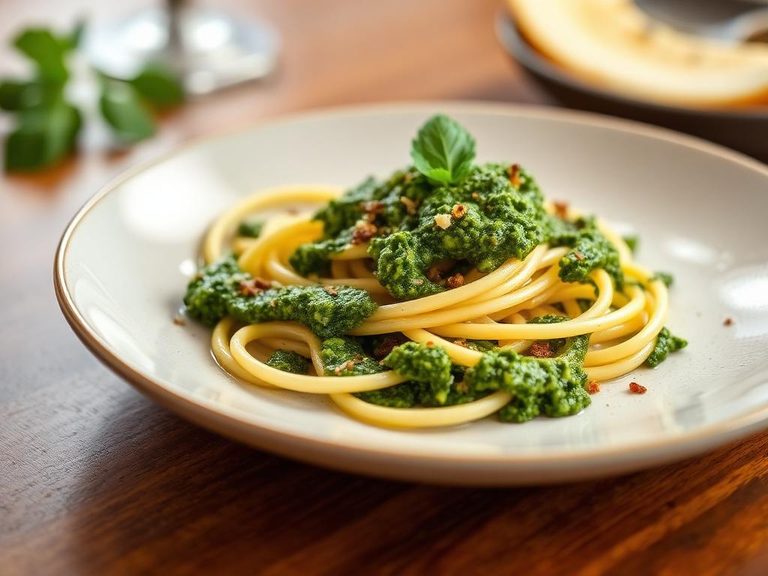
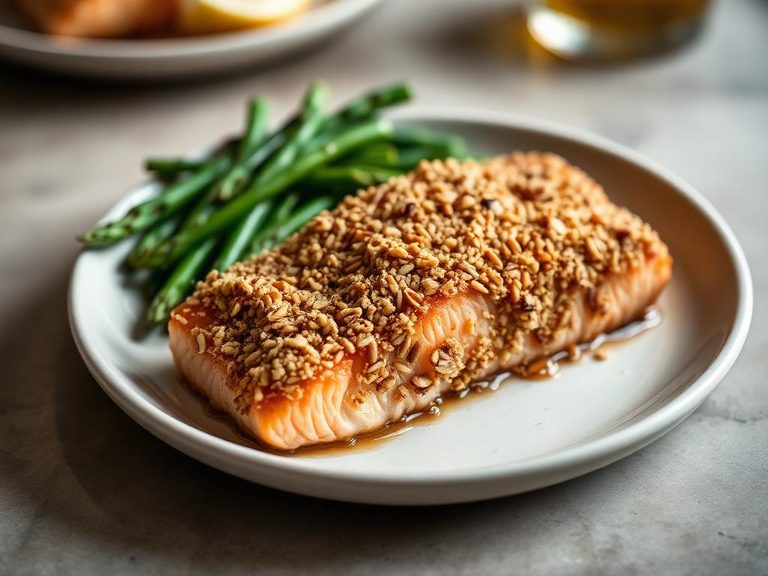
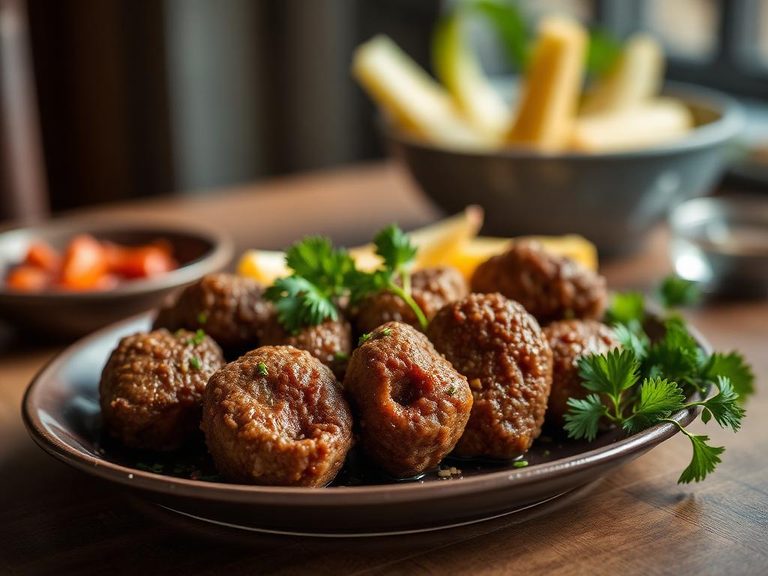
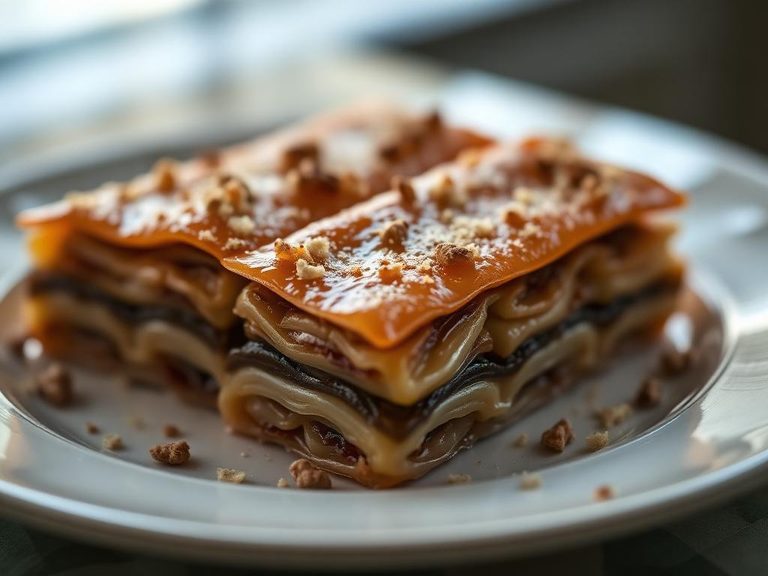
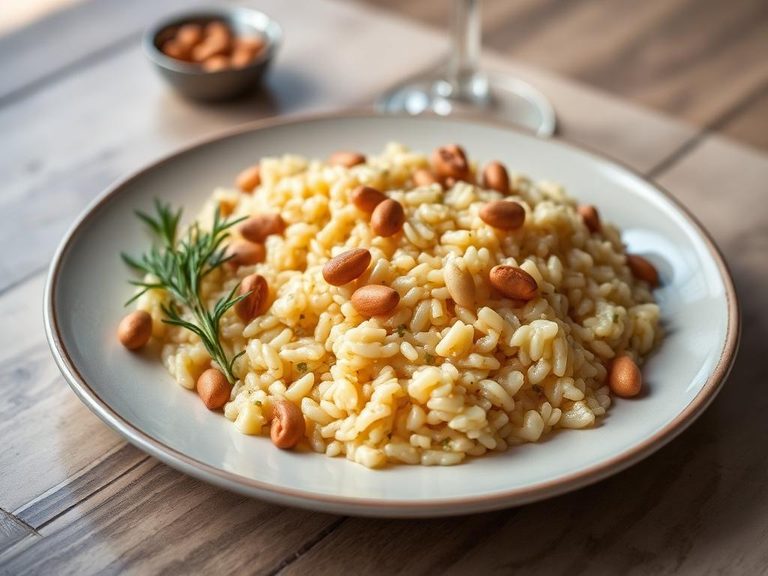
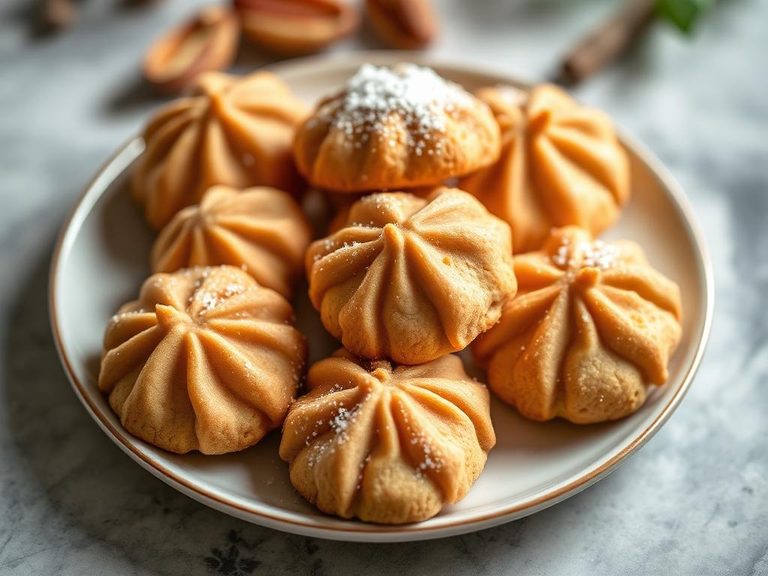
🌍 Where it's eaten
💡 Did you know?
Pine nuts are one of the slowest-growing seeds to harvest, often taking 15 to 25 years for a pine tree to produce its first crop of cones.
Full nutrition (USDA data · scales with serving)
| Water | 2.3 g |
| Energy | 673 kcal |
| Protein | 13.7 g |
| Total lipid (fat) | 68.4 g |
| Carbohydrate, by difference | 13.1 g |
| Fiber, total dietary | 3.7 g |
| Total Sugars | 3.6 g |
| Calcium, Ca | 16.0 mg |
| Iron, Fe | 5.5 mg |
| Magnesium, Mg | 251 mg |
| Phosphorus, P | 575 mg |
| Potassium, K | 597 mg |
| Sodium, Na | 2.0 mg |
| Zinc, Zn | 6.5 mg |
| Copper, Cu | 1.3 mg |
| Selenium, Se | 0.70 ug |
| Vitamin C, total ascorbic acid | 0.80 mg |
| Thiamin | 0.36 mg |
| Riboflavin | 0.23 mg |
| Niacin | 4.4 mg |
| Vitamin B-6 | 0.09 mg |
| Folate, total | 34.0 ug |
| Folic acid | 0.00 ug |
| Folate, food | 34.0 ug |
| Folate, DFE | 34.0 ug |
| Choline, total | 55.8 mg |
| Vitamin B-12 | 0.00 ug |
| Vitamin B-12, added | 0.00 ug |
| Vitamin A, RAE | 1.0 ug |
| Retinol | 0.00 ug |
| Carotene, beta | 17.0 ug |
| Carotene, alpha | 0.00 ug |
| Cryptoxanthin, beta | 0.00 ug |
| Lycopene | 0.00 ug |
| Lutein + zeaxanthin | 9.0 ug |
| Vitamin E (alpha-tocopherol) | 9.3 mg |
| Vitamin E, added | 0.00 mg |
| Vitamin D (D2 + D3) | 0.00 ug |
| Vitamin K (phylloquinone) | 53.9 ug |
| Alcohol, ethyl | 0.00 g |
| Caffeine | 0.00 mg |
| Theobromine | 0.00 mg |
Fat & fatty acid profile (per 100g)
| Fatty acids, total saturated | 4.9 g |
| SFA 4:0 | 0.00 g |
| SFA 6:0 | 0.00 g |
| SFA 8:0 | 0.00 g |
| SFA 10:0 | 0.00 g |
| SFA 12:0 | 0.00 g |
| SFA 14:0 | 0.00 g |
| SFA 16:0 | 3.2 g |
| SFA 18:0 | 1.4 g |
| Fatty acids, total monounsaturated | 18.8 g |
| MUFA 16:1 | 0.02 g |
| MUFA 18:1 | 17.9 g |
| MUFA 20:1 | 0.80 g |
| MUFA 22:1 | 0.00 g |
| Fatty acids, total polyunsaturated | 34.1 g |
| PUFA 18:2 | 33.1 g |
| PUFA 18:3 | 0.16 g |
| PUFA 18:4 | 0.00 g |
| PUFA 20:4 | 0.00 g |
| PUFA 20:5 n-3 (EPA) | 0.00 g |
| PUFA 22:5 n-3 (DPA) | 0.00 g |
| PUFA 22:6 n-3 (DHA) | 0.00 g |
| Cholesterol | 0.00 mg |
Amino acid profile (per 100g)
Estimated from Nuts, pine nuts, dried — USDA does not publish this profile for Pine nuts.
| Tryptophan | 0.11 g |
| Threonine | 0.37 g |
| Isoleucine | 0.54 g |
| Leucine | 0.99 g |
| Lysine | 0.54 g |
| Methionine | 0.26 g |
| Cystine | 0.29 g |
| Phenylalanine | 0.52 g |
| Tyrosine | 0.51 g |
| Valine | 0.69 g |
| Arginine | 2.4 g |
| Histidine | 0.34 g |
| Alanine | 0.68 g |
| Aspartic acid | 1.3 g |
| Glutamic acid | 2.9 g |
| Glycine | 0.69 g |
| Proline | 0.67 g |
| Serine | 0.83 g |
FAQ
Are pine nuts a nut or a seed?
Pine nuts are technically the seeds of pine trees, not true nuts, but they are commonly categorized as nuts in culinary contexts.
How should I store pine nuts?
Due to their high oil content, pine nuts can go rancid quickly. Store them in an airtight container in the refrigerator for up to a month, or freeze them for up to six months.
What is 'pine mouth' and is it dangerous?
Pine mouth is a temporary, metallic or bitter taste that can occur after eating pine nuts, lasting from a few days to a couple of weeks. It is not harmful and resolves on its own.
Nutrient density (calculated · NRF9.3)
Nutrient Rich Foods index: beneficial nutrients (protein, fiber, vitamins, minerals) minus saturated fat, added sugar & sodium, per 100 kcal.
NRF9.3 index — Fulgoni, Keast & Drewnowski, 2009. Computed from USDA nutrients.
Weight-loss friendliness (composite index)
Energy density 6.73 kcal/g · 8% calories from protein · 3.7 g fiber · 3.6 g sugar per 100 g.
Composite of energy density (Rolls et al., 1999), protein & fiber satiety, minus sugar. A calculated heuristic — ranks satiety-per-calorie, not a clinical measure.
Dietary load (calculated from USDA values)
Potential renal acid load. Positive = acid-forming, negative = alkaline-forming.
Sodium-to-potassium ratio: 0.00 (lower is better — aim for ≤ 1)
Sodium:potassium per WHO potassium guidance. Computed from USDA nutrients.