

Nuts, pine nuts, raw
Whole food · Nut and Seed Products

Photo: Wikipedia
Raw pine nuts are the edible seeds of pine trees, prized for their buttery, slightly sweet flavor and delicate, tender crunch. Nutritionally, they are a powerhouse of healthy fats and protein, offering a satisfying energy boost in just a small handful. Their unique, resinous aroma makes them a coveted ingredient in both sweet and savory cuisines worldwide.
Calorie split: 9% protein · 11% carbs · 80% fat
↓ Full nutrition💚 Why it's loved
People love pine nuts for their rich, buttery taste that elevates dishes without overpowering them, and for their satisfying texture that adds a luxurious crunch. They are a cultural staple in Mediterranean and Middle Eastern cooking, symbolizing harvest and culinary tradition.
⚠️ Watch-outs & how to enjoy it better
Pine nuts are high in calories and fat, so overconsumption can lead to weight gain if not portion-controlled. Some individuals may experience pine nut syndrome (a temporary metallic taste after eating) or have tree nut allergies; pairing with fiber-rich foods or using in moderation can mitigate these issues.
Key benefits
- Rich in heart-healthy monounsaturated and polyunsaturated fats
- Good source of plant-based protein for muscle maintenance
- Provides essential minerals like magnesium, zinc, and manganese
- Contains antioxidants like vitamin E and carotenoids
- May help promote satiety due to high fat and protein content
🍽️ Popular dishes
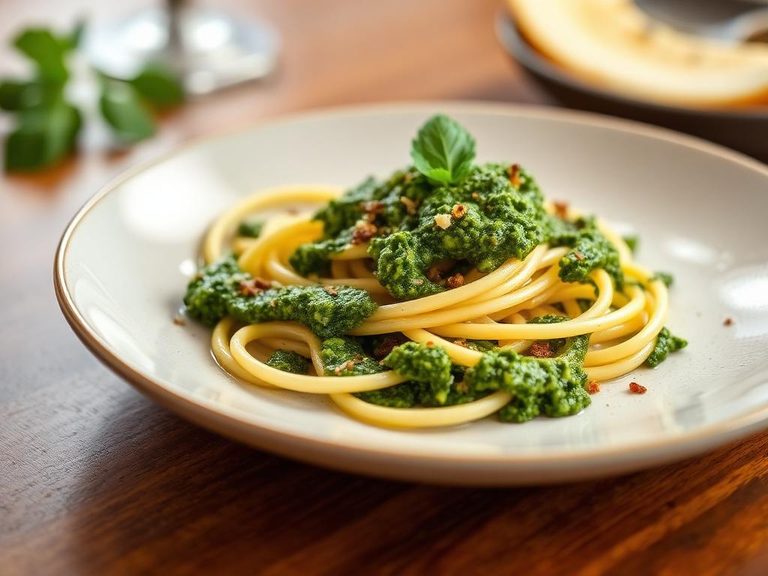
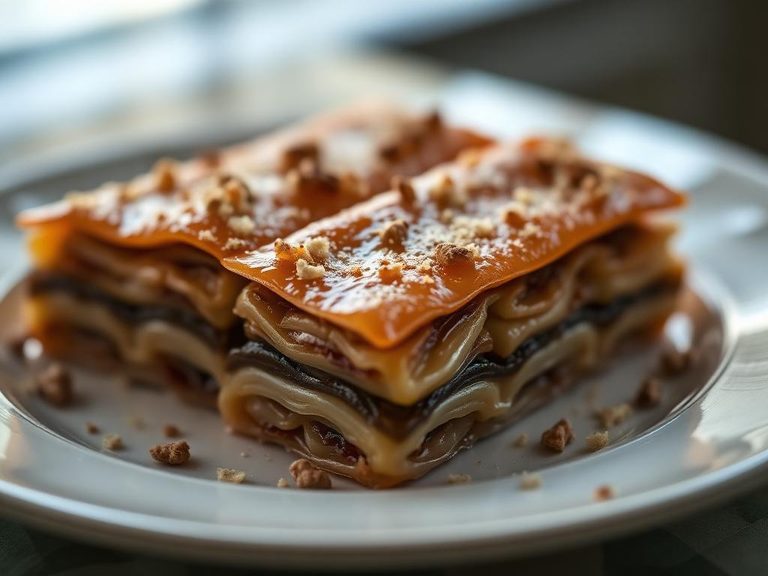
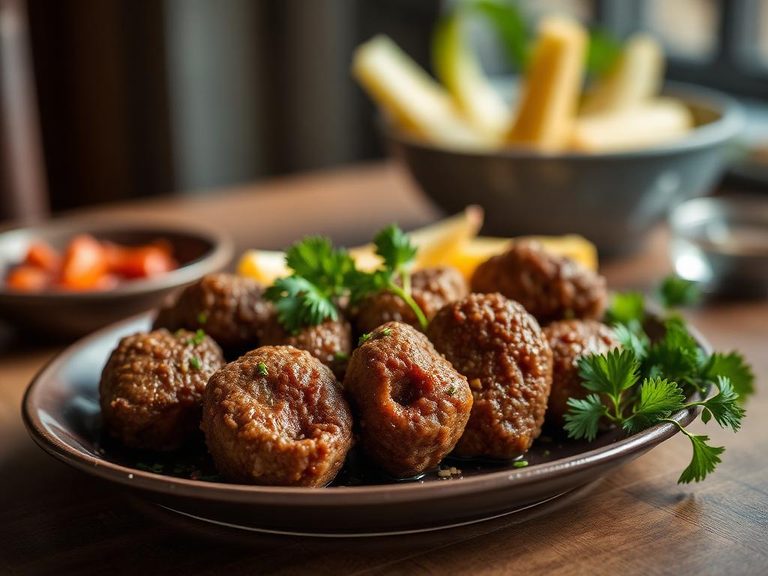
🌍 Where it's eaten
💡 Did you know?
Pine nuts are one of the slowest-growing seeds, taking up to 3 years to mature inside pine cones, and harvesting them is often a labor-intensive, manual process.
Full nutrition (USDA data · scales with serving)
| Water | 1.9 g |
| Energy (Atwater General Factors) | 689 kcal |
| Energy (Atwater Specific Factors) | 643 kcal |
| Nitrogen | 3.0 g |
| Protein | 15.7 g |
| Total lipid (fat) | 61.3 g |
| Ash | 2.5 g |
| Carbohydrate, by difference | 18.6 g |
| Fiber, total dietary | 3.9 g |
| Calcium, Ca | 8.7 mg |
| Iron, Fe | 5.4 mg |
| Magnesium, Mg | 206 mg |
| Phosphorus, P | 540 mg |
| Potassium, K | 655 mg |
| Sodium, Na | 0.00 mg |
| Zinc, Zn | 5.7 mg |
| Copper, Cu | 1.1 mg |
| Manganese, Mn | 10.3 mg |
| Molybdenum, Mo | 3.3 ug |
| Thiamin | 0.63 mg |
| Niacin | 4.5 mg |
| Vitamin B-6 | 0.25 mg |
| Biotin | 12.9 ug |
| Vitamin K (phylloquinone) | 3.2 ug |
| Vitamin K (Dihydrophylloquinone) | 0.00 ug |
| Vitamin K (Menaquinone-4) | 0.00 ug |
Fat & fatty acid profile (per 100g)
Estimated from Nuts, mixed nuts, dry roasted, with peanuts, with salt added — USDA does not publish this profile for Nuts.
| Fatty acids, total saturated | 6.5 g |
| SFA 4:0 | 0.00 g |
| SFA 6:0 | 0.00 g |
| SFA 8:0 | 0.04 g |
| SFA 10:0 | 0.04 g |
| SFA 12:0 | 0.27 g |
| SFA 14:0 | 0.21 g |
| SFA 16:0 | 4.2 g |
| SFA 18:0 | 1.7 g |
| Fatty acids, total monounsaturated | 31.4 g |
| MUFA 16:1 | 0.22 g |
| MUFA 18:1 | 30.8 g |
| MUFA 20:1 | 0.26 g |
| MUFA 22:1 | 0.00 g |
| Fatty acids, total polyunsaturated | 10.8 g |
| PUFA 18:2 | 10.5 g |
| PUFA 18:3 | 0.19 g |
| PUFA 18:4 | 0.00 g |
| PUFA 20:4 | 0.00 g |
| PUFA 20:5 n-3 (EPA) | 0.00 g |
| PUFA 22:5 n-3 (DPA) | 0.00 g |
| PUFA 22:6 n-3 (DHA) | 0.00 g |
| Cholesterol | 0.00 mg |
Amino acid profile (per 100g)
| Tryptophan | 0.15 g |
| Threonine | 0.47 g |
| Isoleucine | 0.57 g |
| Leucine | 1.1 g |
| Lysine | 0.59 g |
| Methionine | 0.33 g |
| Phenylalanine | 0.59 g |
| Tyrosine | 0.59 g |
| Valine | 0.74 g |
| Arginine | 2.7 g |
| Histidine | 0.37 g |
| Alanine | 0.75 g |
| Aspartic acid | 1.4 g |
| Glutamic acid | 3.4 g |
| Glycine | 0.73 g |
| Proline | 1.0 g |
| Serine | 0.98 g |
| Hydroxyproline | 0.00 g |
| Cysteine | 0.47 g |
FAQ
Are pine nuts considered a nut or a seed?
Pine nuts are technically seeds from pine trees, not true nuts, but they are often grouped with nuts for culinary and nutritional purposes.
How should pine nuts be stored to prevent rancidity?
Store pine nuts in an airtight container in the refrigerator or freezer to prevent their high oil content from going rancid, especially in warm climates.
Can pine nuts be eaten raw, or do they need cooking?
Pine nuts can be eaten raw, but lightly toasting them enhances their flavor and texture; they are often used both ways in recipes.
Nutrient density (calculated · NRF9.3)
Nutrient Rich Foods index: beneficial nutrients (protein, fiber, vitamins, minerals) minus saturated fat, added sugar & sodium, per 100 kcal.
NRF9.3 index — Fulgoni, Keast & Drewnowski, 2009. Computed from USDA nutrients.
Weight-loss friendliness (composite index)
Energy density 6.89 kcal/g · 9% calories from protein · 3.9 g fiber · 0.0 g sugar per 100 g.
Composite of energy density (Rolls et al., 1999), protein & fiber satiety, minus sugar. A calculated heuristic — ranks satiety-per-calorie, not a clinical measure.
Dietary load (calculated from USDA values)
Potential renal acid load. Positive = acid-forming, negative = alkaline-forming.
Sodium-to-potassium ratio: 0.00 (lower is better — aim for ≤ 1)
Sodium:potassium per WHO potassium guidance. Computed from USDA nutrients.