

Pie, apple, fast food
Common food

Photo: Wikipedia
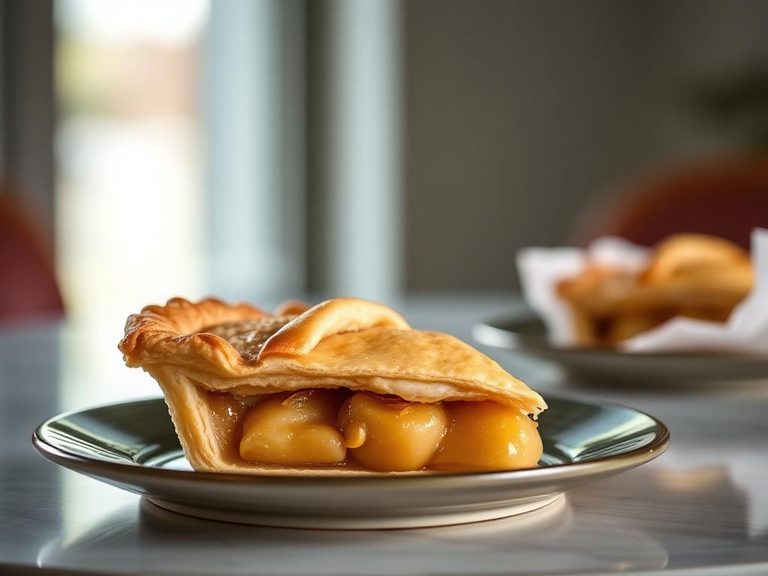
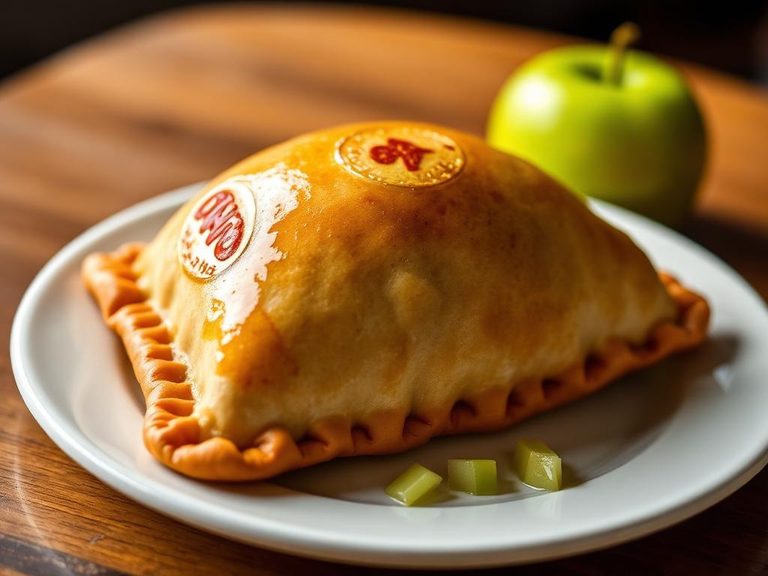
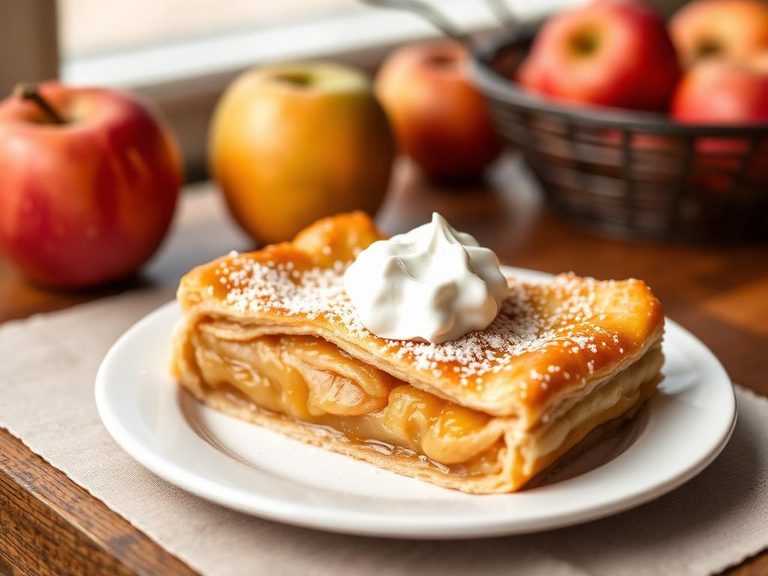
A classic fast-food dessert, this apple pie features a flaky, golden-brown crust encasing a warm, sweet-tart filling of tender apple slices. It's a handheld comfort food, delivering a satisfying contrast between the crisp pastry and the soft, spiced fruit inside. Nutritionally, it's a calorie-dense treat, with its 42.6g of carbohydrates per 100g coming primarily from refined flour and added sugars.
Calorie split: 4% protein · 52% carbs · 44% fat
↓ Full nutrition💚 Why it's loved
People adore it for the comforting combination of warm, cinnamon-spiced apples and buttery, flaky crust. It's a nostalgic, convenient treat that evokes feelings of home and tradition, even in a fast-food setting.
⚠️ Watch-outs & how to enjoy it better
The high sugar (21.4g per 100g) and refined carbohydrate content can cause rapid blood-sugar spikes, making it a poor choice for diabetics or those monitoring glucose. To mitigate this, pair it with a source of protein or fat (like a handful of nuts or a scoop of plain yogurt) to slow sugar absorption, and practice strict portion control by sharing or saving half for later.
Key benefits
- Provides quick energy from carbohydrates
- Contains small amounts of dietary fiber from apple filling
- Offers a comforting, nostalgic flavor experience
- Convenient, portable, single-serving dessert
🍽️ Popular dishes



🌍 Where it's eaten
💡 Did you know?
The iconic McDonald's apple pie was first introduced in 1968 and was originally fried in beef tallow before the recipe was changed to vegetable oil in 1992.
Full nutrition (USDA data · scales with serving)
| Water | 37.6 g |
| Energy | 316 kcal |
| Protein | 3.0 g |
| Total lipid (fat) | 16.1 g |
| Carbohydrate, by difference | 42.6 g |
| Fiber, total dietary | 2.6 g |
| Total Sugars | 21.4 g |
| Calcium, Ca | 22.0 mg |
| Iron, Fe | 1.2 mg |
| Magnesium, Mg | 10.0 mg |
| Phosphorus, P | 43.0 mg |
| Potassium, K | 65.0 mg |
| Sodium, Na | 333 mg |
| Zinc, Zn | 0.23 mg |
| Copper, Cu | 0.05 mg |
| Selenium, Se | 2.4 ug |
| Vitamin C, total ascorbic acid | 1.3 mg |
| Thiamin | 0.14 mg |
| Riboflavin | 0.11 mg |
| Niacin | 1.4 mg |
| Vitamin B-6 | 0.03 mg |
| Folate, total | 18.0 ug |
| Folic acid | 15.0 ug |
| Folate, food | 3.0 ug |
| Folate, DFE | 29.0 ug |
| Choline, total | 7.2 mg |
| Vitamin B-12 | 0.08 ug |
| Vitamin B-12, added | 0.00 ug |
| Vitamin A, RAE | 5.0 ug |
| Retinol | 5.0 ug |
| Carotene, beta | 5.0 ug |
| Carotene, alpha | 0.00 ug |
| Cryptoxanthin, beta | 5.0 ug |
| Lycopene | 0.00 ug |
| Lutein + zeaxanthin | 8.0 ug |
| Vitamin E (alpha-tocopherol) | 1.7 mg |
| Vitamin E, added | 0.00 mg |
| Vitamin D (D2 + D3) | 0.00 ug |
| Vitamin K (phylloquinone) | 4.1 ug |
| Alcohol, ethyl | 0.00 g |
| Caffeine | 0.00 mg |
| Theobromine | 0.00 mg |
Fat & fatty acid profile (per 100g)
| Fatty acids, total saturated | 2.5 g |
| SFA 4:0 | 0.00 g |
| SFA 6:0 | 0.00 g |
| SFA 8:0 | 0.00 g |
| SFA 10:0 | 0.00 g |
| SFA 12:0 | 0.00 g |
| SFA 14:0 | 0.03 g |
| SFA 16:0 | 1.5 g |
| SFA 18:0 | 0.83 g |
| Fatty acids, total monounsaturated | 7.4 g |
| MUFA 16:1 | 0.01 g |
| MUFA 18:1 | 7.3 g |
| MUFA 20:1 | 0.09 g |
| MUFA 22:1 | 0.03 g |
| Fatty acids, total polyunsaturated | 5.4 g |
| PUFA 18:2 | 4.8 g |
| PUFA 18:3 | 0.57 g |
| PUFA 18:4 | 0.00 g |
| PUFA 20:4 | 0.00 g |
| PUFA 20:5 n-3 (EPA) | 0.00 g |
| PUFA 22:5 n-3 (DPA) | 0.00 g |
| PUFA 22:6 n-3 (DHA) | 0.00 g |
| Cholesterol | 0.00 mg |
Amino acid profile (per 100g)
Estimated from Pie Crust, Cookie-type, Chocolate, Ready Crust — USDA does not publish this profile for Pie.
| Tryptophan | 0.08 g |
| Threonine | 0.20 g |
| Isoleucine | 0.23 g |
| Leucine | 0.38 g |
| Lysine | 0.24 g |
| Methionine | 0.07 g |
| Cystine | 0.11 g |
| Phenylalanine | 0.28 g |
| Tyrosine | 0.16 g |
| Valine | 0.32 g |
| Arginine | 0.29 g |
| Histidine | 0.11 g |
| Alanine | 0.24 g |
| Aspartic acid | 0.45 g |
| Glutamic acid | 1.3 g |
| Glycine | 0.24 g |
| Proline | 0.42 g |
| Serine | 0.26 g |
FAQ
Is fast-food apple pie made with real apples?
Yes, most commercial apple pies, including fast-food versions, use real apple slices or puree as the primary filling ingredient, though they often contain added sugars, preservatives, and thickeners.
Why is fast-food apple pie so high in calories?
The calorie density (316 kcal per 100g) comes from the combination of a high-fat, refined-flour crust and a sugar-heavy apple filling. The fat in the pastry and the sugar in the fruit are both energy-dense components.
Can I find a healthier version of apple pie?
Healthier versions often use whole-wheat flour for the crust, reduce added sugar in the filling, and may be baked instead of fried. Making it at home allows for full control over ingredients and portion size.
Nutrient density (calculated · NRF9.3)
Nutrient Rich Foods index: beneficial nutrients (protein, fiber, vitamins, minerals) minus saturated fat, added sugar & sodium, per 100 kcal.
NRF9.3 index — Fulgoni, Keast & Drewnowski, 2009. Computed from USDA nutrients.
Weight-loss friendliness (composite index)
Energy density 3.16 kcal/g · 4% calories from protein · 2.6 g fiber · 21.4 g sugar per 100 g.
Composite of energy density (Rolls et al., 1999), protein & fiber satiety, minus sugar. A calculated heuristic — ranks satiety-per-calorie, not a clinical measure.
Dietary load (calculated from USDA values)
Potential renal acid load. Positive = acid-forming, negative = alkaline-forming.
Sodium-to-potassium ratio: 5.12 (lower is better — aim for ≤ 1)
Sodium:potassium per WHO potassium guidance. Computed from USDA nutrients.