

Peanut oil
Common food
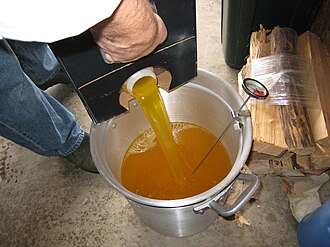
Photo: Wikipedia
Peanut oil is a golden, fragrant oil pressed from peanuts, prized for its high smoke point and clean, slightly nutty flavor that doesn't overpower other ingredients. Nutritionally, it is a pure fat source, providing about 900 calories per 100g, with zero protein, carbs, or fiber. Its light texture and neutral-to-nutty taste make it a workhorse in both high-heat cooking and flavor-forward dishes.
Calorie split: 0% protein · 0% carbs · 100% fat
↓ Full nutrition💚 Why it's loved
People love it for its exceptional frying performance—it creates crispy, non-greasy results—and for the subtle, savory depth it brings to Asian and Southern cuisines. It's a cultural staple in many kitchens, valued for both its practicality and its flavor-enhancing qualities.
⚠️ Watch-outs & how to enjoy it better
As a pure fat, it is extremely calorie-dense, which can contribute to weight gain if used excessively. It is also a common allergen, and some refined versions may contain trace amounts of peanut proteins. For those monitoring fat intake, using a non-stick pan or opting for cooking sprays can reduce the amount needed.
Key benefits
- High smoke point (around 230°C/446°F) ideal for deep-frying and stir-frying.
- Rich in heart-healthy monounsaturated fats (oleic acid) and vitamin E.
- Adds a subtle, complementary nutty flavor without being overpowering.
- Neutral refined versions are versatile for baking and sautéing.
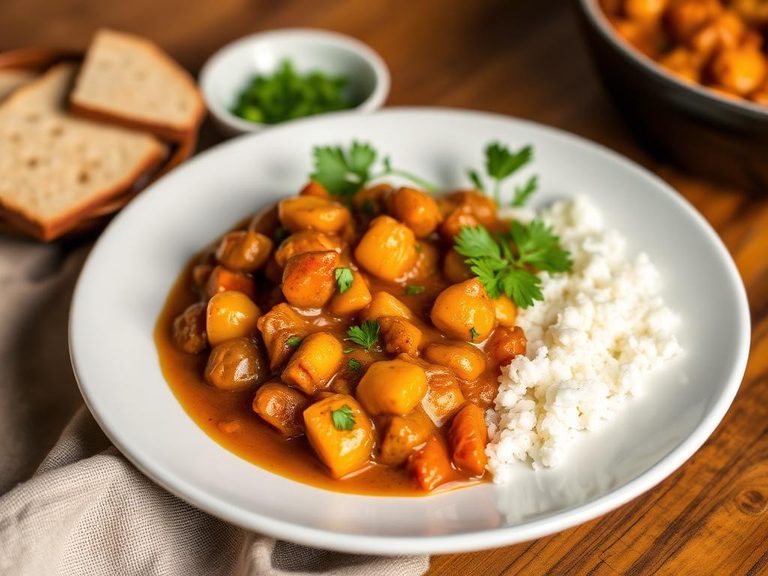
🍽️ Popular dishes
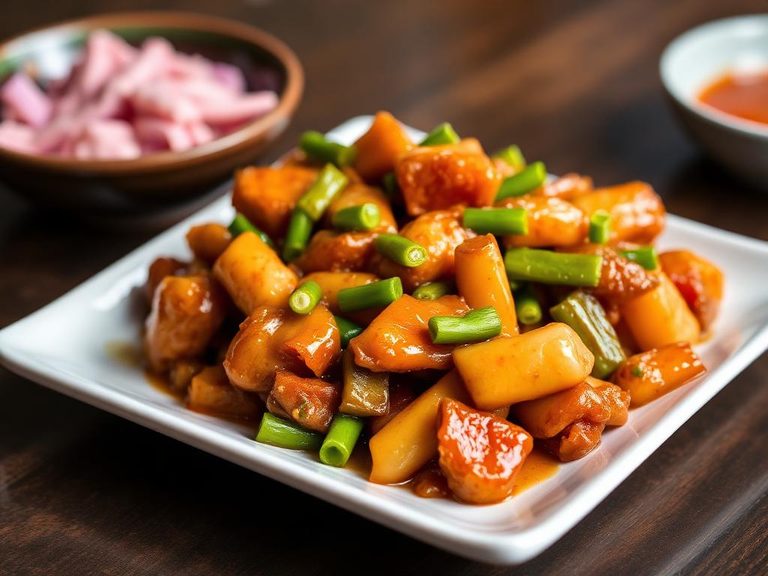
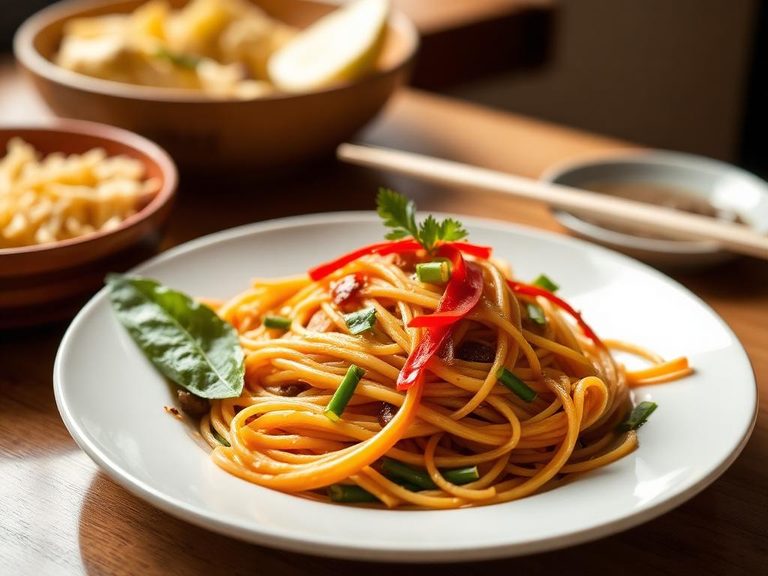

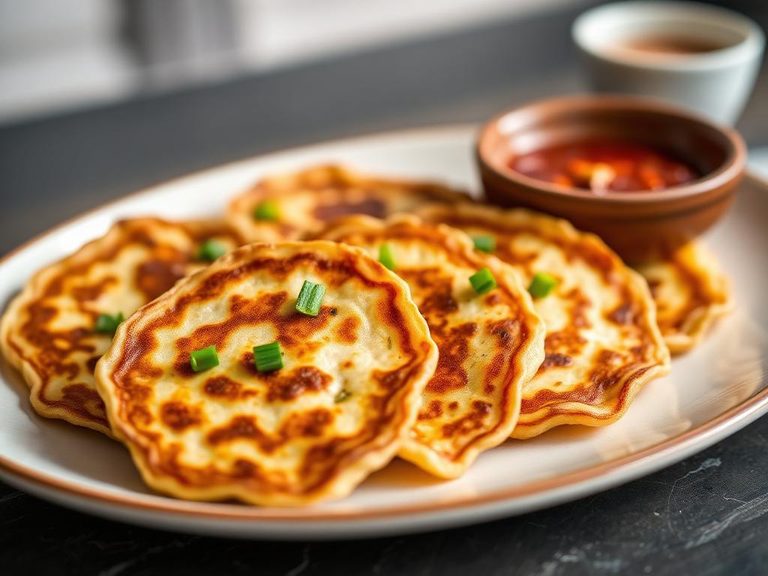

🌍 Where it's eaten
💡 Did you know?
During World War II, peanut oil was used as a substitute for mineral oil in U.S. machinery and even as a component in early synthetic rubber production.
Full nutrition (USDA data · scales with serving)
| Water | 0.00 g |
| Energy | 900 kcal |
| Protein | 0.00 g |
| Total lipid (fat) | 100 g |
| Carbohydrate, by difference | 0.00 g |
| Fiber, total dietary | 0.00 g |
| Total Sugars | 0.00 g |
| Calcium, Ca | 0.00 mg |
| Iron, Fe | 0.03 mg |
| Magnesium, Mg | 0.00 mg |
| Phosphorus, P | 0.00 mg |
| Potassium, K | 0.00 mg |
| Sodium, Na | 0.00 mg |
| Zinc, Zn | 0.01 mg |
| Copper, Cu | 0.00 mg |
| Selenium, Se | 0.00 ug |
| Vitamin C, total ascorbic acid | 0.00 mg |
| Thiamin | 0.00 mg |
| Riboflavin | 0.00 mg |
| Niacin | 0.00 mg |
| Vitamin B-6 | 0.00 mg |
| Folate, total | 0.00 ug |
| Folic acid | 0.00 ug |
| Folate, food | 0.00 ug |
| Folate, DFE | 0.00 ug |
| Choline, total | 0.10 mg |
| Vitamin B-12 | 0.00 ug |
| Vitamin B-12, added | 0.00 ug |
| Vitamin A, RAE | 0.00 ug |
| Retinol | 0.00 ug |
| Carotene, beta | 0.00 ug |
| Carotene, alpha | 0.00 ug |
| Cryptoxanthin, beta | 0.00 ug |
| Lycopene | 0.00 ug |
| Lutein + zeaxanthin | 0.00 ug |
| Vitamin E (alpha-tocopherol) | 15.2 mg |
| Vitamin E, added | 0.00 mg |
| Vitamin D (D2 + D3) | 0.00 ug |
| Vitamin K (phylloquinone) | 4.3 ug |
| Alcohol, ethyl | 0.00 g |
| Caffeine | 0.00 mg |
| Theobromine | 0.00 mg |
Fat & fatty acid profile (per 100g)
| Fatty acids, total saturated | 16.2 g |
| SFA 4:0 | 0.00 g |
| SFA 6:0 | 0.00 g |
| SFA 8:0 | 0.00 g |
| SFA 10:0 | 0.01 g |
| SFA 12:0 | 0.02 g |
| SFA 14:0 | 0.04 g |
| SFA 16:0 | 8.3 g |
| SFA 18:0 | 2.6 g |
| Fatty acids, total monounsaturated | 57.1 g |
| MUFA 16:1 | 0.07 g |
| MUFA 18:1 | 55.5 g |
| MUFA 20:1 | 1.4 g |
| MUFA 22:1 | 0.14 g |
| Fatty acids, total polyunsaturated | 19.9 g |
| PUFA 18:2 | 19.7 g |
| PUFA 18:3 | 0.32 g |
| PUFA 18:4 | 0.00 g |
| PUFA 20:4 | 0.00 g |
| PUFA 20:5 n-3 (EPA) | 0.00 g |
| PUFA 22:5 n-3 (DPA) | 0.00 g |
| PUFA 22:6 n-3 (DHA) | 0.00 g |
| Cholesterol | 0.00 mg |
Amino acid profile (per 100g)
Estimated from Nuts, mixed nuts, oil roasted, with peanuts, with salt added — USDA does not publish this profile for Peanut oil.
| Tryptophan | 0.22 g |
| Threonine | 0.70 g |
| Isoleucine | 0.83 g |
| Leucine | 1.7 g |
| Lysine | 0.78 g |
| Methionine | 0.28 g |
| Cystine | 0.29 g |
| Phenylalanine | 1.2 g |
| Tyrosine | 0.79 g |
| Valine | 1.0 g |
| Arginine | 3.0 g |
| Histidine | 0.57 g |
| Alanine | 0.98 g |
| Aspartic acid | 2.9 g |
| Glutamic acid | 5.6 g |
| Glycine | 1.4 g |
| Proline | 0.96 g |
| Serine | 1.2 g |
FAQ
What's the difference between refined and unrefined peanut oil?
Refined peanut oil has a higher smoke point (around 230°C/446°F), a milder flavor, and is better for high-heat cooking. Unrefined (or 'cold-pressed') has a stronger peanut aroma and flavor but a lower smoke point, making it better for dressings or low-heat sautéing.
Is peanut oil safe for people with peanut allergies?
Highly refined peanut oil is often considered safe for most with peanut allergies because the refining process removes the allergenic proteins. However, unrefined or cold-pressed oils retain proteins and pose a risk. Always consult a doctor and check labels.
How should I store peanut oil to prevent it from going rancid?
Store it in a cool, dark place like a pantry. Once opened, keeping it in the refrigerator can extend its shelf life significantly, though it may become cloudy and need to be warmed to room temperature before use.
Nutrient density (calculated · NRF9.3)
Nutrient Rich Foods index: beneficial nutrients (protein, fiber, vitamins, minerals) minus saturated fat, added sugar & sodium, per 100 kcal.
NRF9.3 index — Fulgoni, Keast & Drewnowski, 2009. Computed from USDA nutrients.
Weight-loss friendliness (composite index)
Energy density 9.00 kcal/g · 0% calories from protein · 0.0 g fiber · 0.0 g sugar per 100 g.
Composite of energy density (Rolls et al., 1999), protein & fiber satiety, minus sugar. A calculated heuristic — ranks satiety-per-calorie, not a clinical measure.
Dietary load (calculated from USDA values)
Potential renal acid load. Positive = acid-forming, negative = alkaline-forming.
Sodium:potassium per WHO potassium guidance. Computed from USDA nutrients.