

Peanut butter, lower sodium and lower sugar
Common food

Photo: Wikipedia
This is a creamy, reduced-sodium and reduced-sugar peanut butter, offering the classic nutty, roasted flavor with a slightly less sweet and salty profile. Its texture is typically smooth and spreadable, with a rich, fatty mouthfeel. Nutritionally, it's a powerhouse of plant-based protein and healthy fats, with a notable fiber content.
Calorie split: 15% protein · 11% carbs · 74% fat
↓ Full nutrition💚 Why it's loved
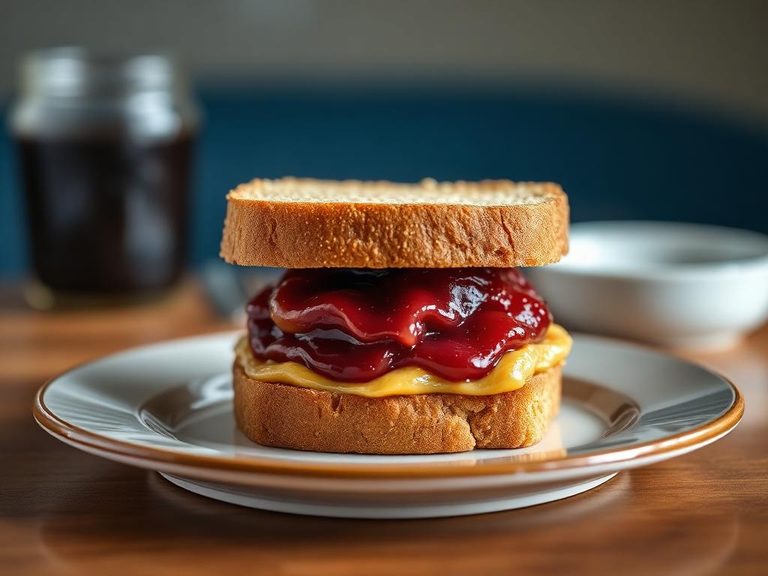
People adore its rich, savory-sweet depth and incredible versatility, using it as a staple in everything from sandwiches to sauces. It's a beloved comfort food with deep cultural roots in American cuisine, often evoking nostalgia.
⚠️ Watch-outs & how to enjoy it better
As a common allergen, it must be strictly avoided by those with peanut allergies. Its high calorie density (624 kcal/100g) requires mindful portion control. The reduced sugar and sodium may still be a concern for some, and the oxalates present can be an issue for individuals prone to kidney stones. To counteract, pair it with high-fiber foods like celery or apple slices, and strictly measure portions (e.g., 2 tablespoons).
Key benefits
- Excellent source of plant-based protein (23.5g per 100g)
- High in heart-healthy monounsaturated fats
- Good source of dietary fiber (6.4g per 100g)
- Lower sodium content than traditional varieties
- Contains reduced added sugar
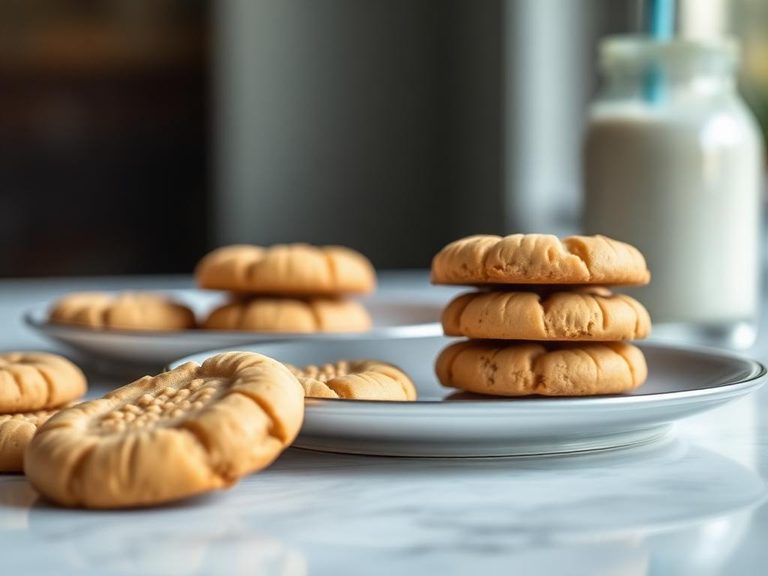
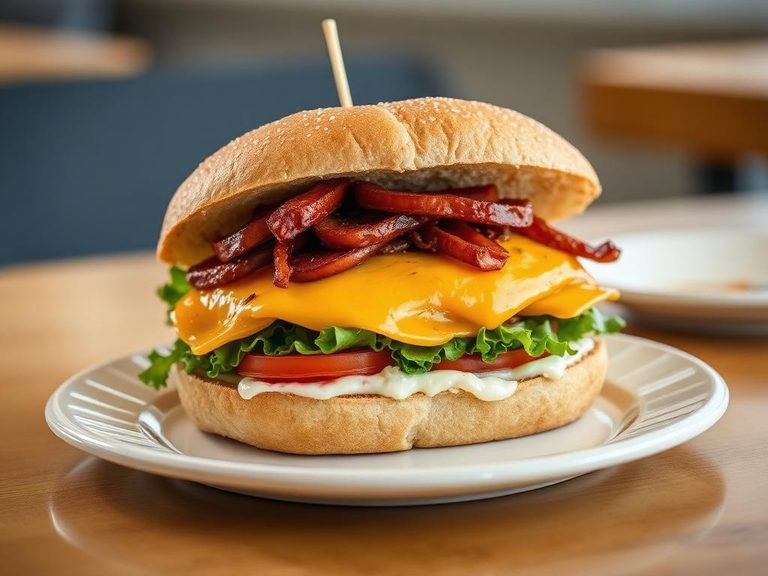
🍽️ Popular dishes
🌍 Where it's eaten
💡 Did you know?
It takes approximately 540 peanuts to make one standard 12-ounce jar of peanut butter.
Full nutrition (USDA data · scales with serving)
| Water | 1.6 g |
| Energy | 624 kcal |
| Protein | 23.5 g |
| Total lipid (fat) | 53.1 g |
| Carbohydrate, by difference | 18.3 g |
| Fiber, total dietary | 6.4 g |
| Total Sugars | 8.4 g |
| Calcium, Ca | 60.0 mg |
| Iron, Fe | 2.3 mg |
| Magnesium, Mg | 166 mg |
| Phosphorus, P | 342 mg |
| Potassium, K | 688 mg |
| Sodium, Na | 154 mg |
| Zinc, Zn | 3.0 mg |
| Copper, Cu | 0.59 mg |
| Selenium, Se | 6.6 ug |
| Vitamin C, total ascorbic acid | 0.00 mg |
| Thiamin | 0.13 mg |
| Riboflavin | 0.16 mg |
| Niacin | 14.7 mg |
| Vitamin B-6 | 0.46 mg |
| Folate, total | 116 ug |
| Folic acid | 0.00 ug |
| Folate, food | 116 ug |
| Folate, DFE | 116 ug |
| Choline, total | 65.2 mg |
| Vitamin B-12 | 0.00 ug |
| Vitamin B-12, added | 0.00 ug |
| Vitamin A, RAE | 0.00 ug |
| Retinol | 0.00 ug |
| Carotene, beta | 0.00 ug |
| Carotene, alpha | 0.00 ug |
| Cryptoxanthin, beta | 0.00 ug |
| Lycopene | 0.00 ug |
| Lutein + zeaxanthin | 0.00 ug |
| Vitamin E (alpha-tocopherol) | 8.6 mg |
| Vitamin E, added | 0.00 mg |
| Vitamin D (D2 + D3) | 0.00 ug |
| Vitamin K (phylloquinone) | 0.40 ug |
| Alcohol, ethyl | 0.00 g |
| Caffeine | 0.00 mg |
| Theobromine | 0.00 mg |
Fat & fatty acid profile (per 100g)
| Fatty acids, total saturated | 10.3 g |
| SFA 4:0 | 0.00 g |
| SFA 6:0 | 0.00 g |
| SFA 8:0 | 0.00 g |
| SFA 10:0 | 0.00 g |
| SFA 12:0 | 0.10 g |
| SFA 14:0 | 0.04 g |
| SFA 16:0 | 5.9 g |
| SFA 18:0 | 1.5 g |
| Fatty acids, total monounsaturated | 26.5 g |
| MUFA 16:1 | 0.01 g |
| MUFA 18:1 | 25.4 g |
| MUFA 20:1 | 0.75 g |
| MUFA 22:1 | 0.02 g |
| Fatty acids, total polyunsaturated | 14.4 g |
| PUFA 18:2 | 14.2 g |
| PUFA 18:3 | 0.06 g |
| PUFA 18:4 | 0.00 g |
| PUFA 20:4 | 0.01 g |
| PUFA 20:5 n-3 (EPA) | 0.00 g |
| PUFA 22:5 n-3 (DPA) | 0.00 g |
| PUFA 22:6 n-3 (DHA) | 0.00 g |
| Cholesterol | 0.00 mg |
Amino acid profile (per 100g)
Estimated from Cookies, peanut butter, refrigerated dough, baked — USDA does not publish this profile for Peanut butter.
| Tryptophan | 0.11 g |
| Threonine | 0.30 g |
| Isoleucine | 0.36 g |
| Leucine | 0.63 g |
| Lysine | 0.37 g |
| Methionine | 0.14 g |
| Cystine | 0.16 g |
| Phenylalanine | 0.45 g |
| Tyrosine | 0.32 g |
| Valine | 0.41 g |
| Arginine | 0.69 g |
| Histidine | 0.21 g |
| Alanine | 0.35 g |
| Aspartic acid | 0.77 g |
| Glutamic acid | 2.2 g |
| Glycine | 0.41 g |
| Proline | 0.64 g |
| Serine | 0.49 g |
FAQ
Is lower-sugar peanut butter still healthy?
Yes, it retains the core benefits of peanuts—protein, healthy fats, and fiber—while reducing added sugars. The key is to check the ingredient list for minimal additives and to practice portion control due to its calorie density.
How does the reduced sodium affect the taste?
The flavor is less salty and may taste more purely of roasted peanuts. Some find it milder, which can be preferable for cooking where other salty ingredients are added, or for those monitoring sodium intake.
Can I use this in baking?
Absolutely. It works well in cookies, brownies, and energy balls. Note that the reduced sugar may slightly alter the sweetness and browning in baked goods, so you might need to adjust other sweeteners in the recipe.
Nutrient density (calculated · NRF9.3)
Nutrient Rich Foods index: beneficial nutrients (protein, fiber, vitamins, minerals) minus saturated fat, added sugar & sodium, per 100 kcal.
NRF9.3 index — Fulgoni, Keast & Drewnowski, 2009. Computed from USDA nutrients.
Weight-loss friendliness (composite index)
Energy density 6.24 kcal/g · 15% calories from protein · 6.4 g fiber · 8.4 g sugar per 100 g.
Composite of energy density (Rolls et al., 1999), protein & fiber satiety, minus sugar. A calculated heuristic — ranks satiety-per-calorie, not a clinical measure.
Dietary load (calculated from USDA values)
Potential renal acid load. Positive = acid-forming, negative = alkaline-forming.
Sodium-to-potassium ratio: 0.22 (lower is better — aim for ≤ 1)
Sodium:potassium per WHO potassium guidance. Computed from USDA nutrients.