

Peanut butter, lower sugar
Common food

Photo: Wikipedia
Lower-sugar peanut butter delivers the classic, deeply roasted peanut flavor and thick, creamy (or crunchy) texture with significantly less added sweetener. It is a powerhouse of healthy monounsaturated fats and plant-based protein, offering a more savory, nut-forward profile than its sweeter counterparts. This makes it a staple for those seeking a nutrient-dense, satisfying spread without the typical sugar crash.
Calorie split: 15% protein · 9% carbs · 76% fat
↓ Full nutrition💚 Why it's loved
People love it for its intense, pure peanut flavor and satisfying, rich texture that feels indulgent without the guilt of excess sugar. Its versatility makes it a go-to for everything from quick snacks to complex sauces, deeply embedded in both American and global comfort food culture.
⚠️ Watch-outs & how to enjoy it better
The high fat and calorie density (650 kcal per 100g) means portion control is crucial for weight management. As a common allergen, it poses a risk for those with peanut sensitivities. To counteract this, pair a measured tablespoon with high-fiber foods like apple slices or celery, and always check labels for added hydrogenated oils or excessive sodium.
Key benefits
- High in heart-healthy monounsaturated fats
- Excellent source of plant-based protein (24.8g per 100g)
- Rich in fiber for satiety and digestive health
- Lower glycemic impact than regular peanut butter
- Provides essential minerals like magnesium and potassium
🍽️ Popular dishes
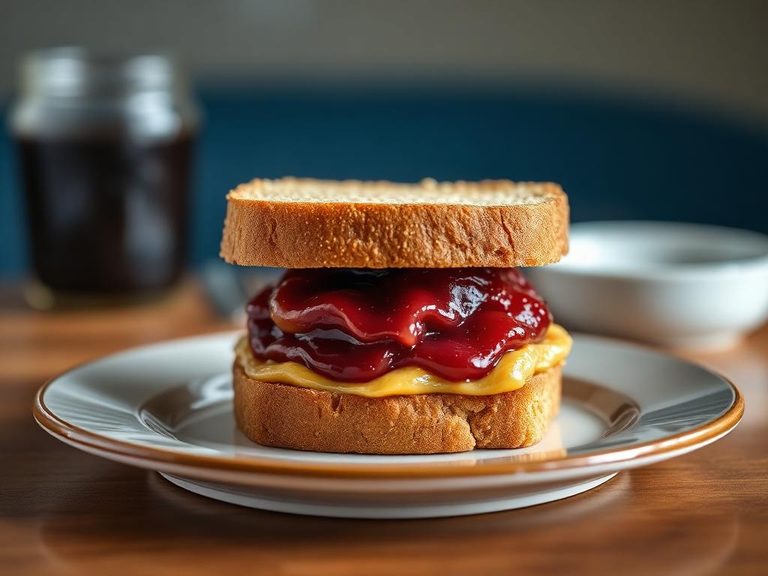
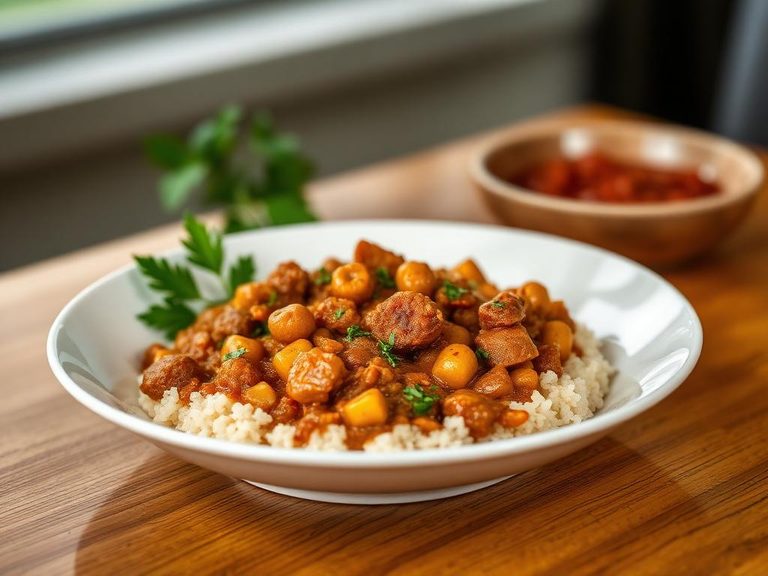
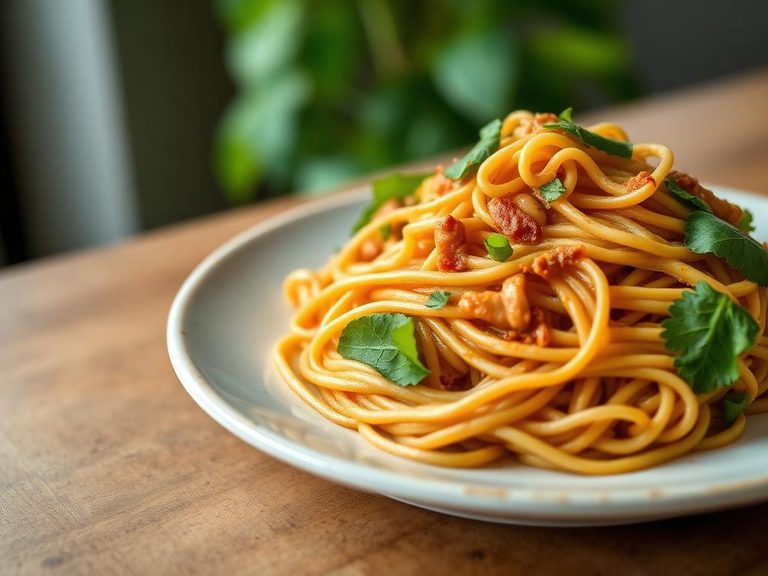
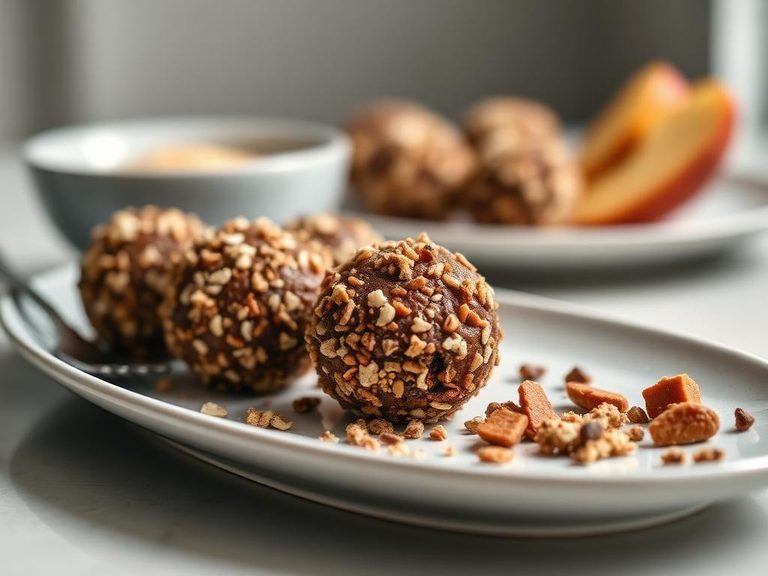
🌍 Where it's eaten
💡 Did you know?
It takes about 540 peanuts to make a single 12-ounce (340g) jar of peanut butter.
Full nutrition (USDA data · scales with serving)
| Water | 1.9 g |
| Energy | 650 kcal |
| Protein | 24.8 g |
| Total lipid (fat) | 54.9 g |
| Carbohydrate, by difference | 14.2 g |
| Fiber, total dietary | 7.8 g |
| Total Sugars | 6.3 g |
| Calcium, Ca | 72.0 mg |
| Iron, Fe | 2.8 mg |
| Magnesium, Mg | 164 mg |
| Phosphorus, P | 350 mg |
| Potassium, K | 818 mg |
| Sodium, Na | 292 mg |
| Zinc, Zn | 3.5 mg |
| Copper, Cu | 0.76 mg |
| Selenium, Se | 9.1 ug |
| Vitamin C, total ascorbic acid | 0.00 mg |
| Thiamin | 0.12 mg |
| Riboflavin | 0.12 mg |
| Niacin | 16.4 mg |
| Vitamin B-6 | 0.47 mg |
| Folate, total | 144 ug |
| Folic acid | 0.00 ug |
| Folate, food | 144 ug |
| Folate, DFE | 144 ug |
| Choline, total | 67.4 mg |
| Vitamin B-12 | 0.00 ug |
| Vitamin B-12, added | 0.00 ug |
| Vitamin A, RAE | 0.00 ug |
| Retinol | 0.00 ug |
| Carotene, beta | 0.00 ug |
| Carotene, alpha | 0.00 ug |
| Cryptoxanthin, beta | 0.00 ug |
| Lycopene | 0.00 ug |
| Lutein + zeaxanthin | 0.00 ug |
| Vitamin E (alpha-tocopherol) | 8.1 mg |
| Vitamin E, added | 0.00 mg |
| Vitamin D (D2 + D3) | 0.00 ug |
| Vitamin K (phylloquinone) | 0.60 ug |
| Alcohol, ethyl | 0.00 g |
| Caffeine | 0.00 mg |
| Theobromine | 0.00 mg |
Fat & fatty acid profile (per 100g)
| Fatty acids, total saturated | 10.2 g |
| SFA 4:0 | 0.00 g |
| SFA 6:0 | 0.00 g |
| SFA 8:0 | 0.00 g |
| SFA 10:0 | 0.00 g |
| SFA 12:0 | 0.21 g |
| SFA 14:0 | 0.06 g |
| SFA 16:0 | 7.1 g |
| SFA 18:0 | 0.80 g |
| Fatty acids, total monounsaturated | 27.0 g |
| MUFA 16:1 | 0.00 g |
| MUFA 18:1 | 26.1 g |
| MUFA 20:1 | 0.92 g |
| MUFA 22:1 | 0.00 g |
| Fatty acids, total polyunsaturated | 16.3 g |
| PUFA 18:2 | 16.2 g |
| PUFA 18:3 | 0.09 g |
| PUFA 18:4 | 0.00 g |
| PUFA 20:4 | 0.00 g |
| PUFA 20:5 n-3 (EPA) | 0.00 g |
| PUFA 22:5 n-3 (DPA) | 0.00 g |
| PUFA 22:6 n-3 (DHA) | 0.00 g |
| Cholesterol | 0.00 mg |
Amino acid profile (per 100g)
Estimated from Cookies, peanut butter, refrigerated dough, baked — USDA does not publish this profile for Peanut butter.
| Tryptophan | 0.11 g |
| Threonine | 0.30 g |
| Isoleucine | 0.36 g |
| Leucine | 0.63 g |
| Lysine | 0.37 g |
| Methionine | 0.14 g |
| Cystine | 0.16 g |
| Phenylalanine | 0.45 g |
| Tyrosine | 0.32 g |
| Valine | 0.41 g |
| Arginine | 0.69 g |
| Histidine | 0.21 g |
| Alanine | 0.35 g |
| Aspartic acid | 0.77 g |
| Glutamic acid | 2.2 g |
| Glycine | 0.41 g |
| Proline | 0.64 g |
| Serine | 0.49 g |
FAQ
How does lower-sugar peanut butter differ from regular?
Lower-sugar varieties have significantly less added sugar (often 6.35g per 100g vs. 10-15g), resulting in a more savory, nutty taste and a lower glycemic load.
Is it suitable for a low-carb or keto diet?
Yes, it's an excellent fit due to its very low net carb count (about 6.4g per 100g after subtracting fiber) and high fat content.
Why does the oil separate in natural peanut butter?
The oil (peanut oil) naturally separates from the solid peanut paste. Simply stir it back in before use; it's a sign of minimal processing and no added stabilizers.
Nutrient density (calculated · NRF9.3)
Nutrient Rich Foods index: beneficial nutrients (protein, fiber, vitamins, minerals) minus saturated fat, added sugar & sodium, per 100 kcal.
NRF9.3 index — Fulgoni, Keast & Drewnowski, 2009. Computed from USDA nutrients.
Weight-loss friendliness (composite index)
Energy density 6.50 kcal/g · 15% calories from protein · 7.8 g fiber · 6.3 g sugar per 100 g.
Composite of energy density (Rolls et al., 1999), protein & fiber satiety, minus sugar. A calculated heuristic — ranks satiety-per-calorie, not a clinical measure.
Dietary load (calculated from USDA values)
Potential renal acid load. Positive = acid-forming, negative = alkaline-forming.
Sodium-to-potassium ratio: 0.36 (lower is better — aim for ≤ 1)
Sodium:potassium per WHO potassium guidance. Computed from USDA nutrients.