

Pastry, puff
Common food

Photo: Wikipedia
Puff pastry is a light, flaky, and buttery dough made by laminating butter into dough through repeated folding and rolling, creating hundreds of thin layers. When baked, it puffs up dramatically, resulting in a crisp, golden exterior and a tender, airy interior. Nutritionally, it is a calorie-dense food, primarily providing energy from fats and refined carbohydrates, with minimal protein or fiber.
Calorie split: 5% protein · 33% carbs · 62% fat
↓ Full nutrition💚 Why it's loved
People adore puff pastry for its irresistible combination of shattering crispness and buttery richness, which elevates both humble and fancy dishes. Its versatility allows it to be the star of everything from a simple jam tart to an elegant beef Wellington, making it a beloved staple in bakeries and home kitchens worldwide.
⚠️ Watch-outs & how to enjoy it better
Puff pastry is very high in saturated fat and refined carbs, which can contribute to blood-sugar spikes and isn't ideal for those monitoring cholesterol or calorie intake. To enjoy it more healthily, practice strict portion control, pair it with protein-rich fillings (like lean meats or legumes) or fiber-dense vegetables to slow digestion, and opt for baked rather than fried preparations.
Key benefits
- Provides a quick source of energy from carbohydrates and fats.
- Versatile base for both sweet and savory culinary applications.
- Contains small amounts of protein and iron from wheat flour.
- The lamination process creates a satisfying, multi-textured eating experience.
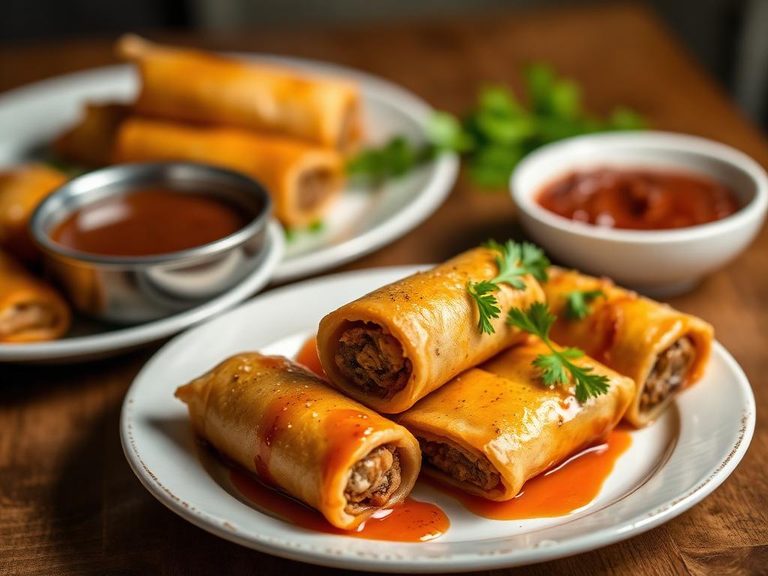
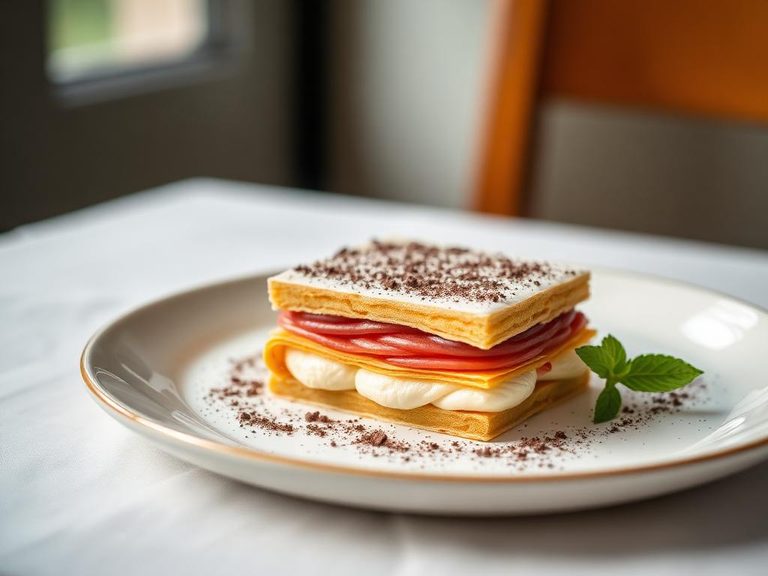
🍽️ Popular dishes
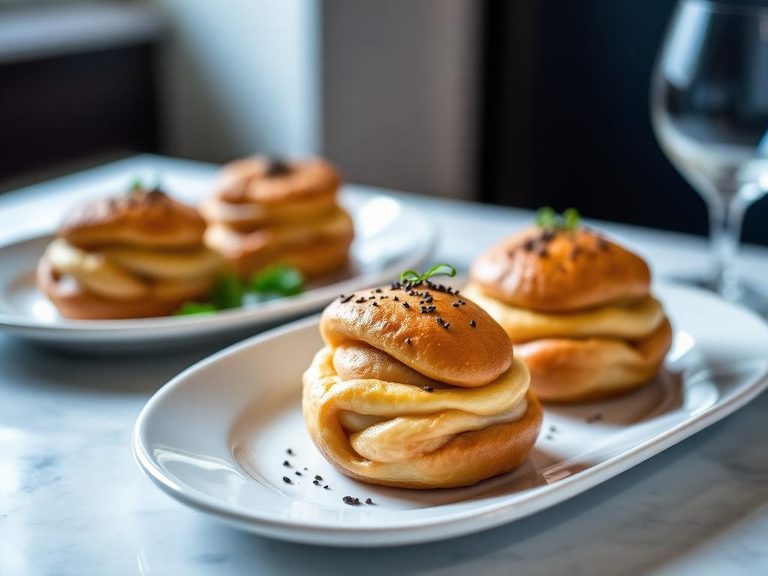
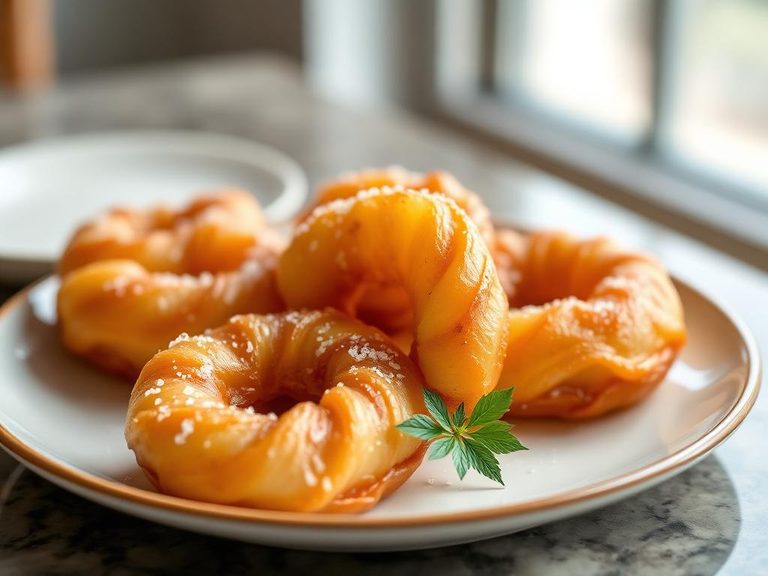
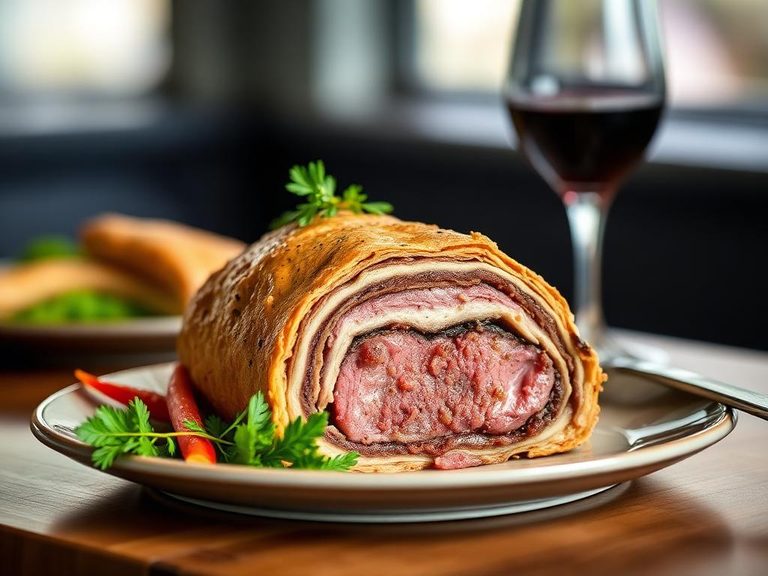
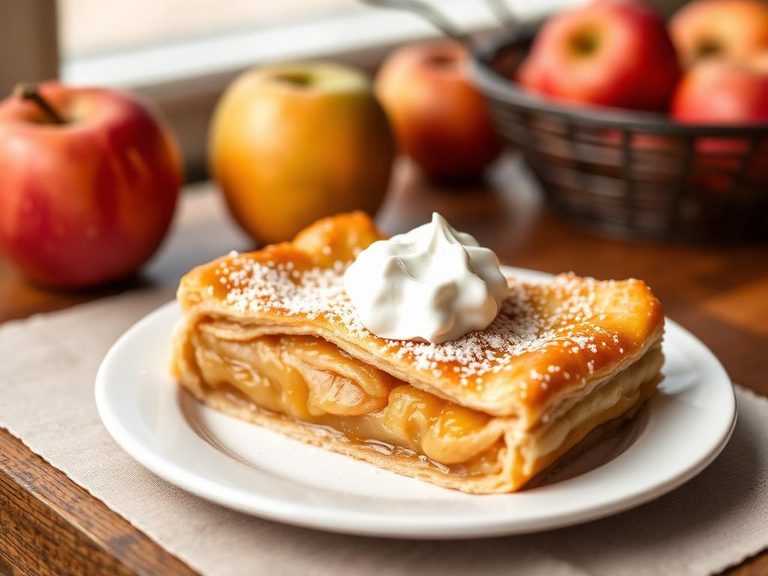
🌍 Where it's eaten
💡 Did you know?
The creation of modern puff pastry is credited to a French chef's apprentice in the 19th century who, as the story goes, accidentally folded butter into dough 729 times to create the perfect layers.
Full nutrition (USDA data · scales with serving)
| Water | 7.4 g |
| Energy | 558 kcal |
| Protein | 7.4 g |
| Total lipid (fat) | 38.5 g |
| Carbohydrate, by difference | 45.7 g |
| Fiber, total dietary | 1.5 g |
| Total Sugars | 0.75 g |
| Calcium, Ca | 10.0 mg |
| Iron, Fe | 2.6 mg |
| Magnesium, Mg | 16.0 mg |
| Phosphorus, P | 60.0 mg |
| Potassium, K | 62.0 mg |
| Sodium, Na | 253 mg |
| Zinc, Zn | 0.54 mg |
| Copper, Cu | 0.12 mg |
| Selenium, Se | 24.5 ug |
| Vitamin C, total ascorbic acid | 0.00 mg |
| Thiamin | 0.32 mg |
| Riboflavin | 0.26 mg |
| Niacin | 3.8 mg |
| Vitamin B-6 | 0.02 mg |
| Folate, total | 55.0 ug |
| Folic acid | 46.0 ug |
| Folate, food | 9.0 ug |
| Folate, DFE | 87.0 ug |
| Choline, total | 6.2 mg |
| Vitamin B-12 | 0.00 ug |
| Vitamin B-12, added | 0.00 ug |
| Vitamin A, RAE | 0.00 ug |
| Retinol | 0.00 ug |
| Carotene, beta | 0.00 ug |
| Carotene, alpha | 0.00 ug |
| Cryptoxanthin, beta | 0.00 ug |
| Lycopene | 0.00 ug |
| Lutein + zeaxanthin | 39.0 ug |
| Vitamin E (alpha-tocopherol) | 0.55 mg |
| Vitamin E, added | 0.00 mg |
| Vitamin D (D2 + D3) | 0.00 ug |
| Vitamin K (phylloquinone) | 16.3 ug |
| Alcohol, ethyl | 0.00 g |
| Caffeine | 0.00 mg |
| Theobromine | 0.00 mg |
Fat & fatty acid profile (per 100g)
| Fatty acids, total saturated | 5.5 g |
| SFA 4:0 | 0.00 g |
| SFA 6:0 | 0.00 g |
| SFA 8:0 | 0.00 g |
| SFA 10:0 | 0.00 g |
| SFA 12:0 | 0.00 g |
| SFA 14:0 | 0.04 g |
| SFA 16:0 | 4.0 g |
| SFA 18:0 | 1.4 g |
| Fatty acids, total monounsaturated | 8.8 g |
| MUFA 16:1 | 0.08 g |
| MUFA 18:1 | 8.7 g |
| MUFA 20:1 | 0.07 g |
| MUFA 22:1 | 0.00 g |
| Fatty acids, total polyunsaturated | 22.2 g |
| PUFA 18:2 | 19.6 g |
| PUFA 18:3 | 2.6 g |
| PUFA 18:4 | 0.00 g |
| PUFA 20:4 | 0.00 g |
| PUFA 20:5 n-3 (EPA) | 0.00 g |
| PUFA 22:5 n-3 (DPA) | 0.00 g |
| PUFA 22:6 n-3 (DHA) | 0.00 g |
| Cholesterol | 0.00 mg |
Amino acid profile (per 100g)
Estimated from Puff pastry, frozen, ready-to-bake, baked — USDA does not publish this profile for Pastry.
| Tryptophan | 0.09 g |
| Threonine | 0.20 g |
| Isoleucine | 0.28 g |
| Leucine | 0.51 g |
| Lysine | 0.14 g |
| Methionine | 0.13 g |
| Cystine | 0.17 g |
| Phenylalanine | 0.37 g |
| Tyrosine | 0.20 g |
| Valine | 0.31 g |
| Arginine | 0.26 g |
| Histidine | 0.16 g |
| Alanine | 0.23 g |
| Aspartic acid | 0.30 g |
| Glutamic acid | 2.6 g |
| Glycine | 0.26 g |
| Proline | 0.88 g |
| Serine | 0.36 g |
FAQ
What's the difference between puff pastry and phyllo dough?
Puff pastry is a laminated dough with butter folded into it, creating its own layers and leavening as it bakes. Phyllo is a paper-thin, unleavened dough that is brushed with butter or oil and layered, requiring many sheets to achieve a similar flaky effect.
Can I make puff pastry at home?
Yes, but it's a labor-intensive process that requires keeping the dough and butter cold while performing multiple folds and chills. For most home cooks, high-quality store-bought puff pastry is a practical and excellent alternative.
Why does my puff pastry not puff up properly?
The most common reasons are that the oven wasn't hot enough, the pastry was overworked and warmed up, or the layers were sealed by a wet filling. Ensure your oven is fully preheated and keep the dough chilled until it goes in.
Nutrient density (calculated · NRF9.3)
Nutrient Rich Foods index: beneficial nutrients (protein, fiber, vitamins, minerals) minus saturated fat, added sugar & sodium, per 100 kcal.
NRF9.3 index — Fulgoni, Keast & Drewnowski, 2009. Computed from USDA nutrients.
Weight-loss friendliness (composite index)
Energy density 5.58 kcal/g · 5% calories from protein · 1.5 g fiber · 0.8 g sugar per 100 g.
Composite of energy density (Rolls et al., 1999), protein & fiber satiety, minus sugar. A calculated heuristic — ranks satiety-per-calorie, not a clinical measure.
Dietary load (calculated from USDA values)
Potential renal acid load. Positive = acid-forming, negative = alkaline-forming.
Sodium-to-potassium ratio: 4.08 (lower is better — aim for ≤ 1)
Sodium:potassium per WHO potassium guidance. Computed from USDA nutrients.