

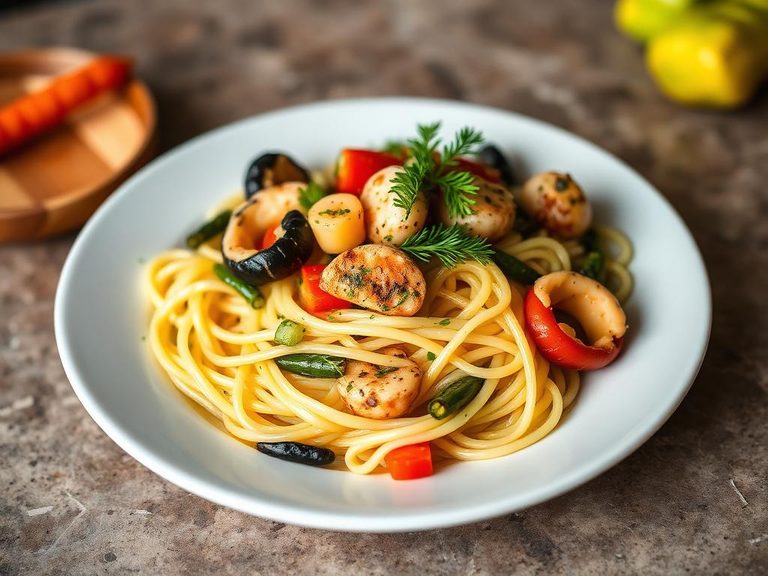
Pasta, whole grain, with cream sauce, seafood, and added vegetables, home recipe
Common food
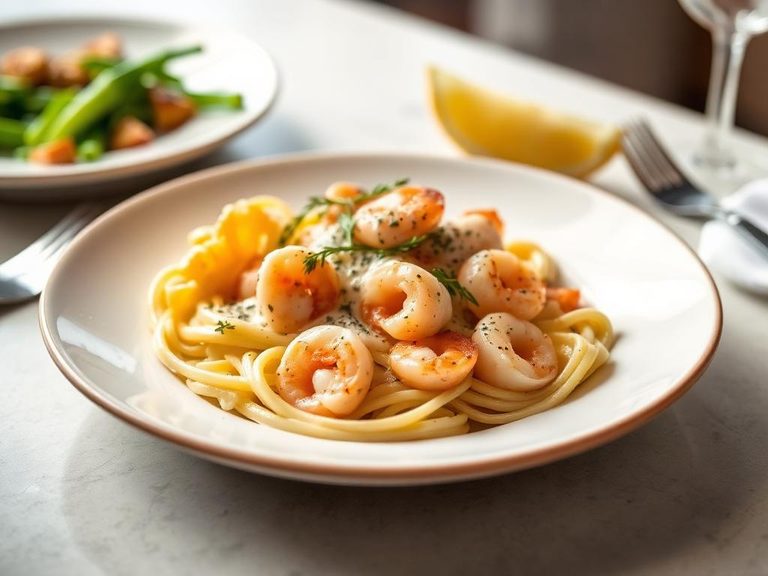
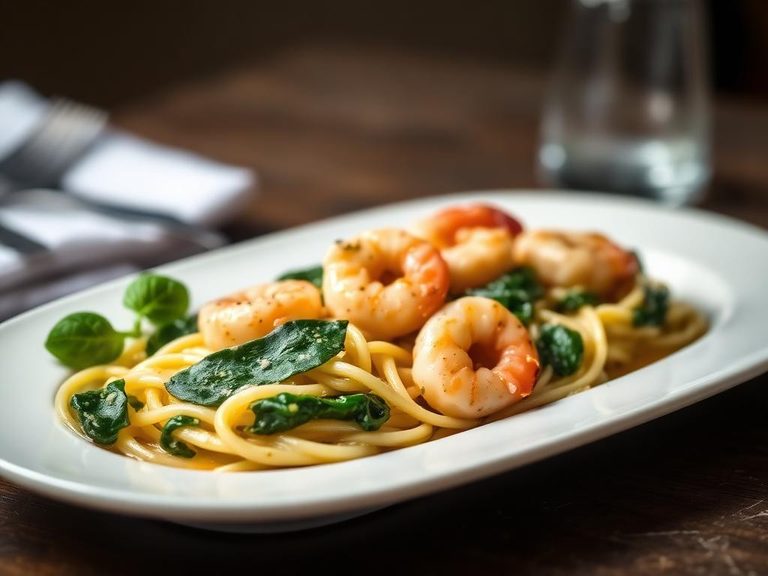
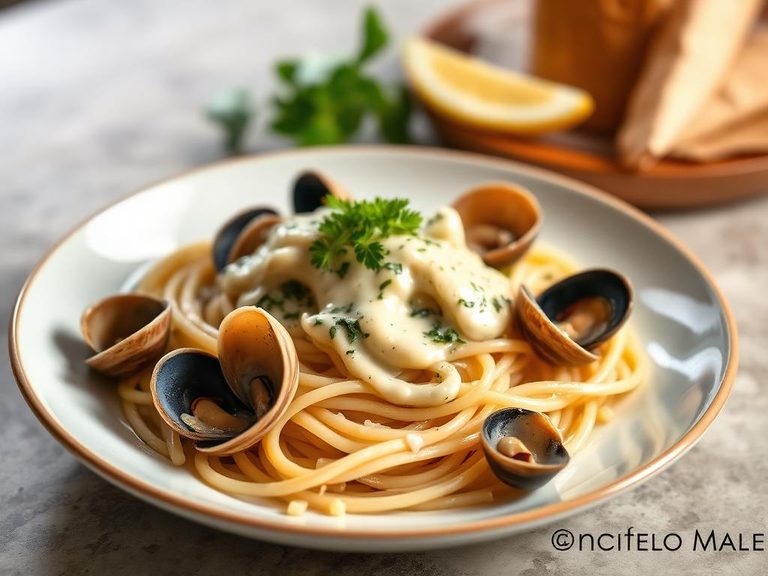
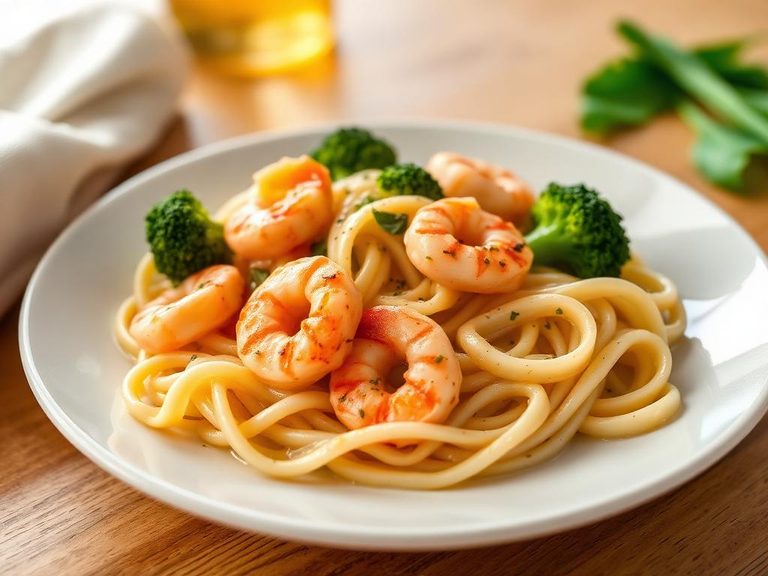
A comforting bowl of whole grain pasta tossed in a velvety cream sauce, brimming with tender seafood like shrimp or mussels and brightened by added vegetables such as spinach or bell peppers. The whole wheat pasta provides a satisfying, slightly nutty chew, while the cream sauce offers a rich, savory backdrop to the ocean-fresh flavors of the seafood. At just 136 kcal per 100g, it's a surprisingly light yet nutrient-dense option, offering a good balance of protein, complex carbs, and fiber.
Calorie split: 17% protein · 48% carbs · 35% fat
↓ Full nutrition💚 Why it's loved
People love this dish for its harmonious blend of textures—the al dente pasta, the creamy sauce, and the tender seafood—and its ability to feel both indulgent and wholesome. It's a versatile comfort food that bridges home cooking with restaurant-quality flavors, often evoking memories of coastal family meals or cozy weeknight dinners.
⚠️ Watch-outs & how to enjoy it better
The cream sauce can be high in saturated fat and calories if overused, and some individuals may be sensitive to dairy or shellfish allergens. To counteract this, opt for lighter cream alternatives like Greek yogurt or coconut milk, control portion sizes, and ensure seafood is fresh and properly cooked to avoid digestive issues. Pair with a side salad or steamed vegetables to add volume and nutrients without excess calories.
Key benefits
- Whole grain pasta provides sustained energy and dietary fiber for digestive health
- Seafood offers lean protein and omega-3 fatty acids for heart and brain health
- Added vegetables contribute vitamins, minerals, and antioxidants
- Cream sauce, when used in moderation, adds calcium and a satisfying richness
- Balanced macronutrient profile supports satiety and stable blood sugar levels
🍽️ Popular dishes
🌍 Where it's eaten
💡 Did you know?
The combination of seafood and cream sauce in pasta became popular in the United States during the 1980s, influenced by Italian-American cuisine and the rise of 'California cuisine' that blended European techniques with local ingredients.
Full nutrition (USDA data · scales with serving)
| Water | 70.6 g |
| Energy | 136 kcal |
| Protein | 5.9 g |
| Total lipid (fat) | 5.5 g |
| Carbohydrate, by difference | 16.9 g |
| Fiber, total dietary | 2.2 g |
| Total Sugars | 0.95 g |
| Calcium, Ca | 37.0 mg |
| Iron, Fe | 1.1 mg |
| Magnesium, Mg | 34.0 mg |
| Phosphorus, P | 110 mg |
| Potassium, K | 122 mg |
| Sodium, Na | 212 mg |
| Zinc, Zn | 0.94 mg |
| Copper, Cu | 0.15 mg |
| Selenium, Se | 24.7 ug |
| Vitamin C, total ascorbic acid | 4.4 mg |
| Thiamin | 0.09 mg |
| Riboflavin | 0.10 mg |
| Niacin | 1.9 mg |
| Vitamin B-6 | 0.07 mg |
| Folate, total | 15.0 ug |
| Folic acid | 0.00 ug |
| Folate, food | 15.0 ug |
| Folate, DFE | 15.0 ug |
| Choline, total | 14.9 mg |
| Vitamin B-12 | 0.90 ug |
| Vitamin B-12, added | 0.00 ug |
| Vitamin A, RAE | 51.0 ug |
| Retinol | 47.0 ug |
| Carotene, beta | 39.0 ug |
| Carotene, alpha | 1.0 ug |
| Cryptoxanthin, beta | 9.0 ug |
| Lycopene | 0.00 ug |
| Lutein + zeaxanthin | 96.0 ug |
| Vitamin E (alpha-tocopherol) | 0.35 mg |
| Vitamin E, added | 0.00 mg |
| Vitamin D (D2 + D3) | 0.20 ug |
| Vitamin K (phylloquinone) | 1.1 ug |
| Alcohol, ethyl | 0.00 g |
| Caffeine | 0.00 mg |
| Theobromine | 0.00 mg |
Fat & fatty acid profile (per 100g)
| Fatty acids, total saturated | 2.7 g |
| SFA 4:0 | 0.10 g |
| SFA 6:0 | 0.08 g |
| SFA 8:0 | 0.05 g |
| SFA 10:0 | 0.11 g |
| SFA 12:0 | 0.13 g |
| SFA 14:0 | 0.42 g |
| SFA 16:0 | 1.3 g |
| SFA 18:0 | 0.42 g |
| Fatty acids, total monounsaturated | 1.0 g |
| MUFA 16:1 | 0.08 g |
| MUFA 18:1 | 1.1 g |
| MUFA 20:1 | 0.01 g |
| MUFA 22:1 | 0.00 g |
| Fatty acids, total polyunsaturated | 0.54 g |
| PUFA 18:2 | 0.40 g |
| PUFA 18:3 | 0.04 g |
| PUFA 18:4 | 0.00 g |
| PUFA 20:4 | 0.01 g |
| PUFA 20:5 n-3 (EPA) | 0.02 g |
| PUFA 22:5 n-3 (DPA) | 0.01 g |
| PUFA 22:6 n-3 (DHA) | 0.02 g |
| Cholesterol | 27.0 mg |
Amino acid profile (per 100g)
Estimated from Restaurant, Italian, chicken parmesan without pasta — USDA does not publish this profile for Pasta.
| Tryptophan | 0.20 g |
| Threonine | 0.66 g |
| Isoleucine | 0.72 g |
| Leucine | 1.3 g |
| Lysine | 1.3 g |
| Methionine | 0.41 g |
| Cystine | 0.20 g |
| Phenylalanine | 1.1 g |
| Tyrosine | 0.53 g |
| Valine | 0.81 g |
| Arginine | 0.93 g |
| Histidine | 0.50 g |
| Alanine | 0.79 g |
| Aspartic acid | 1.4 g |
| Glutamic acid | 2.8 g |
| Glycine | 0.61 g |
| Proline | 1.3 g |
| Serine | 0.70 g |
| Hydroxyproline | 0.04 g |
FAQ
Is this dish suitable for a low-carb diet?
Not typically, as whole grain pasta is a significant source of carbohydrates. However, you can reduce the pasta portion and increase the seafood and vegetables to lower the carb content while maintaining flavor and nutrition.
Can I make this dish dairy-free?
Yes, you can substitute the cream sauce with coconut milk, cashew cream, or a dairy-free yogurt base. Ensure the seafood is cooked separately and added to the sauce to maintain texture and flavor.
What are the best vegetables to add to this pasta?
Spinach, bell peppers, cherry tomatoes, broccoli, and zucchini are excellent choices. They add color, nutrients, and texture without overpowering the seafood and cream sauce.
Nutrient density (calculated · NRF9.3)
Nutrient Rich Foods index: beneficial nutrients (protein, fiber, vitamins, minerals) minus saturated fat, added sugar & sodium, per 100 kcal.
NRF9.3 index — Fulgoni, Keast & Drewnowski, 2009. Computed from USDA nutrients.
Weight-loss friendliness (composite index)
Energy density 1.36 kcal/g · 17% calories from protein · 2.2 g fiber · 0.9 g sugar per 100 g.
Composite of energy density (Rolls et al., 1999), protein & fiber satiety, minus sugar. A calculated heuristic — ranks satiety-per-calorie, not a clinical measure.
Dietary load (calculated from USDA values)
Potential renal acid load. Positive = acid-forming, negative = alkaline-forming.
Sodium-to-potassium ratio: 1.74 (lower is better — aim for ≤ 1)
Sodium:potassium per WHO potassium guidance. Computed from USDA nutrients.