

Papad, grilled or broiled
Common food

Photo: Wikipedia
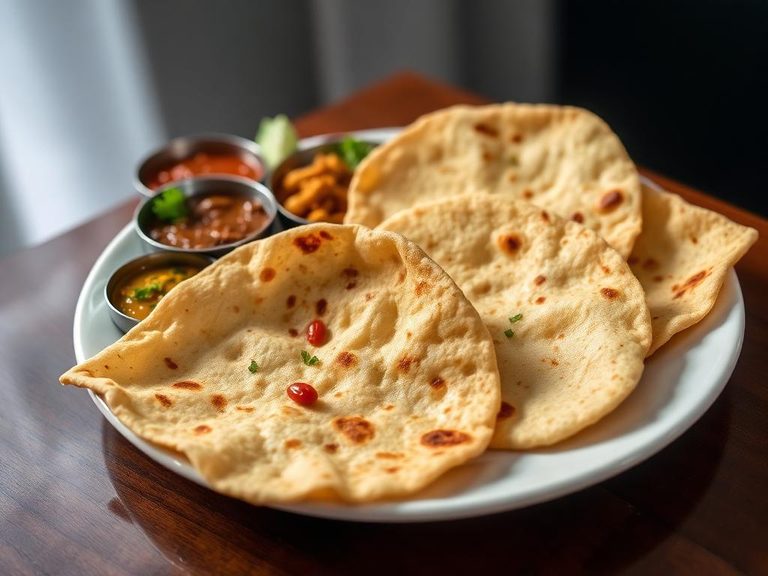
Papad, also known as papadum, is a thin, crisp disc-shaped food typically made from seasoned dough (usually of peeled black gram flour). When grilled or broiled, it puffs up dramatically, developing a light, airy, and shatteringly crisp texture with a savory, often spicy or earthy flavor. Nutritionally, it's a standout for its high protein and exceptionally high fiber content relative to its calorie count.
Calorie split: 28% protein · 65% carbs · 8% fat
↓ Full nutrition💚 Why it's loved
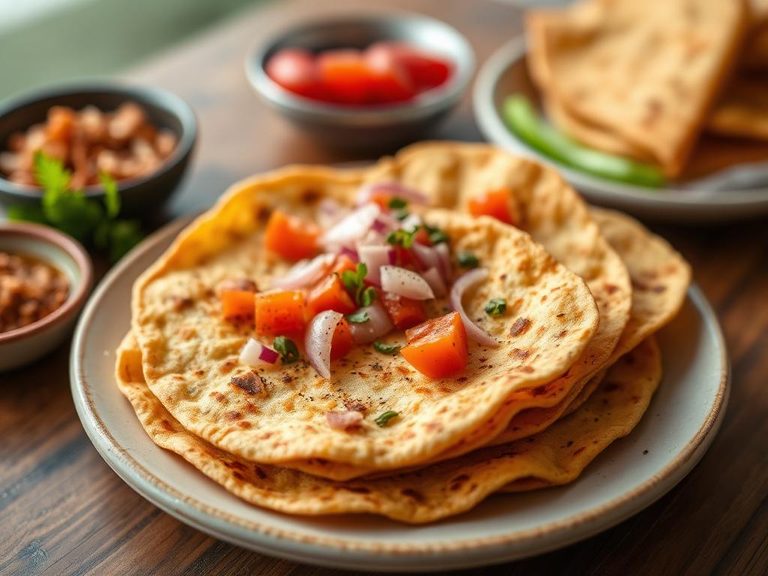
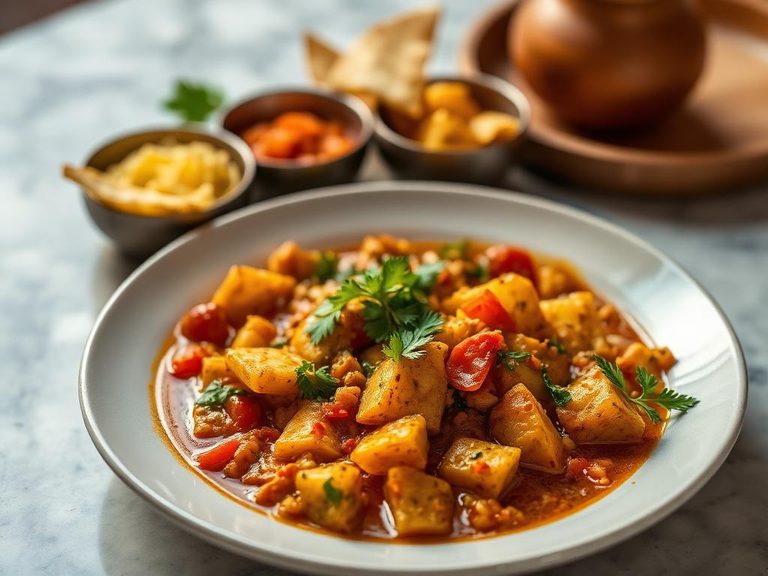
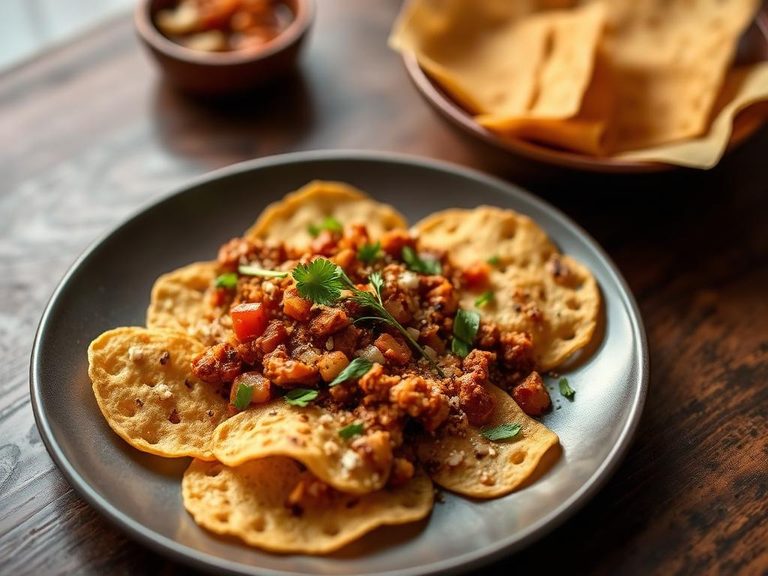
People adore papad for its incredible textural contrast—a light, crispy vessel for bold flavors. It's a beloved, versatile accompaniment in Indian meals, serving as a crunchy palate cleanser, a scoop for chutneys, or a base for creative toppings.
⚠️ Watch-outs & how to enjoy it better
Papad can be high in sodium, and some varieties may contain added preservatives or be made with refined flours. The high fiber, while beneficial, can cause digestive discomfort for some if consumed in large quantities. To mitigate, choose low-sodium versions, pair with plenty of water, and enjoy as part of a balanced meal with proteins and vegetables.
Key benefits
- High in plant-based protein (25.56g per 100g).
- Excellent source of dietary fiber (18.6g per 100g).
- Very low in fat (3.25g per 100g).
- Provides a satisfying crunch with minimal calories.
- Can be a good source of minerals like iron and folate from its lentil base.
🍽️ Popular dishes
🌍 Where it's eaten
💡 Did you know?
The dramatic puffing of papad during cooking is due to the rapid vaporization of moisture in the dough, creating a steam-filled pocket that inflates the disc in seconds.
Full nutrition (USDA data · scales with serving)
| Water | 3.5 g |
| Energy | 371 kcal |
| Protein | 25.6 g |
| Total lipid (fat) | 3.3 g |
| Carbohydrate, by difference | 59.9 g |
| Fiber, total dietary | 18.6 g |
| Total Sugars | 0.00 g |
| Calcium, Ca | 143 mg |
| Iron, Fe | 7.8 mg |
| Magnesium, Mg | 271 mg |
| Phosphorus, P | 385 mg |
| Potassium, K | 1000 mg |
| Sodium, Na | 1745 mg |
| Zinc, Zn | 3.4 mg |
| Copper, Cu | 1.00 mg |
| Selenium, Se | 8.3 ug |
| Vitamin C, total ascorbic acid | 0.00 mg |
| Thiamin | 0.28 mg |
| Riboflavin | 0.26 mg |
| Niacin | 1.5 mg |
| Vitamin B-6 | 0.28 mg |
| Folate, total | 219 ug |
| Folic acid | 0.00 ug |
| Folate, food | 219 ug |
| Folate, DFE | 219 ug |
| Choline, total | 0.40 mg |
| Vitamin B-12 | 0.00 ug |
| Vitamin B-12, added | 0.00 ug |
| Vitamin A, RAE | 13.0 ug |
| Retinol | 13.0 ug |
| Carotene, beta | 4.0 ug |
| Carotene, alpha | 0.00 ug |
| Cryptoxanthin, beta | 0.00 ug |
| Lycopene | 0.00 ug |
| Lutein + zeaxanthin | 1.0 ug |
| Vitamin E (alpha-tocopherol) | 0.05 mg |
| Vitamin E, added | 0.00 mg |
| Vitamin D (D2 + D3) | 0.00 ug |
| Vitamin K (phylloquinone) | 0.40 ug |
| Alcohol, ethyl | 0.00 g |
| Caffeine | 0.00 mg |
| Theobromine | 0.00 mg |
Fat & fatty acid profile (per 100g)
| Fatty acids, total saturated | 1.1 g |
| SFA 4:0 | 0.05 g |
| SFA 6:0 | 0.03 g |
| SFA 8:0 | 0.02 g |
| SFA 10:0 | 0.04 g |
| SFA 12:0 | 0.04 g |
| SFA 14:0 | 0.16 g |
| SFA 16:0 | 0.56 g |
| SFA 18:0 | 0.19 g |
| Fatty acids, total monounsaturated | 0.53 g |
| MUFA 16:1 | 0.04 g |
| MUFA 18:1 | 0.50 g |
| MUFA 20:1 | 0.00 g |
| MUFA 22:1 | 0.00 g |
| Fatty acids, total polyunsaturated | 1.1 g |
| PUFA 18:2 | 0.11 g |
| PUFA 18:3 | 1.0 g |
| PUFA 18:4 | 0.00 g |
| PUFA 20:4 | 0.00 g |
| PUFA 20:5 n-3 (EPA) | 0.00 g |
| PUFA 22:5 n-3 (DPA) | 0.00 g |
| PUFA 22:6 n-3 (DHA) | 0.00 g |
| Cholesterol | 4.0 mg |
Amino acid profile (per 100g)
Estimated from Papad — USDA does not publish this profile for Papad.
| Tryptophan | 0.27 g |
| Threonine | 0.89 g |
| Isoleucine | 1.3 g |
| Leucine | 2.1 g |
| Lysine | 1.7 g |
| Methionine | 0.37 g |
| Cystine | 0.24 g |
| Phenylalanine | 1.5 g |
| Tyrosine | 0.79 g |
| Valine | 1.4 g |
| Arginine | 1.7 g |
| Histidine | 0.71 g |
| Alanine | 1.1 g |
| Aspartic acid | 3.0 g |
| Glutamic acid | 4.2 g |
| Glycine | 1.1 g |
| Proline | 1.2 g |
| Serine | 1.3 g |
FAQ
What is papad made of?
The most common base is peeled black gram flour (urad dal). Other flours like rice, lentil (moong dal), or chickpea (besan) are also used, often mixed with spices like cumin, chili, and black pepper.
Is papad gluten-free?
Traditional papad made solely from lentil or rice flour is gluten-free. However, some commercial varieties may use wheat flour or be processed in facilities with gluten, so always check the label if you have an allergy.
How is papad different from a tortilla chip?
While both are thin and crispy, papad is typically made from legume flour, is much lower in fat (especially when grilled/broiled vs. fried), and has a distinct, often spiced flavor profile and a more delicate, shattering texture.
Nutrient density (calculated · NRF9.3)
Nutrient Rich Foods index: beneficial nutrients (protein, fiber, vitamins, minerals) minus saturated fat, added sugar & sodium, per 100 kcal.
NRF9.3 index — Fulgoni, Keast & Drewnowski, 2009. Computed from USDA nutrients.
Weight-loss friendliness (composite index)
Energy density 3.71 kcal/g · 28% calories from protein · 18.6 g fiber · 0.0 g sugar per 100 g.
Composite of energy density (Rolls et al., 1999), protein & fiber satiety, minus sugar. A calculated heuristic — ranks satiety-per-calorie, not a clinical measure.
Dietary load (calculated from USDA values)
Potential renal acid load. Positive = acid-forming, negative = alkaline-forming.
Sodium-to-potassium ratio: 1.75 (lower is better — aim for ≤ 1)
Sodium:potassium per WHO potassium guidance. Computed from USDA nutrients.