Papad with Indian Thali
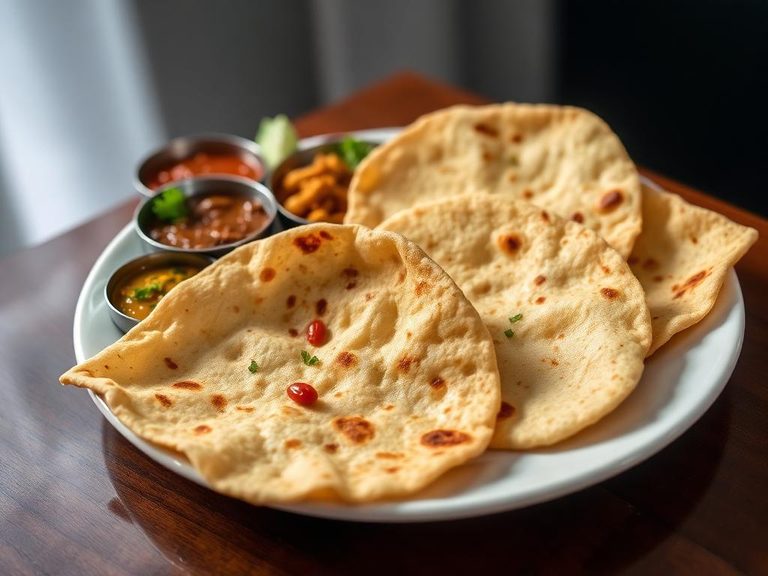
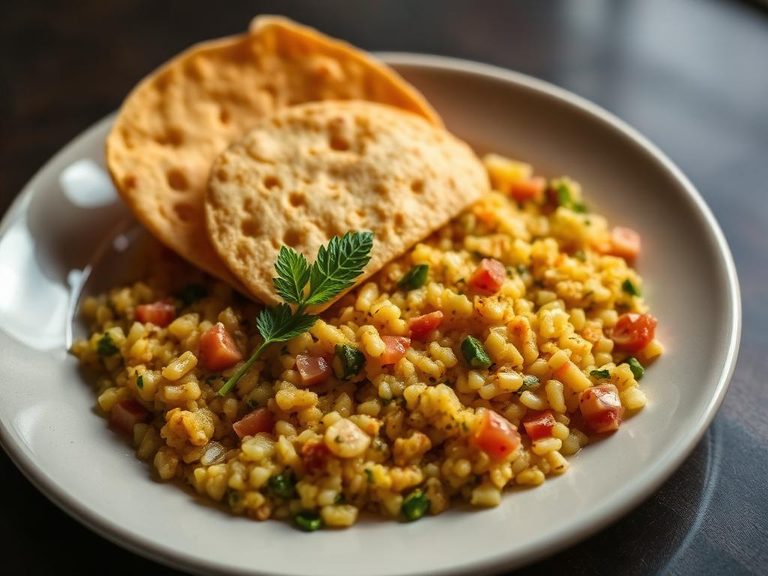
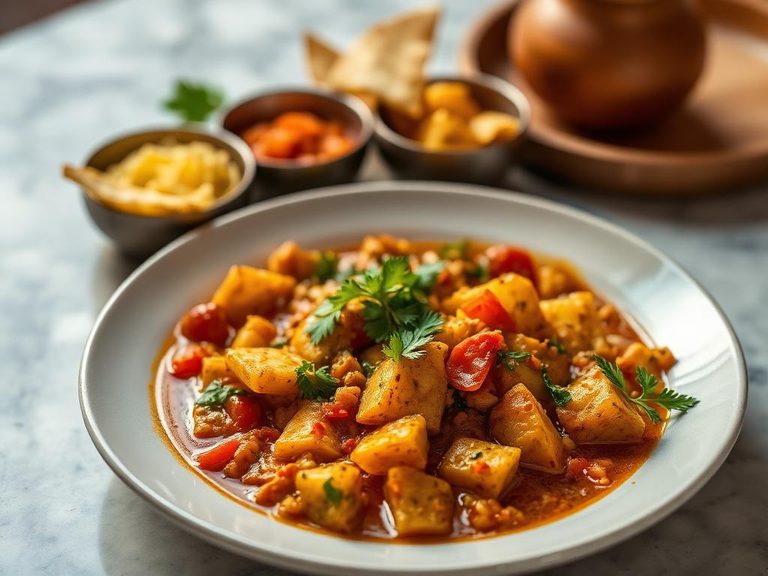
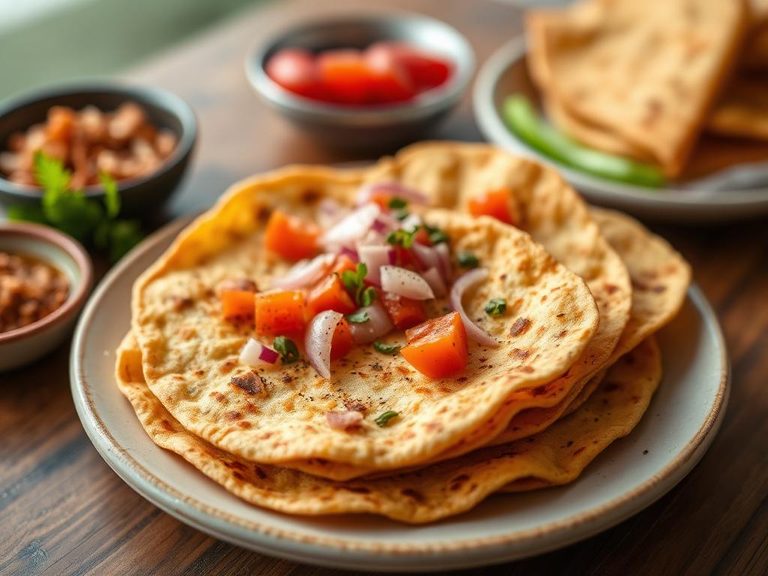
Papad with Indian Thali refers to the thin, crispy lentil wafers (papad) served as a crunchy accompaniment to a traditional Indian thali meal. Papad is typically made from seasoned dough of lentil flour, rice, or chickpea flour, then sun-dried and deep-fried or roasted. This combination is a staple across India, especially in North Indian and Gujarati cuisines.
🍽️ Nutrition at a glance
Papad is primarily a source of carbohydrates and plant-based protein, with moderate fat depending on preparation method. A typical serving provides fiber, iron, and B vitamins, with a rough calorie range of 100-150 kcal for 2-3 papads.
Nutrition breakdown
| Calories | 750 kcal |
| Protein | 25 g |
| Carbs | 95 g |
| Fat | 30 g |
| Fiber | 15 g |
| Sugar | 12 g |
| Sodium | 1800 mg |
| Iron | 6 mg |
| Calcium | 250 mg |
| Potassium | 800 mg |
| Magnesium | 120 mg |
| Vitamin A | 300 µg RAE |
| Vitamin C | 40 mg |
| Folate | 150 µg |
| Phosphorus | 350 mg |
Per 1 typical thali (approx. 800-1000 g total) · estimated, varies by recipe
💡 What's interesting
Culturally, papad serves as a textural contrast to the soft curries and rice in a thali, and is often used to scoop up food. Nutritionally, it adds plant protein from lentils and can aid digestion when made with cumin or black pepper.