

Pancakes, whole grain
Common food

Photo: Wikipedia
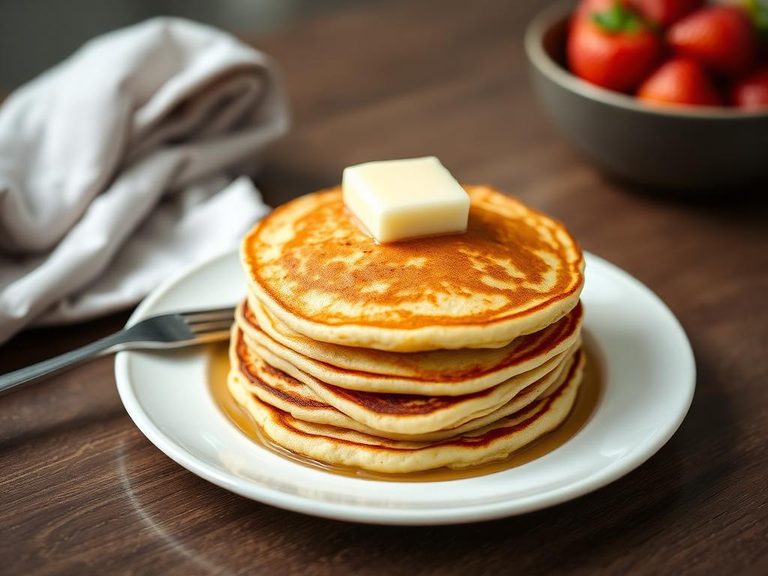
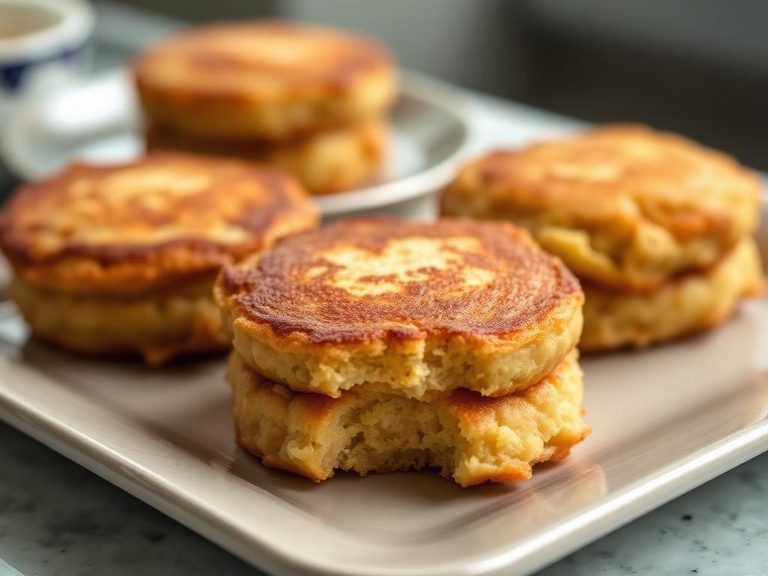
Whole grain pancakes are hearty, rustic breakfast cakes made with flour from the entire wheat kernel, giving them a nutty, earthy flavor and a denser, more satisfying texture than their refined counterparts. Their golden-brown surface often hides a tender, moist interior, making them a comforting and wholesome start to the day. Nutritionally, they offer a solid balance of complex carbohydrates for sustained energy, along with a notable protein boost and beneficial dietary fiber.
Calorie split: 11% protein · 48% carbs · 40% fat
↓ Full nutrition💚 Why it's loved
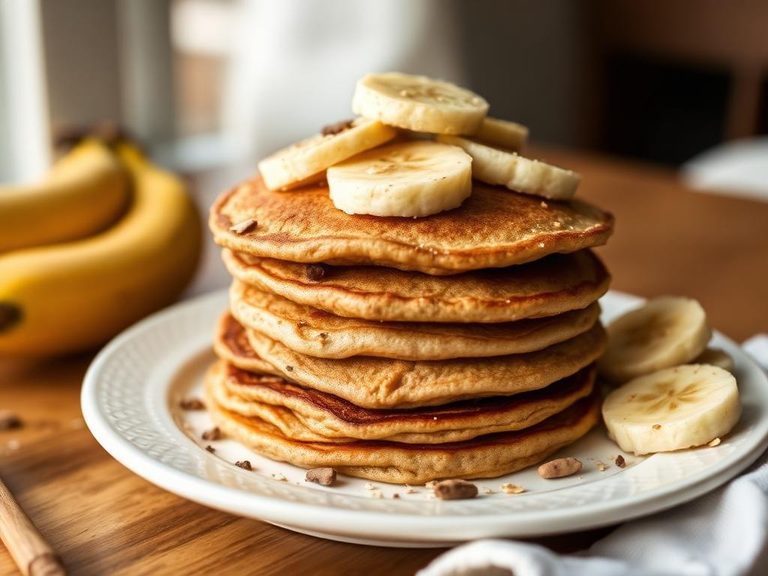
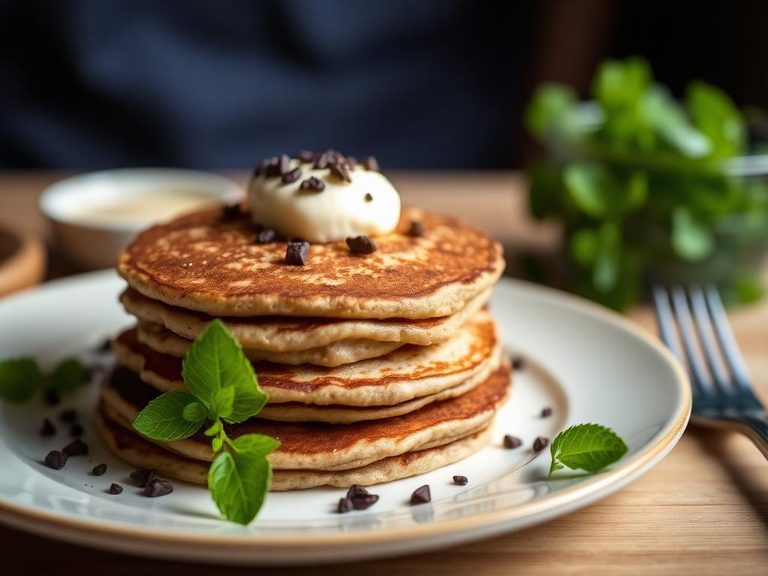
People love whole grain pancakes for their deeply comforting, nutty flavor and the satisfying, substantial texture that feels both indulgent and nourishing. They are a beloved breakfast staple, celebrated for their incredible versatility—easily customized with fruits, nuts, or syrups to suit any taste or occasion.
⚠️ Watch-outs & how to enjoy it better
The denser texture and stronger grain flavor can be an adjustment for those accustomed to light, fluffy white pancakes. For individuals monitoring carbohydrate intake, the carb content requires portion awareness, and the added sugars in toppings can quickly elevate the meal's glycemic impact. To counteract this, pair them with a source of protein (like eggs or Greek yogurt) and healthy fat (like nuts or a pat of butter) to slow digestion and promote fullness. Choosing a sugar-free topping like berries or a small amount of pure maple syrup can also help manage the overall sugar load.
Key benefits
- High in dietary fiber for digestive health and satiety.
- Provides a good source of plant-based protein.
- Contains more vitamins and minerals than refined flour versions.
- Offers complex carbohydrates for steady energy release.
- The fiber content can help moderate blood sugar response.
🍽️ Popular dishes

🌍 Where it's eaten
💡 Did you know?
The oldest known pancake-like recipe dates back to ancient Rome and was made with spelt flour, honey, and cheese.
Full nutrition (USDA data · scales with serving)
| Water | 44.9 g |
| Energy | 273 kcal |
| Protein | 7.9 g |
| Total lipid (fat) | 12.3 g |
| Carbohydrate, by difference | 32.9 g |
| Fiber, total dietary | 3.2 g |
| Total Sugars | 6.9 g |
| Calcium, Ca | 138 mg |
| Iron, Fe | 3.1 mg |
| Magnesium, Mg | 42.0 mg |
| Phosphorus, P | 403 mg |
| Potassium, K | 252 mg |
| Sodium, Na | 722 mg |
| Zinc, Zn | 1.1 mg |
| Copper, Cu | 0.12 mg |
| Selenium, Se | 13.3 ug |
| Vitamin C, total ascorbic acid | 0.00 mg |
| Thiamin | 0.17 mg |
| Riboflavin | 0.46 mg |
| Niacin | 3.0 mg |
| Vitamin B-6 | 0.11 mg |
| Folate, total | 32.0 ug |
| Folic acid | 17.0 ug |
| Folate, food | 16.0 ug |
| Folate, DFE | 44.0 ug |
| Choline, total | 55.7 mg |
| Vitamin B-12 | 0.40 ug |
| Vitamin B-12, added | 0.00 ug |
| Vitamin A, RAE | 79.0 ug |
| Retinol | 78.0 ug |
| Carotene, beta | 13.0 ug |
| Carotene, alpha | 0.00 ug |
| Cryptoxanthin, beta | 2.0 ug |
| Lycopene | 0.00 ug |
| Lutein + zeaxanthin | 113 ug |
| Vitamin E (alpha-tocopherol) | 1.8 mg |
| Vitamin E, added | 0.00 mg |
| Vitamin D (D2 + D3) | 1.0 ug |
| Vitamin K (phylloquinone) | 8.9 ug |
| Alcohol, ethyl | 0.00 g |
| Caffeine | 0.00 mg |
| Theobromine | 0.00 mg |
Fat & fatty acid profile (per 100g)
| Fatty acids, total saturated | 3.0 g |
| SFA 4:0 | 0.06 g |
| SFA 6:0 | 0.04 g |
| SFA 8:0 | 0.03 g |
| SFA 10:0 | 0.06 g |
| SFA 12:0 | 0.07 g |
| SFA 14:0 | 0.24 g |
| SFA 16:0 | 1.8 g |
| SFA 18:0 | 0.62 g |
| Fatty acids, total monounsaturated | 4.3 g |
| MUFA 16:1 | 0.09 g |
| MUFA 18:1 | 4.2 g |
| MUFA 20:1 | 0.05 g |
| MUFA 22:1 | 0.00 g |
| Fatty acids, total polyunsaturated | 3.4 g |
| PUFA 18:2 | 3.0 g |
| PUFA 18:3 | 0.35 g |
| PUFA 18:4 | 0.00 g |
| PUFA 20:4 | 0.00 g |
| PUFA 20:5 n-3 (EPA) | 0.00 g |
| PUFA 22:5 n-3 (DPA) | 0.00 g |
| PUFA 22:6 n-3 (DHA) | 0.00 g |
| Cholesterol | 69.0 mg |
Amino acid profile (per 100g)
Estimated from Pancakes, buttermilk, prepared from recipe — USDA does not publish this profile for Pancakes.
| Tryptophan | 0.08 g |
| Threonine | 0.25 g |
| Isoleucine | 0.32 g |
| Leucine | 0.55 g |
| Lysine | 0.35 g |
| Methionine | 0.15 g |
| Cystine | 0.12 g |
| Phenylalanine | 0.34 g |
| Tyrosine | 0.25 g |
| Valine | 0.36 g |
| Arginine | 0.29 g |
| Histidine | 0.16 g |
| Alanine | 0.26 g |
| Aspartic acid | 0.45 g |
| Glutamic acid | 1.6 g |
| Glycine | 0.21 g |
| Proline | 0.61 g |
| Serine | 0.38 g |
FAQ
Are whole grain pancakes healthier than regular pancakes?
Generally, yes. Whole grain versions retain the bran and germ of the wheat kernel, providing more fiber, protein, vitamins, and minerals than pancakes made with refined white flour. This can lead to better satiety and a more gradual energy release.
How can I make my whole grain pancakes fluffier?
Ensure your leavening agents (baking powder/soda) are fresh. Don't overmix the batter—a few lumps are fine. Letting the batter rest for 10-15 minutes allows the whole grains to hydrate, which can improve texture. Using buttermilk or adding a tablespoon of vinegar to milk can also create a lighter, more tender pancake.
Can I freeze leftover whole grain pancakes?
Absolutely. Let them cool completely, then stack them with parchment paper between each pancake to prevent sticking. Place the stack in a freezer-safe bag or container. They can be frozen for up to 3 months and reheated directly from frozen in a toaster or oven.
Nutrient density (calculated · NRF9.3)
Nutrient Rich Foods index: beneficial nutrients (protein, fiber, vitamins, minerals) minus saturated fat, added sugar & sodium, per 100 kcal.
NRF9.3 index — Fulgoni, Keast & Drewnowski, 2009. Computed from USDA nutrients.
Weight-loss friendliness (composite index)
Energy density 2.73 kcal/g · 12% calories from protein · 3.2 g fiber · 6.9 g sugar per 100 g.
Composite of energy density (Rolls et al., 1999), protein & fiber satiety, minus sugar. A calculated heuristic — ranks satiety-per-calorie, not a clinical measure.
Dietary load (calculated from USDA values)
Potential renal acid load. Positive = acid-forming, negative = alkaline-forming.
Sodium-to-potassium ratio: 2.87 (lower is better — aim for ≤ 1)
Sodium:potassium per WHO potassium guidance. Computed from USDA nutrients.