

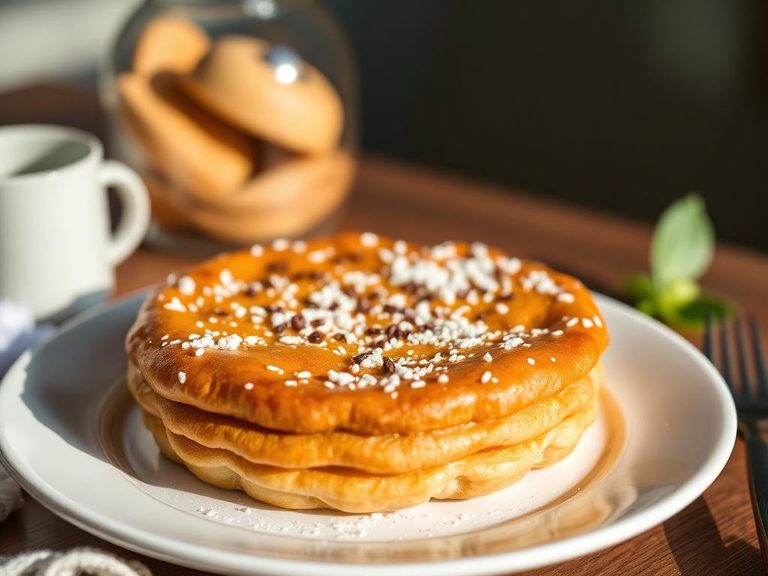
Pancakes, whole grain, reduced fat
Common food

Photo: Wikipedia
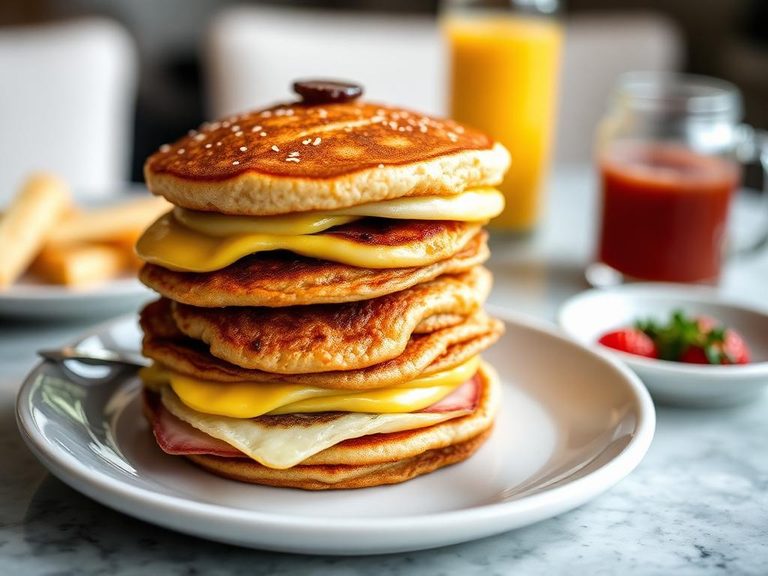
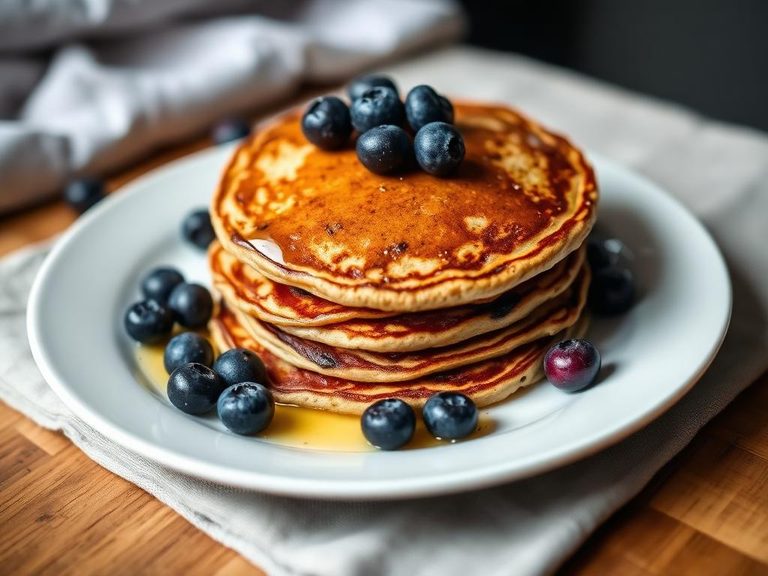
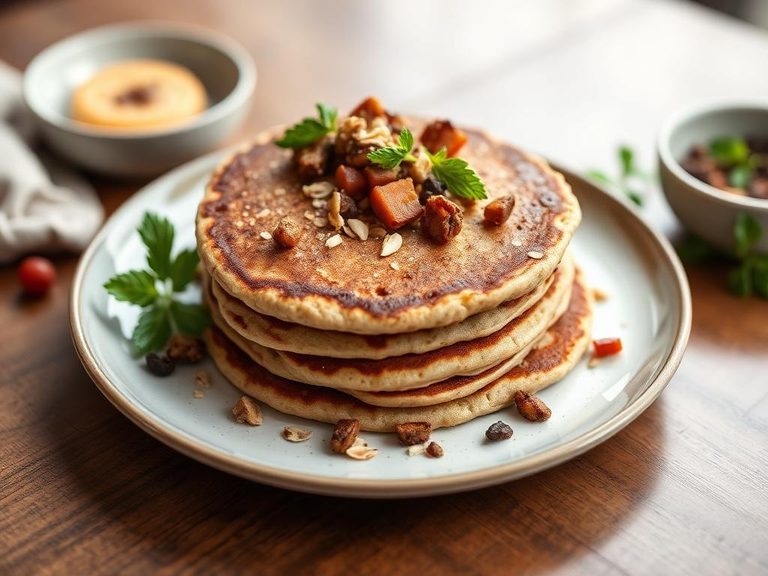
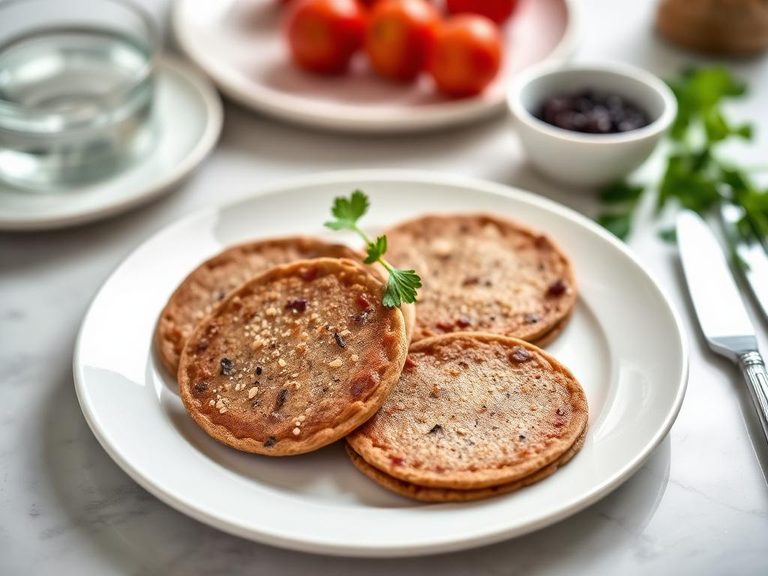
These are hearty, wholesome pancakes made with whole-grain flour, offering a nutty, earthy flavor and a satisfyingly dense, tender texture. With a modest 256 calories per 100g and a good 8g of protein, they provide sustained energy without the sugar crash of their refined-flour counterparts. The reduced-fat preparation keeps them lighter while the 3.3g of fiber aids digestion.
Calorie split: 13% protein · 53% carbs · 35% fat
↓ Full nutrition💚 Why it's loved
People love them for their comforting, rustic flavor and the ability to feel good about a classic breakfast treat. They are a versatile canvas for both sweet toppings like berries and savory ones like eggs and avocado.
⚠️ Watch-outs & how to enjoy it better
The denser texture and nutty taste may not appeal to those used to light, fluffy white-flour pancakes. Their fiber and complex carbs, while healthy, can still cause blood sugar spikes if consumed in large portions with sugary syrups. Counteract this by pairing with a protein source like Greek yogurt or nuts, and using measured amounts of low-glycemic toppings.
Key benefits
- High in fiber for digestive health and satiety.
- Good source of plant-based protein for muscle maintenance.
- Whole grains provide sustained energy release.
- Lower in fat than traditional pancake recipes.
- Contains more micronutrients than refined-flour versions.
🍽️ Popular dishes
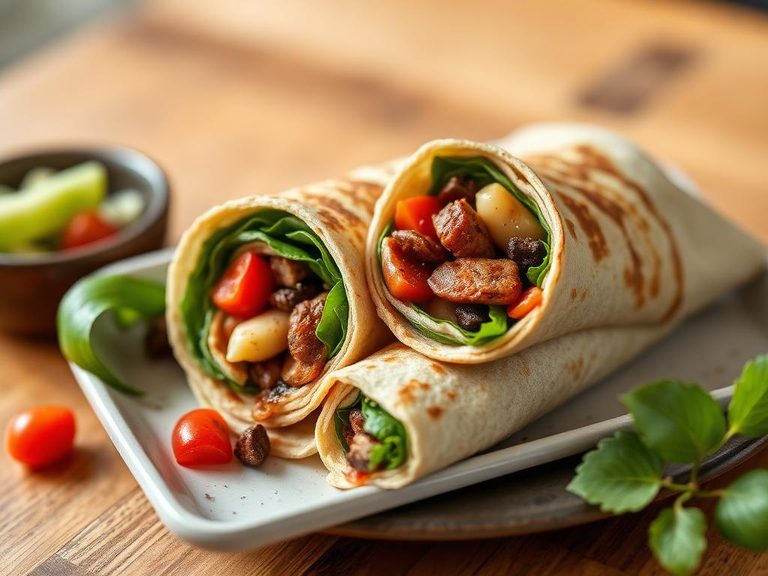
🌍 Where it's eaten
💡 Did you know?
The term 'whole grain' means the flour includes the bran, germ, and endosperm, meaning a single pancake can contain over 20 different nutrients from the wheat kernel.
Full nutrition (USDA data · scales with serving)
| Water | 46.4 g |
| Energy | 256 kcal |
| Protein | 8.0 g |
| Total lipid (fat) | 9.9 g |
| Carbohydrate, by difference | 33.6 g |
| Fiber, total dietary | 3.3 g |
| Total Sugars | 7.0 g |
| Calcium, Ca | 141 mg |
| Iron, Fe | 3.2 mg |
| Magnesium, Mg | 43.0 mg |
| Phosphorus, P | 412 mg |
| Potassium, K | 258 mg |
| Sodium, Na | 738 mg |
| Zinc, Zn | 1.1 mg |
| Copper, Cu | 0.12 mg |
| Selenium, Se | 13.6 ug |
| Vitamin C, total ascorbic acid | 0.00 mg |
| Thiamin | 0.17 mg |
| Riboflavin | 0.47 mg |
| Niacin | 3.0 mg |
| Vitamin B-6 | 0.12 mg |
| Folate, total | 33.0 ug |
| Folic acid | 17.0 ug |
| Folate, food | 16.0 ug |
| Folate, DFE | 45.0 ug |
| Choline, total | 57.0 mg |
| Vitamin B-12 | 0.41 ug |
| Vitamin B-12, added | 0.00 ug |
| Vitamin A, RAE | 81.0 ug |
| Retinol | 80.0 ug |
| Carotene, beta | 14.0 ug |
| Carotene, alpha | 0.00 ug |
| Cryptoxanthin, beta | 2.0 ug |
| Lycopene | 0.00 ug |
| Lutein + zeaxanthin | 115 ug |
| Vitamin E (alpha-tocopherol) | 1.4 mg |
| Vitamin E, added | 0.00 mg |
| Vitamin D (D2 + D3) | 1.0 ug |
| Vitamin K (phylloquinone) | 6.4 ug |
| Alcohol, ethyl | 0.00 g |
| Caffeine | 0.00 mg |
| Theobromine | 0.00 mg |
Fat & fatty acid profile (per 100g)
| Fatty acids, total saturated | 2.7 g |
| SFA 4:0 | 0.06 g |
| SFA 6:0 | 0.04 g |
| SFA 8:0 | 0.03 g |
| SFA 10:0 | 0.07 g |
| SFA 12:0 | 0.08 g |
| SFA 14:0 | 0.25 g |
| SFA 16:0 | 1.5 g |
| SFA 18:0 | 0.56 g |
| Fatty acids, total monounsaturated | 3.3 g |
| MUFA 16:1 | 0.09 g |
| MUFA 18:1 | 3.2 g |
| MUFA 20:1 | 0.04 g |
| MUFA 22:1 | 0.00 g |
| Fatty acids, total polyunsaturated | 2.5 g |
| PUFA 18:2 | 2.2 g |
| PUFA 18:3 | 0.24 g |
| PUFA 18:4 | 0.00 g |
| PUFA 20:4 | 0.00 g |
| PUFA 20:5 n-3 (EPA) | 0.00 g |
| PUFA 22:5 n-3 (DPA) | 0.00 g |
| PUFA 22:6 n-3 (DHA) | 0.00 g |
| Cholesterol | 70.0 mg |
Amino acid profile (per 100g)
Estimated from Pancakes, buttermilk, prepared from recipe — USDA does not publish this profile for Pancakes.
| Tryptophan | 0.08 g |
| Threonine | 0.25 g |
| Isoleucine | 0.32 g |
| Leucine | 0.55 g |
| Lysine | 0.35 g |
| Methionine | 0.15 g |
| Cystine | 0.12 g |
| Phenylalanine | 0.34 g |
| Tyrosine | 0.25 g |
| Valine | 0.36 g |
| Arginine | 0.29 g |
| Histidine | 0.16 g |
| Alanine | 0.26 g |
| Aspartic acid | 0.45 g |
| Glutamic acid | 1.6 g |
| Glycine | 0.21 g |
| Proline | 0.61 g |
| Serine | 0.38 g |
FAQ
Are whole-grain reduced-fat pancakes healthier than regular pancakes?
Generally, yes. They offer more fiber, protein, and nutrients from the whole grain and are lower in fat. However, the overall healthiness depends on portion size and toppings.
Can I freeze leftover whole-grain pancakes?
Absolutely. Let them cool completely, layer with parchment paper in a freezer bag, and they'll keep for up to 3 months. Reheat in a toaster or oven for best texture.
Why are my whole-grain pancakes tough?
Overmixing the batter develops gluten, making them tough. Mix just until the dry ingredients are moistened. Letting the batter rest for 5-10 minutes also helps the grains hydrate for a more tender result.
Nutrient density (calculated · NRF9.3)
Nutrient Rich Foods index: beneficial nutrients (protein, fiber, vitamins, minerals) minus saturated fat, added sugar & sodium, per 100 kcal.
NRF9.3 index — Fulgoni, Keast & Drewnowski, 2009. Computed from USDA nutrients.
Weight-loss friendliness (composite index)
Energy density 2.56 kcal/g · 13% calories from protein · 3.3 g fiber · 7.0 g sugar per 100 g.
Composite of energy density (Rolls et al., 1999), protein & fiber satiety, minus sugar. A calculated heuristic — ranks satiety-per-calorie, not a clinical measure.
Dietary load (calculated from USDA values)
Potential renal acid load. Positive = acid-forming, negative = alkaline-forming.
Sodium-to-potassium ratio: 2.86 (lower is better — aim for ≤ 1)
Sodium:potassium per WHO potassium guidance. Computed from USDA nutrients.