

Pancakes, whole grain, frozen
Common food

Photo: Wikipedia
These are pre-cooked, whole-grain pancakes that transform from freezer to plate in minutes, offering a hearty, nutty flavor with a pleasantly chewy texture. Nutritionally, they stand out for their solid fiber content and balanced macronutrient profile compared to refined-flour versions.
Calorie split: 9% protein · 65% carbs · 26% fat
↓ Full nutrition💚 Why it's loved
People love them for their comforting, home-cooked taste and the incredible convenience of having a wholesome breakfast ready in under five minutes. Their sturdy texture makes them perfect for stacking with toppings or rolling up fillings.
⚠️ Watch-outs & how to enjoy it better
The primary concern is the added sugar, which can contribute to blood-sugar spikes, especially if consumed alone. To counteract this, always pair them with a protein and healthy fat source like Greek yogurt, nuts, or eggs to slow digestion. Those watching sodium intake should also check labels, as some brands add it for flavor.
Key benefits
- Provides sustained energy from complex carbohydrates and fiber
- Convenient source of plant-based protein for a quick meal
- Whole grains may support digestive health
- Offers a more nutrient-dense option than traditional white-flour pancakes
- Freezer-ready for immediate portion control
🍽️ Popular dishes
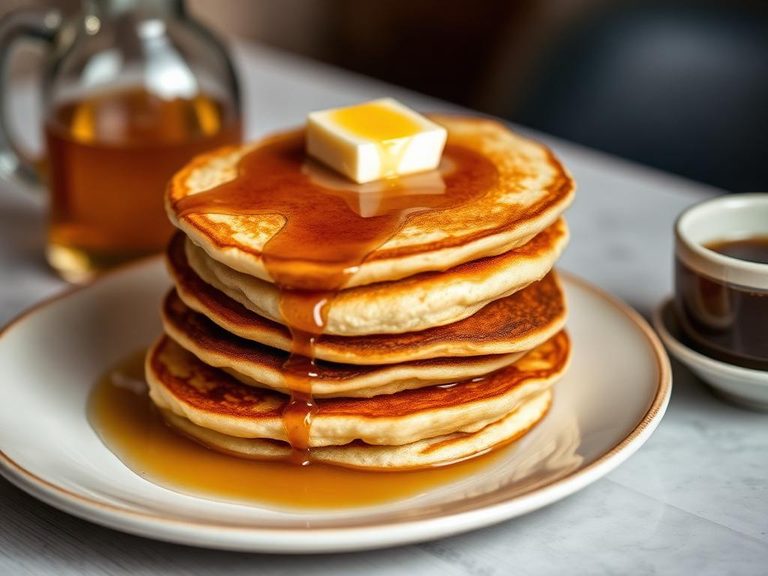
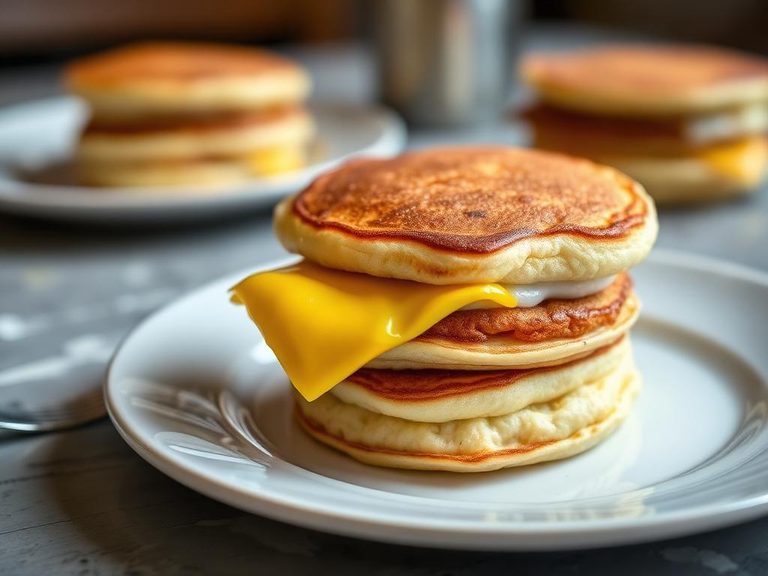
🌍 Where it's eaten
💡 Did you know?
The term 'pancake' dates back to the 15th century, but the practice of making thin, flat cakes from grain batter is one of the oldest known forms of prepared food, with evidence found in ancient Greek and Roman cultures.
Full nutrition (USDA data · scales with serving)
| Water | 47.2 g |
| Energy | 232 kcal |
| Protein | 5.5 g |
| Total lipid (fat) | 6.8 g |
| Carbohydrate, by difference | 38.5 g |
| Fiber, total dietary | 2.3 g |
| Total Sugars | 8.1 g |
| Calcium, Ca | 78.0 mg |
| Iron, Fe | 5.8 mg |
| Magnesium, Mg | 32.0 mg |
| Phosphorus, P | 239 mg |
| Potassium, K | 123 mg |
| Sodium, Na | 447 mg |
| Zinc, Zn | 0.61 mg |
| Copper, Cu | 0.10 mg |
| Selenium, Se | 12.8 ug |
| Vitamin C, total ascorbic acid | 0.20 mg |
| Thiamin | 0.56 mg |
| Riboflavin | 0.39 mg |
| Niacin | 6.6 mg |
| Vitamin B-6 | 0.54 mg |
| Folate, total | 61.0 ug |
| Folic acid | 47.0 ug |
| Folate, food | 14.0 ug |
| Folate, DFE | 93.0 ug |
| Choline, total | 16.4 mg |
| Vitamin B-12 | 1.6 ug |
| Vitamin B-12, added | 1.5 ug |
| Vitamin A, RAE | 417 ug |
| Retinol | 417 ug |
| Carotene, beta | 1.0 ug |
| Carotene, alpha | 0.00 ug |
| Cryptoxanthin, beta | 0.00 ug |
| Lycopene | 0.00 ug |
| Lutein + zeaxanthin | 61.0 ug |
| Vitamin E (alpha-tocopherol) | 0.65 mg |
| Vitamin E, added | 0.00 mg |
| Vitamin D (D2 + D3) | 0.00 ug |
| Vitamin K (phylloquinone) | 6.4 ug |
| Alcohol, ethyl | 0.00 g |
| Caffeine | 0.00 mg |
| Theobromine | 0.00 mg |
Fat & fatty acid profile (per 100g)
| Fatty acids, total saturated | 1.1 g |
| SFA 4:0 | 0.00 g |
| SFA 6:0 | 0.00 g |
| SFA 8:0 | 0.00 g |
| SFA 10:0 | 0.01 g |
| SFA 12:0 | 0.00 g |
| SFA 14:0 | 0.00 g |
| SFA 16:0 | 0.83 g |
| SFA 18:0 | 0.26 g |
| Fatty acids, total monounsaturated | 1.5 g |
| MUFA 16:1 | 0.01 g |
| MUFA 18:1 | 1.5 g |
| MUFA 20:1 | 0.02 g |
| MUFA 22:1 | 0.00 g |
| Fatty acids, total polyunsaturated | 3.8 g |
| PUFA 18:2 | 3.6 g |
| PUFA 18:3 | 0.19 g |
| PUFA 18:4 | 0.00 g |
| PUFA 20:4 | 0.01 g |
| PUFA 20:5 n-3 (EPA) | 0.00 g |
| PUFA 22:5 n-3 (DPA) | 0.00 g |
| PUFA 22:6 n-3 (DHA) | 0.00 g |
| Cholesterol | 17.0 mg |
Amino acid profile (per 100g)
Estimated from Pancakes, buttermilk, prepared from recipe — USDA does not publish this profile for Pancakes.
| Tryptophan | 0.08 g |
| Threonine | 0.25 g |
| Isoleucine | 0.32 g |
| Leucine | 0.55 g |
| Lysine | 0.35 g |
| Methionine | 0.15 g |
| Cystine | 0.12 g |
| Phenylalanine | 0.34 g |
| Tyrosine | 0.25 g |
| Valine | 0.36 g |
| Arginine | 0.29 g |
| Histidine | 0.16 g |
| Alanine | 0.26 g |
| Aspartic acid | 0.45 g |
| Glutamic acid | 1.6 g |
| Glycine | 0.21 g |
| Proline | 0.61 g |
| Serine | 0.38 g |
FAQ
How do I reheat frozen whole-grain pancakes for the best texture?
For the best texture, reheat directly from frozen in a toaster on a medium setting. This crisps the exterior while keeping the interior tender. Avoid the microwave if possible, as it can make them tough or soggy.
Are these a good option for people managing their blood sugar?
They can be part of a balanced diet. The whole grain and fiber help, but the added sugar means they should not be eaten alone. Pairing with protein (like eggs or cottage cheese) and fat (like nut butter) significantly blunts the glycemic response.
What's the difference between these and regular frozen pancakes?
The key difference is the flour. These use whole-grain flour, which retains the bran and germ, providing more fiber, vitamins, and minerals. Regular frozen pancakes are typically made with refined white flour, which has a higher glycemic index and fewer nutrients.
Nutrient density (calculated · NRF9.3)
Nutrient Rich Foods index: beneficial nutrients (protein, fiber, vitamins, minerals) minus saturated fat, added sugar & sodium, per 100 kcal.
NRF9.3 index — Fulgoni, Keast & Drewnowski, 2009. Computed from USDA nutrients.
Weight-loss friendliness (composite index)
Energy density 2.32 kcal/g · 10% calories from protein · 2.3 g fiber · 8.1 g sugar per 100 g.
Composite of energy density (Rolls et al., 1999), protein & fiber satiety, minus sugar. A calculated heuristic — ranks satiety-per-calorie, not a clinical measure.
Dietary load (calculated from USDA values)
Potential renal acid load. Positive = acid-forming, negative = alkaline-forming.
Sodium-to-potassium ratio: 3.63 (lower is better — aim for ≤ 1)
Sodium:potassium per WHO potassium guidance. Computed from USDA nutrients.