Buckwheat-style blinis
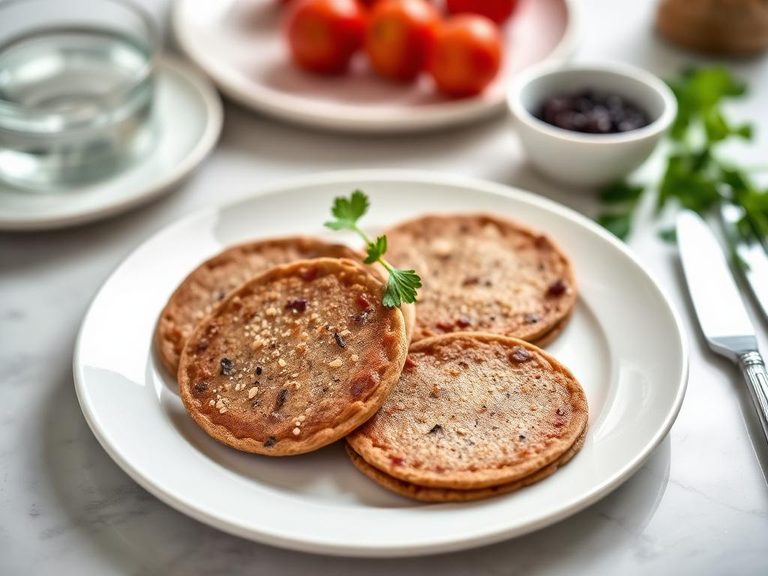
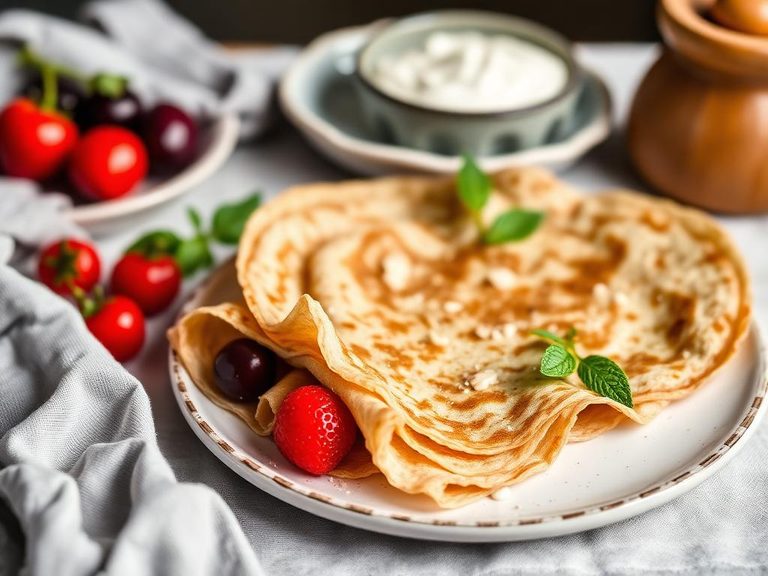
Buckwheat-style blinis are small, savory pancakes made from a batter that includes buckwheat flour, giving them a distinctive nutty flavor and earthy aroma. They are a staple of Eastern European cuisine, particularly in Russia and Ukraine, where they are often served with toppings like sour cream, smoked salmon, or caviar. The dish is traditionally enjoyed during festivals and celebrations, symbolizing prosperity and the sun.
🍽️ Nutrition at a glance
Buckwheat blinis are a good source of complex carbohydrates and dietary fiber, providing sustained energy. They also contain moderate amounts of plant-based protein and essential minerals like magnesium and iron, with a typical serving of two medium blinis (around 100g) containing approximately 200-250 calories.
Nutrition breakdown
| Calories | 220 kcal |
| Protein | 8 g |
| Carbs | 36 g |
| Fat | 5 g |
| Fiber | 4 g |
| Sugar | 2 g |
| Sodium | 380 mg |
| Magnesium | 45 mg |
| Iron | 2.1 mg |
| Phosphorus | 120 mg |
| Thiamin (B1) | 0.15 mg |
| Niacin (B3) | 2.5 mg |
| Folate | 35 mcg |
| Manganese | 0.8 mg |
| Copper | 0.2 mg |
Per 2 medium blinis (100g) · estimated, varies by recipe
💡 What's interesting
Buckwheat is not a true grain but a pseudocereal, naturally gluten-free and rich in antioxidants, making these blinis a nutritious option for those with gluten sensitivities. Culturally, they are often associated with Maslenitsa, a Slavic festival celebrating the end of winter, where they represent the returning warmth of the sun.