Caviar on Blinis

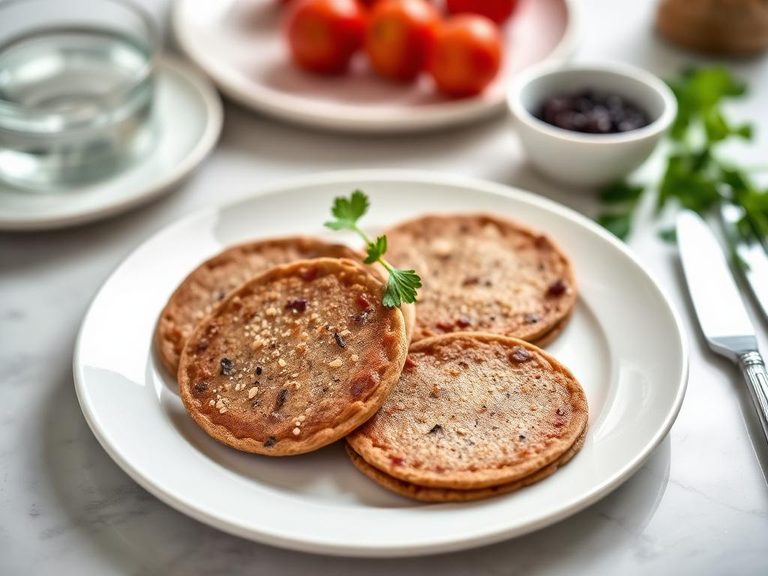
Caviar on blinis is a classic appetizer consisting of small, savory pancakes (blinis) topped with a dollop of crème fraîche or sour cream and a spoonful of caviar, which are the salt-cured roe of fish, most traditionally sturgeon. The dish is a hallmark of Russian and Eastern European cuisine, often associated with luxury and celebration.
🍽️ Nutrition at a glance
This dish is high in protein and healthy fats from the caviar and dairy, with a moderate amount of carbohydrates from the blinis. It is a good source of omega-3 fatty acids, vitamin B12, and selenium, with a typical serving containing roughly 150-250 calories.
Nutrition breakdown
| Calories | 190 kcal |
| Protein | 12 g |
| Carbs | 10 g |
| Fat | 11 g |
| Fiber | 0.5 g |
| Sugar | 1 g |
| Sodium | 480 mg |
| Vitamin B12 | 4.8 mcg |
| Selenium | 15 mcg |
| Phosphorus | 180 mg |
| Omega-3 (EPA+DHA) | 500 mg |
| Vitamin D | 1.2 mcg |
| Iron | 1.8 mg |
| Vitamin E | 1.5 mg |
| Choline | 45 mg |
Per 2 small blinis (approx. 50 g) with 1 tbsp (15 g) crème fraîche and 1 tbsp (15 g) caviar · estimated, varies by recipe
💡 What's interesting
Caviar has been a symbol of opulence since the Russian Tsars, and the small, light blini were originally designed to be eaten in one bite. Nutritionally, the roe is a concentrated source of nutrients, providing a significant boost of vitamin B12 in a very small portion.