

Pancakes, fruit
Common food

Photo: Wikipedia
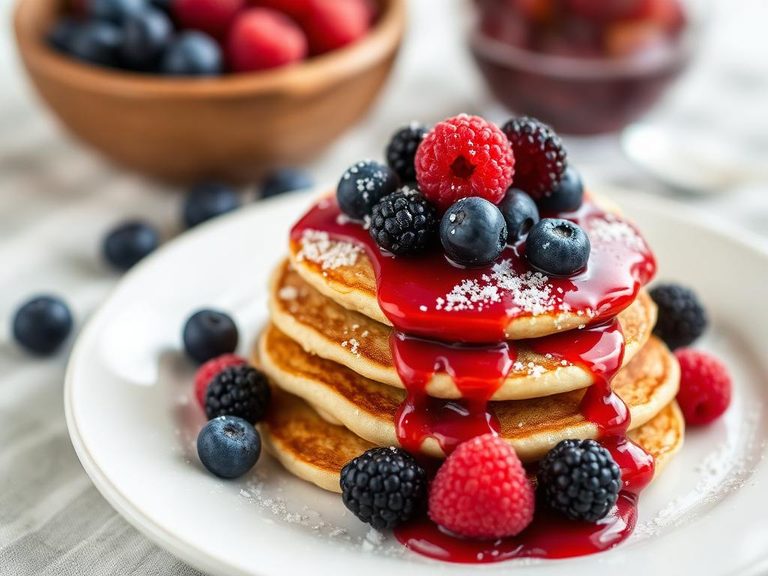
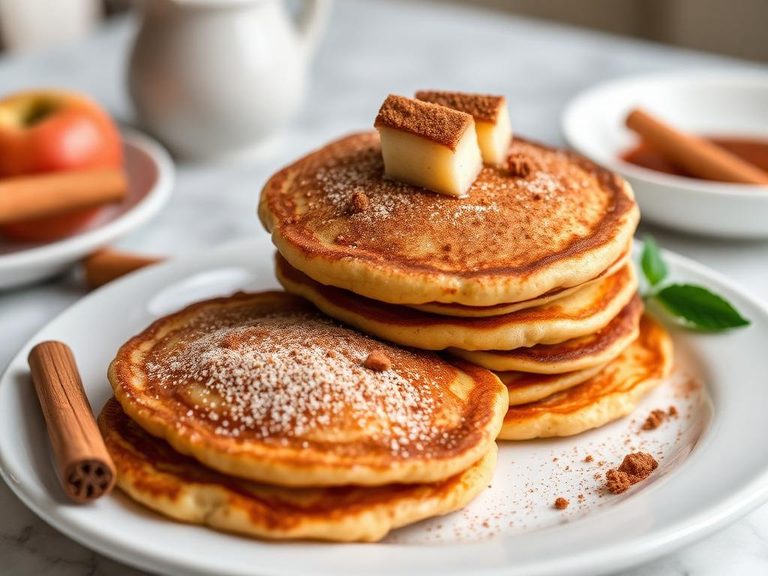
A fluffy, golden pancake studded with juicy fruit pieces like blueberries or bananas, offering a tender crumb and a burst of sweet, tangy flavor in each bite. It's a comforting breakfast staple that balances a satisfying, slightly crisp edge with a soft, cake-like interior. Nutritionally, it provides a moderate energy boost from carbs and fats, with a touch of protein and fiber from the fruit.
Calorie split: 10% protein · 53% carbs · 37% fat
↓ Full nutrition💚 Why it's loved
People adore its nostalgic, comforting warmth and the delightful contrast between the soft batter and the burst of warm, sweet fruit. It's a beloved canvas for creativity, easily customized with different fruits, syrups, or savory sides for any meal.
⚠️ Watch-outs & how to enjoy it better
The combination of refined carbs and sugar can lead to blood-sugar spikes, especially if made with white flour and served with syrup. To counteract this, pair with a source of protein (like Greek yogurt or nuts) and healthy fat (like nut butter), and opt for whole-grain batter or add fiber-rich fruit. Those with gluten or dairy sensitivities should seek alternative recipes.
Key benefits
- Quick energy source from carbohydrates
- Provides some dietary fiber from fruit
- Contains essential vitamins like vitamin C from fruit
- Offers a small amount of plant-based protein
- Versatile base for both sweet and savory toppings
🍽️ Popular dishes
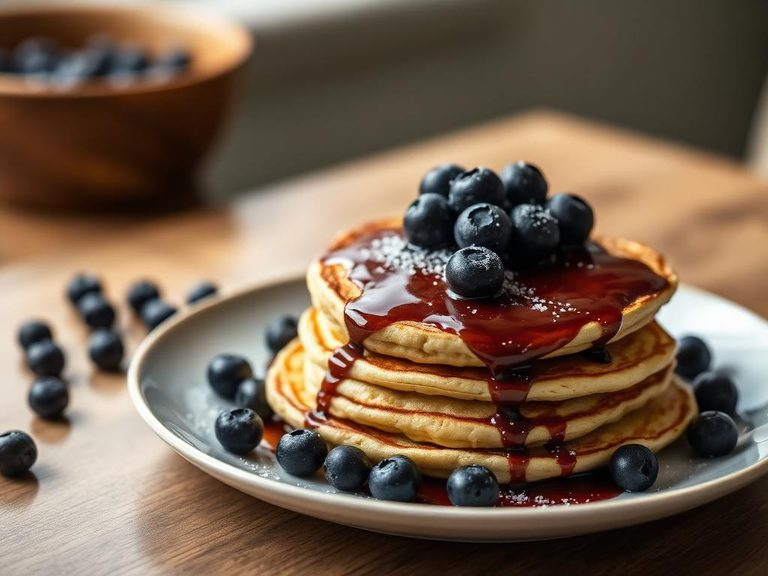
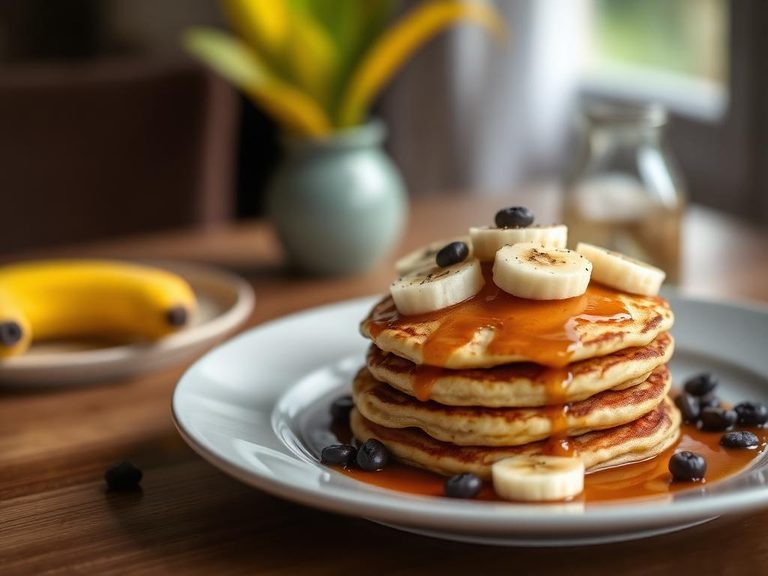
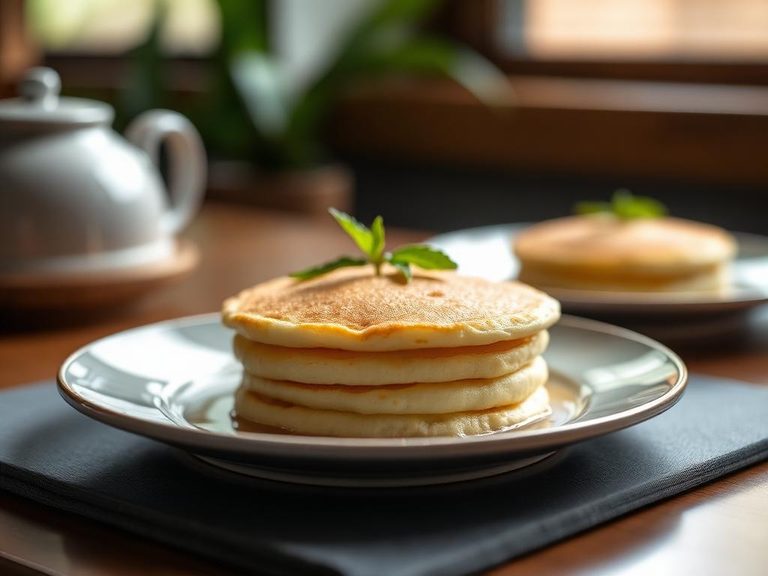
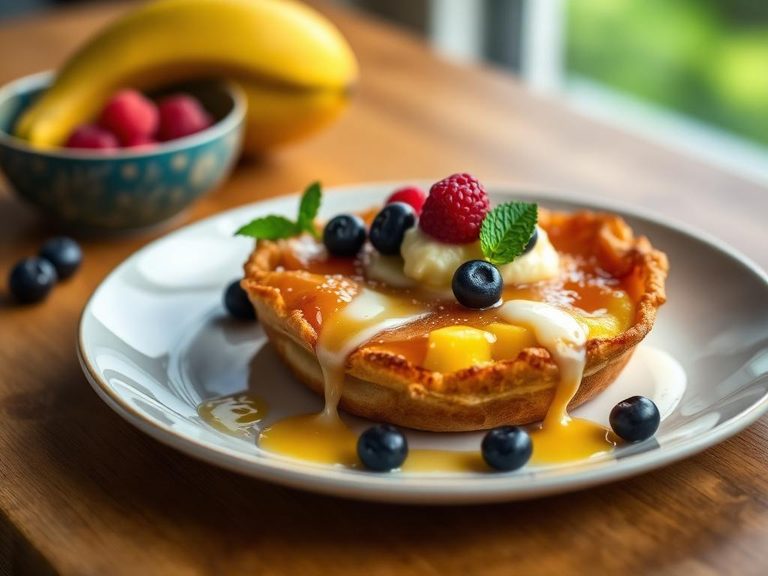
🌍 Where it's eaten
💡 Did you know?
The world's largest pancake breakfast is held annually in Massillon, Ohio, and has served over 5,000 pancakes in a single event.
Full nutrition (USDA data · scales with serving)
| Water | 51.8 g |
| Energy | 232 kcal |
| Protein | 5.9 g |
| Total lipid (fat) | 9.5 g |
| Carbohydrate, by difference | 30.6 g |
| Fiber, total dietary | 2.4 g |
| Total Sugars | 7.7 g |
| Calcium, Ca | 162 mg |
| Iron, Fe | 1.2 mg |
| Magnesium, Mg | 17.0 mg |
| Phosphorus, P | 256 mg |
| Potassium, K | 148 mg |
| Sodium, Na | 395 mg |
| Zinc, Zn | 0.58 mg |
| Copper, Cu | 0.04 mg |
| Selenium, Se | 8.2 ug |
| Vitamin C, total ascorbic acid | 0.60 mg |
| Thiamin | 0.18 mg |
| Riboflavin | 0.21 mg |
| Niacin | 1.2 mg |
| Vitamin B-6 | 0.12 mg |
| Folate, total | 37.0 ug |
| Folic acid | 27.0 ug |
| Folate, food | 9.0 ug |
| Folate, DFE | 56.0 ug |
| Choline, total | 40.2 mg |
| Vitamin B-12 | 0.30 ug |
| Vitamin B-12, added | 0.00 ug |
| Vitamin A, RAE | 60.0 ug |
| Retinol | 59.0 ug |
| Carotene, beta | 16.0 ug |
| Carotene, alpha | 0.00 ug |
| Cryptoxanthin, beta | 2.0 ug |
| Lycopene | 0.00 ug |
| Lutein + zeaxanthin | 92.0 ug |
| Vitamin E (alpha-tocopherol) | 1.5 mg |
| Vitamin E, added | 0.00 mg |
| Vitamin D (D2 + D3) | 0.70 ug |
| Vitamin K (phylloquinone) | 10.9 ug |
| Alcohol, ethyl | 0.00 g |
| Caffeine | 0.00 mg |
| Theobromine | 0.00 mg |
Fat & fatty acid profile (per 100g)
| Fatty acids, total saturated | 2.3 g |
| SFA 4:0 | 0.04 g |
| SFA 6:0 | 0.03 g |
| SFA 8:0 | 0.02 g |
| SFA 10:0 | 0.05 g |
| SFA 12:0 | 0.06 g |
| SFA 14:0 | 0.18 g |
| SFA 16:0 | 1.4 g |
| SFA 18:0 | 0.47 g |
| Fatty acids, total monounsaturated | 3.4 g |
| MUFA 16:1 | 0.07 g |
| MUFA 18:1 | 3.3 g |
| MUFA 20:1 | 0.04 g |
| MUFA 22:1 | 0.00 g |
| Fatty acids, total polyunsaturated | 2.8 g |
| PUFA 18:2 | 2.5 g |
| PUFA 18:3 | 0.30 g |
| PUFA 18:4 | 0.00 g |
| PUFA 20:4 | 0.00 g |
| PUFA 20:5 n-3 (EPA) | 0.00 g |
| PUFA 22:5 n-3 (DPA) | 0.00 g |
| PUFA 22:6 n-3 (DHA) | 0.00 g |
| Cholesterol | 52.0 mg |
Amino acid profile (per 100g)
Estimated from Pancakes, buttermilk, prepared from recipe — USDA does not publish this profile for Pancakes.
| Tryptophan | 0.08 g |
| Threonine | 0.25 g |
| Isoleucine | 0.32 g |
| Leucine | 0.55 g |
| Lysine | 0.35 g |
| Methionine | 0.15 g |
| Cystine | 0.12 g |
| Phenylalanine | 0.34 g |
| Tyrosine | 0.25 g |
| Valine | 0.36 g |
| Arginine | 0.29 g |
| Histidine | 0.16 g |
| Alanine | 0.26 g |
| Aspartic acid | 0.45 g |
| Glutamic acid | 1.6 g |
| Glycine | 0.21 g |
| Proline | 0.61 g |
| Serine | 0.38 g |
FAQ
Can I make pancakes ahead of time?
Yes, you can cook them, cool completely, and freeze in a single layer on a baking sheet before transferring to a bag. Reheat in a toaster or oven for best texture.
How do I keep pancakes warm without getting soggy?
Place them in a single layer on a wire rack set over a baking sheet in a 200°F (93°C) oven. Avoid stacking them while warm.
What's the best fruit for pancakes?
Berries (blueberries, raspberries) are classic as they hold their shape well. Bananas and sliced apples also work great. For juicy fruits like peaches, pat them dry to prevent excess moisture.
Nutrient density (calculated · NRF9.3)
Nutrient Rich Foods index: beneficial nutrients (protein, fiber, vitamins, minerals) minus saturated fat, added sugar & sodium, per 100 kcal.
NRF9.3 index — Fulgoni, Keast & Drewnowski, 2009. Computed from USDA nutrients.
Weight-loss friendliness (composite index)
Energy density 2.32 kcal/g · 10% calories from protein · 2.4 g fiber · 7.7 g sugar per 100 g.
Composite of energy density (Rolls et al., 1999), protein & fiber satiety, minus sugar. A calculated heuristic — ranks satiety-per-calorie, not a clinical measure.
Dietary load (calculated from USDA values)
Potential renal acid load. Positive = acid-forming, negative = alkaline-forming.
Sodium-to-potassium ratio: 2.67 (lower is better — aim for ≤ 1)
Sodium:potassium per WHO potassium guidance. Computed from USDA nutrients.