

Onions, raw
Common food
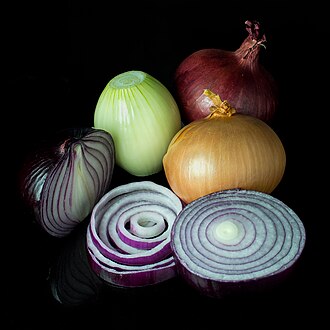
Photo: Wikipedia
The raw onion is a pungent, crisp bulb with a sharp, sulfurous bite that mellows into sweetness when cooked. Nutritionally, it's a low-calorie source of fiber and natural sugars, with a standout profile of antioxidants like quercetin.
Calorie split: 9% protein · 89% carbs · 2% fat
↓ Full nutrition💚 Why it's loved
People love it for its transformative flavor—from sharp and spicy raw to sweet and savory when cooked—which forms the aromatic base of countless cuisines worldwide.
⚠️ Watch-outs & how to enjoy it better
Raw onions can cause digestive discomfort (bloating, gas) for some, especially those with IBS, and their high-FODMAP content can be problematic. They also contain compounds that may trigger heartburn. To counteract, try digestively-friendly varieties like sweet onions, use smaller amounts, or cook them thoroughly to break down the fructans.
Key benefits
- Rich in antioxidant quercetin
- Good source of prebiotic fiber
- Contains vitamin C and B vitamins
- Very low in calories and fat
- Adds flavor without added salt
🍽️ Popular dishes
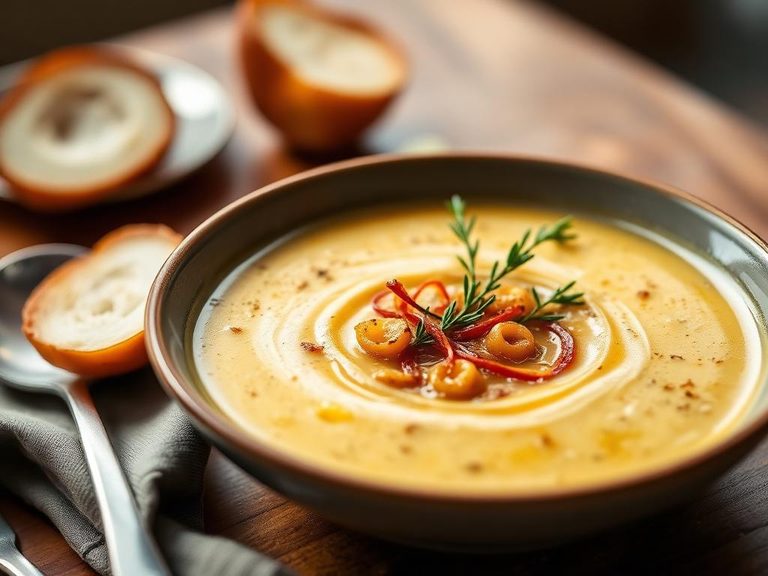
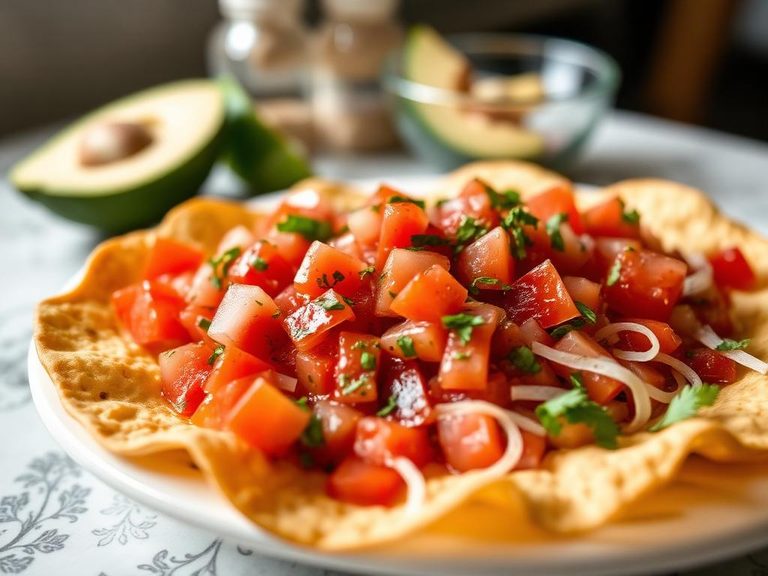
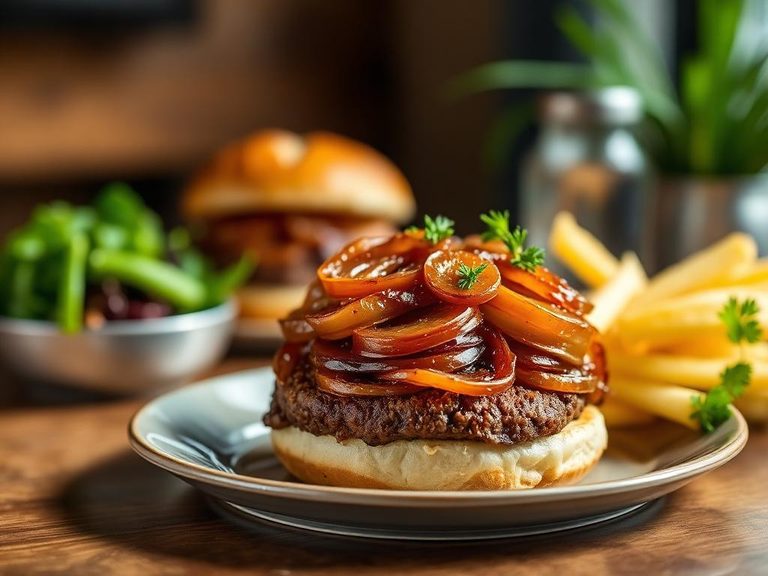
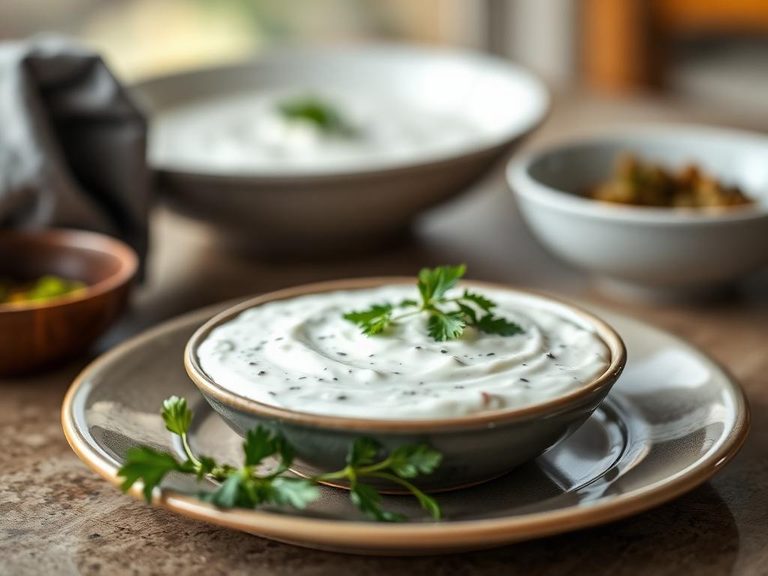
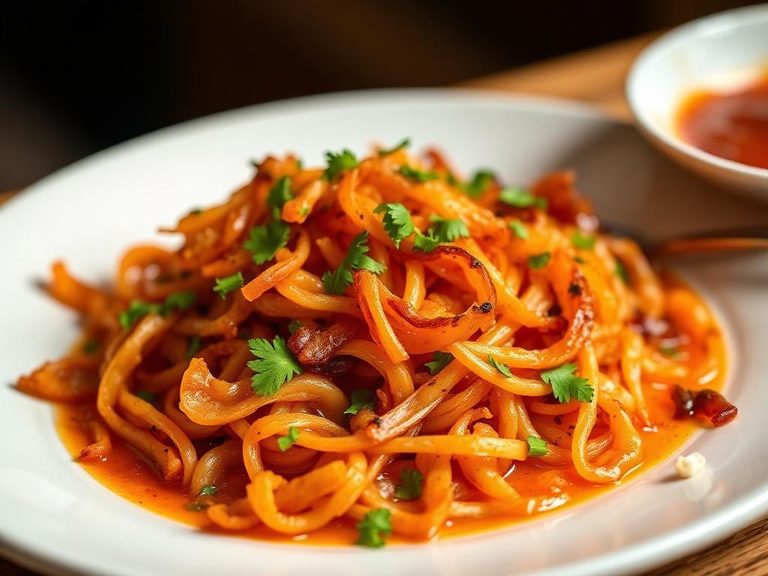
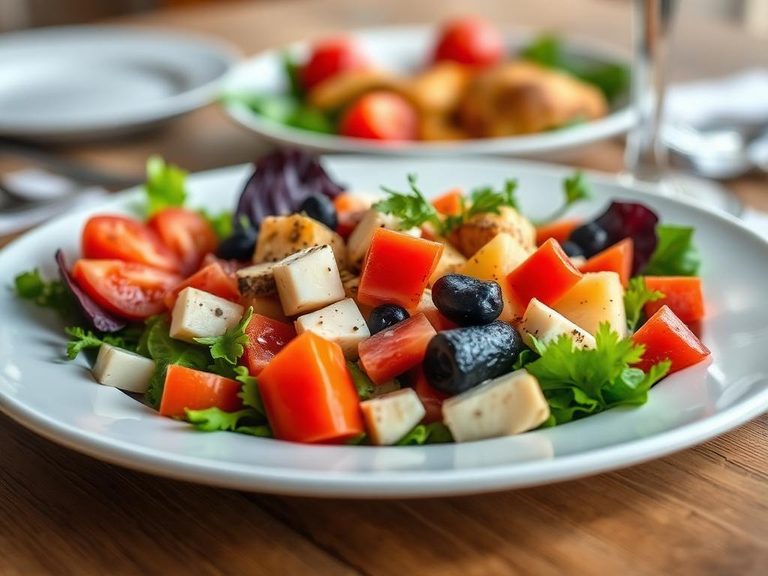
🌍 Where it's eaten
💡 Did you know?
Ancient Egyptian workers building the pyramids were reportedly given rations of onions, which they believed promoted health and were used in the mummification process.
Full nutrition (USDA data · scales with serving)
| Water | 90.3 g |
| Energy | 38.0 kcal |
| Protein | 0.86 g |
| Total lipid (fat) | 0.08 g |
| Carbohydrate, by difference | 8.5 g |
| Fiber, total dietary | 1.7 g |
| Total Sugars | 5.8 g |
| Calcium, Ca | 17.0 mg |
| Iron, Fe | 0.24 mg |
| Magnesium, Mg | 9.0 mg |
| Phosphorus, P | 33.0 mg |
| Potassium, K | 171 mg |
| Sodium, Na | 1.0 mg |
| Zinc, Zn | 0.17 mg |
| Copper, Cu | 0.04 mg |
| Selenium, Se | 0.00 ug |
| Vitamin C, total ascorbic acid | 8.2 mg |
| Thiamin | 0.05 mg |
| Riboflavin | 0.03 mg |
| Niacin | 0.12 mg |
| Vitamin B-6 | 0.12 mg |
| Folate, total | 19.0 ug |
| Folic acid | 0.00 ug |
| Folate, food | 19.0 ug |
| Folate, DFE | 19.0 ug |
| Choline, total | 6.1 mg |
| Vitamin B-12 | 0.00 ug |
| Vitamin B-12, added | 0.00 ug |
| Vitamin A, RAE | 0.00 ug |
| Retinol | 0.00 ug |
| Carotene, beta | 1.0 ug |
| Carotene, alpha | 0.00 ug |
| Cryptoxanthin, beta | 0.00 ug |
| Lycopene | 0.00 ug |
| Lutein + zeaxanthin | 4.0 ug |
| Vitamin E (alpha-tocopherol) | 0.02 mg |
| Vitamin E, added | 0.00 mg |
| Vitamin D (D2 + D3) | 0.00 ug |
| Vitamin K (phylloquinone) | 0.40 ug |
| Alcohol, ethyl | 0.00 g |
| Caffeine | 0.00 mg |
| Theobromine | 0.00 mg |
Fat & fatty acid profile (per 100g)
| Fatty acids, total saturated | 0.04 g |
| SFA 4:0 | 0.00 g |
| SFA 6:0 | 0.00 g |
| SFA 8:0 | 0.00 g |
| SFA 10:0 | 0.00 g |
| SFA 12:0 | 0.00 g |
| SFA 14:0 | 0.00 g |
| SFA 16:0 | 0.03 g |
| SFA 18:0 | 0.00 g |
| Fatty acids, total monounsaturated | 0.01 g |
| MUFA 16:1 | 0.00 g |
| MUFA 18:1 | 0.01 g |
| MUFA 20:1 | 0.00 g |
| MUFA 22:1 | 0.00 g |
| Fatty acids, total polyunsaturated | 0.02 g |
| PUFA 18:2 | 0.01 g |
| PUFA 18:3 | 0.00 g |
| PUFA 18:4 | 0.00 g |
| PUFA 20:4 | 0.00 g |
| PUFA 20:5 n-3 (EPA) | 0.00 g |
| PUFA 22:5 n-3 (DPA) | 0.00 g |
| PUFA 22:6 n-3 (DHA) | 0.00 g |
| Cholesterol | 0.00 mg |
Amino acid profile (per 100g)
Estimated from Onions, dehydrated flakes — USDA does not publish this profile for Onions.
| Tryptophan | 0.13 g |
| Threonine | 0.22 g |
| Isoleucine | 0.32 g |
| Leucine | 0.31 g |
| Lysine | 0.43 g |
| Methionine | 0.07 g |
| Cystine | 0.16 g |
| Phenylalanine | 0.23 g |
| Tyrosine | 0.22 g |
| Valine | 0.21 g |
| Arginine | 1.2 g |
| Histidine | 0.15 g |
| Alanine | 0.25 g |
| Aspartic acid | 0.49 g |
| Glutamic acid | 1.4 g |
| Glycine | 0.37 g |
| Proline | 0.28 g |
| Serine | 0.26 g |
FAQ
Why do onions make you cry?
When cut, onions release a gas called syn-propanethial-S-oxide. This irritates the eyes' nerve endings, triggering tears as a natural defense mechanism to flush out the irritant.
What's the difference between red, white, and yellow onions?
Yellow onions are all-purpose with a strong flavor that mellows when cooked. White onions are sharper and crisp, often used raw in salsas. Red onions are milder, sweeter, and prized for their color in salads and pickling.
How can I store cut onions?
Wrap the cut side tightly in plastic wrap or place in an airtight container in the refrigerator. Use within 7-10 days. For longer storage, dice or slice and freeze them for use in cooked dishes.
Nutrient density (calculated · NRF9.3)
Nutrient Rich Foods index: beneficial nutrients (protein, fiber, vitamins, minerals) minus saturated fat, added sugar & sodium, per 100 kcal.
NRF9.3 index — Fulgoni, Keast & Drewnowski, 2009. Computed from USDA nutrients.
Weight-loss friendliness (composite index)
Energy density 0.38 kcal/g · 9% calories from protein · 1.7 g fiber · 5.8 g sugar per 100 g.
Composite of energy density (Rolls et al., 1999), protein & fiber satiety, minus sugar. A calculated heuristic — ranks satiety-per-calorie, not a clinical measure.
Dietary load (calculated from USDA values)
Potential renal acid load. Positive = acid-forming, negative = alkaline-forming.
Sodium-to-potassium ratio: 0.01 (lower is better — aim for ≤ 1)
Sodium:potassium per WHO potassium guidance. Computed from USDA nutrients.