

Onions, pearl, cooked
Common food

Photo: Wikipedia
Pearl onions are tiny, pungent bulbs that transform into sweet, tender morsels when cooked. Their delicate, almost translucent layers offer a mild, slightly caramelized flavor and a soft, yielding texture. Nutritionally, they are a low-calorie, fiber-rich addition to dishes, providing a modest amount of natural sugars and very little fat or protein.
Calorie split: 5% protein · 50% carbs · 45% fat
↓ Full nutrition💚 Why it's loved
People adore pearl onions for their concentrated, sweet flavor that elevates stews, roasts, and pickles. Their uniform size and elegant appearance make them a versatile, visually appealing ingredient in both rustic and refined cuisines.
⚠️ Watch-outs & how to enjoy it better
Their high natural sugar content can cause a quicker blood sugar rise compared to non-starchy vegetables, so those managing diabetes should be mindful of portions. To counteract this, pair them with a source of protein or healthy fat (like in a stew with meat or a salad with nuts) to slow digestion. Also, their small size can make peeling tedious; blanching them in boiling water for 30 seconds then plunging into ice water loosens the skins for easy removal.
Key benefits
- Low in calories, making them a light addition to meals.
- Good source of dietary fiber, supporting digestive health.
- Contain antioxidants like quercetin, which may have anti-inflammatory properties.
- Provide small amounts of vitamin C and B vitamins.
- Add flavor without significant sodium or saturated fat.
🍽️ Popular dishes
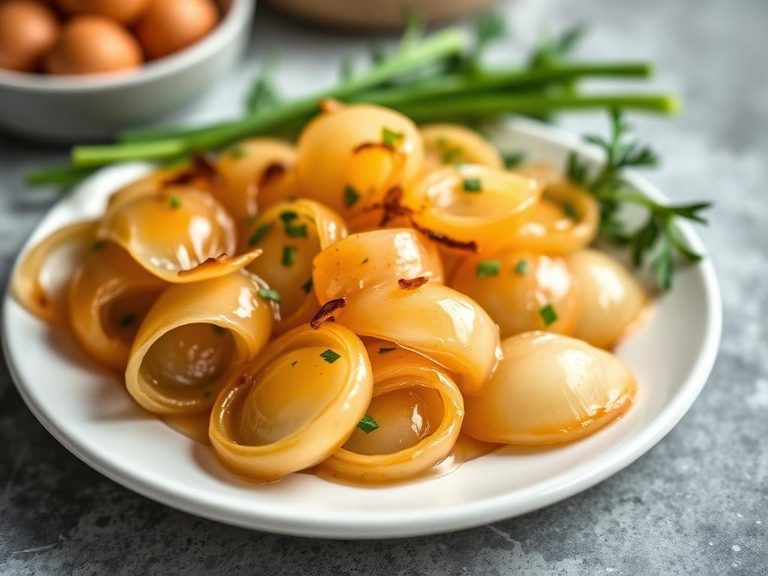
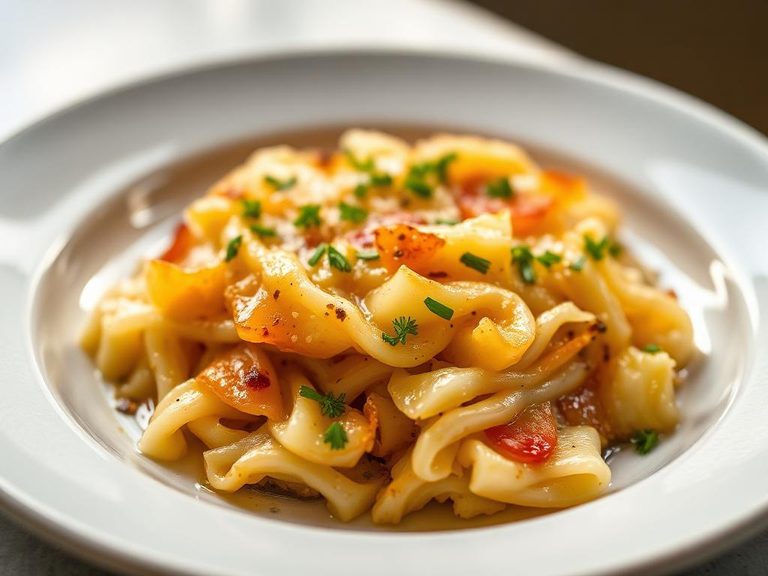
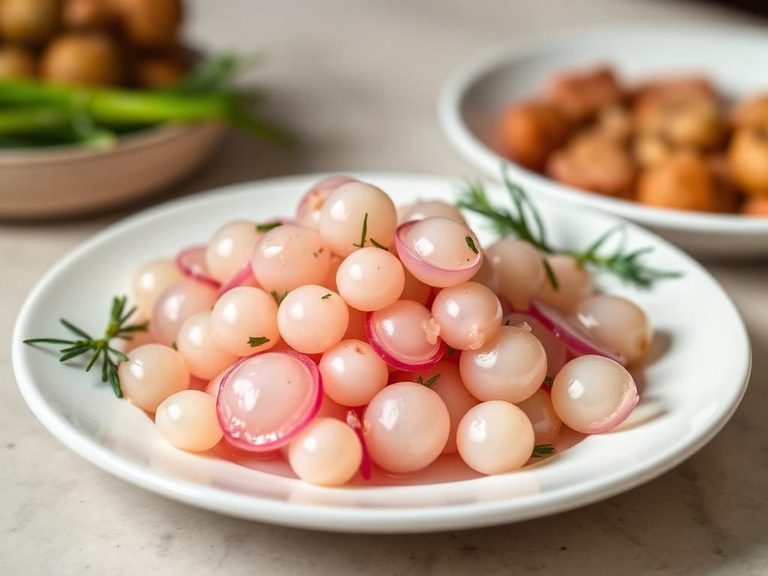
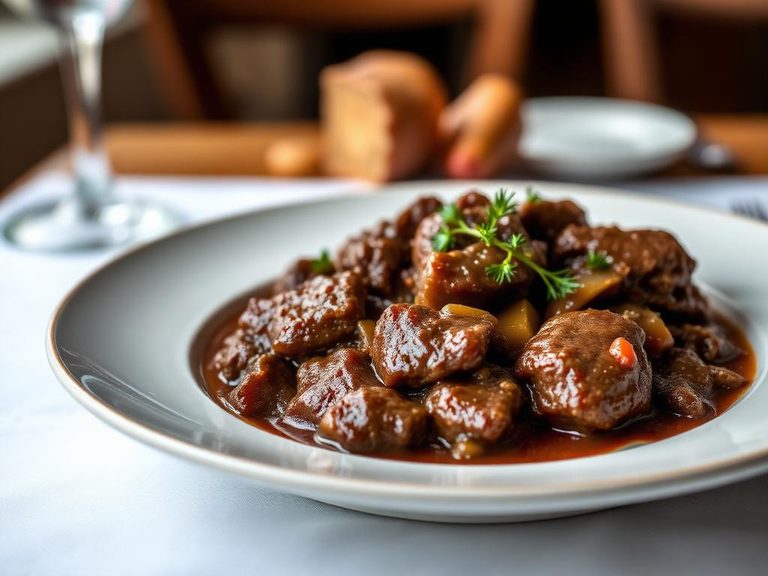
🌍 Where it's eaten
💡 Did you know?
The tiny, uniform size of pearl onions is not natural but is achieved by planting onion seeds very densely, which stunts their growth and forces them to develop as small, single bulbs.
Full nutrition (USDA data · scales with serving)
| Water | 89.6 g |
| Energy | 50.0 kcal |
| Protein | 0.70 g |
| Total lipid (fat) | 2.6 g |
| Carbohydrate, by difference | 6.5 g |
| Fiber, total dietary | 1.4 g |
| Total Sugars | 2.8 g |
| Calcium, Ca | 27.0 mg |
| Iron, Fe | 0.33 mg |
| Magnesium, Mg | 8.0 mg |
| Phosphorus, P | 2.0 mg |
| Potassium, K | 98.0 mg |
| Sodium, Na | 129 mg |
| Zinc, Zn | 0.09 mg |
| Copper, Cu | 0.02 mg |
| Selenium, Se | 0.40 ug |
| Vitamin C, total ascorbic acid | 4.9 mg |
| Thiamin | 0.02 mg |
| Riboflavin | 0.02 mg |
| Niacin | 0.13 mg |
| Vitamin B-6 | 0.08 mg |
| Folate, total | 13.0 ug |
| Folic acid | 0.00 ug |
| Folate, food | 13.0 ug |
| Folate, DFE | 13.0 ug |
| Choline, total | 4.5 mg |
| Vitamin B-12 | 0.00 ug |
| Vitamin B-12, added | 0.00 ug |
| Vitamin A, RAE | 11.0 ug |
| Retinol | 11.0 ug |
| Carotene, beta | 6.0 ug |
| Carotene, alpha | 0.00 ug |
| Cryptoxanthin, beta | 0.00 ug |
| Lycopene | 0.00 ug |
| Lutein + zeaxanthin | 3.0 ug |
| Vitamin E (alpha-tocopherol) | 0.39 mg |
| Vitamin E, added | 0.00 mg |
| Vitamin D (D2 + D3) | 0.00 ug |
| Vitamin K (phylloquinone) | 2.4 ug |
| Alcohol, ethyl | 0.00 g |
| Caffeine | 0.00 mg |
| Theobromine | 0.00 mg |
Fat & fatty acid profile (per 100g)
| Fatty acids, total saturated | 0.68 g |
| SFA 4:0 | 0.02 g |
| SFA 6:0 | 0.01 g |
| SFA 8:0 | 0.01 g |
| SFA 10:0 | 0.02 g |
| SFA 12:0 | 0.02 g |
| SFA 14:0 | 0.06 g |
| SFA 16:0 | 0.37 g |
| SFA 18:0 | 0.14 g |
| Fatty acids, total monounsaturated | 0.91 g |
| MUFA 16:1 | 0.01 g |
| MUFA 18:1 | 0.88 g |
| MUFA 20:1 | 0.01 g |
| MUFA 22:1 | 0.00 g |
| Fatty acids, total polyunsaturated | 0.75 g |
| PUFA 18:2 | 0.67 g |
| PUFA 18:3 | 0.08 g |
| PUFA 18:4 | 0.00 g |
| PUFA 20:4 | 0.00 g |
| PUFA 20:5 n-3 (EPA) | 0.00 g |
| PUFA 22:5 n-3 (DPA) | 0.00 g |
| PUFA 22:6 n-3 (DHA) | 0.00 g |
| Cholesterol | 2.0 mg |
Amino acid profile (per 100g)
Estimated from Onions, dehydrated flakes — USDA does not publish this profile for Onions.
| Tryptophan | 0.13 g |
| Threonine | 0.22 g |
| Isoleucine | 0.32 g |
| Leucine | 0.31 g |
| Lysine | 0.43 g |
| Methionine | 0.07 g |
| Cystine | 0.16 g |
| Phenylalanine | 0.23 g |
| Tyrosine | 0.22 g |
| Valine | 0.21 g |
| Arginine | 1.2 g |
| Histidine | 0.15 g |
| Alanine | 0.25 g |
| Aspartic acid | 0.49 g |
| Glutamic acid | 1.4 g |
| Glycine | 0.37 g |
| Proline | 0.28 g |
| Serine | 0.26 g |
FAQ
What's the difference between pearl onions and regular onions?
Pearl onions are a specific variety grown to be very small (about 1-2 inches in diameter) and are typically used whole or halved. Regular onions (yellow, white, red) are much larger and are usually chopped or sliced.
Do I need to peel pearl onions before cooking?
Yes, the papery skin is tough and inedible. The easiest method is to blanch them in boiling water for 30 seconds, then transfer to an ice bath; the skins will slip off easily.
Can I substitute pearl onions in recipes?
For dishes where they are used whole (like stews or pickles), there is no perfect substitute due to their unique size and texture. In a pinch, you could use small shallot bulbs or cut a regular onion into large chunks, but the result will differ.
Nutrient density (calculated · NRF9.3)
Nutrient Rich Foods index: beneficial nutrients (protein, fiber, vitamins, minerals) minus saturated fat, added sugar & sodium, per 100 kcal.
NRF9.3 index — Fulgoni, Keast & Drewnowski, 2009. Computed from USDA nutrients.
Weight-loss friendliness (composite index)
Energy density 0.50 kcal/g · 6% calories from protein · 1.4 g fiber · 2.8 g sugar per 100 g.
Composite of energy density (Rolls et al., 1999), protein & fiber satiety, minus sugar. A calculated heuristic — ranks satiety-per-calorie, not a clinical measure.
Dietary load (calculated from USDA values)
Potential renal acid load. Positive = acid-forming, negative = alkaline-forming.
Sodium-to-potassium ratio: 1.32 (lower is better — aim for ≤ 1)
Sodium:potassium per WHO potassium guidance. Computed from USDA nutrients.