

Okra, pickled
Common food

Photo: Wikipedia
Pickled okra consists of whole or sliced green okra pods preserved in a brine of vinegar, salt, and often garlic or dill. The process transforms its raw grassy flavor into a tangy, salty, and crisp snack, while the pods retain their signature mucilaginous interior. Nutritionally, it's a very low-calorie, high-fiber condiment with minimal fat and a modest amount of natural sugars.
Calorie split: 12% protein · 85% carbs · 3% fat
↓ Full nutrition💚 Why it's loved
People adore its satisfying crunch and the bright, zesty punch it adds to meals. It's a beloved staple in Southern U.S. cuisine and a popular bar snack, valued for its ability to cut through rich, fatty foods.
⚠️ Watch-outs & how to enjoy it better
The pickling process can significantly increase sodium content, which may be a concern for those monitoring blood pressure. The vinegar's acidity might also be harsh for individuals with acid reflux or sensitive stomachs. To mitigate, look for low-sodium versions, rinse the pods briefly before eating, or pair them with a low-sodium, protein-rich food like cheese or hummus to balance the flavor.
Key benefits
- Excellent source of dietary fiber for digestive health.
- Very low in calories and fat, supporting weight management.
- Provides vitamin K, important for bone health and blood clotting.
- Contains antioxidants like flavonoids and polyphenols.
- Fermented versions may offer probiotic benefits for gut flora.
🍽️ Popular dishes



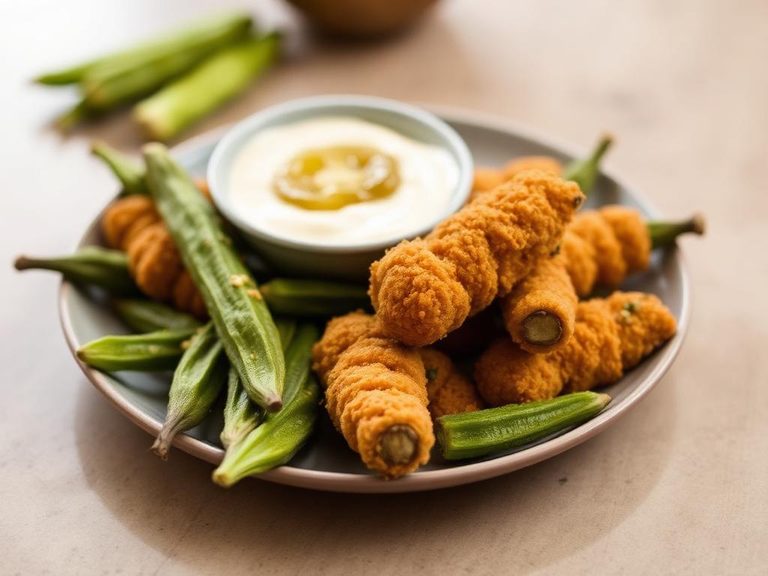
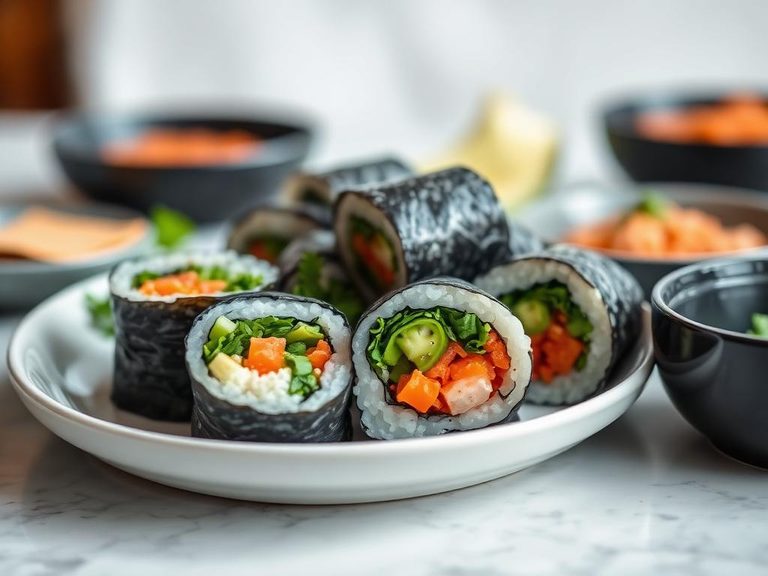
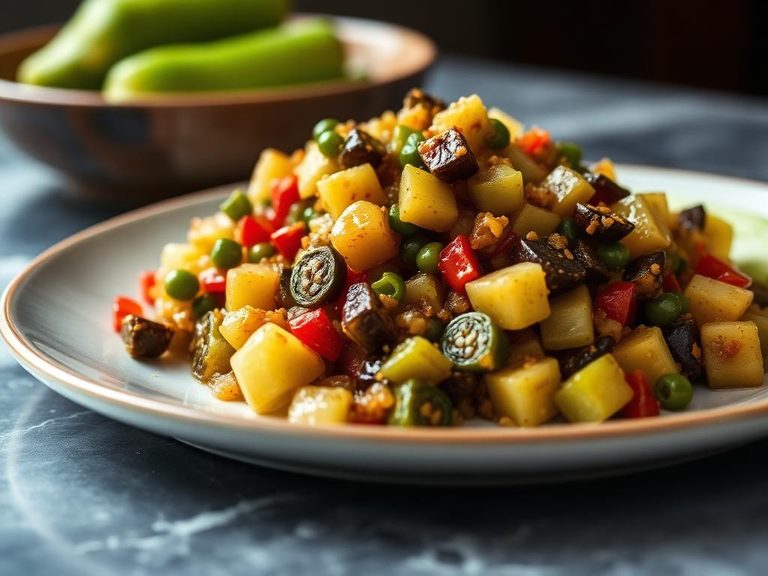
🌍 Where it's eaten
💡 Did you know?
The name 'okra' is derived from the Igbo word 'ọkụrụ,' reflecting its deep roots in West African cuisine before it became a cornerstone of Southern American cooking via the Atlantic slave trade.
Full nutrition (USDA data · scales with serving)
| Water | 83.8 g |
| Energy | 48.0 kcal |
| Protein | 1.6 g |
| Total lipid (fat) | 0.17 g |
| Carbohydrate, by difference | 11.0 g |
| Fiber, total dietary | 2.7 g |
| Total Sugars | 6.1 g |
| Calcium, Ca | 70.0 mg |
| Iron, Fe | 0.52 mg |
| Magnesium, Mg | 47.0 mg |
| Phosphorus, P | 51.0 mg |
| Potassium, K | 248 mg |
| Sodium, Na | 950 mg |
| Zinc, Zn | 0.48 mg |
| Copper, Cu | 0.09 mg |
| Selenium, Se | 0.60 ug |
| Vitamin C, total ascorbic acid | 16.2 mg |
| Thiamin | 0.15 mg |
| Riboflavin | 0.05 mg |
| Niacin | 0.79 mg |
| Vitamin B-6 | 0.16 mg |
| Folate, total | 42.0 ug |
| Folic acid | 0.00 ug |
| Folate, food | 42.0 ug |
| Folate, DFE | 42.0 ug |
| Choline, total | 10.2 mg |
| Vitamin B-12 | 0.00 ug |
| Vitamin B-12, added | 0.00 ug |
| Vitamin A, RAE | 28.0 ug |
| Retinol | 0.00 ug |
| Carotene, beta | 328 ug |
| Carotene, alpha | 21.0 ug |
| Cryptoxanthin, beta | 0.00 ug |
| Lycopene | 0.00 ug |
| Lutein + zeaxanthin | 221 ug |
| Vitamin E (alpha-tocopherol) | 0.22 mg |
| Vitamin E, added | 0.00 mg |
| Vitamin D (D2 + D3) | 0.00 ug |
| Vitamin K (phylloquinone) | 26.0 ug |
| Alcohol, ethyl | 0.00 g |
| Caffeine | 0.00 mg |
| Theobromine | 0.00 mg |
Fat & fatty acid profile (per 100g)
| Fatty acids, total saturated | 0.02 g |
| SFA 4:0 | 0.00 g |
| SFA 6:0 | 0.00 g |
| SFA 8:0 | 0.00 g |
| SFA 10:0 | 0.00 g |
| SFA 12:0 | 0.00 g |
| SFA 14:0 | 0.00 g |
| SFA 16:0 | 0.02 g |
| SFA 18:0 | 0.00 g |
| Fatty acids, total monounsaturated | 0.01 g |
| MUFA 16:1 | 0.00 g |
| MUFA 18:1 | 0.01 g |
| MUFA 20:1 | 0.00 g |
| MUFA 22:1 | 0.00 g |
| Fatty acids, total polyunsaturated | 0.02 g |
| PUFA 18:2 | 0.02 g |
| PUFA 18:3 | 0.00 g |
| PUFA 18:4 | 0.00 g |
| PUFA 20:4 | 0.00 g |
| PUFA 20:5 n-3 (EPA) | 0.00 g |
| PUFA 22:5 n-3 (DPA) | 0.00 g |
| PUFA 22:6 n-3 (DHA) | 0.00 g |
| Cholesterol | 0.00 mg |
Amino acid profile (per 100g)
Estimated from Okra, raw — USDA does not publish this profile for Okra.
| Tryptophan | 0.02 g |
| Threonine | 0.07 g |
| Isoleucine | 0.07 g |
| Leucine | 0.10 g |
| Lysine | 0.08 g |
| Methionine | 0.02 g |
| Cystine | 0.02 g |
| Phenylalanine | 0.07 g |
| Tyrosine | 0.09 g |
| Valine | 0.09 g |
| Arginine | 0.08 g |
| Histidine | 0.03 g |
| Alanine | 0.07 g |
| Aspartic acid | 0.14 g |
| Glutamic acid | 0.27 g |
| Glycine | 0.04 g |
| Proline | 0.04 g |
| Serine | 0.04 g |
FAQ
Is pickled okra the same as fermented okra?
Not always. Most commercial pickled okra is made with a vinegar brine (quick pickling). Fermented okra uses a salt brine, allowing natural lactobacillus bacteria to create a tangy flavor and potentially probiotic benefits. Check the label for 'live cultures' or 'naturally fermented.'
Can I eat the seeds and skin?
Yes, the entire pod is edible. The skin provides fiber, and the seeds are a source of healthy fats and minerals. The pickling process softens them, making them easy to consume.
How long does an opened jar last?
Once opened, keep it refrigerated and submerged in its brine. It will maintain its best quality for about 1-2 months, though it may remain safe to eat for longer if no mold or off-odors develop.
Nutrient density (calculated · NRF9.3)
Nutrient Rich Foods index: beneficial nutrients (protein, fiber, vitamins, minerals) minus saturated fat, added sugar & sodium, per 100 kcal.
NRF9.3 index — Fulgoni, Keast & Drewnowski, 2009. Computed from USDA nutrients.
Weight-loss friendliness (composite index)
Energy density 0.48 kcal/g · 13% calories from protein · 2.7 g fiber · 6.1 g sugar per 100 g.
Composite of energy density (Rolls et al., 1999), protein & fiber satiety, minus sugar. A calculated heuristic — ranks satiety-per-calorie, not a clinical measure.
Dietary load (calculated from USDA values)
Potential renal acid load. Positive = acid-forming, negative = alkaline-forming.
Sodium-to-potassium ratio: 3.83 (lower is better — aim for ≤ 1)
Sodium:potassium per WHO potassium guidance. Computed from USDA nutrients.