

Octopus
Common food

Photo: Wikipedia
Octopus is a firm, meaty seafood prized for its mild, slightly sweet flavor that beautifully absorbs marinades and sauces. When cooked properly, its texture is tender and succulent, but overcooking can render it unpleasantly rubbery. Nutritionally, it's a lean protein powerhouse with minimal fat and virtually no sugar, making it a staple in many healthy coastal cuisines.
Calorie split: 24% protein · 24% carbs · 52% fat
↓ Full nutrition💚 Why it's loved
People love octopus for its unique, satisfying texture and its remarkable ability to act as a canvas for bold flavors—from smoky paprika to bright citrus. It's deeply woven into the culinary traditions of coastal cultures worldwide, symbolizing both rustic simplicity and gourmet sophistication.
⚠️ Watch-outs & how to enjoy it better
The primary challenge is its texture; improper cooking results in a tough, chewy experience. It also contains purines, which individuals with gout or certain kidney conditions may need to limit. To ensure tenderness, tenderize by freezing first, then use a slow-braise or a quick, high-heat grill after parboiling.
Key benefits
- Excellent source of high-quality lean protein
- Rich in vitamin B12, essential for nerve function
- Provides iron and selenium for energy and immunity
- Low in calories and carbohydrates
🍽️ Popular dishes
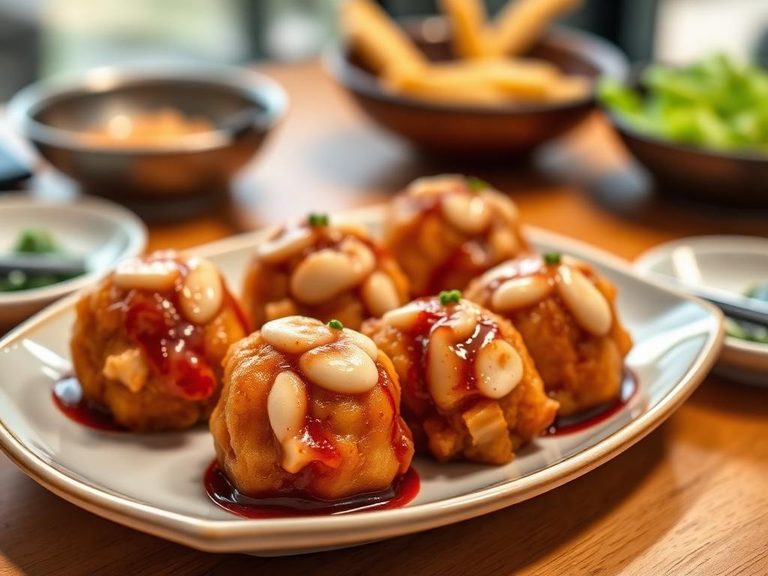
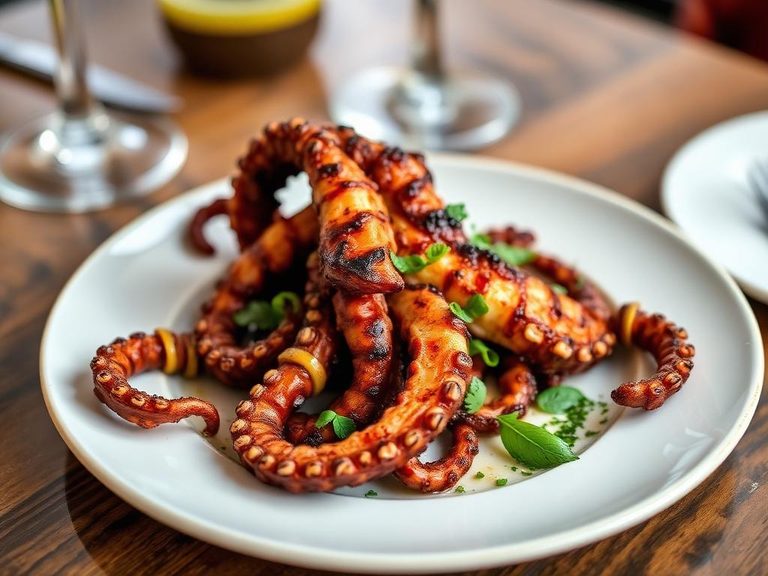
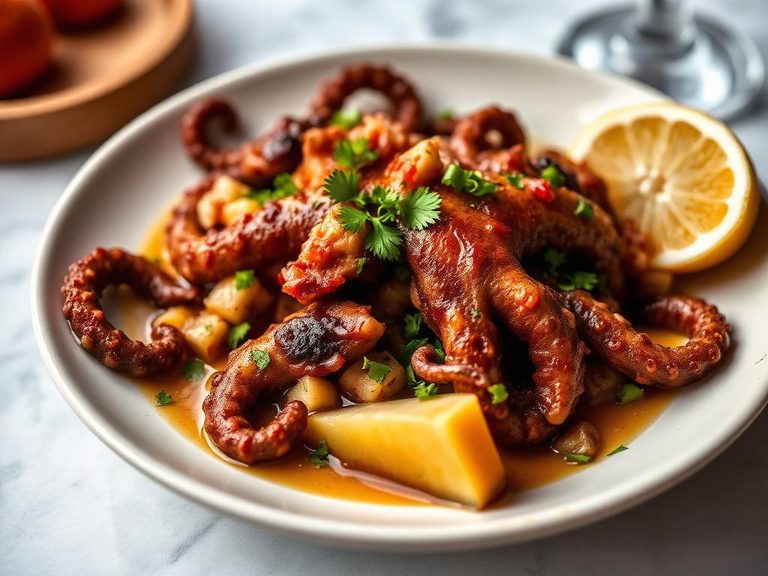
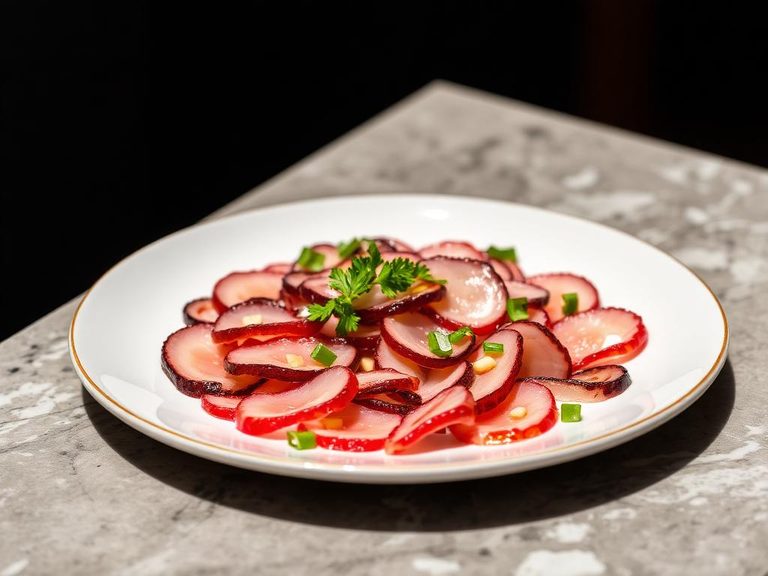
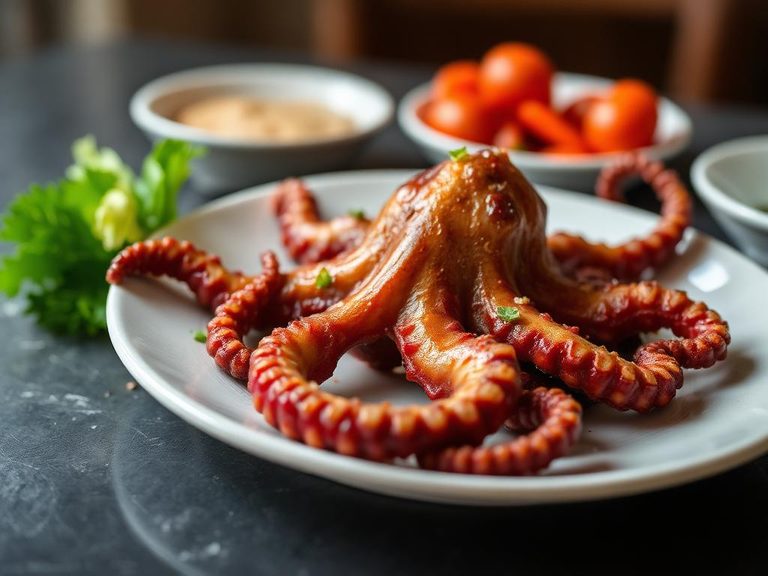
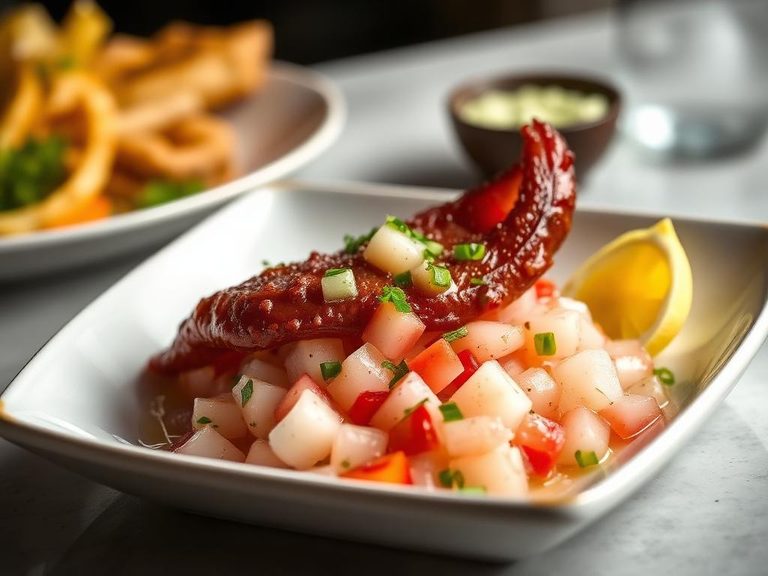
🌍 Where it's eaten
💡 Did you know?
The common octopus has three hearts and blue, copper-based blood, which is why it's sometimes called a 'blue-blooded' creature.
Full nutrition (USDA data · scales with serving)
| Water | 58.1 g |
| Energy | 226 kcal |
| Protein | 13.3 g |
| Total lipid (fat) | 13.0 g |
| Carbohydrate, by difference | 13.4 g |
| Fiber, total dietary | 0.50 g |
| Total Sugars | 0.20 g |
| Calcium, Ca | 55.0 mg |
| Iron, Fe | 4.9 mg |
| Magnesium, Mg | 28.0 mg |
| Phosphorus, P | 164 mg |
| Potassium, K | 290 mg |
| Sodium, Na | 518 mg |
| Zinc, Zn | 1.4 mg |
| Copper, Cu | 0.36 mg |
| Selenium, Se | 37.2 ug |
| Vitamin C, total ascorbic acid | 3.0 mg |
| Thiamin | 0.17 mg |
| Riboflavin | 0.10 mg |
| Niacin | 2.5 mg |
| Vitamin B-6 | 0.26 mg |
| Folate, total | 33.0 ug |
| Folic acid | 20.0 ug |
| Folate, food | 14.0 ug |
| Folate, DFE | 47.0 ug |
| Choline, total | 56.3 mg |
| Vitamin B-12 | 12.9 ug |
| Vitamin B-12, added | 0.00 ug |
| Vitamin A, RAE | 35.0 ug |
| Retinol | 35.0 ug |
| Carotene, beta | 0.00 ug |
| Carotene, alpha | 0.00 ug |
| Cryptoxanthin, beta | 0.00 ug |
| Lycopene | 0.00 ug |
| Lutein + zeaxanthin | 10.0 ug |
| Vitamin E (alpha-tocopherol) | 3.2 mg |
| Vitamin E, added | 0.00 mg |
| Vitamin D (D2 + D3) | 0.00 ug |
| Vitamin K (phylloquinone) | 12.0 ug |
| Alcohol, ethyl | 0.00 g |
| Caffeine | 0.00 mg |
| Theobromine | 0.00 mg |
Fat & fatty acid profile (per 100g)
| Fatty acids, total saturated | 1.8 g |
| SFA 4:0 | 0.00 g |
| SFA 6:0 | 0.00 g |
| SFA 8:0 | 0.00 g |
| SFA 10:0 | 0.00 g |
| SFA 12:0 | 0.00 g |
| SFA 14:0 | 0.03 g |
| SFA 16:0 | 1.3 g |
| SFA 18:0 | 0.40 g |
| Fatty acids, total monounsaturated | 5.2 g |
| MUFA 16:1 | 0.10 g |
| MUFA 18:1 | 5.0 g |
| MUFA 20:1 | 0.10 g |
| MUFA 22:1 | 0.01 g |
| Fatty acids, total polyunsaturated | 4.8 g |
| PUFA 18:2 | 4.1 g |
| PUFA 18:3 | 0.52 g |
| PUFA 18:4 | 0.02 g |
| PUFA 20:4 | 0.03 g |
| PUFA 20:5 n-3 (EPA) | 0.06 g |
| PUFA 22:5 n-3 (DPA) | 0.01 g |
| PUFA 22:6 n-3 (DHA) | 0.06 g |
| Cholesterol | 43.0 mg |
Amino acid profile (per 100g)
Estimated from Mollusks, octopus, common, raw — USDA does not publish this profile for Octopus.
| Tryptophan | 0.17 g |
| Threonine | 0.64 g |
| Isoleucine | 0.65 g |
| Leucine | 1.0 g |
| Lysine | 1.1 g |
| Methionine | 0.34 g |
| Cystine | 0.20 g |
| Phenylalanine | 0.53 g |
| Tyrosine | 0.48 g |
| Valine | 0.65 g |
| Arginine | 1.1 g |
| Histidine | 0.29 g |
| Alanine | 0.90 g |
| Aspartic acid | 1.4 g |
| Glutamic acid | 2.0 g |
| Glycine | 0.93 g |
| Proline | 0.61 g |
| Serine | 0.67 g |
FAQ
How do you tenderize octopus before cooking?
The most reliable home method is to freeze the raw octopus for at least 24 hours before cooking. The ice crystals break down muscle fibers. Another traditional technique is to beat it against a rock or use a meat mallet.
What's the best way to cook octopus to avoid rubberiness?
A two-step method is best: first, simmer it gently in water (often with a cork or wine cork, a traditional trick) until a knife slides in easily, about 45-60 minutes. Then, shock it in ice water. Finally, sear or grill it quickly over high heat to caramelize the outside.
Is octopus high in cholesterol?
While octopus contains some cholesterol, it is very low in saturated fat. For most people, it can be part of a heart-healthy diet. The bigger nutritional benefit is its high protein and micronutrient content.
Nutrient density (calculated · NRF9.3)
Nutrient Rich Foods index: beneficial nutrients (protein, fiber, vitamins, minerals) minus saturated fat, added sugar & sodium, per 100 kcal.
NRF9.3 index — Fulgoni, Keast & Drewnowski, 2009. Computed from USDA nutrients.
Weight-loss friendliness (composite index)
Energy density 2.26 kcal/g · 23% calories from protein · 0.5 g fiber · 0.2 g sugar per 100 g.
Composite of energy density (Rolls et al., 1999), protein & fiber satiety, minus sugar. A calculated heuristic — ranks satiety-per-calorie, not a clinical measure.
Dietary load (calculated from USDA values)
Potential renal acid load. Positive = acid-forming, negative = alkaline-forming.
Sodium-to-potassium ratio: 1.79 (lower is better — aim for ≤ 1)
Sodium:potassium per WHO potassium guidance. Computed from USDA nutrients.