Takoyaki
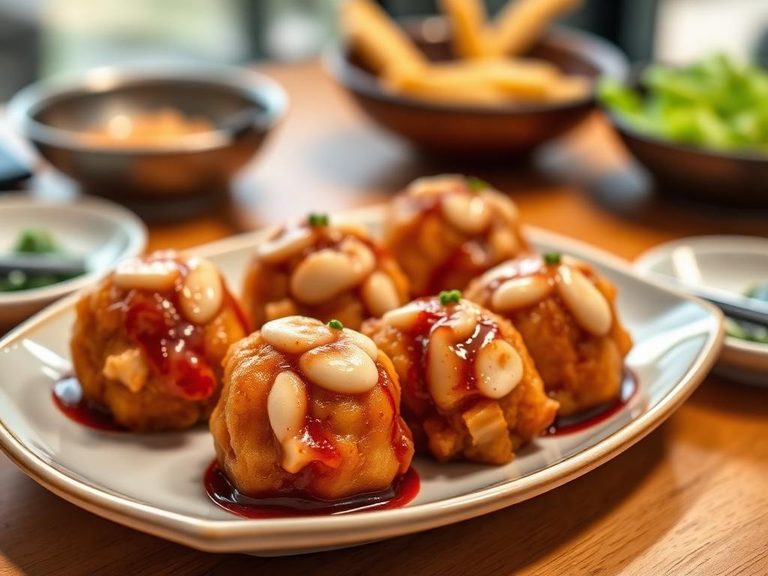
Takoyaki are savory, ball-shaped Japanese snacks made from a wheat flour-based batter and filled with diced octopus, pickled ginger, and green onion. Originating in Osaka in 1935, they are a quintessential street food cooked in a special molded pan and typically topped with a sweet-savory sauce, mayonnaise, and bonito flakes.
🍽️ Nutrition at a glance
Takoyaki are a moderate source of carbohydrates from the batter and fats from the oil and toppings, with a smaller amount of protein from the octopus. A typical serving of about 4-6 balls provides roughly 200-300 calories.
Nutrition breakdown
| Calories | 350 kcal |
| Protein | 12 g |
| Carbs | 40 g |
| Fat | 15 g |
| Fiber | 2 g |
| Sugar | 4 g |
| Sodium | 850 mg |
| Iron | 2.5 mg |
| Calcium | 80 mg |
| Potassium | 220 mg |
| Phosphorus | 150 mg |
| Vitamin B12 | 1.8 µg |
| Niacin (B3) | 3.2 mg |
| Selenium | 20 µg |
| Magnesium | 25 mg |
Per 6 pieces (180 g) · estimated, varies by recipe
💡 What's interesting
Culturally, takoyaki are a beloved symbol of Osaka's vibrant street food scene and are often enjoyed at festivals. Nutritionally, the octopus provides a lean source of protein and minerals like selenium and vitamin B12, contrasting with the richer batter and toppings.