

Octopus (Alaska Native)
Whole food · American Indian/Alaska Native Foods

Photo: Wikipedia
Alaska Native octopus is a lean, protein-dense cephalopod harvested from the cold, nutrient-rich waters of the North Pacific. Its texture is tender yet firm when cooked properly, offering a mild, slightly sweet flavor that readily absorbs marinades and seasonings. Nutritionally, it's a powerhouse of high-quality protein with virtually no fat or carbohydrates.
Calorie split: 87% protein · 0% carbs · 13% fat
↓ Full nutrition💚 Why it's loved
People love it for its unique, satisfying texture and its incredible versatility—it can be grilled, braised, or used in ceviche, taking on the flavors of bold sauces or delicate broths. In many coastal cultures, it's a celebrated staple, representing both a connection to the ocean and a skillful culinary ingredient.
⚠️ Watch-outs & how to enjoy it better
Its primary downside is its potential for a rubbery, tough texture if overcooked or prepared incorrectly, which can be off-putting. Those with shellfish allergies should exercise caution, as octopus is a common allergen. To counteract toughness, it benefits from either very quick, high-heat cooking (like grilling) or very slow, moist cooking (like braising), and tenderizing methods like freezing or massaging with salt.
Key benefits
- Excellent source of complete, low-fat protein
- Rich in vitamin B12 for nerve and blood cell health
- Provides essential minerals like selenium and iron
- Naturally low in calories and carbohydrates
- Contains taurine, an amino acid important for heart health
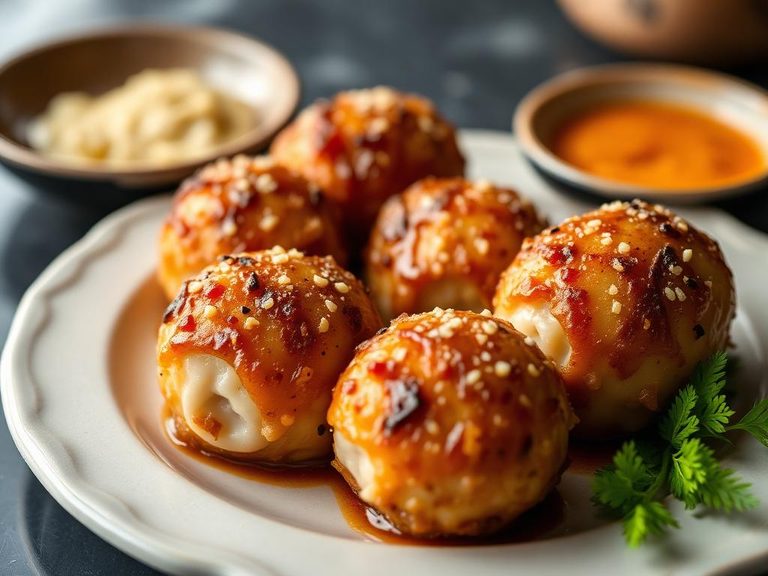
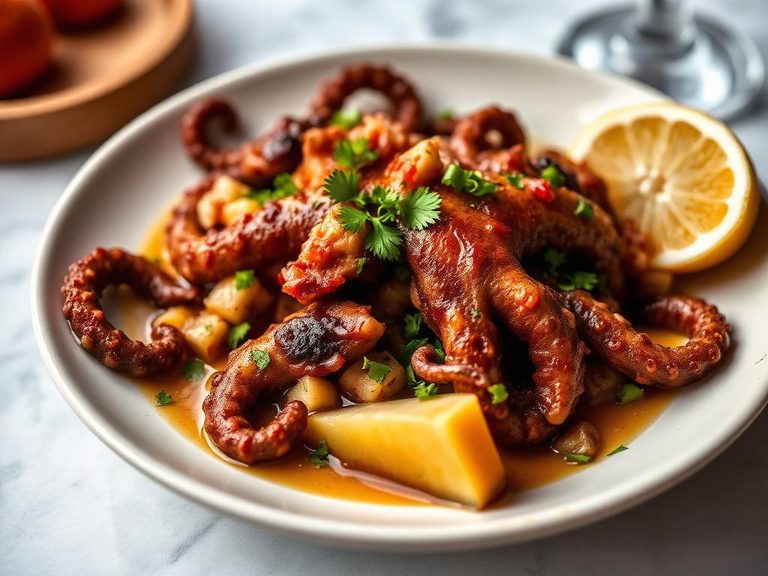
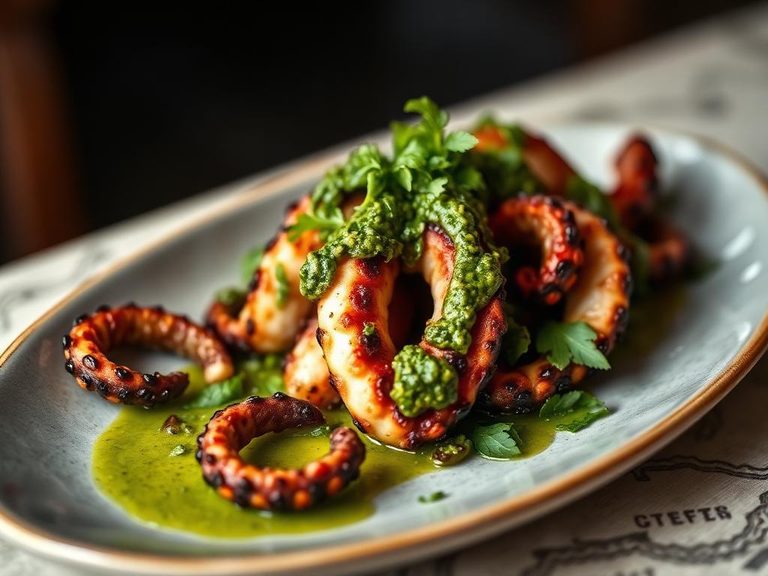
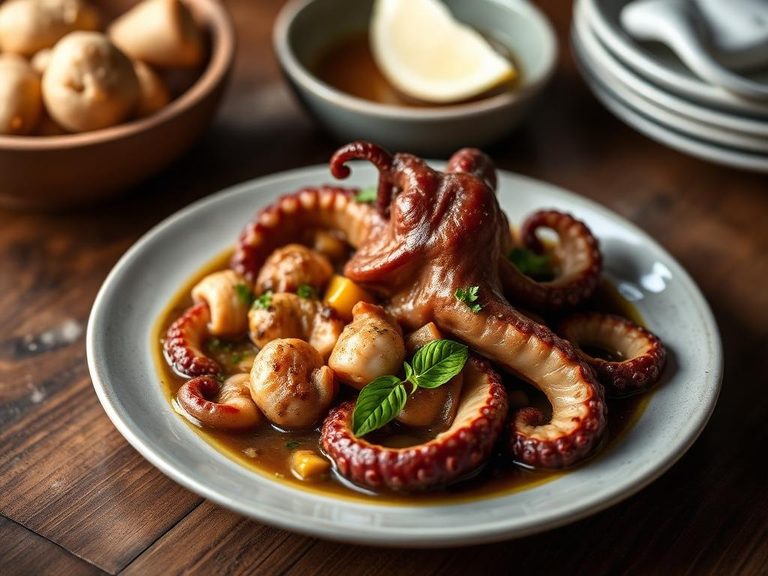
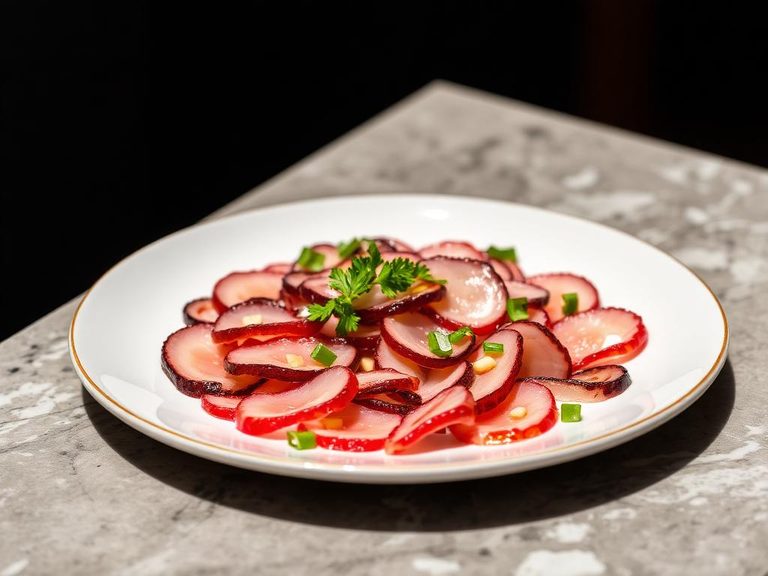
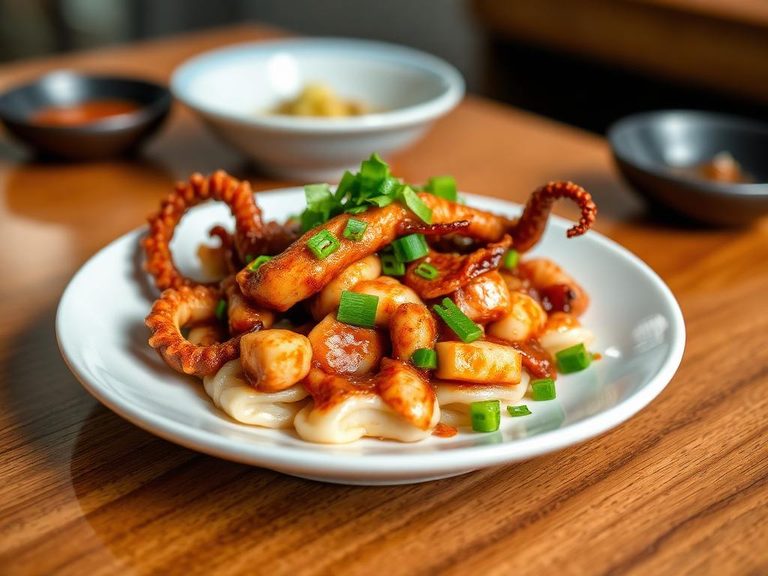
🍽️ Popular dishes
🌍 Where it's eaten
💡 Did you know?
The Alaska octopus (Enteroctopus dofleini) is one of the largest octopus species in the world, with an arm span that can reach over 20 feet, yet it is prized for its tender flesh when harvested at a smaller, marketable size.
Full nutrition (USDA data · scales with serving)
| Water | 84.0 g |
| Energy | 56.0 kcal |
| Energy | 236 kj |
| Protein | 12.3 g |
| Total lipid (fat) | 0.80 g |
| Ash | 1.5 g |
| Carbohydrate, by difference | 0.00 g |
| Calcium, Ca | 35.0 mg |
| Iron, Fe | 4.9 mg |
| Phosphorus, P | 158 mg |
| Zinc, Zn | 1.4 mg |
| Copper, Cu | 0.37 mg |
| Manganese, Mn | 0.02 mg |
| Vitamin C, total ascorbic acid | 0.00 mg |
| Thiamin | 0.03 mg |
| Riboflavin | 0.04 mg |
| Niacin | 2.0 mg |
| Vitamin A, IU | 0.00 iu |
Fat & fatty acid profile (per 100g)
| Fatty acids, total saturated | 0.20 g |
| Fatty acids, total polyunsaturated | 0.20 g |
| Cholesterol | 41.0 mg |
FAQ
How do you prevent octopus from becoming rubbery?
The key is to not overcook it. For a tender result, you can either braise it slowly in liquid for 45-60 minutes until fork-tender, or cook it very quickly over high heat (grill or sauté) for just 2-3 minutes per side. Freezing it before cooking also helps break down muscle fibers.
Is octopus high in cholesterol?
While octopus contains dietary cholesterol, it is very low in saturated fat. For most people, the dietary cholesterol in lean proteins like octopus has a minimal impact on blood cholesterol levels, especially as part of a balanced diet.
What does octopus taste like?
Octopus has a mild, slightly sweet flavor similar to other shellfish like lobster or squid, but less briny. Its primary characteristic is its texture, which is tender and meaty when cooked correctly.
Weight-loss friendliness (composite index)
Energy density 0.56 kcal/g · 88% calories from protein · 0.0 g fiber · 0.0 g sugar per 100 g.
Composite of energy density (Rolls et al., 1999), protein & fiber satiety, minus sugar. A calculated heuristic — ranks satiety-per-calorie, not a clinical measure.