

Muffin, pumpkin
Common food

Photo: Wikipedia
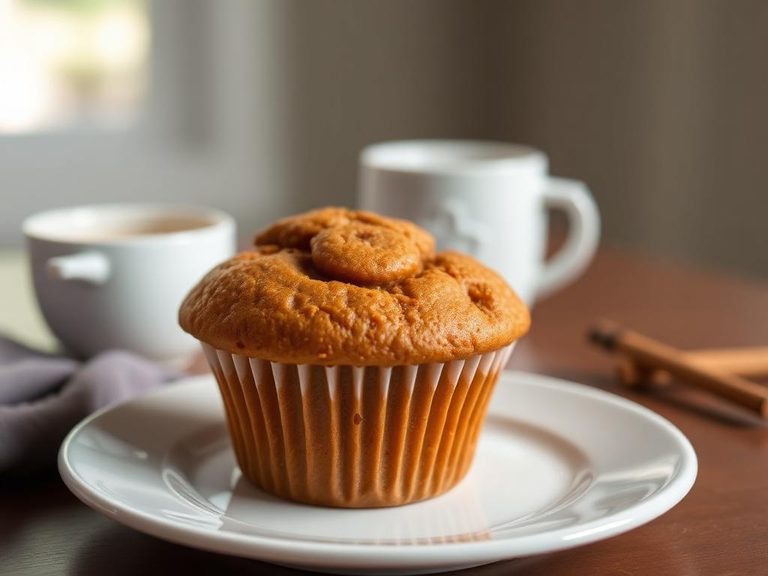
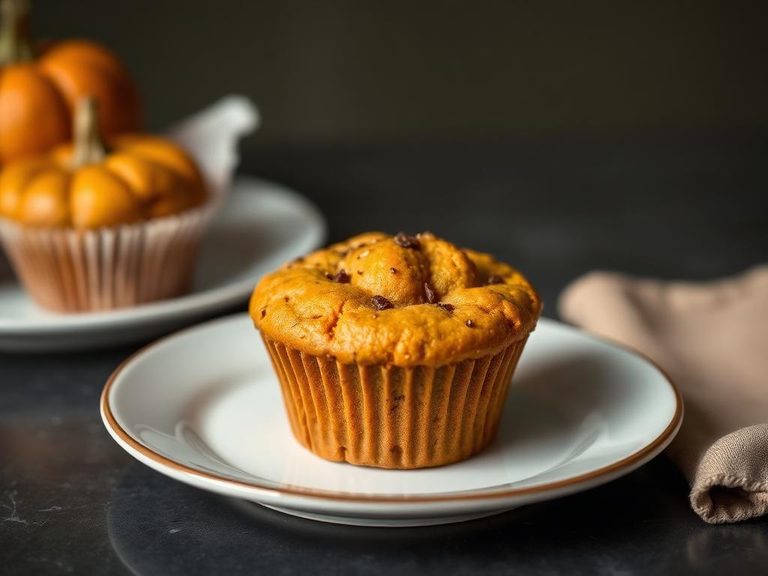
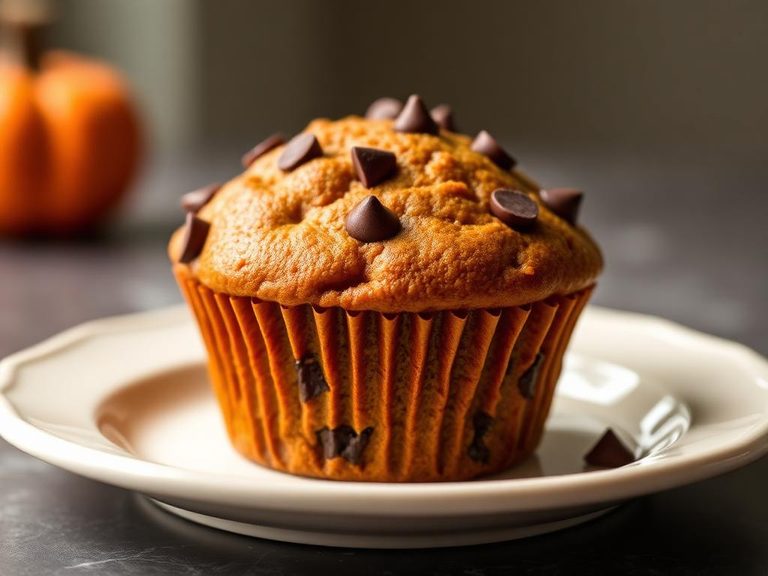
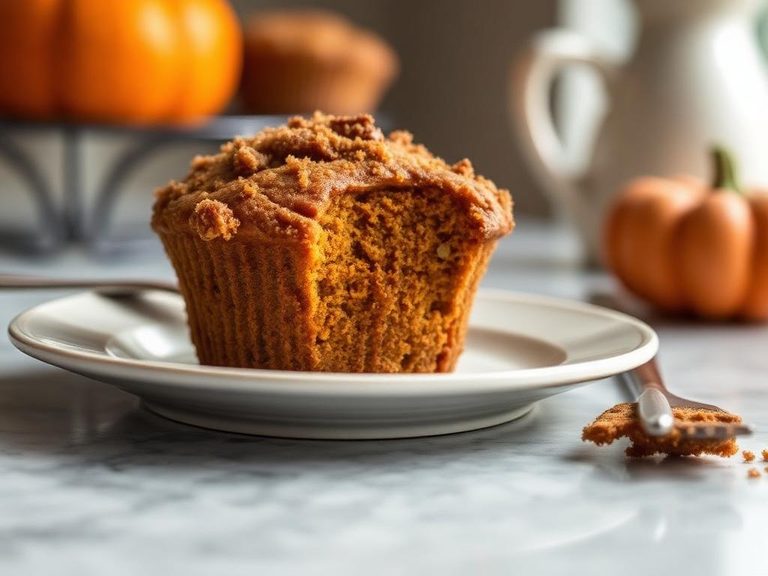
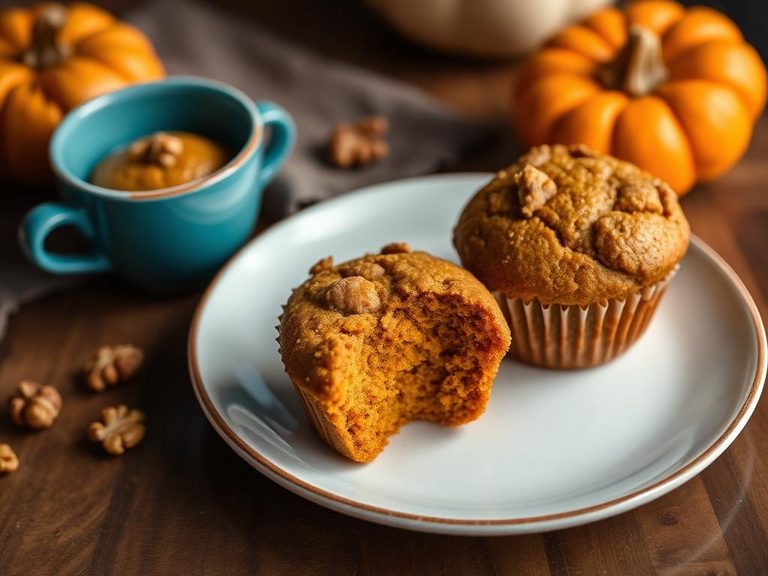
A moist, tender quick bread infused with pumpkin puree and warm spices like cinnamon, nutmeg, and cloves. Its flavor is sweet and earthy, with a soft, cake-like crumb that is denser than a standard muffin. While delicious, it is calorie-dense with a significant amount of sugar, making it more of a treat than a breakfast staple.
Calorie split: 6% protein · 56% carbs · 38% fat
↓ Full nutrition💚 Why it's loved
People love it for the cozy, nostalgic flavors of autumn and the comforting, moist texture that pairs perfectly with coffee or tea. It's a versatile treat that can be enjoyed for breakfast, as a snack, or even as a dessert.
⚠️ Watch-outs & how to enjoy it better
The high sugar content can lead to blood-sugar spikes, and it's often made with refined flour and added fats, making it less suitable for those managing diabetes or weight. To counteract this, pair it with a source of protein like Greek yogurt or a handful of nuts, and practice portion control by choosing a mini muffin or sharing a standard one.
Key benefits
- Provides a quick source of energy from carbohydrates.
- Contains small amounts of Vitamin A from pumpkin puree.
- Offers a convenient, portable snack or breakfast option.
- Can be made with whole wheat flour to increase fiber content.
🍽️ Popular dishes
🌍 Where it's eaten
💡 Did you know?
The modern pumpkin muffin's popularity is heavily tied to the 'Pumpkin Spice' craze, which began in the early 2000s and turned a seasonal ingredient into a year-round cultural phenomenon.
Full nutrition (USDA data · scales with serving)
| Water | 37.1 g |
| Energy | 305 kcal |
| Protein | 5.0 g |
| Total lipid (fat) | 12.9 g |
| Carbohydrate, by difference | 43.2 g |
| Fiber, total dietary | 1.4 g |
| Total Sugars | 22.6 g |
| Calcium, Ca | 137 mg |
| Iron, Fe | 2.1 mg |
| Magnesium, Mg | 18.0 mg |
| Phosphorus, P | 108 mg |
| Potassium, K | 153 mg |
| Sodium, Na | 285 mg |
| Zinc, Zn | 0.45 mg |
| Copper, Cu | 0.07 mg |
| Selenium, Se | 7.7 ug |
| Vitamin C, total ascorbic acid | 0.80 mg |
| Thiamin | 0.21 mg |
| Riboflavin | 0.18 mg |
| Niacin | 1.6 mg |
| Vitamin B-6 | 0.05 mg |
| Folate, total | 35.0 ug |
| Folic acid | 24.0 ug |
| Folate, food | 12.0 ug |
| Folate, DFE | 52.0 ug |
| Choline, total | 34.6 mg |
| Vitamin B-12 | 0.15 ug |
| Vitamin B-12, added | 0.00 ug |
| Vitamin A, RAE | 209 ug |
| Retinol | 31.0 ug |
| Carotene, beta | 1585 ug |
| Carotene, alpha | 1095 ug |
| Cryptoxanthin, beta | 1.0 ug |
| Lycopene | 0.00 ug |
| Lutein + zeaxanthin | 53.0 ug |
| Vitamin E (alpha-tocopherol) | 2.5 mg |
| Vitamin E, added | 0.00 mg |
| Vitamin D (D2 + D3) | 0.50 ug |
| Vitamin K (phylloquinone) | 15.0 ug |
| Alcohol, ethyl | 0.00 g |
| Caffeine | 0.00 mg |
| Theobromine | 0.00 mg |
Fat & fatty acid profile (per 100g)
| Fatty acids, total saturated | 2.2 g |
| SFA 4:0 | 0.01 g |
| SFA 6:0 | 0.01 g |
| SFA 8:0 | 0.01 g |
| SFA 10:0 | 0.01 g |
| SFA 12:0 | 0.02 g |
| SFA 14:0 | 0.06 g |
| SFA 16:0 | 1.5 g |
| SFA 18:0 | 0.45 g |
| Fatty acids, total monounsaturated | 5.2 g |
| MUFA 16:1 | 0.07 g |
| MUFA 18:1 | 5.0 g |
| MUFA 20:1 | 0.07 g |
| MUFA 22:1 | 0.00 g |
| Fatty acids, total polyunsaturated | 4.5 g |
| PUFA 18:2 | 4.0 g |
| PUFA 18:3 | 0.49 g |
| PUFA 18:4 | 0.00 g |
| PUFA 20:4 | 0.00 g |
| PUFA 20:5 n-3 (EPA) | 0.00 g |
| PUFA 22:5 n-3 (DPA) | 0.00 g |
| PUFA 22:6 n-3 (DHA) | 0.00 g |
| Cholesterol | 42.0 mg |
Amino acid profile (per 100g)
Estimated from Muffins, blueberry, commercially prepared (Includes mini-muffins) — USDA does not publish this profile for Muffin.
| Tryptophan | 0.07 g |
| Threonine | 0.18 g |
| Isoleucine | 0.22 g |
| Leucine | 0.42 g |
| Lysine | 0.20 g |
| Methionine | 0.12 g |
| Cystine | 0.11 g |
| Phenylalanine | 0.28 g |
| Tyrosine | 0.18 g |
| Valine | 0.26 g |
| Arginine | 0.24 g |
| Histidine | 0.13 g |
| Alanine | 0.21 g |
| Aspartic acid | 0.32 g |
| Glutamic acid | 1.5 g |
| Glycine | 0.19 g |
| Proline | 0.54 g |
| Serine | 0.30 g |
| Hydroxyproline | 0.00 g |
FAQ
Is a pumpkin muffin healthy?
It can be part of a balanced diet, but it's typically high in sugar and refined carbs. For a healthier version, look for recipes using whole wheat flour, less sugar, and added nuts or seeds for fiber and protein.
What makes pumpkin muffins moist?
The pumpkin puree itself adds moisture, and recipes often include oil or butter and sometimes sour cream or yogurt to ensure a tender, non-dry crumb.
Can I freeze pumpkin muffins?
Yes, they freeze very well. Wrap them individually in plastic wrap and place them in a freezer-safe bag. They can be stored for up to 3 months and reheated in the microwave or oven.
Nutrient density (calculated · NRF9.3)
Nutrient Rich Foods index: beneficial nutrients (protein, fiber, vitamins, minerals) minus saturated fat, added sugar & sodium, per 100 kcal.
NRF9.3 index — Fulgoni, Keast & Drewnowski, 2009. Computed from USDA nutrients.
Weight-loss friendliness (composite index)
Energy density 3.05 kcal/g · 7% calories from protein · 1.4 g fiber · 22.6 g sugar per 100 g.
Composite of energy density (Rolls et al., 1999), protein & fiber satiety, minus sugar. A calculated heuristic — ranks satiety-per-calorie, not a clinical measure.
Dietary load (calculated from USDA values)
Potential renal acid load. Positive = acid-forming, negative = alkaline-forming.
Sodium-to-potassium ratio: 1.86 (lower is better — aim for ≤ 1)
Sodium:potassium per WHO potassium guidance. Computed from USDA nutrients.