

Muffin, NFS
Common food
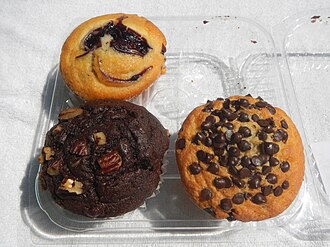
Photo: Wikipedia
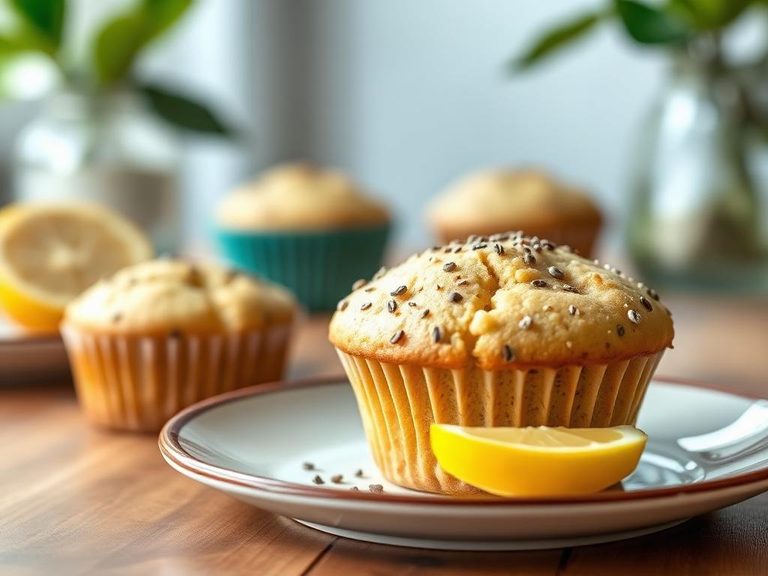
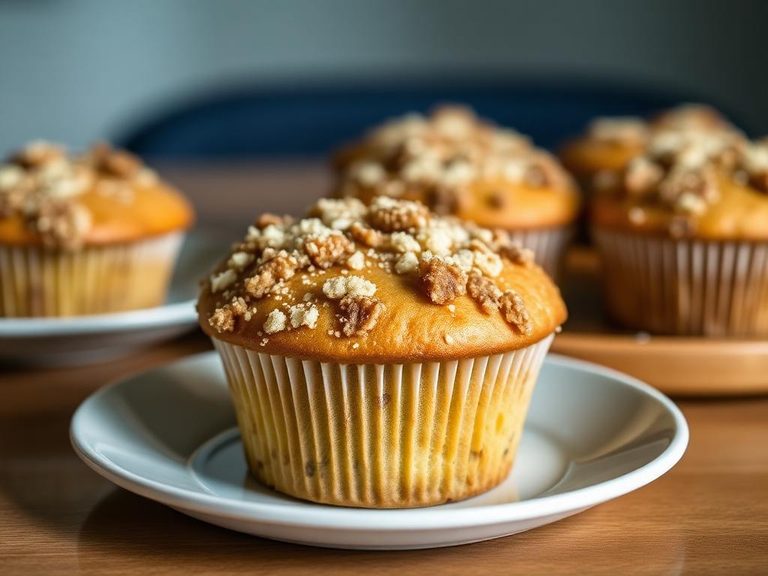
Muffin, NFS (Not Further Specified) is a ubiquitous, tender, and often sweet quick bread, typically baked in a cup-shaped liner. Its texture ranges from light and cake-like to dense and moist, with a golden-brown top that can be plain, studded with fruit, or crowned with a crumbly streusel. Nutritionally, it's a significant source of refined carbohydrates and added sugars, providing a quick energy boost but little fiber or protein.
Calorie split: 5% protein · 57% carbs · 39% fat
↓ Full nutrition💚 Why it's loved
People adore muffins for their comforting, cake-like sweetness and the sheer variety available—from classic blueberry to decadent chocolate chip. They are a beloved, grab-and-go staple that feels like a treat any time of day.
⚠️ Watch-outs & how to enjoy it better
The high sugar and refined carbohydrate content can lead to blood sugar spikes and crashes, offering little sustained energy. To mitigate this, pair a muffin with a source of protein (like Greek yogurt or eggs) or healthy fat (like nuts) to slow sugar absorption, and practice portion control by choosing a smaller size or sharing. Those with gluten or dairy allergies should check ingredients carefully.
Key benefits
- Provides quick energy from carbohydrates
- Convenient and portable breakfast or snack
- Versatile base for sweet or savory additions
- A familiar comfort food in many cultures
- Can be easily homemade with simple ingredients
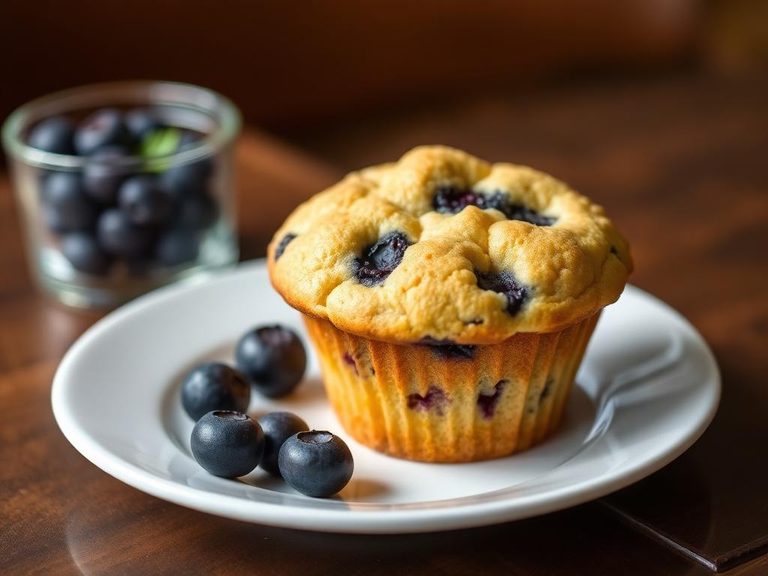
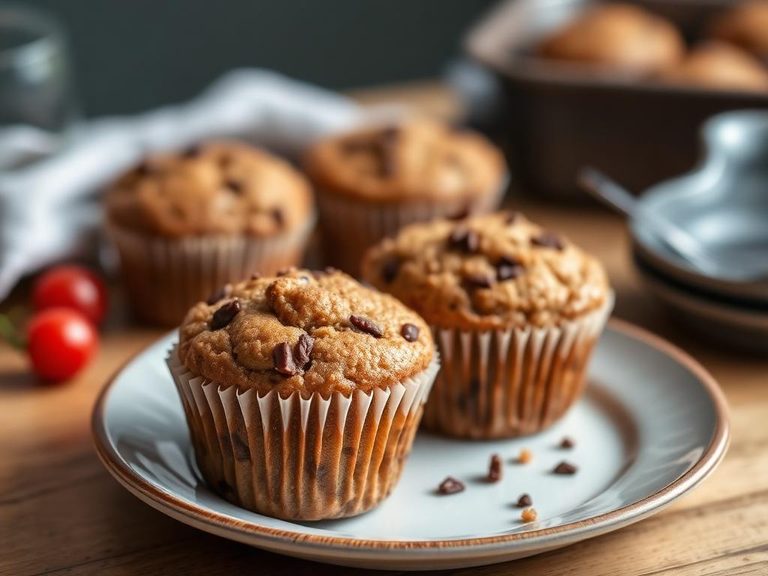
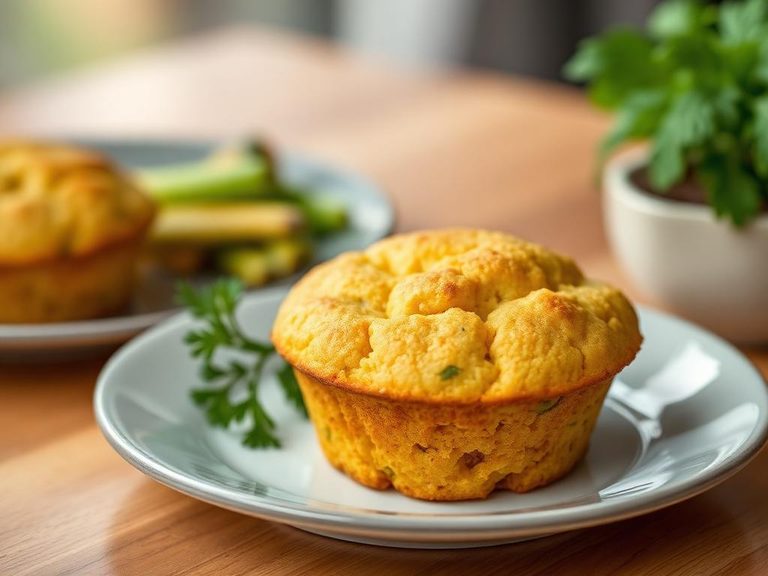
🍽️ Popular dishes

🌍 Where it's eaten
💡 Did you know?
The muffin's rise in popularity in the United States is closely tied to the development of chemical leavening agents like baking powder in the 19th century, which made them quick and easy to bake without yeast.
Full nutrition (USDA data · scales with serving)
| Water | 25.0 g |
| Energy | 375 kcal |
| Protein | 4.5 g |
| Total lipid (fat) | 16.1 g |
| Carbohydrate, by difference | 53.0 g |
| Fiber, total dietary | 1.1 g |
| Total Sugars | 31.5 g |
| Calcium, Ca | 44.0 mg |
| Iron, Fe | 1.3 mg |
| Magnesium, Mg | 10.0 mg |
| Phosphorus, P | 146 mg |
| Potassium, K | 121 mg |
| Sodium, Na | 336 mg |
| Zinc, Zn | 0.37 mg |
| Copper, Cu | 0.06 mg |
| Selenium, Se | 8.2 ug |
| Vitamin C, total ascorbic acid | 0.90 mg |
| Thiamin | 0.17 mg |
| Riboflavin | 0.16 mg |
| Niacin | 1.4 mg |
| Vitamin B-6 | 0.04 mg |
| Folate, total | 48.0 ug |
| Folic acid | 36.0 ug |
| Folate, food | 12.0 ug |
| Folate, DFE | 73.0 ug |
| Choline, total | 92.5 mg |
| Vitamin B-12 | 0.16 ug |
| Vitamin B-12, added | 0.00 ug |
| Vitamin A, RAE | 21.0 ug |
| Retinol | 21.0 ug |
| Carotene, beta | 2.0 ug |
| Carotene, alpha | 0.00 ug |
| Cryptoxanthin, beta | 1.0 ug |
| Lycopene | 0.00 ug |
| Lutein + zeaxanthin | 37.0 ug |
| Vitamin E (alpha-tocopherol) | 1.6 mg |
| Vitamin E, added | 0.00 mg |
| Vitamin D (D2 + D3) | 0.10 ug |
| Vitamin K (phylloquinone) | 39.2 ug |
| Alcohol, ethyl | 0.00 g |
| Caffeine | 0.00 mg |
| Theobromine | 0.00 mg |
Fat & fatty acid profile (per 100g)
| Fatty acids, total saturated | 2.8 g |
| SFA 4:0 | 0.00 g |
| SFA 6:0 | 0.00 g |
| SFA 8:0 | 0.00 g |
| SFA 10:0 | 0.00 g |
| SFA 12:0 | 0.00 g |
| SFA 14:0 | 0.00 g |
| SFA 16:0 | 1.9 g |
| SFA 18:0 | 0.84 g |
| Fatty acids, total monounsaturated | 4.8 g |
| MUFA 16:1 | 0.05 g |
| MUFA 18:1 | 4.7 g |
| MUFA 20:1 | 0.10 g |
| MUFA 22:1 | 0.01 g |
| Fatty acids, total polyunsaturated | 8.1 g |
| PUFA 18:2 | 7.0 g |
| PUFA 18:3 | 1.1 g |
| PUFA 18:4 | 0.00 g |
| PUFA 20:4 | 0.03 g |
| PUFA 20:5 n-3 (EPA) | 0.00 g |
| PUFA 22:5 n-3 (DPA) | 0.00 g |
| PUFA 22:6 n-3 (DHA) | 0.01 g |
| Cholesterol | 30.0 mg |
Amino acid profile (per 100g)
Estimated from Muffins, blueberry, commercially prepared (Includes mini-muffins) — USDA does not publish this profile for Muffin.
| Tryptophan | 0.07 g |
| Threonine | 0.18 g |
| Isoleucine | 0.22 g |
| Leucine | 0.42 g |
| Lysine | 0.20 g |
| Methionine | 0.12 g |
| Cystine | 0.11 g |
| Phenylalanine | 0.28 g |
| Tyrosine | 0.18 g |
| Valine | 0.26 g |
| Arginine | 0.24 g |
| Histidine | 0.13 g |
| Alanine | 0.21 g |
| Aspartic acid | 0.32 g |
| Glutamic acid | 1.5 g |
| Glycine | 0.19 g |
| Proline | 0.54 g |
| Serine | 0.30 g |
| Hydroxyproline | 0.00 g |
FAQ
What does NFS mean on a nutrition label for a muffin?
NFS stands for 'Not Further Specified.' It means the nutrition data is for a generic muffin without detailing the specific flavor, ingredients, or brand, serving as an average reference.
Is a muffin healthier than a slice of cake?
Not necessarily. While muffins are often perceived as a breakfast item, many commercial varieties contain similar amounts of sugar and fat as cake. The healthiness depends entirely on the specific recipe and ingredients used.
How can I make a muffin more nutritionally balanced?
You can boost nutrition by adding fiber-rich ingredients like oats, bran, or whole wheat flour, incorporating protein with nuts or seeds, and reducing sugar. Pairing it with a protein source like an egg or yogurt also creates a more balanced meal.
Nutrient density (calculated · NRF9.3)
Nutrient Rich Foods index: beneficial nutrients (protein, fiber, vitamins, minerals) minus saturated fat, added sugar & sodium, per 100 kcal.
NRF9.3 index — Fulgoni, Keast & Drewnowski, 2009. Computed from USDA nutrients.
Weight-loss friendliness (composite index)
Energy density 3.75 kcal/g · 5% calories from protein · 1.1 g fiber · 31.5 g sugar per 100 g.
Composite of energy density (Rolls et al., 1999), protein & fiber satiety, minus sugar. A calculated heuristic — ranks satiety-per-calorie, not a clinical measure.
Dietary load (calculated from USDA values)
Potential renal acid load. Positive = acid-forming, negative = alkaline-forming.
Sodium-to-potassium ratio: 2.78 (lower is better — aim for ≤ 1)
Sodium:potassium per WHO potassium guidance. Computed from USDA nutrients.