

Muffin, English
Common food
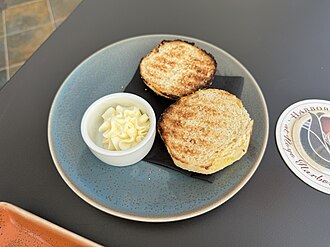
Photo: Wikipedia
A soft, slightly sweet, yeast-leavened quick bread with a distinctive 'nook and cranny' texture perfect for holding butter and jam. Made from a simple wheat-based dough, it has a mild, comforting flavor and a tender, cake-like crumb. Nutritionally, it's primarily a carbohydrate source, offering moderate fiber but low fat and protein.
Calorie split: 16% protein · 78% carbs · 7% fat
↓ Full nutrition💚 Why it's loved
People adore the English muffin for its unique, fork-split texture that creates perfect pockets for melting butter, honey, or jam. Its mild, slightly tangy flavor makes it an ideal canvas for everything from classic Eggs Benedict to a simple peanut butter spread.
⚠️ Watch-outs & how to enjoy it better
Its high carbohydrate content can lead to blood-sugar spikes, especially when eaten alone. It's also a common source of gluten (wheat) and may contain added sugars. To counteract this, pair it with protein (like an egg or Greek yogurt) and healthy fat (like avocado or nut butter) to slow digestion and stabilize blood sugar.
Key benefits
- Provides quick energy from complex carbohydrates
- Low in fat, making it a lighter bread option
- Good source of dietary fiber (3.5g per 100g)
- Versatile base for both sweet and savory toppings
- Convenient and portable breakfast or snack item
🍽️ Popular dishes
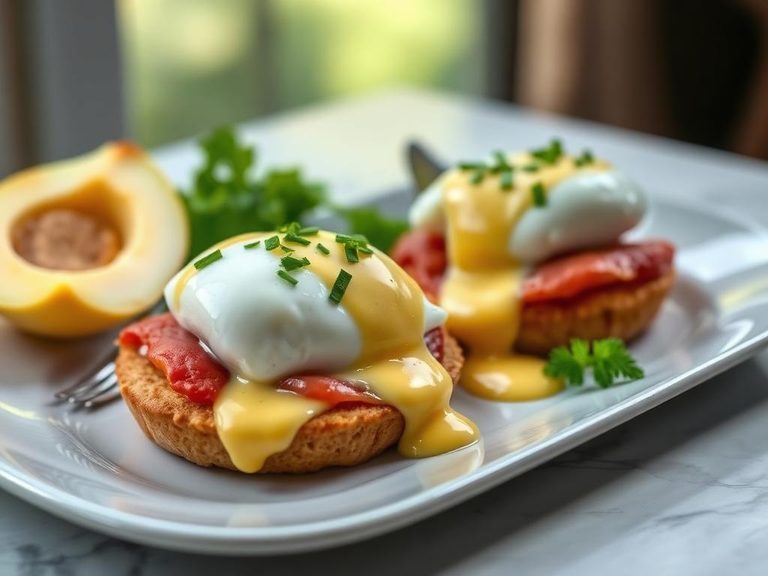
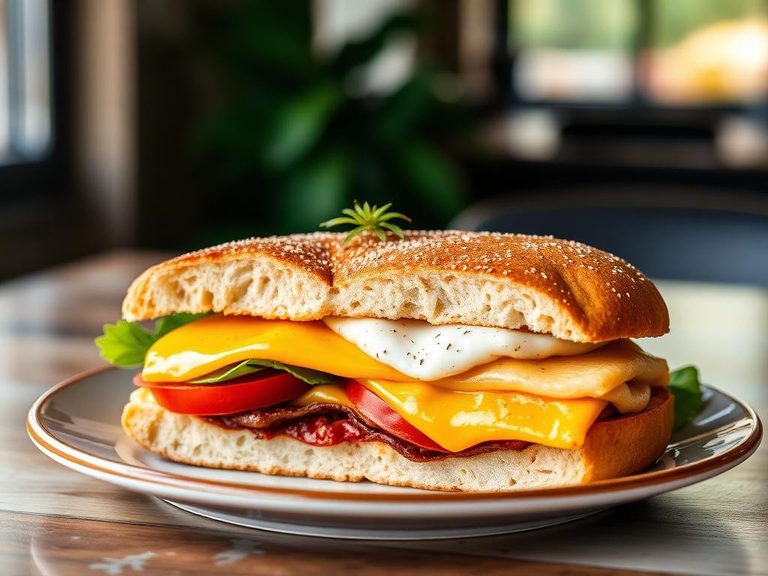
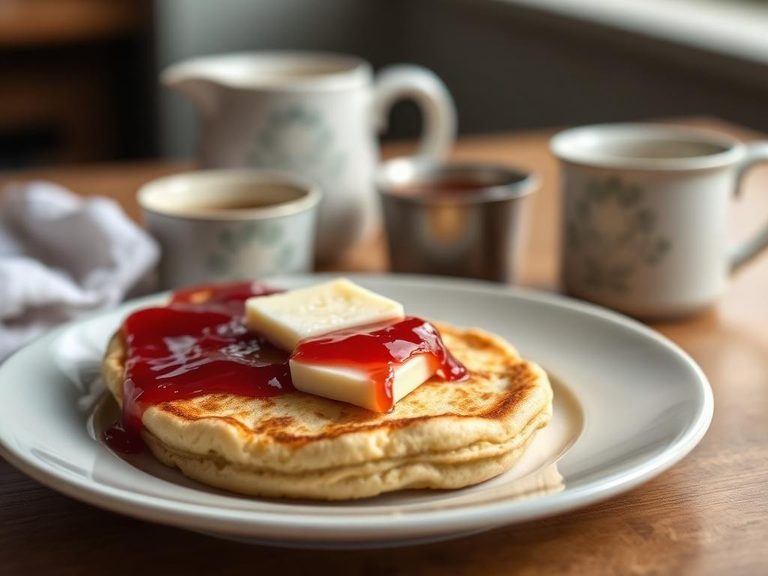
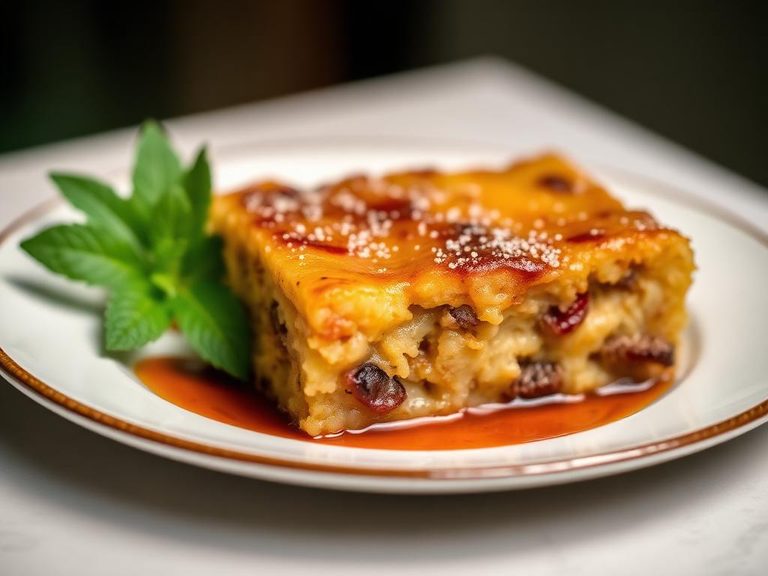
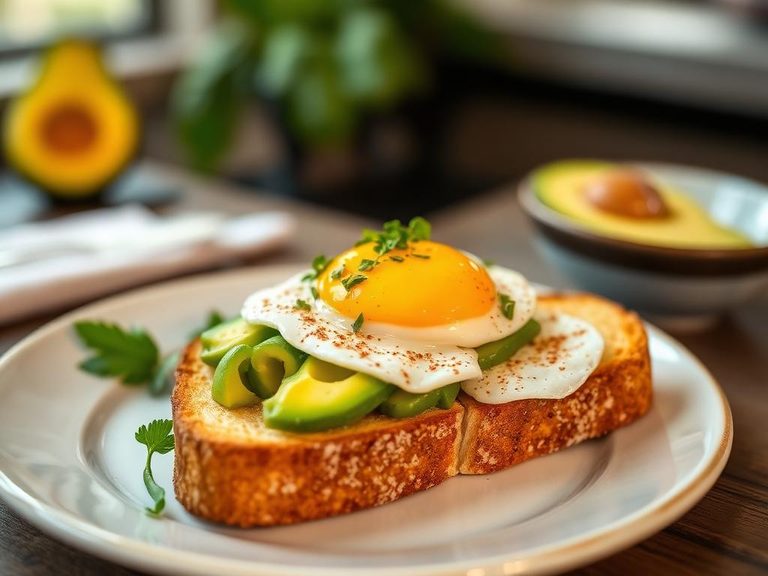
🌍 Where it's eaten
💡 Did you know?
Despite its name, the English muffin was popularized in the United States by a British immigrant, Samuel Bath Thomas, who began selling his 'toaster crumpets' in New York City in the 1880s.
Full nutrition (USDA data · scales with serving)
| Water | 43.6 g |
| Energy | 227 kcal |
| Protein | 8.9 g |
| Total lipid (fat) | 1.7 g |
| Carbohydrate, by difference | 44.2 g |
| Fiber, total dietary | 3.5 g |
| Total Sugars | 3.5 g |
| Calcium, Ca | 163 mg |
| Iron, Fe | 4.0 mg |
| Magnesium, Mg | 24.0 mg |
| Phosphorus, P | 92.0 mg |
| Potassium, K | 109 mg |
| Sodium, Na | 425 mg |
| Zinc, Zn | 1.1 mg |
| Copper, Cu | 0.14 mg |
| Selenium, Se | 22.4 ug |
| Vitamin C, total ascorbic acid | 1.8 mg |
| Thiamin | 0.48 mg |
| Riboflavin | 0.25 mg |
| Niacin | 4.1 mg |
| Vitamin B-6 | 0.05 mg |
| Folate, total | 94.0 ug |
| Folic acid | 55.0 ug |
| Folate, food | 40.0 ug |
| Folate, DFE | 132 ug |
| Choline, total | 16.0 mg |
| Vitamin B-12 | 0.04 ug |
| Vitamin B-12, added | 0.00 ug |
| Vitamin A, RAE | 0.00 ug |
| Retinol | 0.00 ug |
| Carotene, beta | 0.00 ug |
| Carotene, alpha | 0.00 ug |
| Cryptoxanthin, beta | 0.00 ug |
| Lycopene | 0.00 ug |
| Lutein + zeaxanthin | 42.0 ug |
| Vitamin E (alpha-tocopherol) | 0.31 mg |
| Vitamin E, added | 0.00 mg |
| Vitamin D (D2 + D3) | 0.00 ug |
| Vitamin K (phylloquinone) | 1.2 ug |
| Alcohol, ethyl | 0.00 g |
| Caffeine | 0.00 mg |
| Theobromine | 0.00 mg |
Fat & fatty acid profile (per 100g)
| Fatty acids, total saturated | 0.73 g |
| SFA 4:0 | 0.00 g |
| SFA 6:0 | 0.00 g |
| SFA 8:0 | 0.00 g |
| SFA 10:0 | 0.00 g |
| SFA 12:0 | 0.08 g |
| SFA 14:0 | 0.03 g |
| SFA 16:0 | 0.29 g |
| SFA 18:0 | 0.32 g |
| Fatty acids, total monounsaturated | 0.38 g |
| MUFA 16:1 | 0.00 g |
| MUFA 18:1 | 0.38 g |
| MUFA 20:1 | 0.00 g |
| MUFA 22:1 | 0.00 g |
| Fatty acids, total polyunsaturated | 0.50 g |
| PUFA 18:2 | 0.45 g |
| PUFA 18:3 | 0.05 g |
| PUFA 18:4 | 0.00 g |
| PUFA 20:4 | 0.00 g |
| PUFA 20:5 n-3 (EPA) | 0.00 g |
| PUFA 22:5 n-3 (DPA) | 0.00 g |
| PUFA 22:6 n-3 (DHA) | 0.00 g |
| Cholesterol | 0.00 mg |
Amino acid profile (per 100g)
Estimated from Muffins, blueberry, commercially prepared (Includes mini-muffins) — USDA does not publish this profile for Muffin.
| Tryptophan | 0.07 g |
| Threonine | 0.18 g |
| Isoleucine | 0.22 g |
| Leucine | 0.42 g |
| Lysine | 0.20 g |
| Methionine | 0.12 g |
| Cystine | 0.11 g |
| Phenylalanine | 0.28 g |
| Tyrosine | 0.18 g |
| Valine | 0.26 g |
| Arginine | 0.24 g |
| Histidine | 0.13 g |
| Alanine | 0.21 g |
| Aspartic acid | 0.32 g |
| Glutamic acid | 1.5 g |
| Glycine | 0.19 g |
| Proline | 0.54 g |
| Serine | 0.30 g |
| Hydroxyproline | 0.00 g |
FAQ
What's the difference between an English muffin and a regular muffin?
An English muffin is a small, round, yeast-leavened bread that is griddle-cooked and has a chewy texture with nooks and crannies. A regular muffin (like blueberry) is a sweet, cake-like quick bread made with baking powder or soda, and is typically much sweeter and higher in fat.
Why are English muffins 'fork-split'?
Traditionally, they are split with a fork rather than a knife to preserve the distinctive interior texture of irregular air pockets (nooks and crannies). This rough surface is ideal for catching and holding melted butter, jam, or other spreads.
Are English muffins healthier than bread?
It depends on the type. A whole-wheat English muffin can be a good source of fiber and is often lower in calories and fat than many slices of artisan bread. However, a white-flour English muffin is nutritionally similar to white bread. Always check the label for added sugars and sodium.
Nutrient density (calculated · NRF9.3)
Nutrient Rich Foods index: beneficial nutrients (protein, fiber, vitamins, minerals) minus saturated fat, added sugar & sodium, per 100 kcal.
NRF9.3 index — Fulgoni, Keast & Drewnowski, 2009. Computed from USDA nutrients.
Weight-loss friendliness (composite index)
Energy density 2.27 kcal/g · 16% calories from protein · 3.5 g fiber · 3.5 g sugar per 100 g.
Composite of energy density (Rolls et al., 1999), protein & fiber satiety, minus sugar. A calculated heuristic — ranks satiety-per-calorie, not a clinical measure.
Dietary load (calculated from USDA values)
Potential renal acid load. Positive = acid-forming, negative = alkaline-forming.
Sodium-to-potassium ratio: 3.90 (lower is better — aim for ≤ 1)
Sodium:potassium per WHO potassium guidance. Computed from USDA nutrients.