

Milk, reduced fat (2%)
Common food
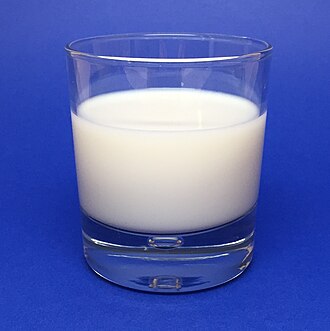
Photo: Wikipedia
Reduced-fat milk is a dairy staple with a clean, slightly sweet taste and a lighter, less creamy mouthfeel than whole milk. It offers a strong protein and calcium punch with about half the fat of its full-fat counterpart. The 2% label refers to its milkfat content by weight, not a percentage of calories.
Calorie split: 27% protein · 39% carbs · 34% fat
↓ Full nutrition💚 Why it's loved
People love it for its familiar, mild sweetness and creamy-yet-light texture that works equally well in a glass, with cereal, or in coffee. It's a versatile kitchen workhorse, bridging the gap between rich whole milk and watery skim.
⚠️ Watch-outs & how to enjoy it better
The natural sugars (lactose) can cause digestive issues for those with lactose intolerance or sensitivity. As a dairy product, it's a common allergen. To counteract potential blood sugar spikes, pair it with high-fiber foods like oatmeal or whole-grain toast, or consume it as part of a balanced meal.
Key benefits
- Excellent source of high-quality protein for muscle maintenance.
- Rich in calcium and vitamin D for bone health.
- Naturally contains potassium and B vitamins.
- Lower in saturated fat than whole milk.
- Provides a balanced mix of protein, carbs, and fat.
🍽️ Popular dishes
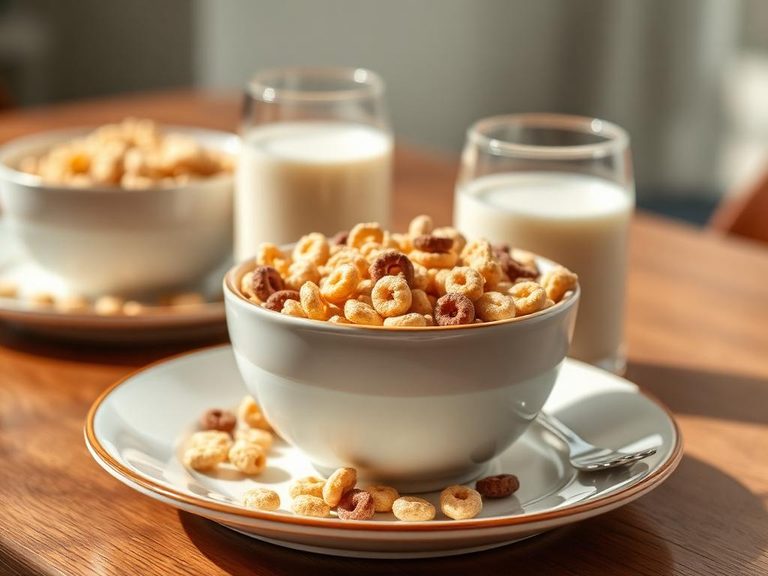




🌍 Where it's eaten
💡 Did you know?
The '2%' label is based on the weight of the milkfat, not its percentage of total calories—by calories, 2% milk is actually about 35% fat.
Full nutrition (USDA data · scales with serving)
| Water | 89.1 g |
| Energy | 50.0 kcal |
| Protein | 3.4 g |
| Total lipid (fat) | 1.9 g |
| Carbohydrate, by difference | 4.9 g |
| Fiber, total dietary | 0.00 g |
| Total Sugars | 4.9 g |
| Calcium, Ca | 126 mg |
| Iron, Fe | 0.00 mg |
| Magnesium, Mg | 12.0 mg |
| Phosphorus, P | 103 mg |
| Potassium, K | 159 mg |
| Sodium, Na | 39.0 mg |
| Zinc, Zn | 0.43 mg |
| Copper, Cu | 0.00 mg |
| Selenium, Se | 1.8 ug |
| Vitamin C, total ascorbic acid | 0.20 mg |
| Thiamin | 0.06 mg |
| Riboflavin | 0.14 mg |
| Niacin | 0.11 mg |
| Vitamin B-6 | 0.06 mg |
| Folate, total | 2.0 ug |
| Folic acid | 0.00 ug |
| Folate, food | 2.0 ug |
| Folate, DFE | 2.0 ug |
| Choline, total | 18.2 mg |
| Vitamin B-12 | 0.55 ug |
| Vitamin B-12, added | 0.00 ug |
| Vitamin A, RAE | 83.0 ug |
| Retinol | 83.0 ug |
| Carotene, beta | 3.0 ug |
| Carotene, alpha | 0.00 ug |
| Cryptoxanthin, beta | 0.00 ug |
| Lycopene | 0.00 ug |
| Lutein + zeaxanthin | 0.00 ug |
| Vitamin E (alpha-tocopherol) | 0.03 mg |
| Vitamin E, added | 0.00 mg |
| Vitamin D (D2 + D3) | 1.1 ug |
| Vitamin K (phylloquinone) | 0.20 ug |
| Alcohol, ethyl | 0.00 g |
| Caffeine | 0.00 mg |
| Theobromine | 0.00 mg |
Fat & fatty acid profile (per 100g)
| Fatty acids, total saturated | 1.1 g |
| SFA 4:0 | 0.04 g |
| SFA 6:0 | 0.03 g |
| SFA 8:0 | 0.02 g |
| SFA 10:0 | 0.05 g |
| SFA 12:0 | 0.06 g |
| SFA 14:0 | 0.18 g |
| SFA 16:0 | 0.51 g |
| SFA 18:0 | 0.18 g |
| Fatty acids, total monounsaturated | 0.40 g |
| MUFA 16:1 | 0.03 g |
| MUFA 18:1 | 0.41 g |
| MUFA 20:1 | 0.00 g |
| MUFA 22:1 | 0.00 g |
| Fatty acids, total polyunsaturated | 0.06 g |
| PUFA 18:2 | 0.06 g |
| PUFA 18:3 | 0.01 g |
| PUFA 18:4 | 0.00 g |
| PUFA 20:4 | 0.00 g |
| PUFA 20:5 n-3 (EPA) | 0.00 g |
| PUFA 22:5 n-3 (DPA) | 0.00 g |
| PUFA 22:6 n-3 (DHA) | 0.00 g |
| Cholesterol | 8.0 mg |
Amino acid profile (per 100g)
Estimated from Potatoes, mashed, prepared from granules, without milk, whole milk and margarine — USDA does not publish this profile for Milk.
| Tryptophan | 0.02 g |
| Threonine | 0.09 g |
| Isoleucine | 0.11 g |
| Leucine | 0.17 g |
| Lysine | 0.15 g |
| Methionine | 0.04 g |
| Cystine | 0.02 g |
| Phenylalanine | 0.10 g |
| Tyrosine | 0.09 g |
| Valine | 0.13 g |
| Arginine | 0.08 g |
| Histidine | 0.05 g |
| Alanine | 0.07 g |
| Aspartic acid | 0.25 g |
| Glutamic acid | 0.39 g |
| Glycine | 0.05 g |
| Proline | 0.15 g |
| Serine | 0.10 g |
FAQ
What's the difference between 2% and whole milk?
Whole milk contains about 3.25% milkfat by weight, while 2% milk has been reduced to 2%. This makes 2% lower in calories, total fat, and saturated fat, but it retains most of the protein, calcium, and other nutrients.
Is 2% milk healthy?
Yes, it's a nutrient-dense food providing high-quality protein, calcium, and essential vitamins. Its reduced fat content makes it a popular choice for those managing calorie or saturated fat intake while still enjoying dairy.
Can I use 2% milk in recipes that call for whole milk?
In most cases, yes. It works well in baking, smoothies, and cooked sauces. The final product may be slightly less rich and creamy, but the difference is often minimal.
Nutrient density (calculated · NRF9.3)
Nutrient Rich Foods index: beneficial nutrients (protein, fiber, vitamins, minerals) minus saturated fat, added sugar & sodium, per 100 kcal.
NRF9.3 index — Fulgoni, Keast & Drewnowski, 2009. Computed from USDA nutrients.
Weight-loss friendliness (composite index)
Energy density 0.50 kcal/g · 27% calories from protein · 0.0 g fiber · 4.9 g sugar per 100 g.
Composite of energy density (Rolls et al., 1999), protein & fiber satiety, minus sugar. A calculated heuristic — ranks satiety-per-calorie, not a clinical measure.
Dietary load (calculated from USDA values)
Potential renal acid load. Positive = acid-forming, negative = alkaline-forming.
Sodium-to-potassium ratio: 0.25 (lower is better — aim for ≤ 1)
Sodium:potassium per WHO potassium guidance. Computed from USDA nutrients.