

Meatball, meatless
Common food

Photo: Wikipedia
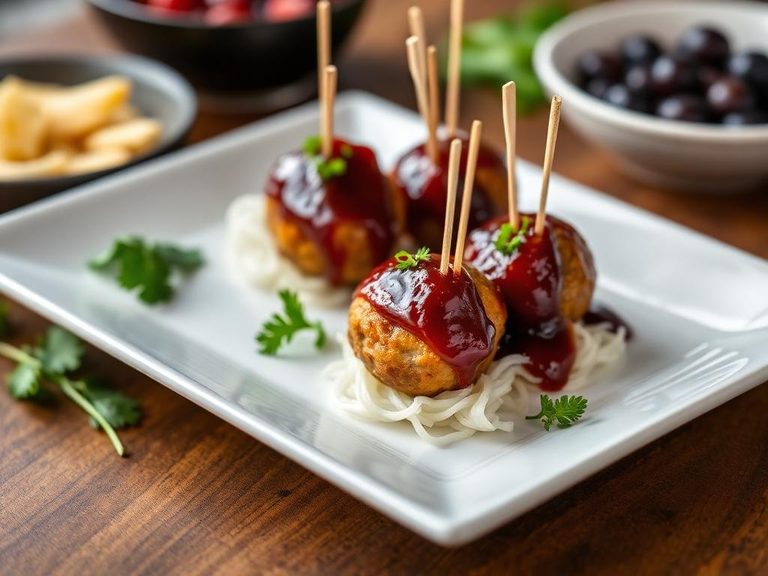
A plant-based marvel that mimics the hearty bite of a traditional meatball using ingredients like soy, peas, or wheat gluten. It delivers a surprisingly robust, savory umami flavor with a firm, springy texture that holds up beautifully in sauces. With 21g of protein per 100g, it's a nutritional powerhouse that rivals many animal-based options.
Calorie split: 43% protein · 16% carbs · 41% fat
↓ Full nutrition💚 Why it's loved
People love them for their remarkable ability to satisfy a craving for a classic comfort food while fitting seamlessly into vegetarian, vegan, or flexitarian diets. Their neutral, savory base makes them incredibly versatile for global cuisines.
⚠️ Watch-outs & how to enjoy it better
Some meatless meatballs can be high in sodium to boost flavor, and those made with soy or wheat are common allergens. To counteract high sodium, rinse them briefly before cooking or pair with potassium-rich foods like tomatoes or leafy greens. For blood sugar management, pair with non-starchy vegetables and a healthy fat to slow absorption.
Key benefits
- High in complete or complementary plant proteins
- Excellent source of dietary fiber for gut health
- Typically lower in saturated fat than meat-based counterparts
- Often fortified with iron and B-vitamins
- A versatile, cholesterol-free protein source
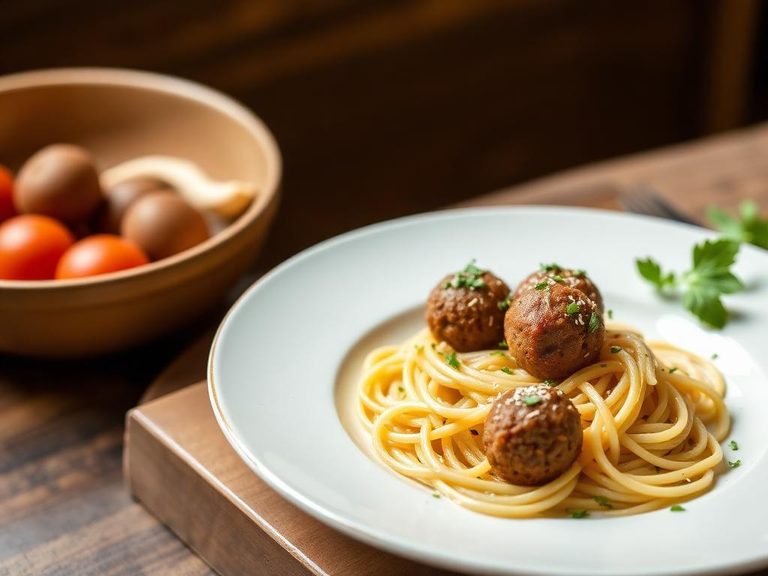
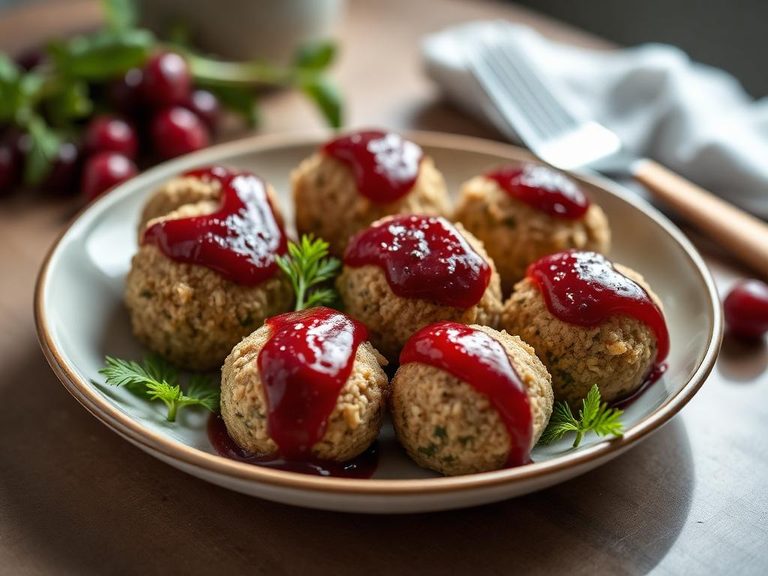
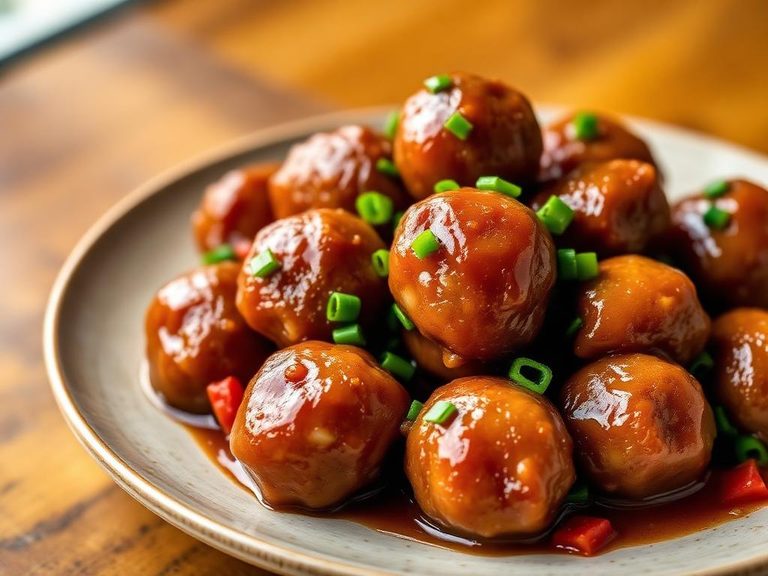
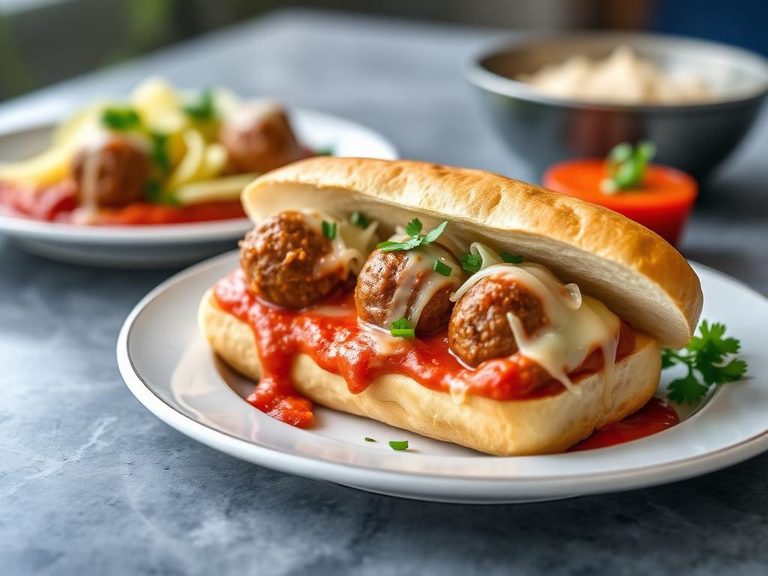
🍽️ Popular dishes
🌍 Where it's eaten
💡 Did you know?
The most famous commercial plant-based meatball, the IKEA plant ball (HUVUDROLL), was specifically engineered to have a 4% lower climate footprint than their classic meat version.
Full nutrition (USDA data · scales with serving)
| Water | 58.0 g |
| Energy | 197 kcal |
| Protein | 21.0 g |
| Total lipid (fat) | 9.0 g |
| Carbohydrate, by difference | 8.0 g |
| Fiber, total dietary | 4.6 g |
| Total Sugars | 1.3 g |
| Calcium, Ca | 25.0 mg |
| Iron, Fe | 2.2 mg |
| Magnesium, Mg | 18.0 mg |
| Phosphorus, P | 344 mg |
| Potassium, K | 180 mg |
| Sodium, Na | 550 mg |
| Zinc, Zn | 1.8 mg |
| Copper, Cu | 0.71 mg |
| Selenium, Se | 0.80 ug |
| Vitamin C, total ascorbic acid | 0.00 mg |
| Thiamin | 0.94 mg |
| Riboflavin | 0.21 mg |
| Niacin | 2.5 mg |
| Vitamin B-6 | 0.20 mg |
| Folate, total | 78.0 ug |
| Folic acid | 0.00 ug |
| Folate, food | 78.0 ug |
| Folate, DFE | 78.0 ug |
| Choline, total | 88.4 mg |
| Vitamin B-12 | 1.5 ug |
| Vitamin B-12, added | 1.5 ug |
| Vitamin A, RAE | 0.00 ug |
| Retinol | 0.00 ug |
| Carotene, beta | 0.00 ug |
| Carotene, alpha | 0.00 ug |
| Cryptoxanthin, beta | 0.00 ug |
| Lycopene | 0.00 ug |
| Lutein + zeaxanthin | 0.00 ug |
| Vitamin E (alpha-tocopherol) | 1.7 mg |
| Vitamin E, added | 0.00 mg |
| Vitamin D (D2 + D3) | 0.00 ug |
| Vitamin K (phylloquinone) | 0.00 ug |
| Alcohol, ethyl | 0.00 g |
| Caffeine | 0.00 mg |
| Theobromine | 0.00 mg |
Fat & fatty acid profile (per 100g)
| Fatty acids, total saturated | 1.4 g |
| SFA 4:0 | 0.00 g |
| SFA 6:0 | 0.00 g |
| SFA 8:0 | 0.00 g |
| SFA 10:0 | 0.00 g |
| SFA 12:0 | 0.09 g |
| SFA 14:0 | 0.04 g |
| SFA 16:0 | 0.93 g |
| SFA 18:0 | 0.37 g |
| Fatty acids, total monounsaturated | 2.2 g |
| MUFA 16:1 | 0.00 g |
| MUFA 18:1 | 2.2 g |
| MUFA 20:1 | 0.00 g |
| MUFA 22:1 | 0.00 g |
| Fatty acids, total polyunsaturated | 4.7 g |
| PUFA 18:2 | 4.1 g |
| PUFA 18:3 | 0.52 g |
| PUFA 18:4 | 0.00 g |
| PUFA 20:4 | 0.00 g |
| PUFA 20:5 n-3 (EPA) | 0.00 g |
| PUFA 22:5 n-3 (DPA) | 0.00 g |
| PUFA 22:6 n-3 (DHA) | 0.00 g |
| Cholesterol | 0.00 mg |
Amino acid profile (per 100g)
Estimated from Lean Pockets, Meatballs & Mozzarella — USDA does not publish this profile for Meatball.
| Tryptophan | 0.14 g |
| Threonine | 0.38 g |
| Isoleucine | 0.46 g |
| Leucine | 0.86 g |
| Lysine | 0.64 g |
| Methionine | 0.20 g |
| Cystine | 0.13 g |
| Phenylalanine | 0.50 g |
| Tyrosine | 0.35 g |
| Valine | 0.56 g |
| Arginine | 0.49 g |
| Histidine | 0.31 g |
| Alanine | 0.41 g |
| Aspartic acid | 0.77 g |
| Glutamic acid | 2.5 g |
| Glycine | 0.38 g |
| Proline | 0.94 g |
| Serine | 0.50 g |
FAQ
Are meatless meatballs a complete protein?
It depends on the base. Soy-based versions are complete proteins. Others, like pea or wheat-based, may need to be paired with grains (like in a sub roll) throughout the day to form complete proteins.
How do I get them to hold together in a sauce?
Avoid over-stirring them once added to a simmering sauce. For homemade versions, ensure your binder (like flax egg or breadcrumbs) is well-incorporated, and chill the mixture before forming balls.
Can I freeze cooked meatless meatballs?
Yes, they freeze exceptionally well. Let them cool completely, then freeze in a single layer on a baking sheet before transferring to a bag. They'll keep for up to 3 months.
Nutrient density (calculated · NRF9.3)
Nutrient Rich Foods index: beneficial nutrients (protein, fiber, vitamins, minerals) minus saturated fat, added sugar & sodium, per 100 kcal.
NRF9.3 index — Fulgoni, Keast & Drewnowski, 2009. Computed from USDA nutrients.
Weight-loss friendliness (composite index)
Energy density 1.97 kcal/g · 43% calories from protein · 4.6 g fiber · 1.3 g sugar per 100 g.
Composite of energy density (Rolls et al., 1999), protein & fiber satiety, minus sugar. A calculated heuristic — ranks satiety-per-calorie, not a clinical measure.
Dietary load (calculated from USDA values)
Potential renal acid load. Positive = acid-forming, negative = alkaline-forming.
Sodium-to-potassium ratio: 3.06 (lower is better — aim for ≤ 1)
Sodium:potassium per WHO potassium guidance. Computed from USDA nutrients.