

Meatballs, NS as to type of meat, with sauce
Common food
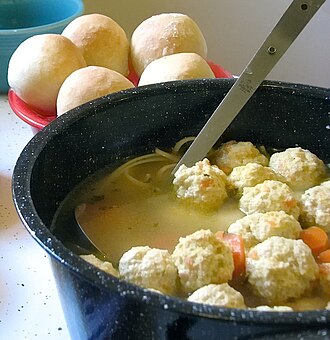
Photo: Wikipedia
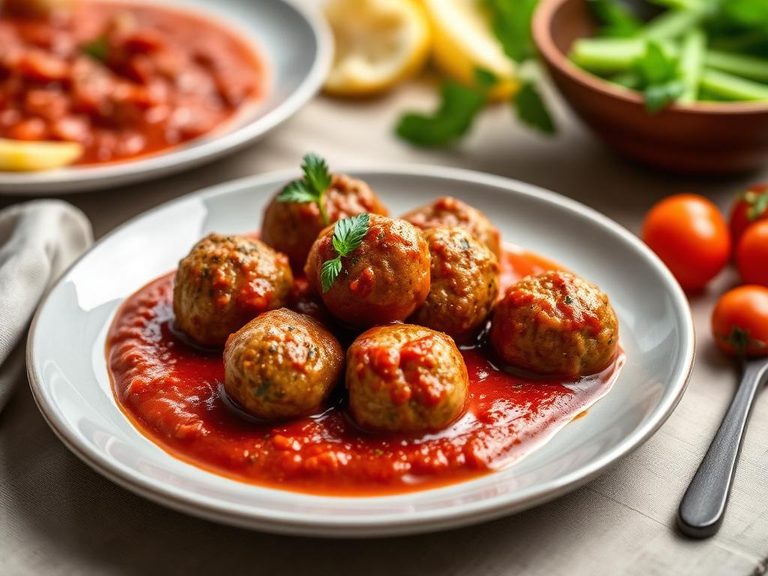
These are savory, browned spheres of ground meat, typically simmered in a rich tomato-based sauce. The texture is tender and juicy, with a hearty, umami-rich flavor profile. Nutritionally, they are a concentrated source of protein and fat, with virtually no carbohydrates.
Calorie split: 40% protein · 0% carbs · 60% fat
↓ Full nutrition💚 Why it's loved
People love them for their comforting, savory flavor and satisfying texture, which pairs perfectly with pasta, rice, or bread. They are a global comfort food, adaptable to countless sauces and seasonings.
⚠️ Watch-outs & how to enjoy it better
The high saturated fat and potential sodium content in the sauce can be a concern for heart health. Those monitoring blood lipids should opt for leaner meat blends (like turkey or chicken) and pair with fiber-rich vegetables like steamed broccoli or a large salad to balance the meal.
Key benefits
- Excellent source of complete protein for muscle maintenance.
- Provides essential minerals like iron, zinc, and B12.
- High in satiating fat, promoting a feeling of fullness.
- A versatile base for many nutrient-dense meals.
🍽️ Popular dishes
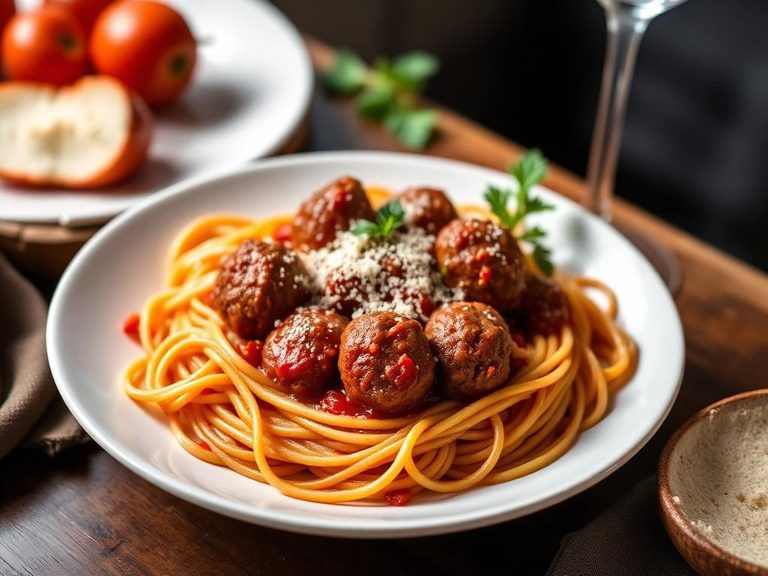
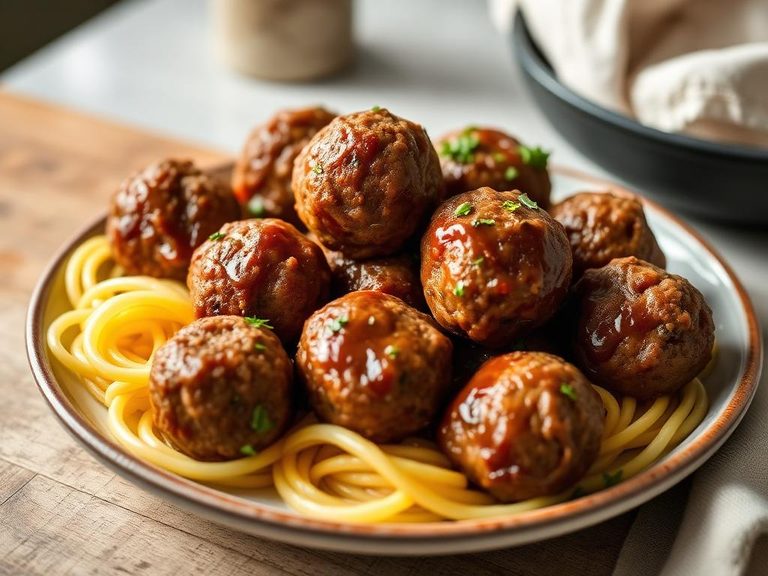
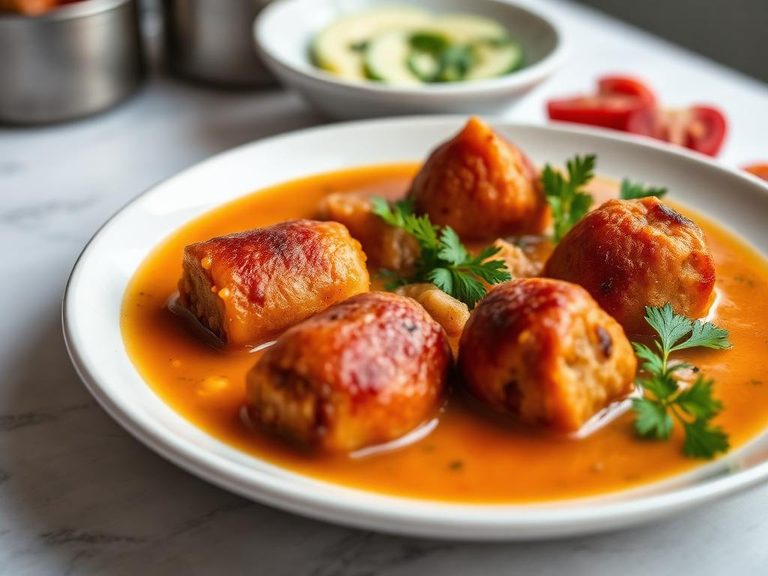
🌍 Where it's eaten
💡 Did you know?
The iconic pairing of spaghetti and meatballs is largely an Italian-American invention; in Italy, meatballs (polpette) are typically served as a main course, not with pasta.
Full nutrition (USDA data · scales with serving)
| Water | 67.5 g |
| Energy | 186 kcal |
| Protein | 18.0 g |
| Total lipid (fat) | 12.0 g |
| Carbohydrate, by difference | 0.15 g |
| Fiber, total dietary | 0.00 g |
| Total Sugars | 0.07 g |
| Calcium, Ca | 22.0 mg |
| Iron, Fe | 1.8 mg |
| Magnesium, Mg | 15.0 mg |
| Phosphorus, P | 145 mg |
| Potassium, K | 212 mg |
| Sodium, Na | 801 mg |
| Zinc, Zn | 4.2 mg |
| Copper, Cu | 0.06 mg |
| Selenium, Se | 17.1 ug |
| Vitamin C, total ascorbic acid | 0.00 mg |
| Thiamin | 0.04 mg |
| Riboflavin | 0.15 mg |
| Niacin | 3.3 mg |
| Vitamin B-6 | 0.24 mg |
| Folate, total | 12.0 ug |
| Folic acid | 0.00 ug |
| Folate, food | 12.0 ug |
| Folate, DFE | 12.0 ug |
| Choline, total | 78.9 mg |
| Vitamin B-12 | 1.9 ug |
| Vitamin B-12, added | 0.00 ug |
| Vitamin A, RAE | 19.0 ug |
| Retinol | 19.0 ug |
| Carotene, beta | 0.00 ug |
| Carotene, alpha | 0.00 ug |
| Cryptoxanthin, beta | 1.0 ug |
| Lycopene | 0.00 ug |
| Lutein + zeaxanthin | 49.0 ug |
| Vitamin E (alpha-tocopherol) | 0.18 mg |
| Vitamin E, added | 0.00 mg |
| Vitamin D (D2 + D3) | 0.20 ug |
| Vitamin K (phylloquinone) | 1.1 ug |
| Alcohol, ethyl | 0.00 g |
| Caffeine | 0.00 mg |
| Theobromine | 0.00 mg |
Fat & fatty acid profile (per 100g)
| Fatty acids, total saturated | 4.6 g |
| SFA 4:0 | 0.00 g |
| SFA 6:0 | 0.00 g |
| SFA 8:0 | 0.00 g |
| SFA 10:0 | 0.00 g |
| SFA 12:0 | 0.01 g |
| SFA 14:0 | 0.32 g |
| SFA 16:0 | 2.6 g |
| SFA 18:0 | 1.4 g |
| Fatty acids, total monounsaturated | 5.3 g |
| MUFA 16:1 | 0.42 g |
| MUFA 18:1 | 4.6 g |
| MUFA 20:1 | 0.04 g |
| MUFA 22:1 | 0.00 g |
| Fatty acids, total polyunsaturated | 0.50 g |
| PUFA 18:2 | 0.39 g |
| PUFA 18:3 | 0.04 g |
| PUFA 18:4 | 0.00 g |
| PUFA 20:4 | 0.03 g |
| PUFA 20:5 n-3 (EPA) | 0.00 g |
| PUFA 22:5 n-3 (DPA) | 0.00 g |
| PUFA 22:6 n-3 (DHA) | 0.00 g |
| Cholesterol | 97.0 mg |
Amino acid profile (per 100g)
Estimated from Restaurant, family style, spaghetti and meatballs — USDA does not publish this profile for Meatballs.
| Tryptophan | 0.09 g |
| Threonine | 0.33 g |
| Isoleucine | 0.37 g |
| Leucine | 0.71 g |
| Lysine | 0.56 g |
| Methionine | 0.19 g |
| Cystine | 0.14 g |
| Phenylalanine | 0.40 g |
| Tyrosine | 0.25 g |
| Valine | 0.45 g |
| Arginine | 0.50 g |
| Histidine | 0.27 g |
| Alanine | 0.44 g |
| Aspartic acid | 0.69 g |
| Glutamic acid | 2.2 g |
| Glycine | 0.46 g |
| Proline | 0.79 g |
| Serine | 0.39 g |
| Hydroxyproline | 0.06 g |
FAQ
Are meatballs with sauce high in carbs?
The meat itself is very low-carb, but the sauce is the main variable. A traditional tomato-based sauce adds some carbs from tomatoes and any added sugar. Cream-based or gravy-style sauces may be lower in carbs.
How can I make meatballs healthier?
Use a leaner meat blend (e.g., 90% lean beef or a mix with turkey), incorporate finely chopped vegetables like mushrooms or zucchini into the mixture, and choose a low-sugar, low-sodium sauce.
What's a good side dish for meatballs in sauce?
To balance the meal, pair with non-starchy vegetables like roasted asparagus, sautéed spinach, or a crisp green salad. For a heartier meal, whole-grain pasta or quinoa are excellent choices.
Nutrient density (calculated · NRF9.3)
Nutrient Rich Foods index: beneficial nutrients (protein, fiber, vitamins, minerals) minus saturated fat, added sugar & sodium, per 100 kcal.
NRF9.3 index — Fulgoni, Keast & Drewnowski, 2009. Computed from USDA nutrients.
Weight-loss friendliness (composite index)
Energy density 1.86 kcal/g · 39% calories from protein · 0.0 g fiber · 0.1 g sugar per 100 g.
Composite of energy density (Rolls et al., 1999), protein & fiber satiety, minus sugar. A calculated heuristic — ranks satiety-per-calorie, not a clinical measure.
Dietary load (calculated from USDA values)
Potential renal acid load. Positive = acid-forming, negative = alkaline-forming.
Sodium-to-potassium ratio: 3.78 (lower is better — aim for ≤ 1)
Sodium:potassium per WHO potassium guidance. Computed from USDA nutrients.