

Margarine, light
Common food

Photo: Wikipedia
Light margarine is a semi-solid, plant-based spread made from refined vegetable oils, engineered to mimic butter's texture with a lower fat content. It has a mild, neutral flavor and a smooth, creamy consistency that spreads easily when chilled. Nutritionally, it is predominantly fat (37.91g per 100g) with negligible protein, carbohydrates, and zero fiber or sugar.
Calorie split: 0% protein · 1% carbs · 98% fat
↓ Full nutrition💚 Why it's loved
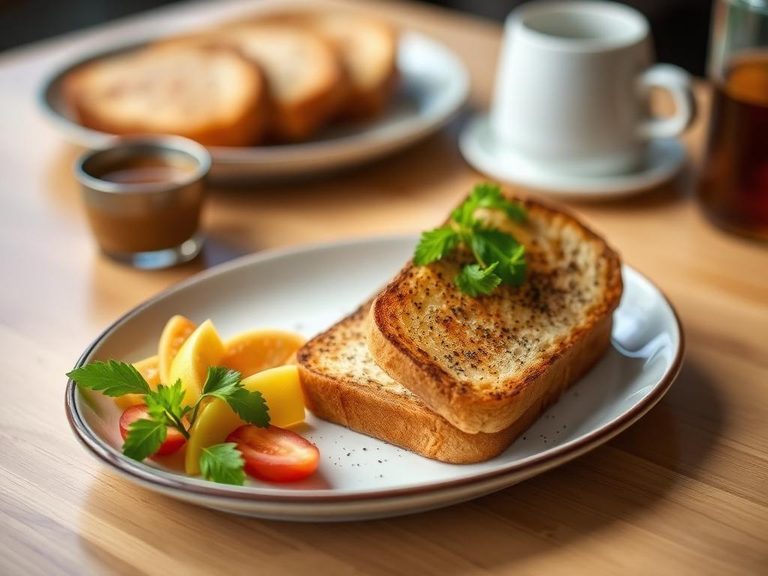
People love it for its buttery flavor and creamy texture without the dairy, making it a versatile staple for spreading on toast, baking, and sautéing. It's a cultural staple in many households for its affordability and ease of use in everyday cooking.
⚠️ Watch-outs & how to enjoy it better
Some light margarines can contain small amounts of trans fats from partial hydrogenation, which are linked to heart disease. To counteract this, choose brands labeled 'trans fat-free' or 'made with zero trans fats,' and use it in moderation, especially if you have cardiovascular concerns.
Key benefits
- Low in saturated fat compared to butter
- Cholesterol-free
- Good source of vitamin E (alpha-tocopherol)
- Contains plant sterols which may help lower LDL cholesterol
- Longer shelf life than butter
🍽️ Popular dishes
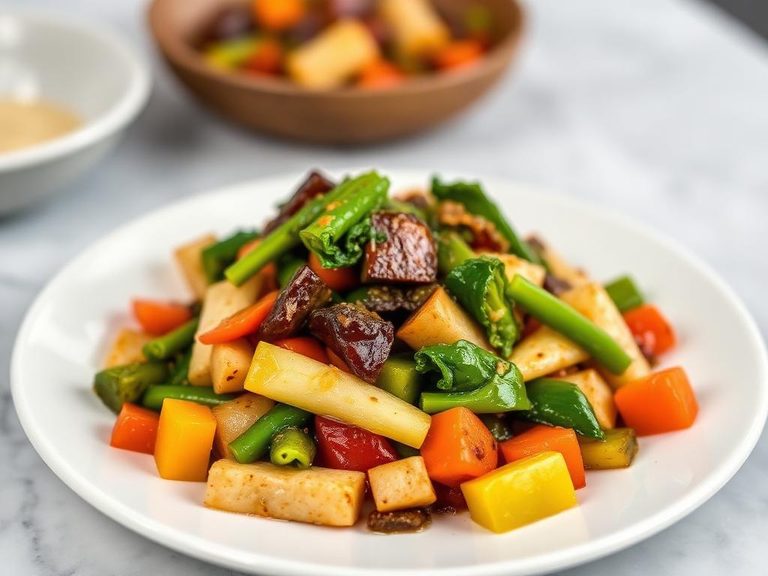
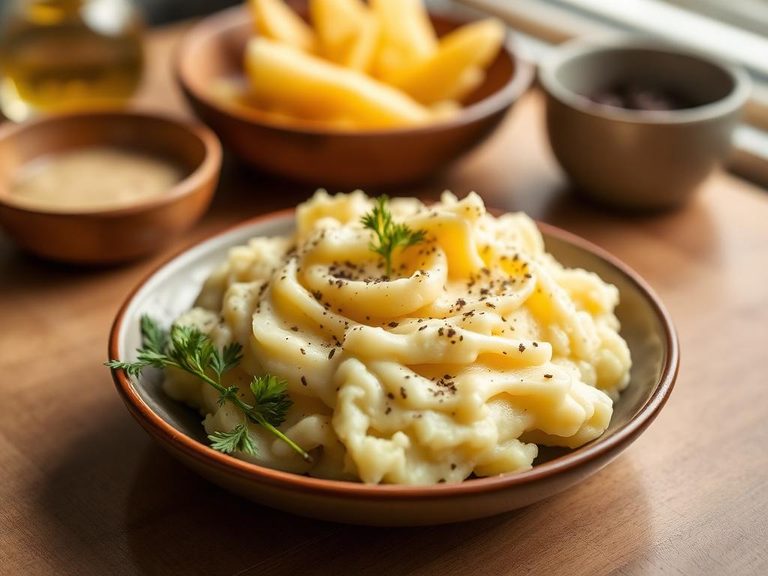
🌍 Where it's eaten
💡 Did you know?
Margarine was invented in 1869 by French chemist Hippolyte Mège-Mouriès in response to a challenge from Emperor Napoleon III to create a butter substitute for the military and the poor.
Full nutrition (USDA data · scales with serving)
| Water | 59.0 g |
| Energy | 346 kcal |
| Protein | 0.33 g |
| Total lipid (fat) | 37.9 g |
| Carbohydrate, by difference | 1.2 g |
| Fiber, total dietary | 0.00 g |
| Total Sugars | 0.00 g |
| Calcium, Ca | 6.0 mg |
| Iron, Fe | 0.03 mg |
| Magnesium, Mg | 1.0 mg |
| Phosphorus, P | 6.0 mg |
| Potassium, K | 45.0 mg |
| Sodium, Na | 586 mg |
| Zinc, Zn | 0.02 mg |
| Copper, Cu | 0.01 mg |
| Selenium, Se | 0.00 ug |
| Vitamin C, total ascorbic acid | 0.00 mg |
| Thiamin | 0.01 mg |
| Riboflavin | 0.00 mg |
| Niacin | 0.00 mg |
| Vitamin B-6 | 0.00 mg |
| Folate, total | 2.0 ug |
| Folic acid | 0.00 ug |
| Folate, food | 1.0 ug |
| Folate, DFE | 1.0 ug |
| Choline, total | 12.4 mg |
| Vitamin B-12 | 0.06 ug |
| Vitamin B-12, added | 0.00 ug |
| Vitamin A, RAE | 1330 ug |
| Retinol | 1297 ug |
| Carotene, beta | 396 ug |
| Carotene, alpha | 0.00 ug |
| Cryptoxanthin, beta | 0.00 ug |
| Lycopene | 0.00 ug |
| Lutein + zeaxanthin | 0.00 ug |
| Vitamin E (alpha-tocopherol) | 13.4 mg |
| Vitamin E, added | 0.00 mg |
| Vitamin D (D2 + D3) | 3.7 ug |
| Vitamin K (phylloquinone) | 74.6 ug |
| Alcohol, ethyl | 0.00 g |
| Caffeine | 0.00 mg |
| Theobromine | 0.00 mg |
Fat & fatty acid profile (per 100g)
| Fatty acids, total saturated | 8.6 g |
| SFA 4:0 | 0.01 g |
| SFA 6:0 | 0.00 g |
| SFA 8:0 | 0.03 g |
| SFA 10:0 | 0.05 g |
| SFA 12:0 | 0.46 g |
| SFA 14:0 | 0.25 g |
| SFA 16:0 | 5.9 g |
| SFA 18:0 | 1.7 g |
| Fatty acids, total monounsaturated | 12.2 g |
| MUFA 16:1 | 0.04 g |
| MUFA 18:1 | 11.9 g |
| MUFA 20:1 | 0.17 g |
| MUFA 22:1 | 0.01 g |
| Fatty acids, total polyunsaturated | 14.9 g |
| PUFA 18:2 | 12.7 g |
| PUFA 18:3 | 2.2 g |
| PUFA 18:4 | 0.00 g |
| PUFA 20:4 | 0.01 g |
| PUFA 20:5 n-3 (EPA) | 0.00 g |
| PUFA 22:5 n-3 (DPA) | 0.00 g |
| PUFA 22:6 n-3 (DHA) | 0.00 g |
| Cholesterol | 0.00 mg |
Amino acid profile (per 100g)
Estimated from Potatoes, mashed, prepared from granules, without milk, whole milk and margarine — USDA does not publish this profile for Margarine.
| Tryptophan | 0.02 g |
| Threonine | 0.09 g |
| Isoleucine | 0.11 g |
| Leucine | 0.17 g |
| Lysine | 0.15 g |
| Methionine | 0.04 g |
| Cystine | 0.02 g |
| Phenylalanine | 0.10 g |
| Tyrosine | 0.09 g |
| Valine | 0.13 g |
| Arginine | 0.08 g |
| Histidine | 0.05 g |
| Alanine | 0.07 g |
| Aspartic acid | 0.25 g |
| Glutamic acid | 0.39 g |
| Glycine | 0.05 g |
| Proline | 0.15 g |
| Serine | 0.10 g |
FAQ
Is light margarine healthier than butter?
Light margarine is lower in calories and saturated fat than butter, but its healthiness depends on the brand and formulation. Some may contain trans fats, so it's best to choose trans fat-free options.
Can I use light margarine for baking?
Yes, light margarine can be used in baking, but it may affect the texture and flavor of baked goods compared to butter. It's best for recipes where a neutral flavor is desired.
How should I store light margarine?
Store it in the refrigerator to maintain its texture and prevent spoilage. It can also be frozen for longer storage, but it may become crumbly.
Nutrient density (calculated · NRF9.3)
Nutrient Rich Foods index: beneficial nutrients (protein, fiber, vitamins, minerals) minus saturated fat, added sugar & sodium, per 100 kcal.
NRF9.3 index — Fulgoni, Keast & Drewnowski, 2009. Computed from USDA nutrients.
Weight-loss friendliness (composite index)
Energy density 3.46 kcal/g · 0% calories from protein · 0.0 g fiber · 0.0 g sugar per 100 g.
Composite of energy density (Rolls et al., 1999), protein & fiber satiety, minus sugar. A calculated heuristic — ranks satiety-per-calorie, not a clinical measure.
Dietary load (calculated from USDA values)
Potential renal acid load. Positive = acid-forming, negative = alkaline-forming.
Sodium-to-potassium ratio: 13.02 (lower is better — aim for ≤ 1)
Sodium:potassium per WHO potassium guidance. Computed from USDA nutrients.