

Mango, frozen
Common food

Photo: Wikipedia
Frozen mango is the tropical stone fruit, peeled and flash-frozen at peak ripeness, locking in its intensely sweet, floral flavor and smooth, velvety texture. It offers a vibrant, sun-drenched taste with a satisfying, slightly icy bite when eaten directly from the freezer. Nutritionally, it's a low-calorie, high-fiber option rich in natural sugars and a notable source of vitamin C.
Calorie split: 5% protein · 90% carbs · 5% fat
↓ Full nutrition💚 Why it's loved
People adore frozen mango for its intense, candy-like sweetness and the way it transforms into a creamy, sorbet-like texture when blended or eaten semi-thawed. It's a beloved staple in smoothies, desserts, and as a refreshing snack across many cultures, from South Asian to Latin American cuisines.
⚠️ Watch-outs & how to enjoy it better
The high natural sugar content (13.66g per 100g) can cause blood sugar spikes, especially for those with diabetes or insulin resistance. To mitigate this, pair it with a source of protein or healthy fat (like Greek yogurt or nuts) and practice portion control. Some individuals may also experience digestive discomfort from the fiber if consumed in large quantities.
Key benefits
- Excellent source of vitamin C for immune support
- High in dietary fiber for digestive health
- Rich in antioxidants like beta-carotene
- Convenient, year-round access to tropical fruit
- Low in fat and sodium
🍽️ Popular dishes
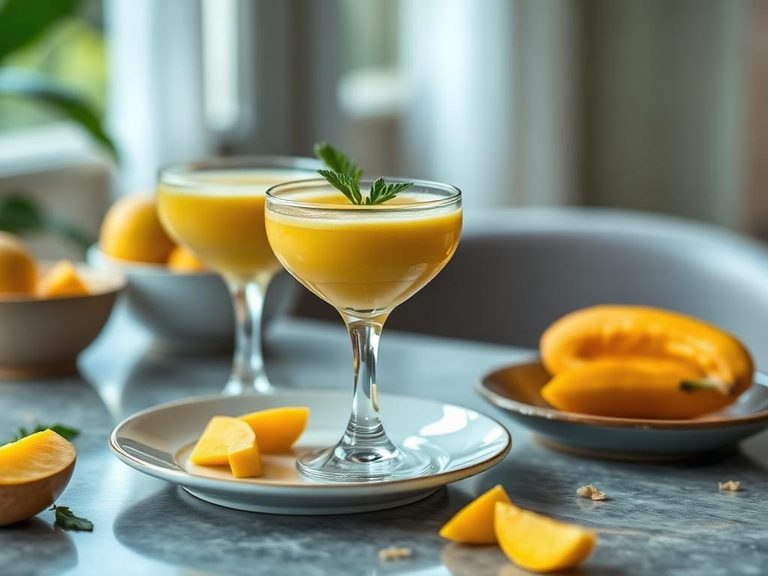
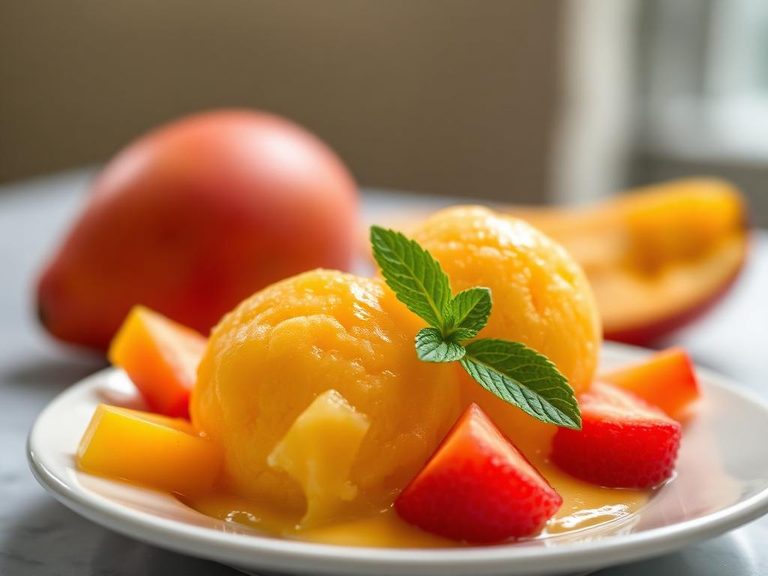
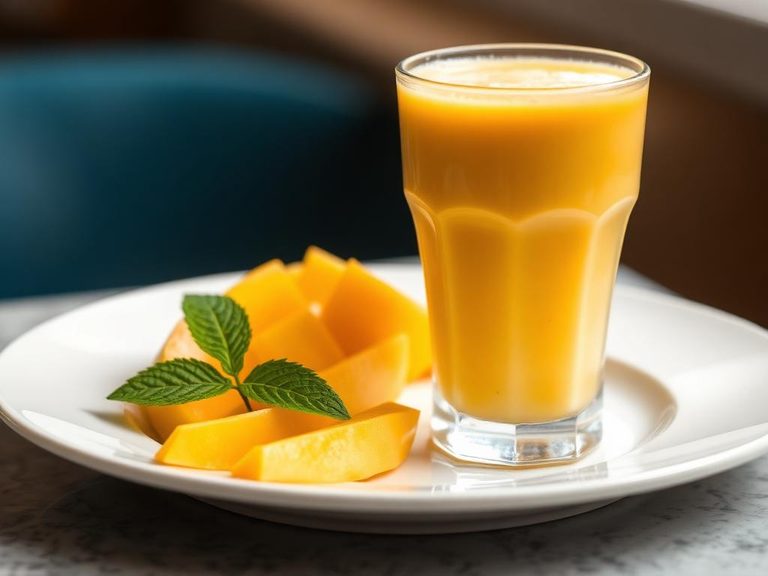
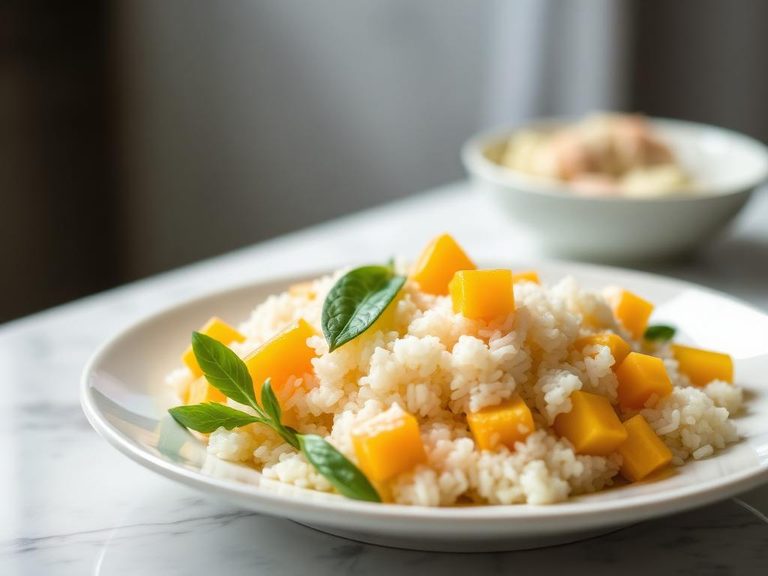
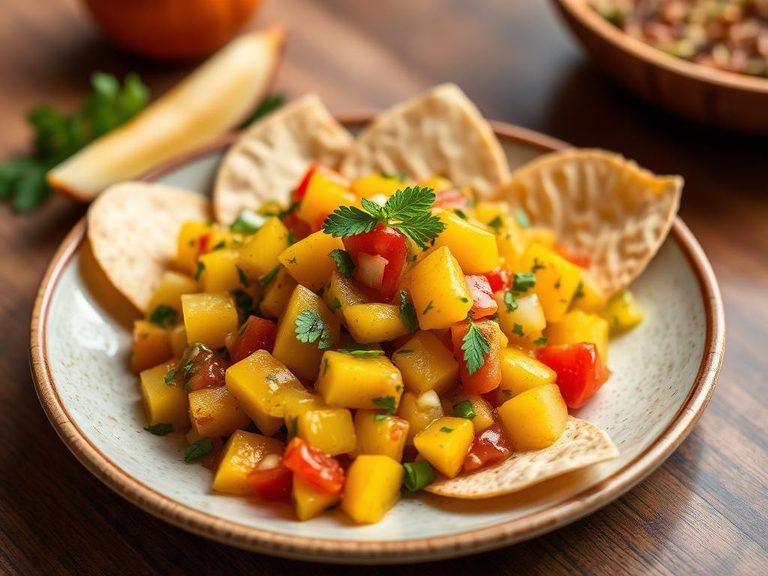
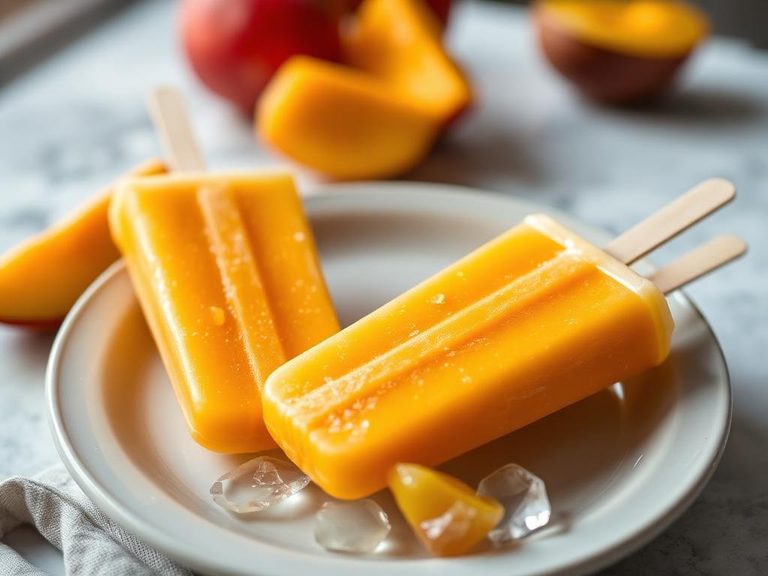
🌍 Where it's eaten
💡 Did you know?
The mango is often called the 'king of fruits' in South Asia, and a single mango tree can produce hundreds of fruits per year, with some varieties yielding over 1,000 pounds of fruit annually.
Full nutrition (USDA data · scales with serving)
| Water | 83.5 g |
| Energy | 60.0 kcal |
| Protein | 0.82 g |
| Total lipid (fat) | 0.38 g |
| Carbohydrate, by difference | 15.0 g |
| Fiber, total dietary | 1.6 g |
| Total Sugars | 13.7 g |
| Calcium, Ca | 11.0 mg |
| Iron, Fe | 0.16 mg |
| Magnesium, Mg | 10.0 mg |
| Phosphorus, P | 14.0 mg |
| Potassium, K | 168 mg |
| Sodium, Na | 1.0 mg |
| Zinc, Zn | 0.09 mg |
| Copper, Cu | 0.11 mg |
| Selenium, Se | 0.60 ug |
| Vitamin C, total ascorbic acid | 36.4 mg |
| Thiamin | 0.03 mg |
| Riboflavin | 0.04 mg |
| Niacin | 0.67 mg |
| Vitamin B-6 | 0.12 mg |
| Folate, total | 43.0 ug |
| Folic acid | 0.00 ug |
| Folate, food | 43.0 ug |
| Folate, DFE | 43.0 ug |
| Choline, total | 7.6 mg |
| Vitamin B-12 | 0.00 ug |
| Vitamin B-12, added | 0.00 ug |
| Vitamin A, RAE | 54.0 ug |
| Retinol | 0.00 ug |
| Carotene, beta | 640 ug |
| Carotene, alpha | 9.0 ug |
| Cryptoxanthin, beta | 10.0 ug |
| Lycopene | 3.0 ug |
| Lutein + zeaxanthin | 23.0 ug |
| Vitamin E (alpha-tocopherol) | 0.90 mg |
| Vitamin E, added | 0.00 mg |
| Vitamin D (D2 + D3) | 0.00 ug |
| Vitamin K (phylloquinone) | 4.2 ug |
| Alcohol, ethyl | 0.00 g |
| Caffeine | 0.00 mg |
| Theobromine | 0.00 mg |
Fat & fatty acid profile (per 100g)
| Fatty acids, total saturated | 0.09 g |
| SFA 4:0 | 0.00 g |
| SFA 6:0 | 0.00 g |
| SFA 8:0 | 0.00 g |
| SFA 10:0 | 0.00 g |
| SFA 12:0 | 0.00 g |
| SFA 14:0 | 0.01 g |
| SFA 16:0 | 0.07 g |
| SFA 18:0 | 0.00 g |
| Fatty acids, total monounsaturated | 0.14 g |
| MUFA 16:1 | 0.07 g |
| MUFA 18:1 | 0.07 g |
| MUFA 20:1 | 0.00 g |
| MUFA 22:1 | 0.00 g |
| Fatty acids, total polyunsaturated | 0.07 g |
| PUFA 18:2 | 0.02 g |
| PUFA 18:3 | 0.05 g |
| PUFA 18:4 | 0.00 g |
| PUFA 20:4 | 0.00 g |
| PUFA 20:5 n-3 (EPA) | 0.00 g |
| PUFA 22:5 n-3 (DPA) | 0.00 g |
| PUFA 22:6 n-3 (DHA) | 0.00 g |
| Cholesterol | 0.00 mg |
Amino acid profile (per 100g)
Estimated from Mangos, raw — USDA does not publish this profile for Mango.
| Tryptophan | 0.01 g |
| Threonine | 0.03 g |
| Isoleucine | 0.03 g |
| Leucine | 0.05 g |
| Lysine | 0.07 g |
| Methionine | 0.01 g |
| Phenylalanine | 0.03 g |
| Tyrosine | 0.02 g |
| Valine | 0.04 g |
| Arginine | 0.03 g |
| Histidine | 0.02 g |
| Alanine | 0.08 g |
| Aspartic acid | 0.07 g |
| Glutamic acid | 0.10 g |
| Glycine | 0.03 g |
| Proline | 0.03 g |
| Serine | 0.04 g |
FAQ
Is frozen mango as nutritious as fresh?
Yes, frozen mango is often flash-frozen at peak ripeness, which preserves its nutrients, including vitamin C and fiber, very effectively. In some cases, it may retain more nutrients than fresh mango that has been transported and stored for days.
How should I store frozen mango?
Keep it in the freezer at 0°F (-18°C) or below in an airtight container or sealed bag to prevent freezer burn and maintain quality for up to 12 months.
Can I use frozen mango in cooking?
Absolutely. Frozen mango works well in smoothies, sauces, desserts, and even savory dishes like curries or salsas. It can be used directly from frozen or thawed, depending on the recipe.
Nutrient density (calculated · NRF9.3)
Nutrient Rich Foods index: beneficial nutrients (protein, fiber, vitamins, minerals) minus saturated fat, added sugar & sodium, per 100 kcal.
NRF9.3 index — Fulgoni, Keast & Drewnowski, 2009. Computed from USDA nutrients.
Weight-loss friendliness (composite index)
Energy density 0.60 kcal/g · 5% calories from protein · 1.6 g fiber · 13.7 g sugar per 100 g.
Composite of energy density (Rolls et al., 1999), protein & fiber satiety, minus sugar. A calculated heuristic — ranks satiety-per-calorie, not a clinical measure.
Dietary load (calculated from USDA values)
Potential renal acid load. Positive = acid-forming, negative = alkaline-forming.
Sodium-to-potassium ratio: 0.01 (lower is better — aim for ≤ 1)
Sodium:potassium per WHO potassium guidance. Computed from USDA nutrients.