

Luncheon meat, loaf type
Common food

Photo: Wikipedia
Luncheon meat, loaf type, is a pre-cooked, canned meat product with a dense, uniform texture and a savory, salty flavor profile. Its nutrition is characterized by a high fat content (15.95g per 100g) and moderate protein (11.23g), making it a calorie-dense staple. It's often enriched with vitamins and minerals, serving as a quick source of energy and protein.
Calorie split: 20% protein · 15% carbs · 65% fat
↓ Full nutrition💚 Why it's loved
People love it for its satisfying, umami-rich saltiness and incredible versatility—it can be fried crispy, baked, or eaten straight from the can. It's a cultural comfort food in many places, representing quick, hearty meals and nostalgic childhood dishes.
⚠️ Watch-outs & how to enjoy it better
Its high sodium and saturated fat content mean it should be consumed in moderation, especially by those monitoring heart health or blood pressure. To counteract, pair it with fiber-rich vegetables (like in a stir-fry) or use it as a small flavor accent in a larger dish rather than the main protein.
Key benefits
- Provides a quick, no-cook source of protein and calories.
- Typically fortified with iron and B vitamins like B12.
- Has a very long shelf life when unopened.
- Offers consistent texture and flavor for cooking.
🍽️ Popular dishes
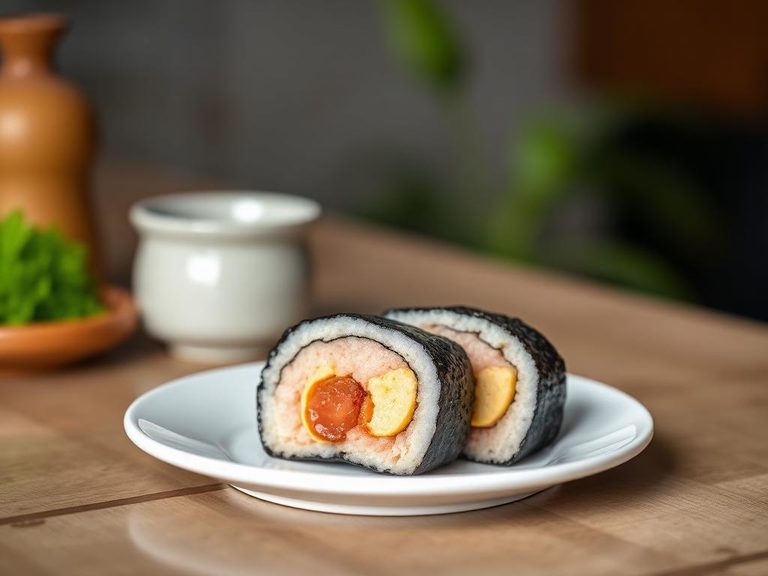
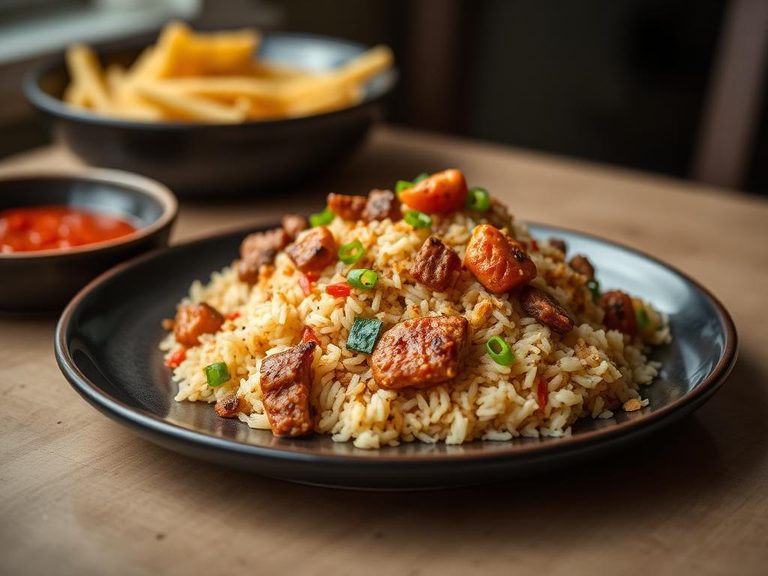
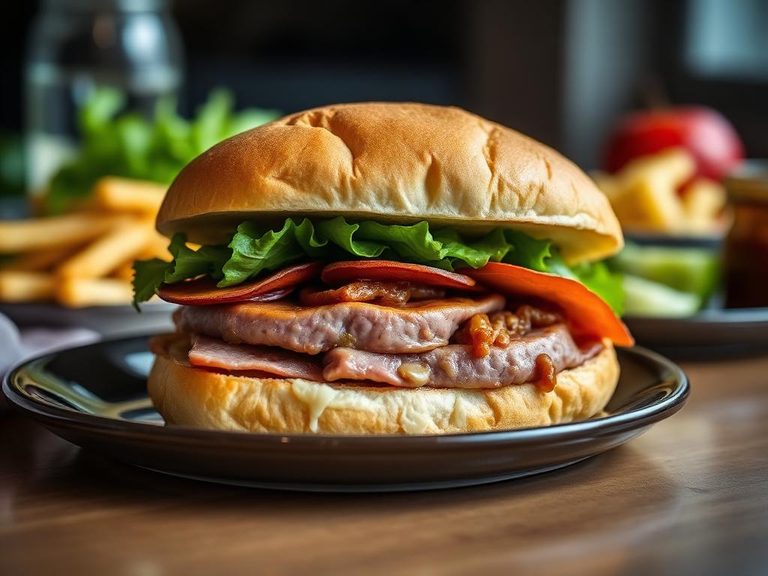
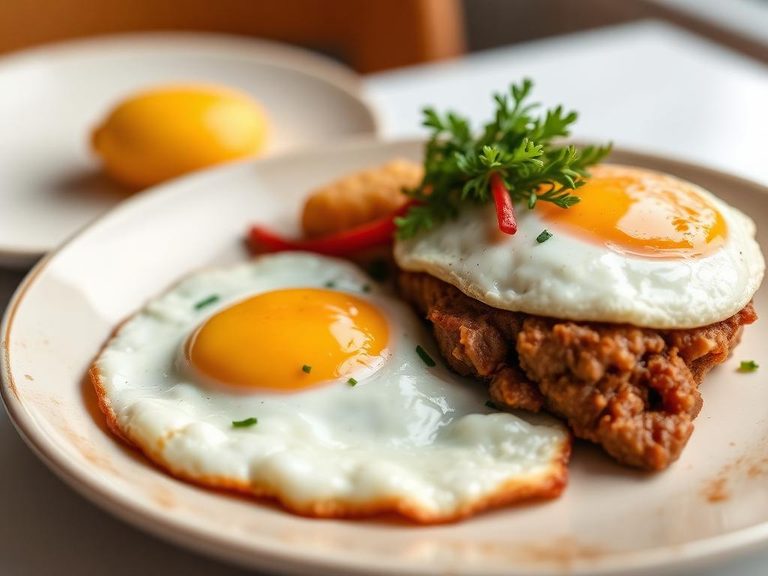
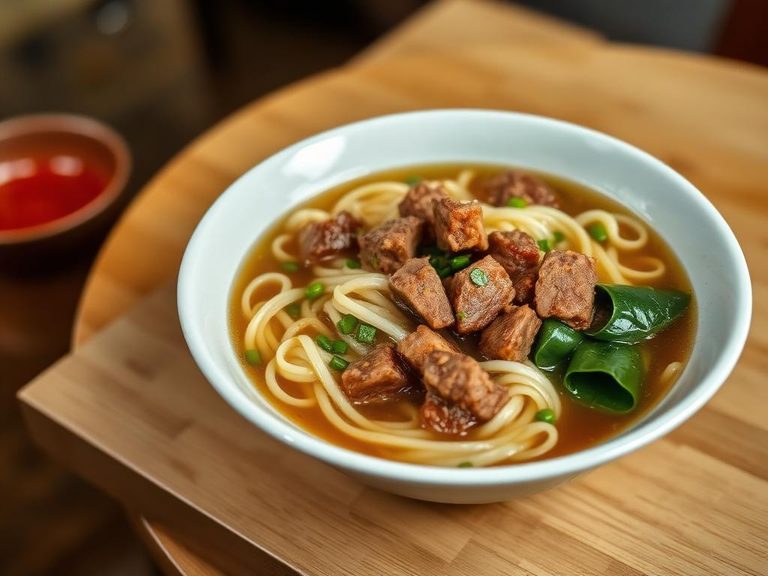
🌍 Where it's eaten
💡 Did you know?
The most famous brand, Spam, was created in 1937 and its name is a portmanteau of 'spiced' and 'ham,' though it contains both pork and ham.
Full nutrition (USDA data · scales with serving)
| Water | 60.3 g |
| Energy | 225 kcal |
| Protein | 11.2 g |
| Total lipid (fat) | 15.9 g |
| Carbohydrate, by difference | 8.5 g |
| Fiber, total dietary | 1.5 g |
| Total Sugars | 8.5 g |
| Calcium, Ca | 109 mg |
| Iron, Fe | 1.3 mg |
| Magnesium, Mg | 34.0 mg |
| Phosphorus, P | 153 mg |
| Potassium, K | 371 mg |
| Sodium, Na | 1040 mg |
| Zinc, Zn | 1.7 mg |
| Copper, Cu | 0.10 mg |
| Selenium, Se | 7.9 ug |
| Vitamin C, total ascorbic acid | 7.8 mg |
| Thiamin | 0.39 mg |
| Riboflavin | 0.12 mg |
| Niacin | 2.5 mg |
| Vitamin B-6 | 0.42 mg |
| Folate, total | 37.0 ug |
| Folic acid | 0.00 ug |
| Folate, food | 37.0 ug |
| Folate, DFE | 37.0 ug |
| Choline, total | 31.7 mg |
| Vitamin B-12 | 0.54 ug |
| Vitamin B-12, added | 0.00 ug |
| Vitamin A, RAE | 78.0 ug |
| Retinol | 78.0 ug |
| Carotene, beta | 147 ug |
| Carotene, alpha | 4.0 ug |
| Cryptoxanthin, beta | 46.0 ug |
| Lycopene | 0.00 ug |
| Lutein + zeaxanthin | 87.0 ug |
| Vitamin E (alpha-tocopherol) | 0.40 mg |
| Vitamin E, added | 0.00 mg |
| Vitamin D (D2 + D3) | 0.80 ug |
| Vitamin K (phylloquinone) | 5.1 ug |
| Alcohol, ethyl | 0.00 g |
| Caffeine | 0.00 mg |
| Theobromine | 0.00 mg |
Fat & fatty acid profile (per 100g)
| Fatty acids, total saturated | 5.3 g |
| SFA 4:0 | 0.00 g |
| SFA 6:0 | 0.00 g |
| SFA 8:0 | 0.00 g |
| SFA 10:0 | 0.02 g |
| SFA 12:0 | 0.02 g |
| SFA 14:0 | 0.20 g |
| SFA 16:0 | 3.5 g |
| SFA 18:0 | 1.5 g |
| Fatty acids, total monounsaturated | 7.1 g |
| MUFA 16:1 | 0.63 g |
| MUFA 18:1 | 6.3 g |
| MUFA 20:1 | 0.09 g |
| MUFA 22:1 | 0.00 g |
| Fatty acids, total polyunsaturated | 2.8 g |
| PUFA 18:2 | 2.7 g |
| PUFA 18:3 | 0.12 g |
| PUFA 18:4 | 0.00 g |
| PUFA 20:4 | 0.00 g |
| PUFA 20:5 n-3 (EPA) | 0.00 g |
| PUFA 22:5 n-3 (DPA) | 0.00 g |
| PUFA 22:6 n-3 (DHA) | 0.00 g |
| Cholesterol | 58.0 mg |
Amino acid profile (per 100g)
Estimated from Beef, cured, luncheon meat, jellied — USDA does not publish this profile for Luncheon meat.
| Tryptophan | 0.14 g |
| Threonine | 0.74 g |
| Isoleucine | 0.71 g |
| Leucine | 1.3 g |
| Lysine | 1.5 g |
| Methionine | 0.42 g |
| Cystine | 0.20 g |
| Phenylalanine | 0.67 g |
| Tyrosine | 0.51 g |
| Valine | 0.82 g |
| Arginine | 1.3 g |
| Histidine | 0.50 g |
| Alanine | 1.3 g |
| Aspartic acid | 1.6 g |
| Glutamic acid | 2.6 g |
| Glycine | 1.8 g |
| Proline | 1.2 g |
| Serine | 0.76 g |
FAQ
Is luncheon meat the same as Spam?
Spam is a specific, trademarked brand of luncheon meat. While 'luncheon meat' is a general category, Spam is the most iconic example and often used interchangeably in casual conversation.
How should I store it after opening?
Once opened, transfer any unused portion from the can to an airtight container and refrigerate. It should be consumed within 3-4 days for best quality and safety.
Can I eat it straight from the can?
Yes, it is fully pre-cooked and safe to eat cold. However, its flavor and texture are greatly enhanced by frying, grilling, or baking until the edges are crispy.
Nutrient density (calculated · NRF9.3)
Nutrient Rich Foods index: beneficial nutrients (protein, fiber, vitamins, minerals) minus saturated fat, added sugar & sodium, per 100 kcal.
NRF9.3 index — Fulgoni, Keast & Drewnowski, 2009. Computed from USDA nutrients.
Weight-loss friendliness (composite index)
Energy density 2.25 kcal/g · 20% calories from protein · 1.5 g fiber · 8.5 g sugar per 100 g.
Composite of energy density (Rolls et al., 1999), protein & fiber satiety, minus sugar. A calculated heuristic — ranks satiety-per-calorie, not a clinical measure.
Dietary load (calculated from USDA values)
Potential renal acid load. Positive = acid-forming, negative = alkaline-forming.
Sodium-to-potassium ratio: 2.80 (lower is better — aim for ≤ 1)
Sodium:potassium per WHO potassium guidance. Computed from USDA nutrients.