

Ham luncheon meat, loaf type
Common food

Photo: Wikipedia
Ham luncheon meat, loaf type, is a finely ground, emulsified pork product pressed into a loaf and sliced, offering a smooth, springy texture and a savory, salty, mildly smoky flavor. Nutritionally, it's a protein powerhouse with minimal carbs and fat, making it a lean, convenient protein source.
Calorie split: 61% protein · 5% carbs · 34% fat
↓ Full nutrition💚 Why it's loved
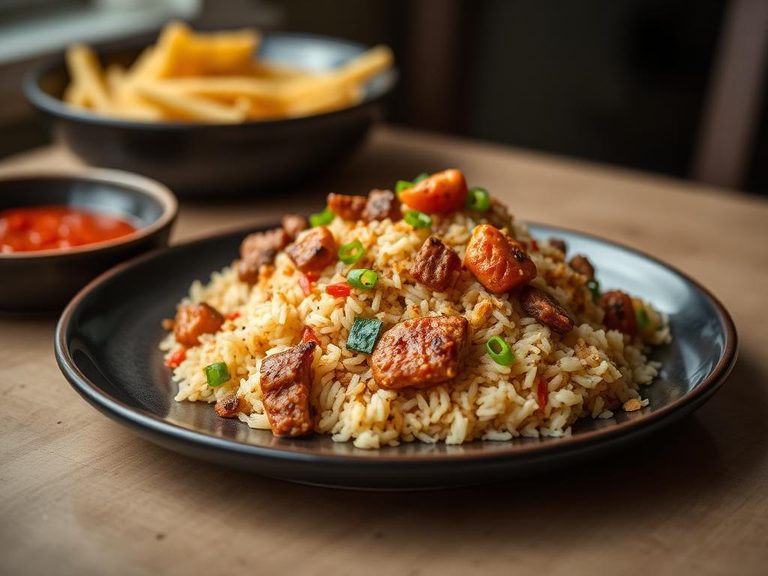
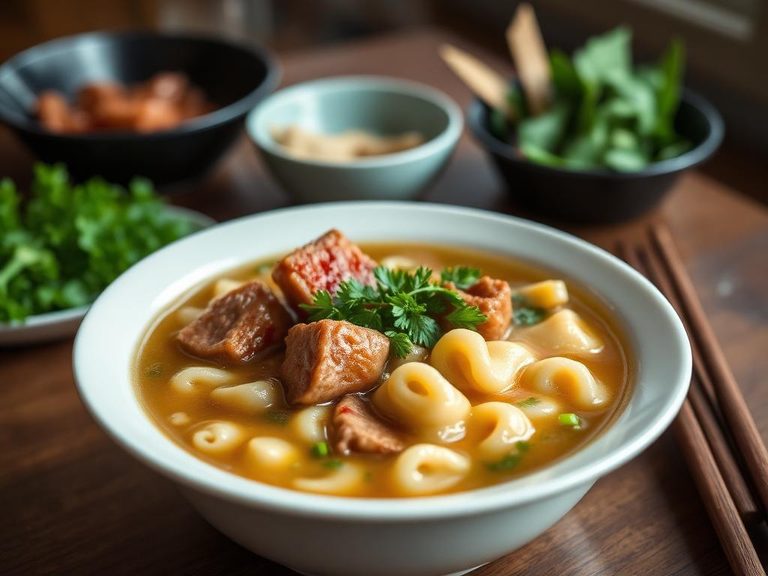
People love it for its reliable, savory saltiness and satisfyingly firm yet tender texture that holds up well in sandwiches and stir-fries. It's a nostalgic comfort food in many cultures, valued for its simplicity and ability to transform a basic meal into something more substantial.
⚠️ Watch-outs & how to enjoy it better
The primary concern is its typically high sodium content, which can be problematic for blood pressure management. It is also a processed meat, so those monitoring nitrates or with specific dietary restrictions should be cautious. To counteract, pair it with potassium-rich foods like leafy greens or avocado, use it as a flavor accent rather than the main protein, and always check labels for lower-sodium versions.
Key benefits
- Excellent source of high-quality protein (18g per 100g).
- Very low in carbohydrates and sugars.
- Low in fat compared to many other processed meats.
- Long shelf life and ready-to-eat convenience.
- Versatile ingredient for quick meal preparation.
🍽️ Popular dishes



🌍 Where it's eaten
💡 Did you know?
The iconic blue can of Spam was a U.S. military staple during WWII, and its introduction to Pacific islands like Hawaii and Guam permanently embedded it into local cuisines.
Full nutrition (USDA data · scales with serving)
| Water | 72.6 g |
| Energy | 117 kcal |
| Protein | 18.0 g |
| Total lipid (fat) | 4.4 g |
| Carbohydrate, by difference | 1.6 g |
| Fiber, total dietary | 0.00 g |
| Total Sugars | 1.6 g |
| Calcium, Ca | 9.0 mg |
| Iron, Fe | 0.82 mg |
| Magnesium, Mg | 19.0 mg |
| Phosphorus, P | 270 mg |
| Potassium, K | 316 mg |
| Sodium, Na | 1193 mg |
| Zinc, Zn | 1.8 mg |
| Copper, Cu | 0.09 mg |
| Selenium, Se | 34.2 ug |
| Vitamin C, total ascorbic acid | 0.00 mg |
| Thiamin | 0.36 mg |
| Riboflavin | 0.18 mg |
| Niacin | 5.8 mg |
| Vitamin B-6 | 0.39 mg |
| Folate, total | 1.0 ug |
| Folic acid | 0.00 ug |
| Folate, food | 1.0 ug |
| Folate, DFE | 1.0 ug |
| Choline, total | 74.2 mg |
| Vitamin B-12 | 0.40 ug |
| Vitamin B-12, added | 0.00 ug |
| Vitamin A, RAE | 13.0 ug |
| Retinol | 13.0 ug |
| Carotene, beta | 0.00 ug |
| Carotene, alpha | 0.00 ug |
| Cryptoxanthin, beta | 0.00 ug |
| Lycopene | 0.00 ug |
| Lutein + zeaxanthin | 0.00 ug |
| Vitamin E (alpha-tocopherol) | 0.20 mg |
| Vitamin E, added | 0.00 mg |
| Vitamin D (D2 + D3) | 0.70 ug |
| Vitamin K (phylloquinone) | 0.00 ug |
| Alcohol, ethyl | 0.00 g |
| Caffeine | 0.00 mg |
| Theobromine | 0.00 mg |
Fat & fatty acid profile (per 100g)
| Fatty acids, total saturated | 1.4 g |
| SFA 4:0 | 0.00 g |
| SFA 6:0 | 0.00 g |
| SFA 8:0 | 0.00 g |
| SFA 10:0 | 0.00 g |
| SFA 12:0 | 0.00 g |
| SFA 14:0 | 0.05 g |
| SFA 16:0 | 0.90 g |
| SFA 18:0 | 0.45 g |
| Fatty acids, total monounsaturated | 2.0 g |
| MUFA 16:1 | 0.12 g |
| MUFA 18:1 | 1.8 g |
| MUFA 20:1 | 0.03 g |
| MUFA 22:1 | 0.00 g |
| Fatty acids, total polyunsaturated | 0.54 g |
| PUFA 18:2 | 0.45 g |
| PUFA 18:3 | 0.02 g |
| PUFA 18:4 | 0.00 g |
| PUFA 20:4 | 0.05 g |
| PUFA 20:5 n-3 (EPA) | 0.00 g |
| PUFA 22:5 n-3 (DPA) | 0.00 g |
| PUFA 22:6 n-3 (DHA) | 0.00 g |
| Cholesterol | 53.0 mg |
FAQ
What's the difference between ham luncheon meat and regular canned ham?
Ham luncheon meat is a finely ground, emulsified product (like a smooth paste) pressed into a loaf, while canned ham is typically whole or large pieces of ham muscle pressed into a can. The texture of luncheon meat is more uniform and springy.
Is it safe to eat it straight from the can?
Yes, it is fully cooked and safe to eat cold. However, many people prefer to pan-fry or grill slices to enhance flavor and create a crispy texture.
How can I reduce the sodium when cooking with it?
Rinse slices or diced pieces under water briefly before cooking. Also, avoid adding extra salt to the dish and balance it with unsalted ingredients like fresh vegetables or plain rice.
Nutrient density (calculated · NRF9.3)
Nutrient Rich Foods index: beneficial nutrients (protein, fiber, vitamins, minerals) minus saturated fat, added sugar & sodium, per 100 kcal.
NRF9.3 index — Fulgoni, Keast & Drewnowski, 2009. Computed from USDA nutrients.
Weight-loss friendliness (composite index)
Energy density 1.17 kcal/g · 62% calories from protein · 0.0 g fiber · 1.6 g sugar per 100 g.
Composite of energy density (Rolls et al., 1999), protein & fiber satiety, minus sugar. A calculated heuristic — ranks satiety-per-calorie, not a clinical measure.
Dietary load (calculated from USDA values)
Potential renal acid load. Positive = acid-forming, negative = alkaline-forming.
Sodium-to-potassium ratio: 3.78 (lower is better — aim for ≤ 1)
Sodium:potassium per WHO potassium guidance. Computed from USDA nutrients.