

Lobster
Common food

Photo: Wikipedia
Lobster is a premium crustacean celebrated for its sweet, delicate meat with a firm yet tender texture, often described as a cross between a shrimp and a crab. Its nutritional profile is exceptionally lean, packing over 20 grams of high-quality protein per 100 grams with virtually no carbohydrates or fat, making it a powerhouse for muscle maintenance. The meat's natural sweetness is enhanced by simple preparations, allowing its clean oceanic flavor to shine.
Calorie split: 91% protein · 0% carbs · 9% fat
↓ Full nutrition💚 Why it's loved
People love lobster for its luxurious, sweet flavor and satisfyingly meaty texture that feels indulgent yet clean. It's incredibly versatile, elevating everything from simple steamed tails with butter to complex bisques and salads.
⚠️ Watch-outs & how to enjoy it better
Lobster is a common shellfish allergen, and those with allergies must avoid it entirely. It can be high in cholesterol (though dietary impact is debated), so individuals with specific heart health concerns may practice portion control. To counteract richness, pair drawn butter with lemon juice and steamed vegetables, or choose grilled preparations over butter-heavy sauces.
Key benefits
- Excellent source of lean, complete protein for muscle repair and satiety
- Very low in fat and carbohydrates, fitting low-calorie or low-carb diets
- Rich in selenium, an antioxidant that supports thyroid and immune function
- Provides zinc, crucial for immune health and wound healing
- Contains omega-3 fatty acids, though in smaller amounts than fatty fish
🍽️ Popular dishes
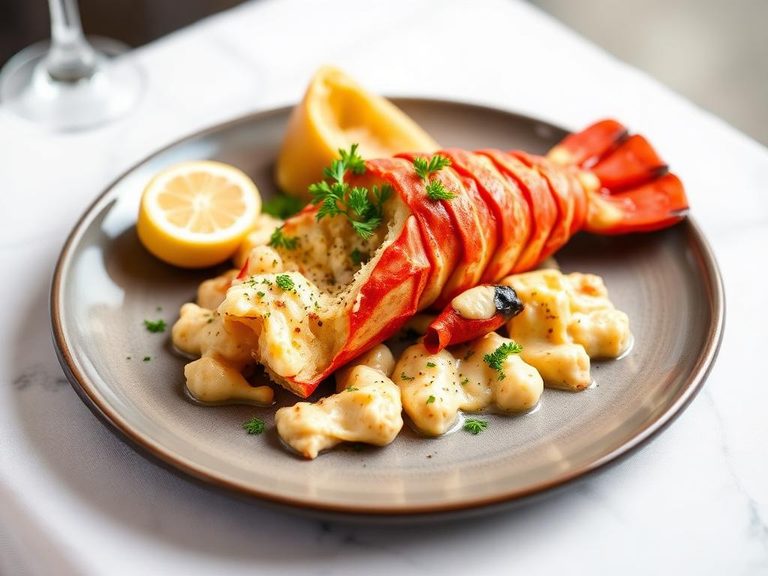
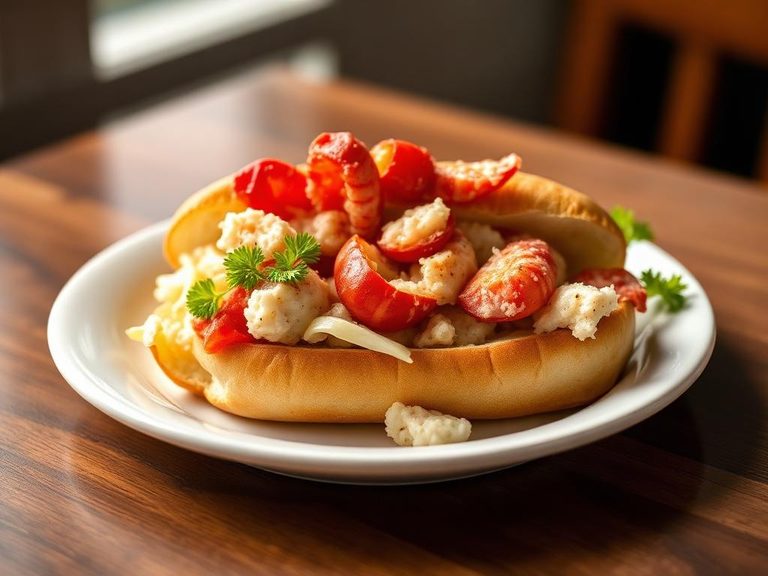
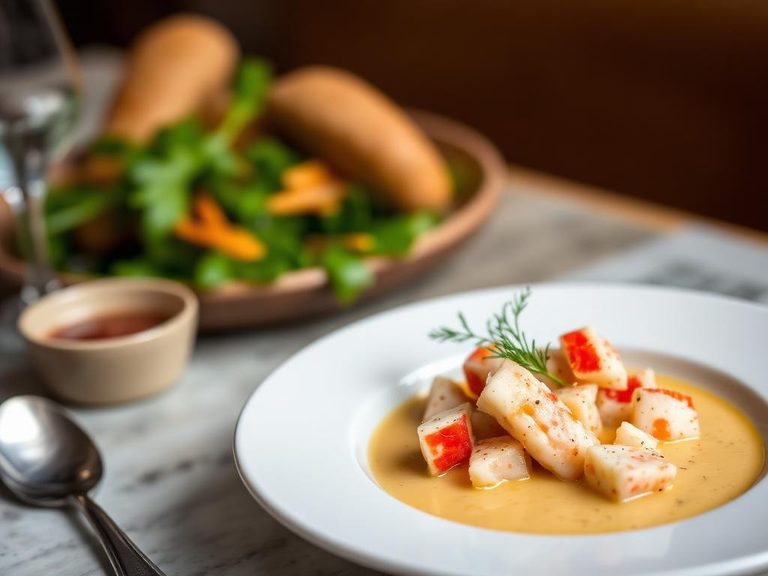
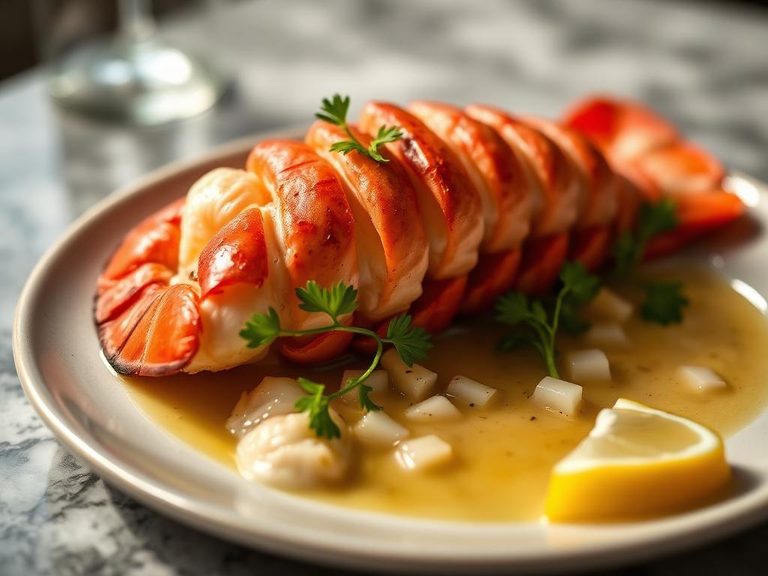
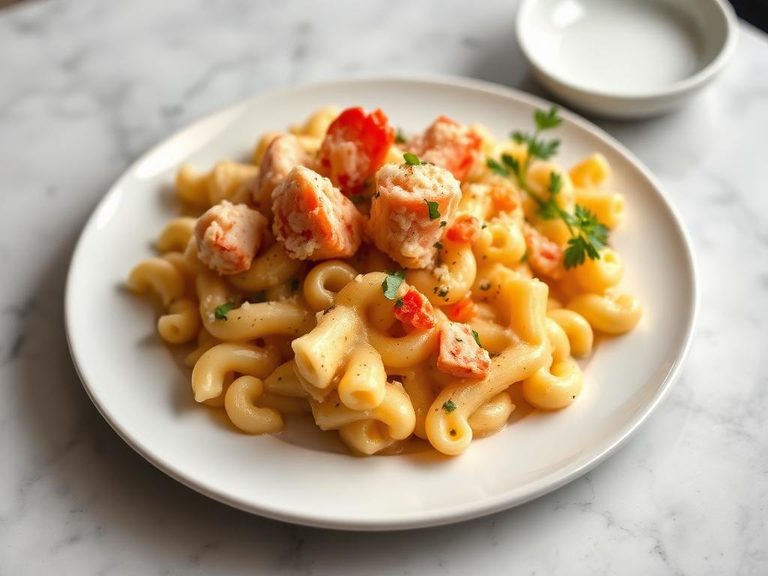
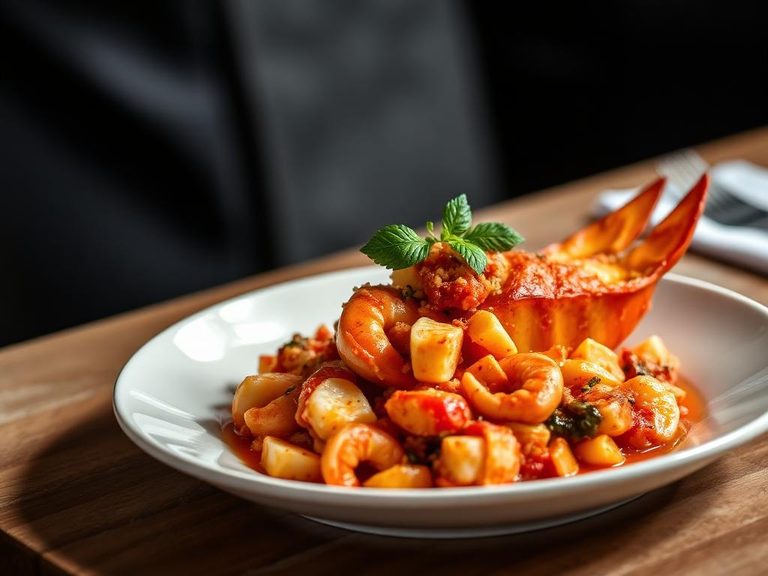
🌍 Where it's eaten
💡 Did you know?
A lobster's blood is colorless but turns blue when exposed to oxygen because it uses copper-based hemocyanin to transport oxygen, unlike the iron-based hemoglobin in human blood.
Full nutrition (USDA data · scales with serving)
| Water | 75.9 g |
| Energy | 97.0 kcal |
| Protein | 20.9 g |
| Total lipid (fat) | 0.95 g |
| Carbohydrate, by difference | 0.00 g |
| Fiber, total dietary | 0.00 g |
| Total Sugars | 0.00 g |
| Calcium, Ca | 106 mg |
| Iron, Fe | 0.33 mg |
| Magnesium, Mg | 48.0 mg |
| Phosphorus, P | 204 mg |
| Potassium, K | 253 mg |
| Sodium, Na | 535 mg |
| Zinc, Zn | 4.5 mg |
| Copper, Cu | 1.7 mg |
| Selenium, Se | 80.5 ug |
| Vitamin C, total ascorbic acid | 0.00 mg |
| Thiamin | 0.02 mg |
| Riboflavin | 0.02 mg |
| Niacin | 1.9 mg |
| Vitamin B-6 | 0.12 mg |
| Folate, total | 9.0 ug |
| Folic acid | 0.00 ug |
| Folate, food | 9.0 ug |
| Folate, DFE | 9.0 ug |
| Choline, total | 89.0 mg |
| Vitamin B-12 | 1.3 ug |
| Vitamin B-12, added | 0.00 ug |
| Vitamin A, RAE | 1.0 ug |
| Retinol | 1.0 ug |
| Carotene, beta | 0.00 ug |
| Carotene, alpha | 0.00 ug |
| Cryptoxanthin, beta | 0.00 ug |
| Lycopene | 0.00 ug |
| Lutein + zeaxanthin | 0.00 ug |
| Vitamin E (alpha-tocopherol) | 1.1 mg |
| Vitamin E, added | 0.00 mg |
| Vitamin D (D2 + D3) | 0.00 ug |
| Vitamin K (phylloquinone) | 0.00 ug |
| Alcohol, ethyl | 0.00 g |
| Caffeine | 0.00 mg |
| Theobromine | 0.00 mg |
Fat & fatty acid profile (per 100g)
| Fatty acids, total saturated | 0.23 g |
| SFA 4:0 | 0.00 g |
| SFA 6:0 | 0.00 g |
| SFA 8:0 | 0.00 g |
| SFA 10:0 | 0.00 g |
| SFA 12:0 | 0.00 g |
| SFA 14:0 | 0.01 g |
| SFA 16:0 | 0.14 g |
| SFA 18:0 | 0.06 g |
| Fatty acids, total monounsaturated | 0.28 g |
| MUFA 16:1 | 0.04 g |
| MUFA 18:1 | 0.20 g |
| MUFA 20:1 | 0.03 g |
| MUFA 22:1 | 0.00 g |
| Fatty acids, total polyunsaturated | 0.38 g |
| PUFA 18:2 | 0.04 g |
| PUFA 18:3 | 0.05 g |
| PUFA 18:4 | 0.00 g |
| PUFA 20:4 | 0.03 g |
| PUFA 20:5 n-3 (EPA) | 0.13 g |
| PUFA 22:5 n-3 (DPA) | 0.01 g |
| PUFA 22:6 n-3 (DHA) | 0.09 g |
| Cholesterol | 161 mg |
Amino acid profile (per 100g)
Estimated from Crustaceans, spiny lobster, mixed species, cooked, moist heat — USDA does not publish this profile for Lobster.
| Tryptophan | 0.37 g |
| Threonine | 1.1 g |
| Isoleucine | 1.3 g |
| Leucine | 2.1 g |
| Lysine | 2.3 g |
| Methionine | 0.74 g |
| Cystine | 0.30 g |
| Phenylalanine | 1.1 g |
| Tyrosine | 0.88 g |
| Valine | 1.2 g |
| Arginine | 2.3 g |
| Histidine | 0.54 g |
| Alanine | 1.5 g |
| Aspartic acid | 2.7 g |
| Glutamic acid | 4.5 g |
| Glycine | 1.6 g |
| Proline | 0.87 g |
| Serine | 1.0 g |
FAQ
How do I know when lobster meat is done cooking?
The meat should be opaque and firm, turning from translucent to white. The internal temperature should reach 140-145°F (60-63°C). Overcooking makes it tough and rubbery.
Is the green stuff (tomalley) safe to eat?
The tomalley is the lobster's liver and pancreas. While edible and considered a delicacy by some, it can concentrate environmental toxins. Most health authorities advise moderation or avoiding it, especially for children or pregnant women.
What's the best way to store live lobster?
Place live lobsters in a single layer in an open container in the refrigerator, covered with a damp towel. Do not put them in water or a sealed bag. Cook within 24-48 hours for best quality and safety.
Nutrient density (calculated · NRF9.3)
Nutrient Rich Foods index: beneficial nutrients (protein, fiber, vitamins, minerals) minus saturated fat, added sugar & sodium, per 100 kcal.
NRF9.3 index — Fulgoni, Keast & Drewnowski, 2009. Computed from USDA nutrients.
Weight-loss friendliness (composite index)
Energy density 0.97 kcal/g · 86% calories from protein · 0.0 g fiber · 0.0 g sugar per 100 g.
Composite of energy density (Rolls et al., 1999), protein & fiber satiety, minus sugar. A calculated heuristic — ranks satiety-per-calorie, not a clinical measure.
Dietary load (calculated from USDA values)
Potential renal acid load. Positive = acid-forming, negative = alkaline-forming.
Sodium-to-potassium ratio: 2.11 (lower is better — aim for ≤ 1)
Sodium:potassium per WHO potassium guidance. Computed from USDA nutrients.