

Lobster, tail only, frozen, wild caught
Whole food · Finfish and Shellfish Products
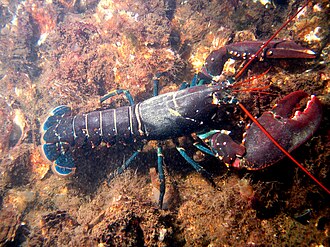
Photo: Wikipedia
Wild-caught frozen lobster tail is the sweet, succulent muscle from the tail of a spiny or clawed lobster, prized for its firm, slightly springy texture and clean, oceanic flavor. Nutritionally, it is a powerhouse of lean protein, delivering nearly 13 grams per 100g with virtually no fat or carbohydrates. This makes it an exceptionally pure source of high-quality protein for muscle maintenance and satiety.
Calorie split: 88% protein · 6% carbs · 6% fat
↓ Full nutrition💚 Why it's loved
People love lobster tail for its luxurious, sweet, and delicate flavor that feels like a special occasion. Its versatility allows it to be grilled, steamed, or broiled, and it pairs beautifully with simple butter or rich sauces, making it a centerpiece in fine dining and home celebrations alike.
⚠️ Watch-outs & how to enjoy it better
As a common shellfish allergen, lobster can trigger severe reactions in sensitive individuals. It is also naturally high in sodium, which may be a concern for those managing blood pressure. To counteract this, pair it with potassium-rich vegetables like asparagus or spinach, and use herbs and citrus (like lemon) instead of added salt for flavor.
Key benefits
- Extremely high in lean protein (13g per 100g) for muscle repair and satiety.
- Virtually fat-free and carbohydrate-free, ideal for low-fat or low-carb diets.
- Naturally rich in selenium, a powerful antioxidant that supports thyroid function.
- Contains vitamin B12, essential for nerve health and red blood cell formation.
- Low in calories (59 kcal per 100g), making it a nutrient-dense choice.
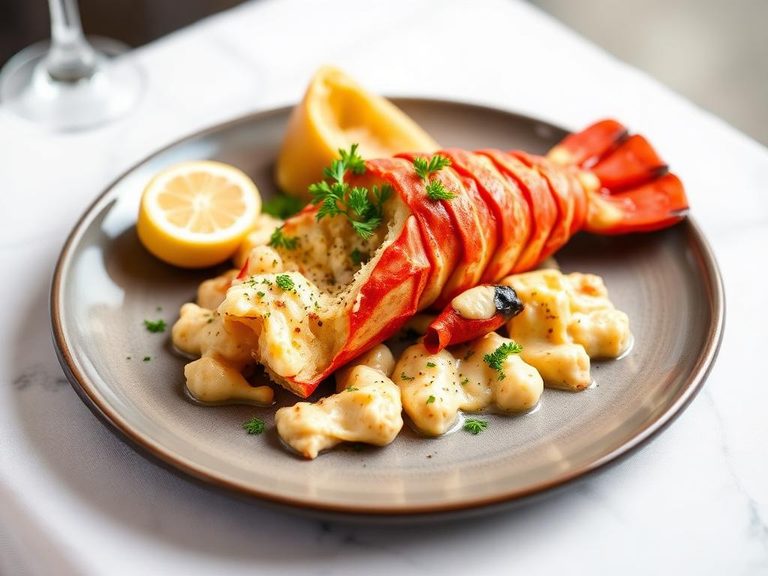
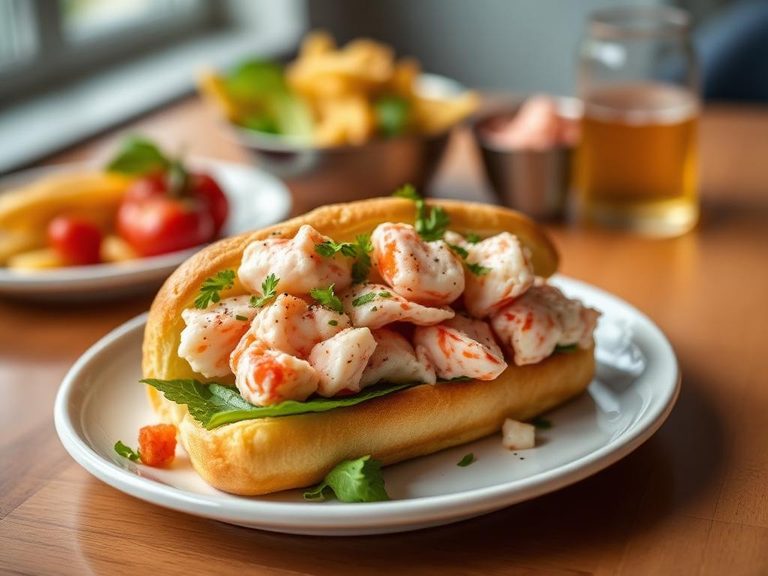
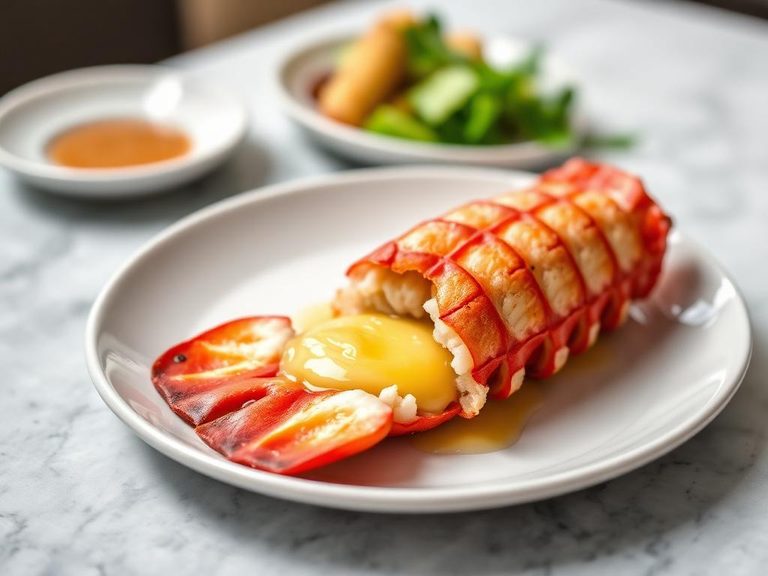
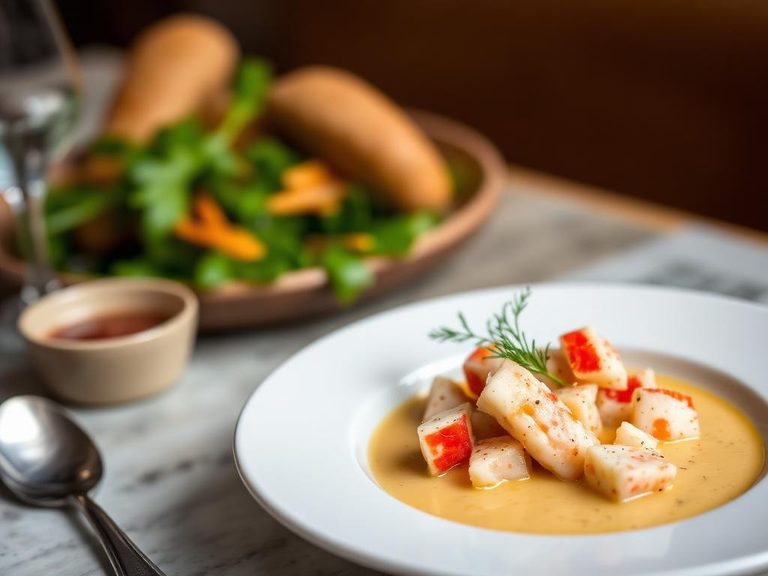
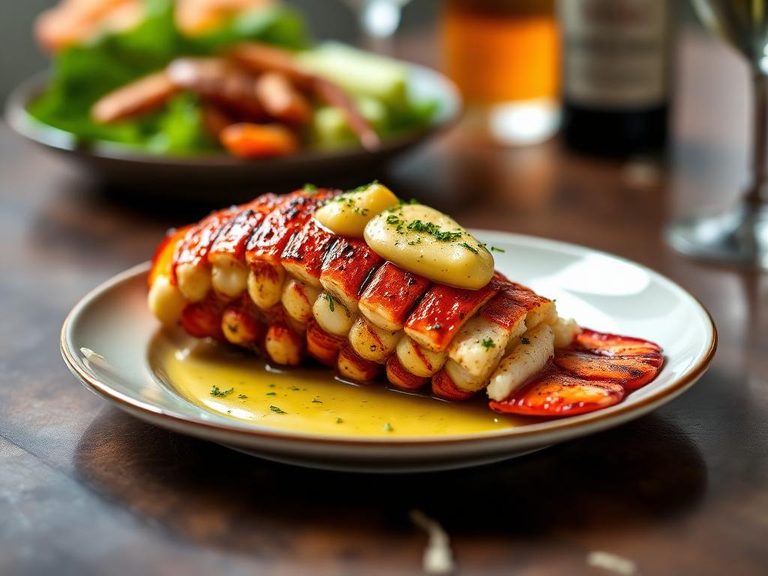
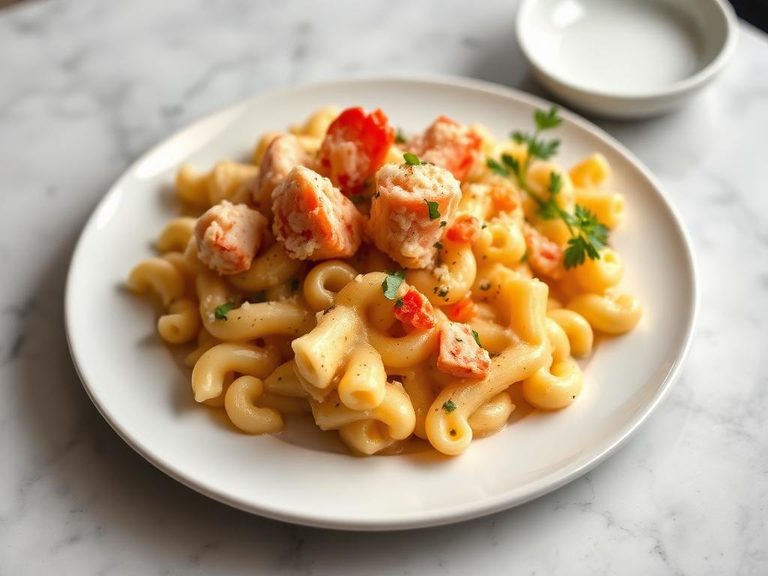
🍽️ Popular dishes
🌍 Where it's eaten
💡 Did you know?
Lobsters are among the few animals that can live indefinitely if not caught or killed, as they don't show signs of aging like reduced fertility or slower metabolism.
Full nutrition (USDA data · scales with serving)
| Water | 83.7 g |
| Energy (Atwater General Factors) | 58.8 kcal |
| Nitrogen | 2.1 g |
| Protein | 13.0 g |
| Total lipid (fat) | 0.37 g |
| Ash | 2.1 g |
| Carbohydrate, by difference | 0.89 g |
| Calcium, Ca | 71.6 mg |
| Iron, Fe | 0.17 mg |
| Magnesium, Mg | 39.0 mg |
| Phosphorus, P | 175 mg |
| Potassium, K | 213 mg |
| Sodium, Na | 509 mg |
| Zinc, Zn | 1.5 mg |
| Copper, Cu | 0.24 mg |
| Manganese, Mn | 0.06 mg |
| Selenium, Se | 63.1 ug |
| Vitamin B-12 | 0.99 ug |
Fat & fatty acid profile (per 100g)
Estimated from Crustaceans, spiny lobster, mixed species, cooked, moist heat — USDA does not publish this profile for Lobster.
| Fatty acids, total saturated | 0.30 g |
| SFA 14:0 | 0.01 g |
| SFA 16:0 | 0.19 g |
| SFA 18:0 | 0.10 g |
| Fatty acids, total monounsaturated | 0.35 g |
| MUFA 16:1 | 0.05 g |
| MUFA 18:1 | 0.27 g |
| MUFA 20:1 | 0.04 g |
| Fatty acids, total polyunsaturated | 0.76 g |
| PUFA 18:2 | 0.02 g |
| PUFA 18:3 | 0.01 g |
| PUFA 18:4 | 0.01 g |
| PUFA 20:4 | 0.20 g |
| PUFA 20:5 n-3 (EPA) | 0.34 g |
| PUFA 22:5 n-3 (DPA) | 0.04 g |
| PUFA 22:6 n-3 (DHA) | 0.14 g |
| Cholesterol | 90.0 mg |
Amino acid profile (per 100g)
Estimated from Crustaceans, spiny lobster, mixed species, cooked, moist heat — USDA does not publish this profile for Lobster.
| Tryptophan | 0.37 g |
| Threonine | 1.1 g |
| Isoleucine | 1.3 g |
| Leucine | 2.1 g |
| Lysine | 2.3 g |
| Methionine | 0.74 g |
| Cystine | 0.30 g |
| Phenylalanine | 1.1 g |
| Tyrosine | 0.88 g |
| Valine | 1.2 g |
| Arginine | 2.3 g |
| Histidine | 0.54 g |
| Alanine | 1.5 g |
| Aspartic acid | 2.7 g |
| Glutamic acid | 4.5 g |
| Glycine | 1.6 g |
| Proline | 0.87 g |
| Serine | 1.0 g |
FAQ
How do I properly thaw a frozen lobster tail?
Thaw it overnight in the refrigerator (about 12-24 hours) for the best texture. For a quicker method, submerge the sealed tail in cold water for 30-60 minutes, changing the water every 15 minutes. Never thaw at room temperature.
What is the best way to cook a lobster tail to keep it tender?
Steaming or broiling are excellent methods. For steaming, cook for 8-10 minutes. For broiling, cut the top shell open, brush with butter, and broil for 8-10 minutes until the meat is opaque. Avoid overcooking, as it makes the meat tough and rubbery.
Is the dark vein in the lobster tail edible?
No, the dark vein running down the tail is the lobster's digestive tract and should be removed before cooking. It's easy to devein by making a shallow cut along the back of the tail and pulling out the vein.
Nutrient density (calculated · NRF9.3)
Nutrient Rich Foods index: beneficial nutrients (protein, fiber, vitamins, minerals) minus saturated fat, added sugar & sodium, per 100 kcal.
NRF9.3 index — Fulgoni, Keast & Drewnowski, 2009. Computed from USDA nutrients.
Weight-loss friendliness (composite index)
Energy density 0.59 kcal/g · 88% calories from protein · 0.0 g fiber · 0.0 g sugar per 100 g.
Composite of energy density (Rolls et al., 1999), protein & fiber satiety, minus sugar. A calculated heuristic — ranks satiety-per-calorie, not a clinical measure.
Dietary load (calculated from USDA values)
Potential renal acid load. Positive = acid-forming, negative = alkaline-forming.
Sodium-to-potassium ratio: 2.39 (lower is better — aim for ≤ 1)
Sodium:potassium per WHO potassium guidance. Computed from USDA nutrients.