

Lo mein, NFS
Common food
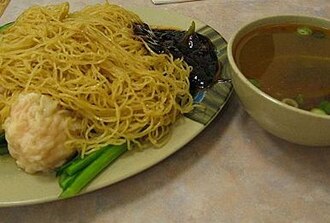
Photo: Wikipedia
Lo mein is a classic Chinese-American noodle dish featuring soft, chewy wheat noodles tossed in a savory, slightly sweet soy-based sauce with vegetables and often a protein. Its texture is delightfully springy and slippery, coating each strand in a glossy, umami-rich glaze. Nutritionally, it's a moderate-calorie dish that provides a quick source of energy from its carbohydrate-dense noodles.
Calorie split: 16% protein · 67% carbs · 17% fat
↓ Full nutrition💚 Why it's loved
People love lo mein for its deeply satisfying, savory flavor and the comforting, chewy texture of the noodles that soak up the sauce. It's a beloved staple of takeout culture, prized for its versatility and ability to be customized with endless combinations of vegetables and proteins.
⚠️ Watch-outs & how to enjoy it better
The dish can be high in sodium from soy sauce and oyster sauce, and the refined wheat noodles may cause a rapid blood-sugar spike, making it less ideal for those managing diabetes or watching their glycemic load. To counteract this, pair it with a side of steamed greens or a protein-rich dish, and opt for a smaller portion of noodles while loading up on the vegetable components.
Key benefits
- Good source of quick-release energy from carbohydrates
- Contains some plant-based protein from wheat noodles
- Can be a vehicle for vegetables, adding fiber and micronutrients
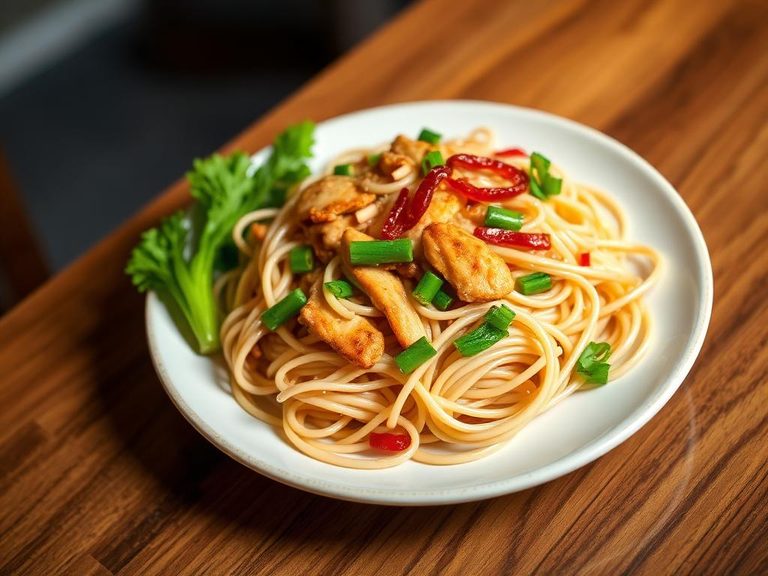
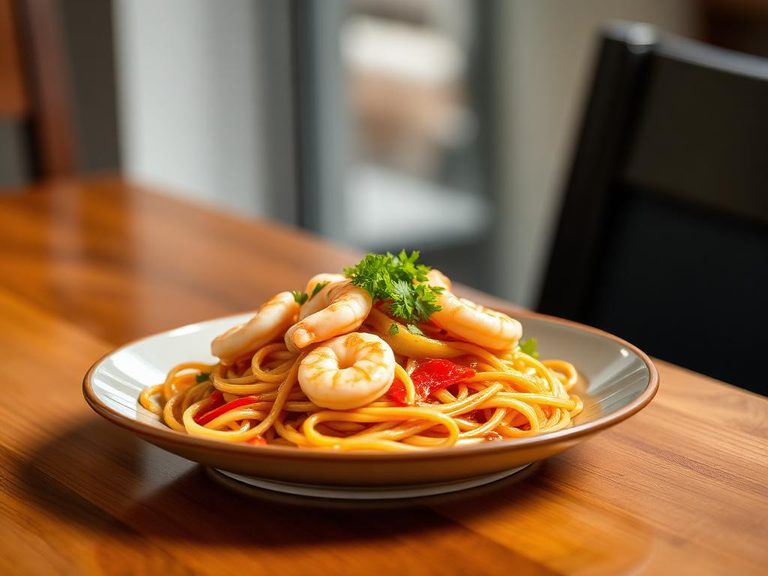
- Versatile base for incorporating lean proteins like chicken or shrimp
- Comfort food that is quick to prepare and serve
🍽️ Popular dishes


🌍 Where it's eaten
💡 Did you know?
The term 'lo mein' comes from the Cantonese 'lou meen,' which literally means 'stirred noodles,' highlighting the essential final step of tossing the cooked noodles in the sauce.
Full nutrition (USDA data · scales with serving)
| Water | 71.3 g |
| Energy | 121 kcal |
| Protein | 4.8 g |
| Total lipid (fat) | 2.4 g |
| Carbohydrate, by difference | 20.2 g |
| Fiber, total dietary | 1.3 g |
| Total Sugars | 2.6 g |
| Calcium, Ca | 21.0 mg |
| Iron, Fe | 1.1 mg |
| Magnesium, Mg | 14.0 mg |
| Phosphorus, P | 45.0 mg |
| Potassium, K | 105 mg |
| Sodium, Na | 430 mg |
| Zinc, Zn | 0.36 mg |
| Copper, Cu | 0.06 mg |
| Selenium, Se | 11.7 ug |
| Vitamin C, total ascorbic acid | 1.7 mg |
| Thiamin | 0.05 mg |
| Riboflavin | 0.12 mg |
| Niacin | 0.81 mg |
| Vitamin B-6 | 0.07 mg |
| Folate, total | 28.0 ug |
| Folic acid | 0.00 ug |
| Folate, food | 28.0 ug |
| Folate, DFE | 28.0 ug |
| Choline, total | 8.9 mg |
| Vitamin B-12 | 0.00 ug |
| Vitamin B-12, added | 0.00 ug |
| Vitamin A, RAE | 9.0 ug |
| Retinol | 0.00 ug |
| Carotene, beta | 97.0 ug |
| Carotene, alpha | 21.0 ug |
| Cryptoxanthin, beta | 0.00 ug |
| Lycopene | 3.0 ug |
| Lutein + zeaxanthin | 112 ug |
| Vitamin E (alpha-tocopherol) | 0.30 mg |
| Vitamin E, added | 0.00 mg |
| Vitamin D (D2 + D3) | 0.10 ug |
| Vitamin K (phylloquinone) | 12.7 ug |
| Alcohol, ethyl | 0.00 g |
| Caffeine | 0.00 mg |
| Theobromine | 0.00 mg |
Fat & fatty acid profile (per 100g)
| Fatty acids, total saturated | 0.46 g |
| SFA 4:0 | 0.00 g |
| SFA 6:0 | 0.00 g |
| SFA 8:0 | 0.00 g |
| SFA 10:0 | 0.00 g |
| SFA 12:0 | 0.00 g |
| SFA 14:0 | 0.00 g |
| SFA 16:0 | 0.33 g |
| SFA 18:0 | 0.11 g |
| Fatty acids, total monounsaturated | 0.59 g |
| MUFA 16:1 | 0.01 g |
| MUFA 18:1 | 0.57 g |
| MUFA 20:1 | 0.01 g |
| MUFA 22:1 | 0.00 g |
| Fatty acids, total polyunsaturated | 1.3 g |
| PUFA 18:2 | 1.1 g |
| PUFA 18:3 | 0.14 g |
| PUFA 18:4 | 0.00 g |
| PUFA 20:4 | 0.00 g |
| PUFA 20:5 n-3 (EPA) | 0.00 g |
| PUFA 22:5 n-3 (DPA) | 0.00 g |
| PUFA 22:6 n-3 (DHA) | 0.00 g |
| Cholesterol | 0.00 mg |
Amino acid profile (per 100g)
Estimated from Restaurant, Chinese, chicken chow mein — USDA does not publish this profile for Lo mein.
| Tryptophan | 0.08 g |
| Threonine | 0.27 g |
| Isoleucine | 0.28 g |
| Leucine | 0.50 g |
| Lysine | 0.47 g |
| Methionine | 0.16 g |
| Cystine | 0.08 g |
| Phenylalanine | 0.25 g |
| Tyrosine | 0.22 g |
| Valine | 0.31 g |
| Arginine | 0.42 g |
| Histidine | 0.18 g |
| Alanine | 0.36 g |
| Aspartic acid | 0.60 g |
| Glutamic acid | 1.4 g |
| Glycine | 0.24 g |
| Proline | 0.35 g |
| Serine | 0.25 g |
FAQ
What's the difference between lo mein and chow mein?
The key difference is in the noodle preparation. For lo mein, noodles are boiled and then gently tossed with sauce and ingredients. For chow mein, noodles are stir-fried directly in the wok, resulting in a crispier, sometimes slightly charred texture.
Is lo mein a healthy choice?
It can be part of a balanced diet when enjoyed in moderation. Its healthiness depends heavily on portion size, the amount of sauce (and thus sodium) used, and the ratio of vegetables and protein to noodles. Choosing versions with more vegetables and lean protein is a better option.
Can I make lo mein with different types of noodles?
While traditional lo mein uses fresh, round wheat noodles, you can experiment with other types like spaghetti or linguine in a pinch. The texture will differ, but the sauce and cooking method remain similar.
Nutrient density (calculated · NRF9.3)
Nutrient Rich Foods index: beneficial nutrients (protein, fiber, vitamins, minerals) minus saturated fat, added sugar & sodium, per 100 kcal.
NRF9.3 index — Fulgoni, Keast & Drewnowski, 2009. Computed from USDA nutrients.
Weight-loss friendliness (composite index)
Energy density 1.21 kcal/g · 16% calories from protein · 1.3 g fiber · 2.6 g sugar per 100 g.
Composite of energy density (Rolls et al., 1999), protein & fiber satiety, minus sugar. A calculated heuristic — ranks satiety-per-calorie, not a clinical measure.
Dietary load (calculated from USDA values)
Potential renal acid load. Positive = acid-forming, negative = alkaline-forming.
Sodium-to-potassium ratio: 4.10 (lower is better — aim for ≤ 1)
Sodium:potassium per WHO potassium guidance. Computed from USDA nutrients.