

Liverwurst
Common food

Photo: Wikipedia
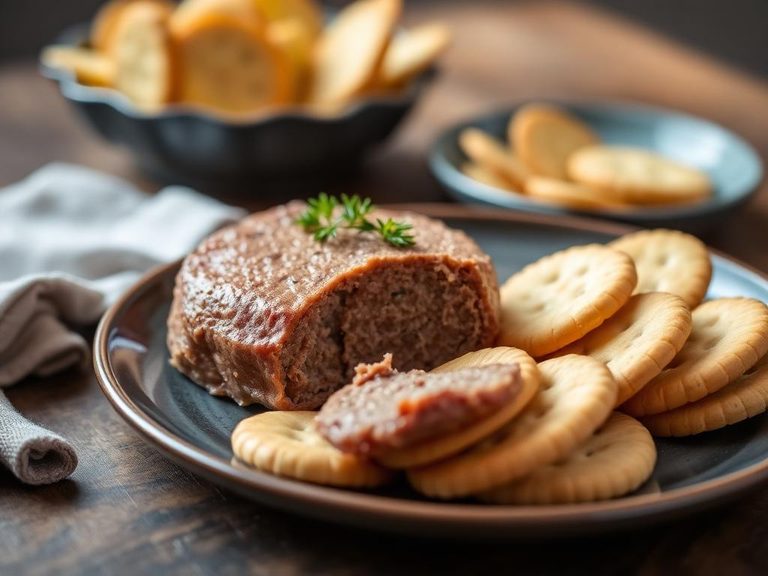
Liverwurst is a smooth, rich, and savory German-style liver sausage, typically made from pork liver, pork meat, and a blend of spices like marjoram and nutmeg. It has a creamy, spreadable texture and a deep, earthy flavor that is distinctly organ-meat forward but mellowed by fat. Nutritionally, it's a powerhouse of high-quality protein and fat, providing a dense source of calories and essential nutrients like vitamin A and iron.
Calorie split: 18% protein · 4% carbs · 78% fat
↓ Full nutrition💚 Why it's loved
People love liverwurst for its intensely savory, umami-rich flavor and luxuriously smooth, pâté-like texture that melts on the tongue. It's a beloved staple in German and Eastern European delis, valued for its versatility as a hearty sandwich spread, a component of a rustic charcuterie board, or a simple, protein-packed snack.
⚠️ Watch-outs & how to enjoy it better
The high saturated fat and cholesterol content means it should be enjoyed in moderation, especially by those monitoring heart health. Its strong, distinct flavor can be polarizing for those unaccustomed to organ meats. To counteract the richness, pair it with acidic or crunchy elements like cornichons, pickled onions, or sharp mustard on rye bread to cut through the fat and balance the palate.
Key benefits
- Excellent source of complete protein for muscle maintenance.
- Rich in heme iron, which is easily absorbed by the body.
- Provides a significant amount of vitamin A, essential for vision and immune function.
- High in B vitamins, particularly B12, crucial for nerve function and energy production.
- Offers a dense, satisfying source of calories for energy.
🍽️ Popular dishes
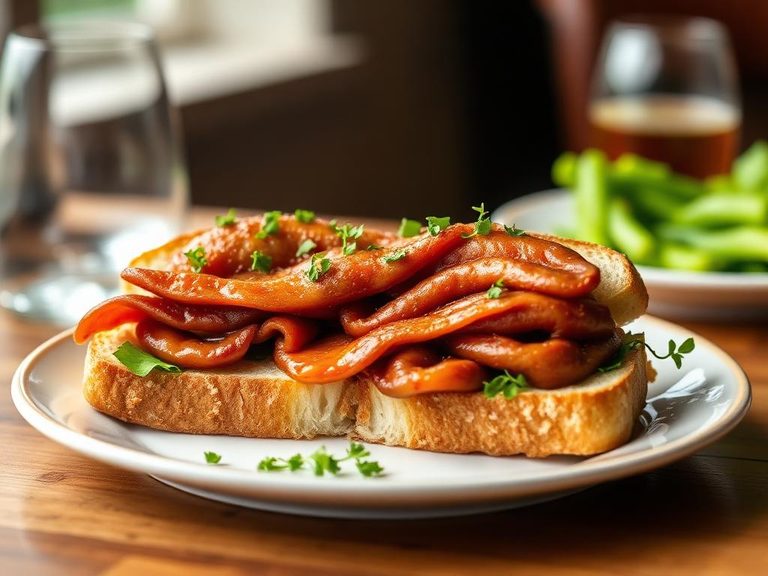
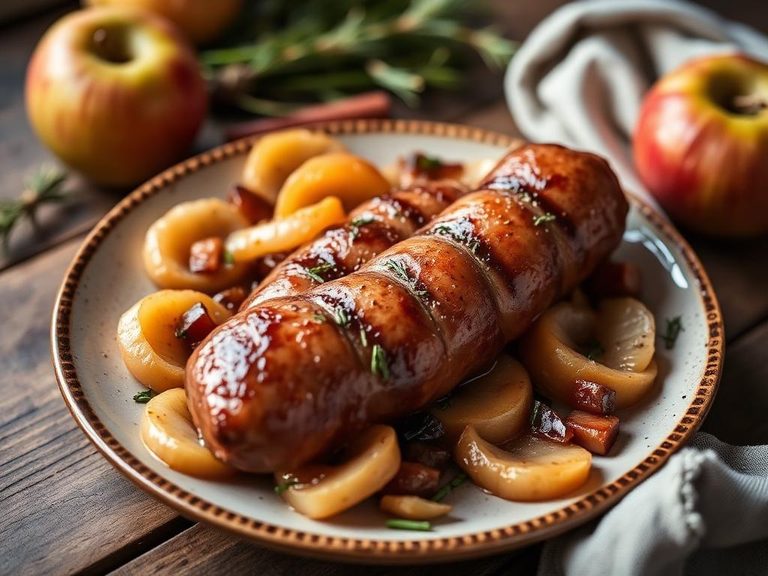
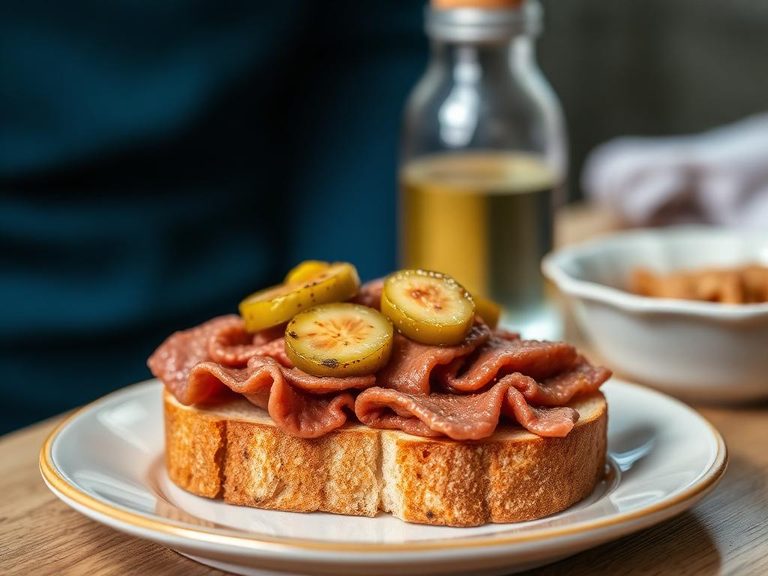
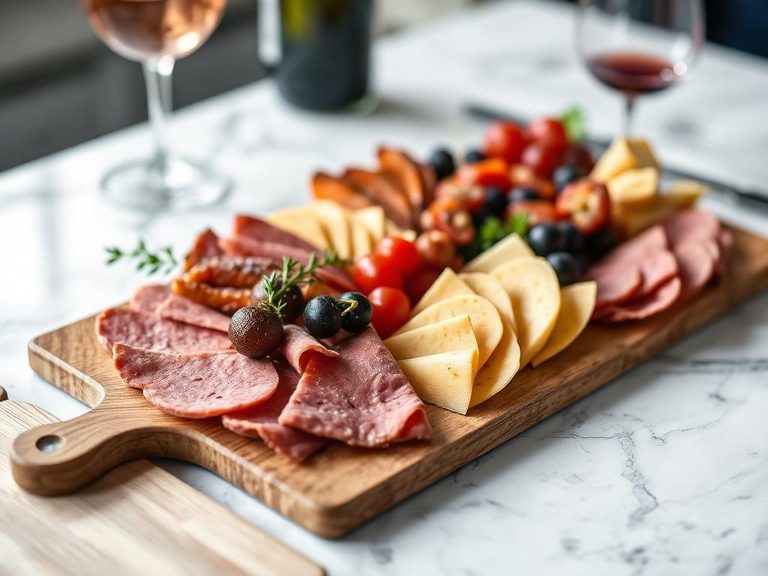
🌍 Where it's eaten
💡 Did you know?
In Germany, there are over 200 officially recognized varieties of 'Leberwurst,' ranging from coarse to fine, and each region fiercely defends its local recipe as the best.
Full nutrition (USDA data · scales with serving)
| Water | 50.6 g |
| Energy | 327 kcal |
| Protein | 14.5 g |
| Total lipid (fat) | 28.5 g |
| Carbohydrate, by difference | 3.1 g |
| Fiber, total dietary | 0.00 g |
| Total Sugars | 0.00 g |
| Calcium, Ca | 9.0 mg |
| Iron, Fe | 11.2 mg |
| Magnesium, Mg | 11.0 mg |
| Phosphorus, P | 168 mg |
| Potassium, K | 199 mg |
| Sodium, Na | 977 mg |
| Zinc, Zn | 2.8 mg |
| Copper, Cu | 0.24 mg |
| Selenium, Se | 58.0 ug |
| Vitamin C, total ascorbic acid | 0.00 mg |
| Thiamin | 0.25 mg |
| Riboflavin | 1.5 mg |
| Niacin | 8.4 mg |
| Vitamin B-6 | 0.33 mg |
| Folate, total | 44.0 ug |
| Folic acid | 0.00 ug |
| Folate, food | 44.0 ug |
| Folate, DFE | 44.0 ug |
| Choline, total | 256 mg |
| Vitamin B-12 | 20.1 ug |
| Vitamin B-12, added | 0.00 ug |
| Vitamin A, RAE | 4220 ug |
| Retinol | 4220 ug |
| Carotene, beta | 0.00 ug |
| Carotene, alpha | 0.00 ug |
| Cryptoxanthin, beta | 0.00 ug |
| Lycopene | 0.00 ug |
| Lutein + zeaxanthin | 0.00 ug |
| Vitamin E (alpha-tocopherol) | 0.35 mg |
| Vitamin E, added | 0.00 mg |
| Vitamin D (D2 + D3) | 1.2 ug |
| Vitamin K (phylloquinone) | 1.6 ug |
| Alcohol, ethyl | 0.00 g |
| Caffeine | 0.00 mg |
| Theobromine | 0.00 mg |
Fat & fatty acid profile (per 100g)
| Fatty acids, total saturated | 9.3 g |
| SFA 4:0 | 0.00 g |
| SFA 6:0 | 0.00 g |
| SFA 8:0 | 0.00 g |
| SFA 10:0 | 0.05 g |
| SFA 12:0 | 0.11 g |
| SFA 14:0 | 0.33 g |
| SFA 16:0 | 5.8 g |
| SFA 18:0 | 3.0 g |
| Fatty acids, total monounsaturated | 12.7 g |
| MUFA 16:1 | 1.0 g |
| MUFA 18:1 | 11.7 g |
| MUFA 20:1 | 0.00 g |
| MUFA 22:1 | 0.00 g |
| Fatty acids, total polyunsaturated | 3.2 g |
| PUFA 18:2 | 2.9 g |
| PUFA 18:3 | 0.34 g |
| PUFA 18:4 | 0.00 g |
| PUFA 20:4 | 0.00 g |
| PUFA 20:5 n-3 (EPA) | 0.00 g |
| PUFA 22:5 n-3 (DPA) | 0.00 g |
| PUFA 22:6 n-3 (DHA) | 0.00 g |
| Cholesterol | 180 mg |
Amino acid profile (per 100g)
Estimated from Liver sausage, liverwurst, pork — USDA does not publish this profile for Liverwurst.
| Tryptophan | 0.15 g |
| Threonine | 0.67 g |
| Isoleucine | 0.65 g |
| Leucine | 1.1 g |
| Lysine | 1.2 g |
| Methionine | 0.28 g |
| Cystine | 0.15 g |
| Phenylalanine | 0.62 g |
| Tyrosine | 0.36 g |
| Valine | 0.86 g |
| Arginine | 0.81 g |
| Histidine | 0.45 g |
| Alanine | 0.83 g |
| Aspartic acid | 1.2 g |
| Glutamic acid | 2.2 g |
| Glycine | 1.1 g |
| Proline | 0.85 g |
| Serine | 0.69 g |
FAQ
What's the difference between liverwurst and braunschweiger?
While often used interchangeably, Braunschweiger is a specific type of liverwurst that is smoked, giving it a distinct flavor. Traditional liverwurst is typically not smoked and has a milder, more straightforward liver taste.
Is liverwurst cooked? Can I eat it straight from the package?
Yes, liverwurst is a pre-cooked sausage. It is fully safe to eat directly from the package, either spread on bread or used as an ingredient in other dishes.
How should I store opened liverwurst?
Once opened, wrap the remaining liverwurst tightly in plastic wrap or place it in an airtight container. It should be refrigerated and consumed within 3 to 5 days for best quality and safety.
Nutrient density (calculated · NRF9.3)
Nutrient Rich Foods index: beneficial nutrients (protein, fiber, vitamins, minerals) minus saturated fat, added sugar & sodium, per 100 kcal.
NRF9.3 index — Fulgoni, Keast & Drewnowski, 2009. Computed from USDA nutrients.
Weight-loss friendliness (composite index)
Energy density 3.27 kcal/g · 18% calories from protein · 0.0 g fiber · 0.0 g sugar per 100 g.
Composite of energy density (Rolls et al., 1999), protein & fiber satiety, minus sugar. A calculated heuristic — ranks satiety-per-calorie, not a clinical measure.
Dietary load (calculated from USDA values)
Potential renal acid load. Positive = acid-forming, negative = alkaline-forming.
Sodium-to-potassium ratio: 4.91 (lower is better — aim for ≤ 1)
Sodium:potassium per WHO potassium guidance. Computed from USDA nutrients.