Charcuterie board component
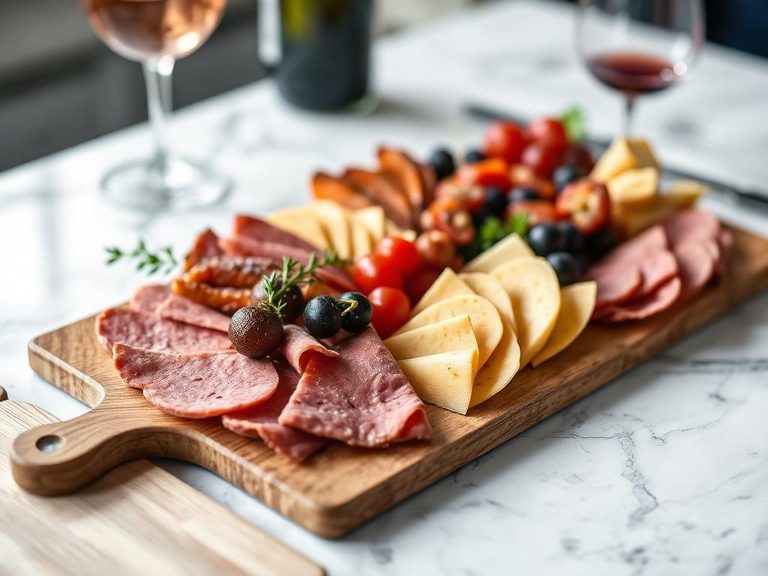
AI-generated illustration
A charcuterie board component refers to the cured, cooked, or smoked meats that form the savory centerpiece of a classic charcuterie board, such as prosciutto, salami, or pâté. These meats are typically made from pork, duck, or other game, and are seasoned with salt, herbs, and spices before being cured or smoked. Originating from French culinary traditions, charcuterie has become a popular appetizer or social dining experience worldwide.
🍽️ Nutrition at a glance
Charcuterie components are generally high in protein and fat, with minimal carbohydrates, making them a rich source of energy and essential amino acids. A typical serving (about 2-3 ounces) can range from 150 to 300 calories, depending on the type of meat and preparation method.
💡 What's interesting
Charcuterie has deep cultural roots in European preservation techniques, where curing meats was a practical way to extend shelf life before refrigeration. Nutritionally, these meats are often rich in B vitamins and iron, but their high sodium and fat content means they are best enjoyed in moderation as part of a balanced diet.