

Kidney beans, from canned, fat added
Common food

Photo: Wikipedia
These are plump, kidney-shaped legumes, typically canned in a savory brine or sauce, offering a satisfyingly creamy-yet-firm texture. They provide a solid plant-based protein boost (8.37g per 100g) alongside significant fiber (7.7g), making them a nutritionally dense staple. The added fat gives them a richer mouthfeel compared to plain canned beans.
Calorie split: 18% protein · 50% carbs · 32% fat
↓ Full nutrition💚 Why it's loved
People love their hearty, earthy flavor and versatile texture that holds up in stews, salads, and dips. They are a cornerstone of comfort food across many cultures, valued for their ability to absorb surrounding flavors while adding substantial body to a dish.
⚠️ Watch-outs & how to enjoy it better
The canning brine is often high in sodium, which can be a concern for blood pressure management. They also contain lectins and oligosaccharides that can cause digestive discomfort (gas) in some individuals. To counteract this, rinse them thoroughly under water to reduce sodium, and introduce them gradually into your diet or pair with digestive herbs like cumin or ginger.
Key benefits
- Excellent source of plant-based protein and dietary fiber.
- Rich in essential minerals like iron, folate, and potassium.
- The added fat can aid in the absorption of fat-soluble vitamins.
- Convenient and shelf-stable for quick meal preparation.
🍽️ Popular dishes
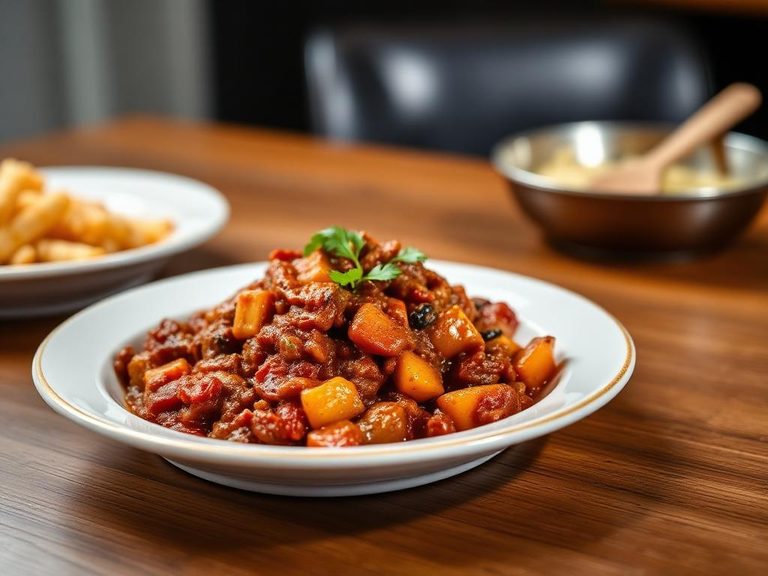
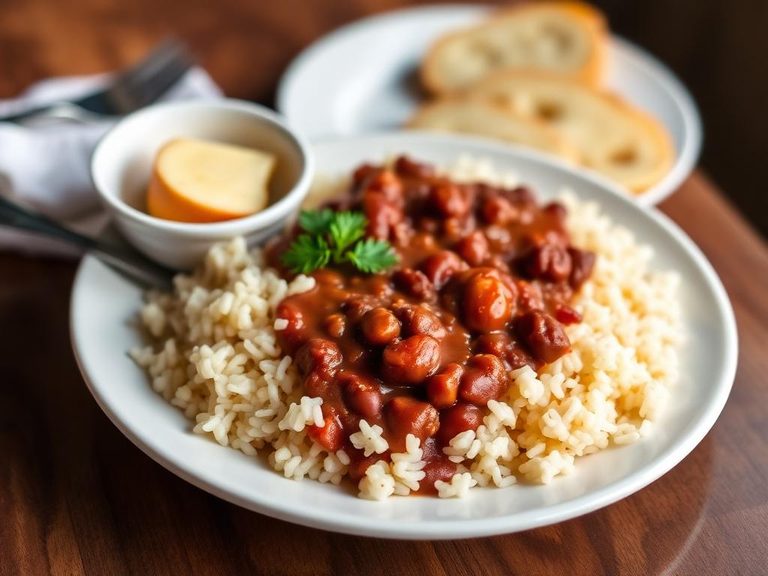
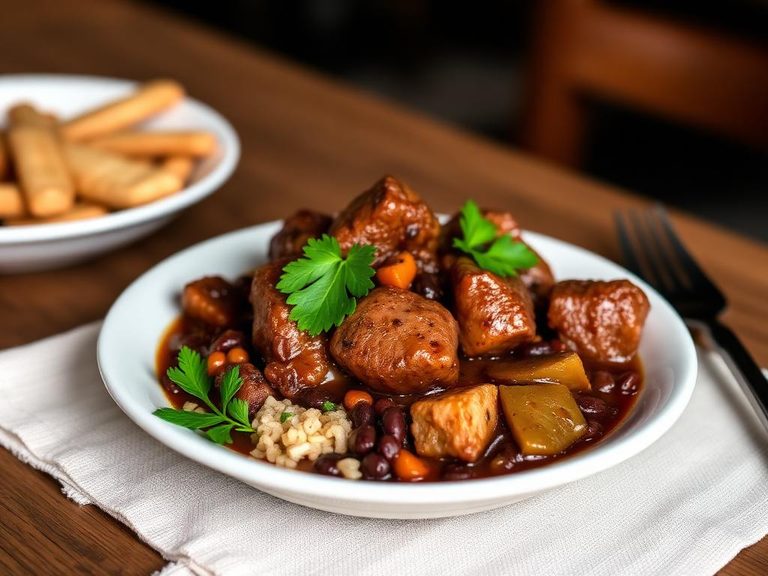
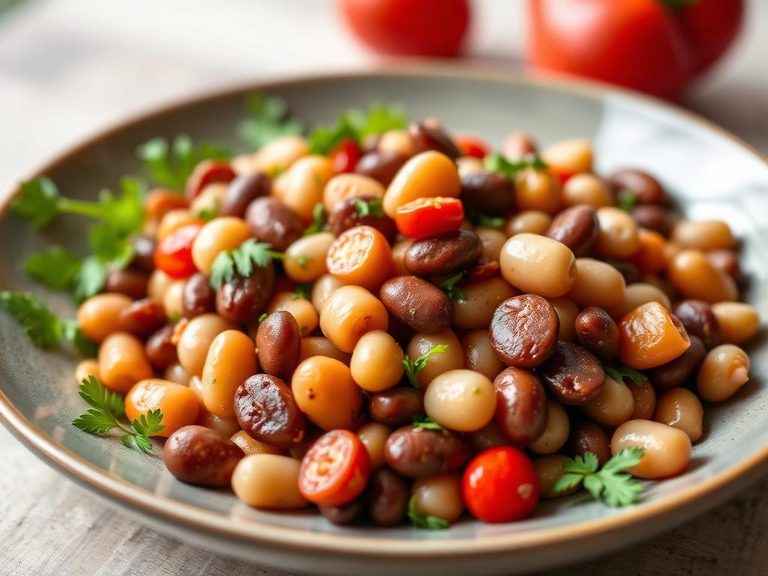
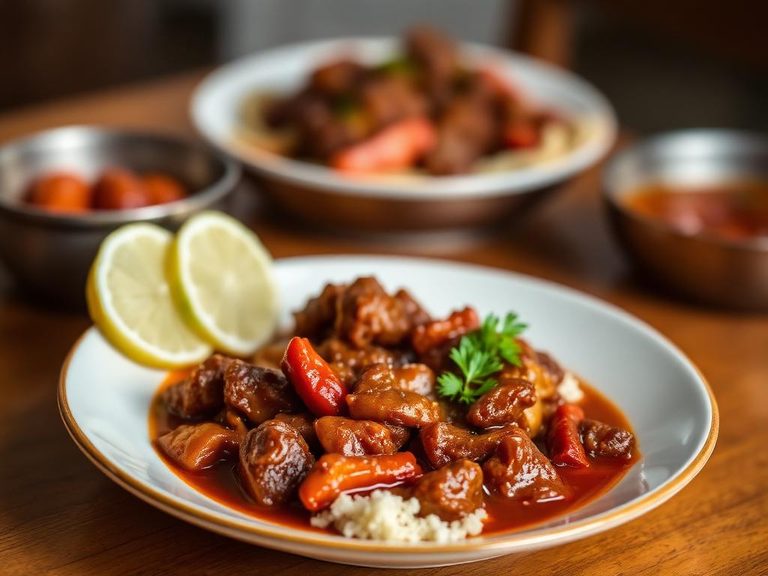
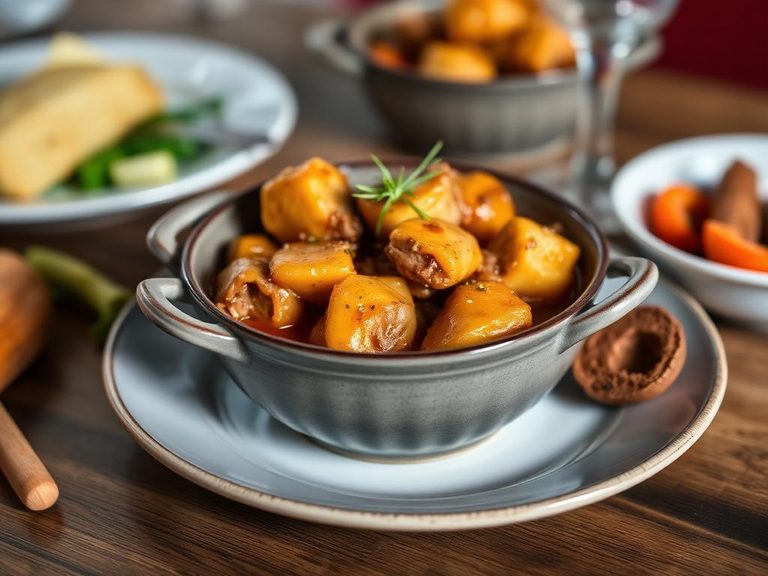
🌍 Where it's eaten
💡 Did you know?
The name 'kidney bean' is a direct reference to their shape and color, which closely resemble a human kidney.
Full nutrition (USDA data · scales with serving)
| Water | 58.4 g |
| Energy | 186 kcal |
| Protein | 8.4 g |
| Total lipid (fat) | 6.8 g |
| Carbohydrate, by difference | 23.8 g |
| Fiber, total dietary | 7.7 g |
| Total Sugars | 3.0 g |
| Calcium, Ca | 47.0 mg |
| Iron, Fe | 2.0 mg |
| Magnesium, Mg | 48.0 mg |
| Phosphorus, P | 170 mg |
| Potassium, K | 417 mg |
| Sodium, Na | 299 mg |
| Zinc, Zn | 1.0 mg |
| Copper, Cu | 0.24 mg |
| Selenium, Se | 1.8 ug |
| Vitamin C, total ascorbic acid | 1.2 mg |
| Thiamin | 0.16 mg |
| Riboflavin | 0.10 mg |
| Niacin | 0.75 mg |
| Vitamin B-6 | 0.12 mg |
| Folate, total | 37.0 ug |
| Folic acid | 0.00 ug |
| Folate, food | 37.0 ug |
| Folate, DFE | 37.0 ug |
| Choline, total | 48.9 mg |
| Vitamin B-12 | 0.00 ug |
| Vitamin B-12, added | 0.00 ug |
| Vitamin A, RAE | 0.00 ug |
| Retinol | 0.00 ug |
| Carotene, beta | 0.00 ug |
| Carotene, alpha | 0.00 ug |
| Cryptoxanthin, beta | 0.00 ug |
| Lycopene | 0.00 ug |
| Lutein + zeaxanthin | 0.00 ug |
| Vitamin E (alpha-tocopherol) | 1.2 mg |
| Vitamin E, added | 0.00 mg |
| Vitamin D (D2 + D3) | 0.00 ug |
| Vitamin K (phylloquinone) | 12.8 ug |
| Alcohol, ethyl | 0.00 g |
| Caffeine | 0.00 mg |
| Theobromine | 0.00 mg |
Fat & fatty acid profile (per 100g)
| Fatty acids, total saturated | 1.0 g |
| SFA 4:0 | 0.00 g |
| SFA 6:0 | 0.00 g |
| SFA 8:0 | 0.00 g |
| SFA 10:0 | 0.00 g |
| SFA 12:0 | 0.00 g |
| SFA 14:0 | 0.01 g |
| SFA 16:0 | 0.73 g |
| SFA 18:0 | 0.24 g |
| Fatty acids, total monounsaturated | 2.9 g |
| MUFA 16:1 | 0.04 g |
| MUFA 18:1 | 2.6 g |
| MUFA 20:1 | 0.04 g |
| MUFA 22:1 | 0.00 g |
| Fatty acids, total polyunsaturated | 2.7 g |
| PUFA 18:2 | 2.3 g |
| PUFA 18:3 | 0.35 g |
| PUFA 18:4 | 0.00 g |
| PUFA 20:4 | 0.00 g |
| PUFA 20:5 n-3 (EPA) | 0.00 g |
| PUFA 22:5 n-3 (DPA) | 0.00 g |
| PUFA 22:6 n-3 (DHA) | 0.00 g |
| Cholesterol | 0.00 mg |
Amino acid profile (per 100g)
Estimated from Beans, kidney, mature seeds, sprouted, cooked, boiled, drained, without salt — USDA does not publish this profile for Kidney beans.
| Tryptophan | 0.05 g |
| Threonine | 0.20 g |
| Isoleucine | 0.21 g |
| Leucine | 0.35 g |
| Lysine | 0.28 g |
| Methionine | 0.05 g |
| Cystine | 0.06 g |
| Phenylalanine | 0.24 g |
| Tyrosine | 0.17 g |
| Valine | 0.25 g |
| Arginine | 0.26 g |
| Histidine | 0.14 g |
| Alanine | 0.20 g |
| Aspartic acid | 0.63 g |
| Glutamic acid | 0.59 g |
| Glycine | 0.17 g |
| Proline | 0.20 g |
| Serine | 0.26 g |
FAQ
Are canned kidney beans as nutritious as dried ones?
Yes, the canning process preserves most of the nutrients, including protein, fiber, and minerals. The main difference is the often higher sodium content, which can be significantly reduced by rinsing.
Why do kidney beans cause gas?
They contain oligosaccharides, a type of sugar that the human digestive system cannot fully break down. Soaking dried beans and thorough rinsing of canned beans can help reduce these compounds.
Can I eat the liquid from the can?
It's called aquafaba and can be used as an egg substitute in baking or to add thickness to sauces. However, be mindful of its high sodium content if you are monitoring your salt intake.
Nutrient density (calculated · NRF9.3)
Nutrient Rich Foods index: beneficial nutrients (protein, fiber, vitamins, minerals) minus saturated fat, added sugar & sodium, per 100 kcal.
NRF9.3 index — Fulgoni, Keast & Drewnowski, 2009. Computed from USDA nutrients.
Weight-loss friendliness (composite index)
Energy density 1.86 kcal/g · 18% calories from protein · 7.7 g fiber · 3.0 g sugar per 100 g.
Composite of energy density (Rolls et al., 1999), protein & fiber satiety, minus sugar. A calculated heuristic — ranks satiety-per-calorie, not a clinical measure.
Dietary load (calculated from USDA values)
Potential renal acid load. Positive = acid-forming, negative = alkaline-forming.
Sodium-to-potassium ratio: 0.72 (lower is better — aim for ≤ 1)
Sodium:potassium per WHO potassium guidance. Computed from USDA nutrients.