

Honeydew melon, raw
Common food
Honeydew melon is a smooth, pale-green fruit with a sweet, subtly floral flavor and a juicy, tender texture. Its high water content and low calorie count make it a refreshing, hydrating choice. The melon is a good source of Vitamin C and provides a natural energy boost from its simple sugars.
Calorie split: 5% protein · 91% carbs · 3% fat
↓ Full nutrition💚 Why it's loved
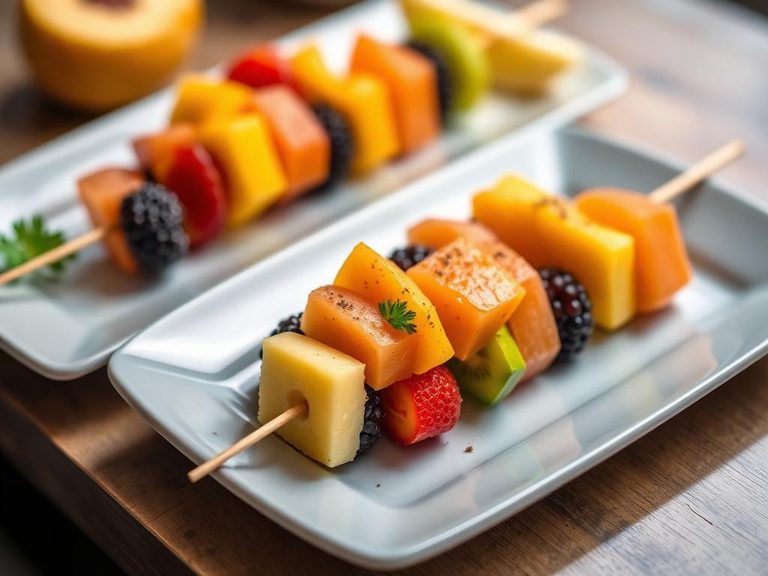
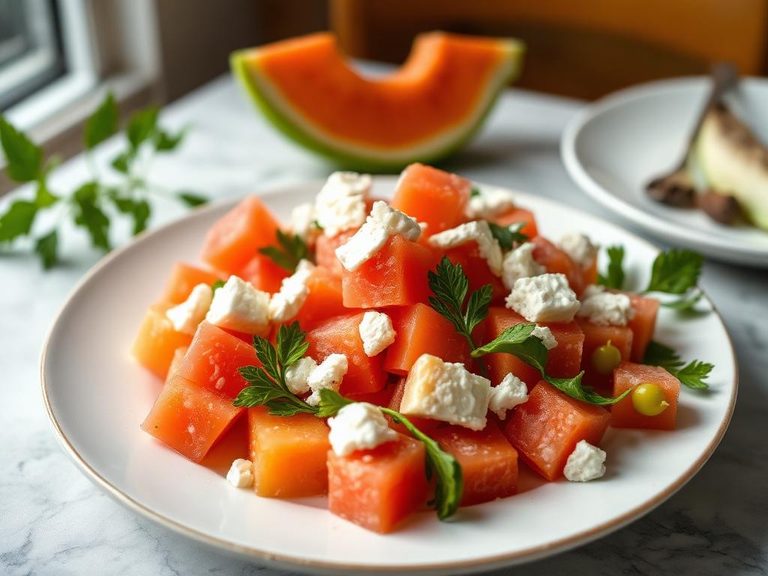
People love honeydew for its delicate, honey-like sweetness and refreshing quality, which makes it a perfect summer fruit. Its versatility shines in everything from fresh fruit salads to chilled soups and cocktails.
⚠️ Watch-outs & how to enjoy it better
The natural sugars can cause a blood-sugar spike if consumed in large quantities. To counteract this, pair honeydew with a source of protein or healthy fat, like nuts or cheese, to slow sugar absorption. Those monitoring their blood sugar should practice portion control.
Key benefits
- Excellent source of hydration due to high water content.
- Provides a significant amount of Vitamin C for immune support.
- Low in calories, making it suitable for weight management.
- Contains potassium, which supports healthy blood pressure.
🍽️ Popular dishes
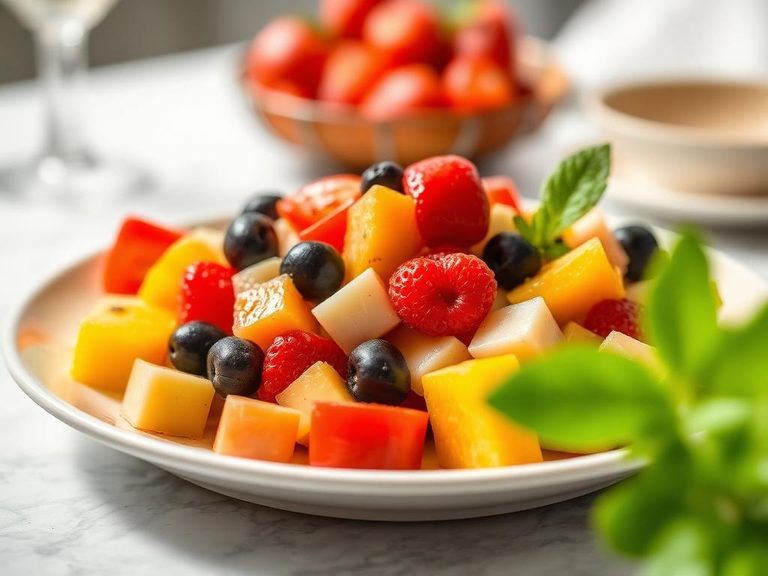
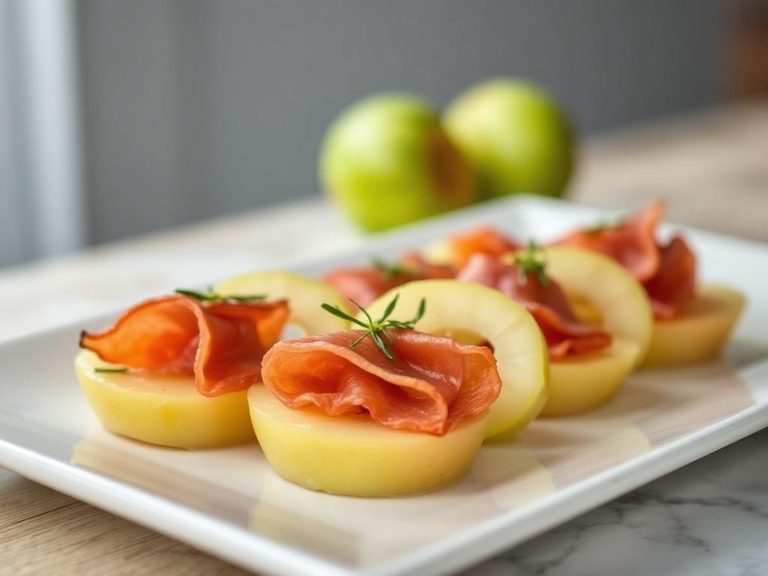
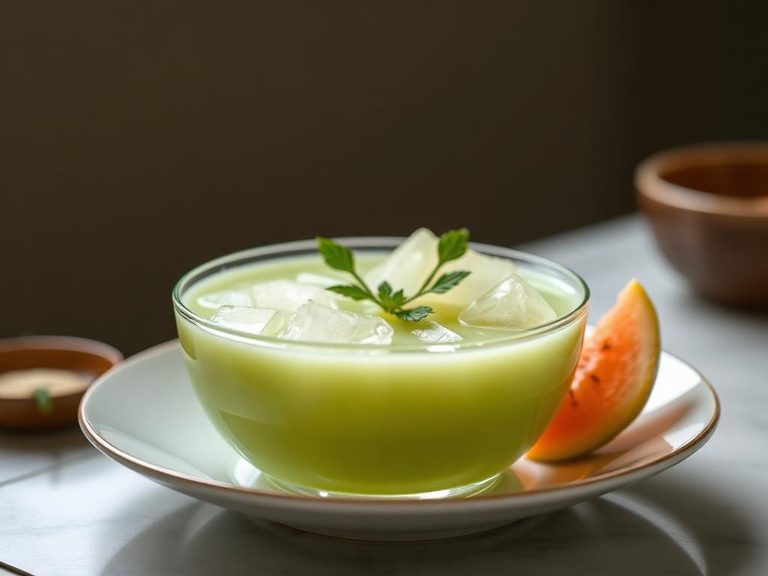
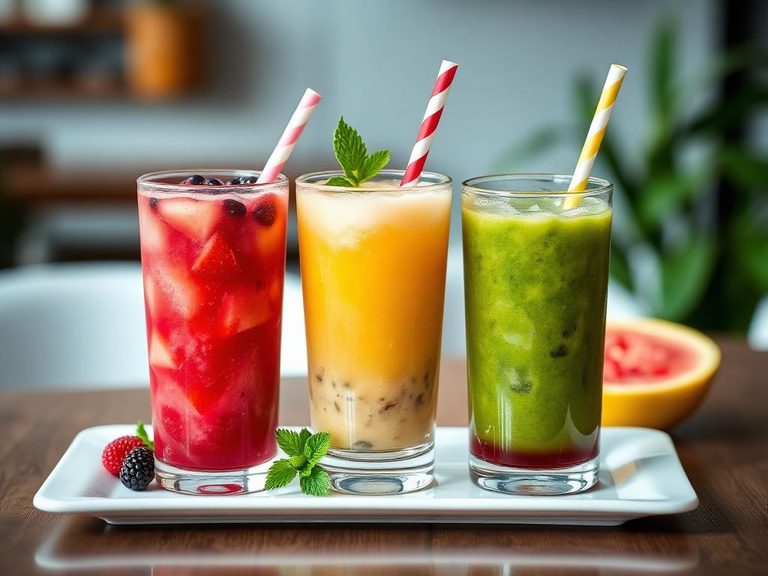
🌍 Where it's eaten
💡 Did you know?
The honeydew melon is actually a variety of muskmelon, and its pale green flesh is a result of a genetic mutation that prevents it from developing the orange color of its cousin, the cantaloupe.
Full nutrition (USDA data · scales with serving)
| Water | 89.8 g |
| Energy | 36.0 kcal |
| Protein | 0.54 g |
| Total lipid (fat) | 0.14 g |
| Carbohydrate, by difference | 9.1 g |
| Fiber, total dietary | 0.80 g |
| Total Sugars | 8.1 g |
| Calcium, Ca | 6.0 mg |
| Iron, Fe | 0.17 mg |
| Magnesium, Mg | 10.0 mg |
| Phosphorus, P | 11.0 mg |
| Potassium, K | 228 mg |
| Sodium, Na | 18.0 mg |
| Zinc, Zn | 0.09 mg |
| Copper, Cu | 0.02 mg |
| Selenium, Se | 0.70 ug |
| Vitamin C, total ascorbic acid | 18.0 mg |
| Thiamin | 0.04 mg |
| Riboflavin | 0.01 mg |
| Niacin | 0.42 mg |
| Vitamin B-6 | 0.09 mg |
| Folate, total | 19.0 ug |
| Folic acid | 0.00 ug |
| Folate, food | 19.0 ug |
| Folate, DFE | 19.0 ug |
| Choline, total | 7.6 mg |
| Vitamin B-12 | 0.00 ug |
| Vitamin B-12, added | 0.00 ug |
| Vitamin A, RAE | 3.0 ug |
| Retinol | 0.00 ug |
| Carotene, beta | 30.0 ug |
| Carotene, alpha | 0.00 ug |
| Cryptoxanthin, beta | 0.00 ug |
| Lycopene | 0.00 ug |
| Lutein + zeaxanthin | 27.0 ug |
| Vitamin E (alpha-tocopherol) | 0.02 mg |
| Vitamin E, added | 0.00 mg |
| Vitamin D (D2 + D3) | 0.00 ug |
| Vitamin K (phylloquinone) | 2.9 ug |
| Alcohol, ethyl | 0.00 g |
| Caffeine | 0.00 mg |
| Theobromine | 0.00 mg |
Fat & fatty acid profile (per 100g)
| Fatty acids, total saturated | 0.04 g |
| SFA 4:0 | 0.00 g |
| SFA 6:0 | 0.00 g |
| SFA 8:0 | 0.00 g |
| SFA 10:0 | 0.00 g |
| SFA 12:0 | 0.00 g |
| SFA 14:0 | 0.00 g |
| SFA 16:0 | 0.03 g |
| SFA 18:0 | 0.00 g |
| Fatty acids, total monounsaturated | 0.00 g |
| MUFA 16:1 | 0.00 g |
| MUFA 18:1 | 0.00 g |
| MUFA 20:1 | 0.00 g |
| MUFA 22:1 | 0.00 g |
| Fatty acids, total polyunsaturated | 0.06 g |
| PUFA 18:2 | 0.03 g |
| PUFA 18:3 | 0.03 g |
| PUFA 18:4 | 0.00 g |
| PUFA 20:4 | 0.00 g |
| PUFA 20:5 n-3 (EPA) | 0.00 g |
| PUFA 22:5 n-3 (DPA) | 0.00 g |
| PUFA 22:6 n-3 (DHA) | 0.00 g |
| Cholesterol | 0.00 mg |
Amino acid profile (per 100g)
Estimated from Melons, honeydew, raw — USDA does not publish this profile for Honeydew melon.
| Tryptophan | 0.01 g |
| Threonine | 0.01 g |
| Isoleucine | 0.01 g |
| Leucine | 0.02 g |
| Lysine | 0.02 g |
| Methionine | 0.01 g |
| Cystine | 0.01 g |
| Phenylalanine | 0.01 g |
| Tyrosine | 0.01 g |
| Valine | 0.02 g |
| Arginine | 0.01 g |
| Histidine | 0.01 g |
| Alanine | 0.04 g |
| Aspartic acid | 0.09 g |
| Glutamic acid | 0.15 g |
| Glycine | 0.02 g |
| Proline | 0.01 g |
| Serine | 0.02 g |
FAQ
How do I choose a ripe honeydew melon?
Look for a melon that feels heavy for its size with a smooth, creamy rind. A ripe honeydew will have a sweet, floral aroma at the stem end and a slight give when pressed gently.
Is honeydew melon good for weight loss?
Yes, it's low in calories and high in water, which can help you feel full and hydrated. However, its sugar content means it's best enjoyed in moderation as part of a balanced diet.
Can I eat honeydew melon seeds?
The seeds are edible but are typically scooped out before eating due to their texture. They are not harmful if consumed, but most people prefer the seedless flesh.
Nutrient density (calculated · NRF9.3)
Nutrient Rich Foods index: beneficial nutrients (protein, fiber, vitamins, minerals) minus saturated fat, added sugar & sodium, per 100 kcal.
NRF9.3 index — Fulgoni, Keast & Drewnowski, 2009. Computed from USDA nutrients.
Weight-loss friendliness (composite index)
Energy density 0.36 kcal/g · 6% calories from protein · 0.8 g fiber · 8.1 g sugar per 100 g.
Composite of energy density (Rolls et al., 1999), protein & fiber satiety, minus sugar. A calculated heuristic — ranks satiety-per-calorie, not a clinical measure.
Dietary load (calculated from USDA values)
Potential renal acid load. Positive = acid-forming, negative = alkaline-forming.
Sodium-to-potassium ratio: 0.08 (lower is better — aim for ≤ 1)
Sodium:potassium per WHO potassium guidance. Computed from USDA nutrients.