

Greens, NS as to form, cooked
Common food

Photo: Wikipedia
This is a broad category of cooked leafy greens—like spinach, kale, or collards—whose specific identity isn't defined, offering a tender, earthy, and slightly mineral-rich flavor profile. Nutritionally, it's a low-calorie powerhouse, delivering a solid 4.1g of fiber per 100g alongside a notable 3.4g of healthy fats, likely from cooking oil. The texture is typically soft and wilted, making it a versatile base for countless dishes.
Calorie split: 19% protein · 32% carbs · 49% fat
↓ Full nutrition💚 Why it's loved
People love cooked greens for their deep, savory umami flavor that absorbs seasonings and sauces beautifully. They are a cornerstone of soul food, Mediterranean, and Asian cuisines, representing comfort, tradition, and nutritious simplicity.
⚠️ Watch-outs & how to enjoy it better
Some find the texture slimy or the taste overly bitter, especially with certain varieties like collards or turnip greens. For those prone to kidney stones, the high oxalate content in greens like spinach can be a concern; pairing with calcium-rich foods or choosing lower-oxalate greens like kale can help mitigate this.
Key benefits
- Excellent source of dietary fiber for digestive health.
- Very low in calories (58 kcal per 100g) for weight management.
- Provides a good balance of plant-based protein (2.89g) and healthy fats.
- Rich in micronutrients like iron, calcium, and vitamins A, C, and K (typical of leafy greens).
- The low sugar content (0.72g) supports stable blood sugar levels.
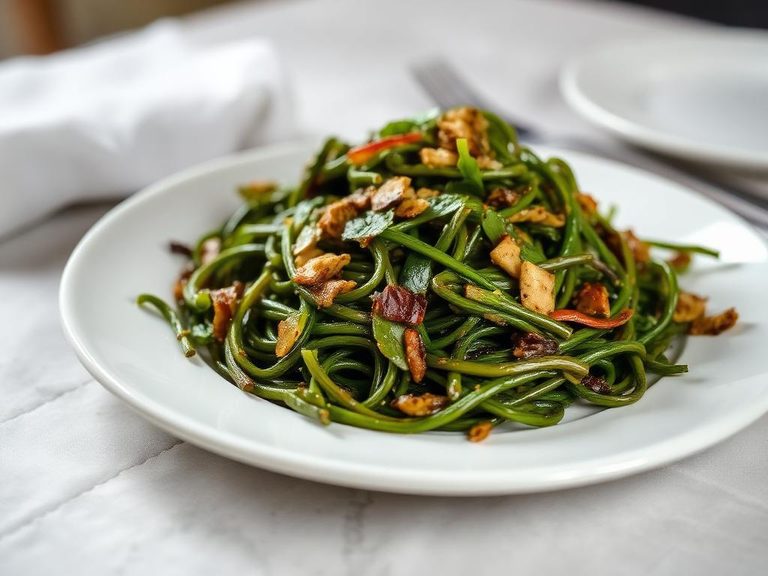
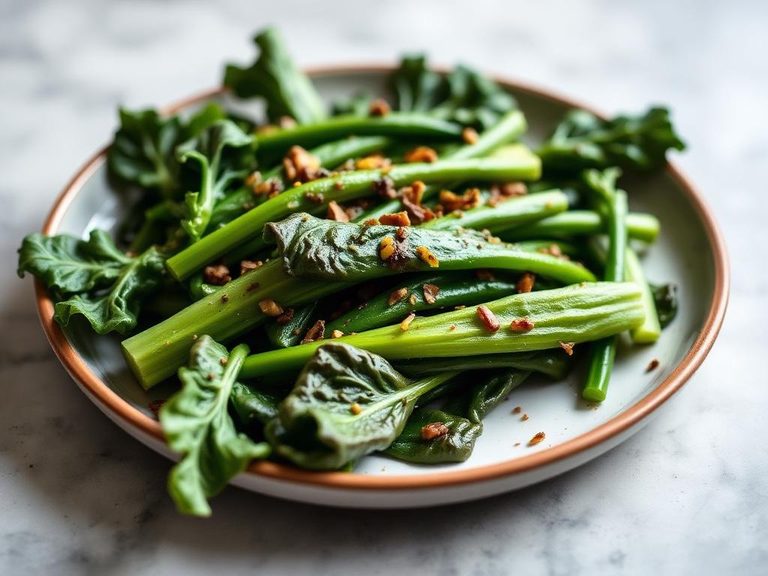
🍽️ Popular dishes
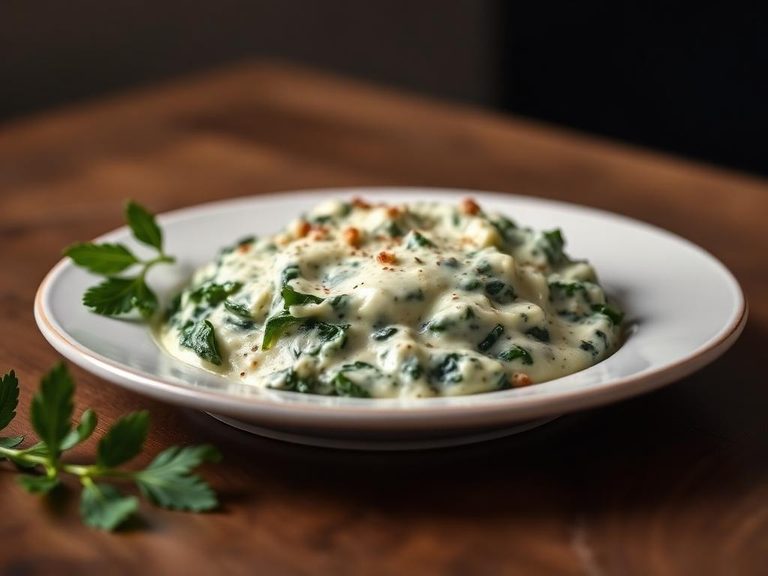
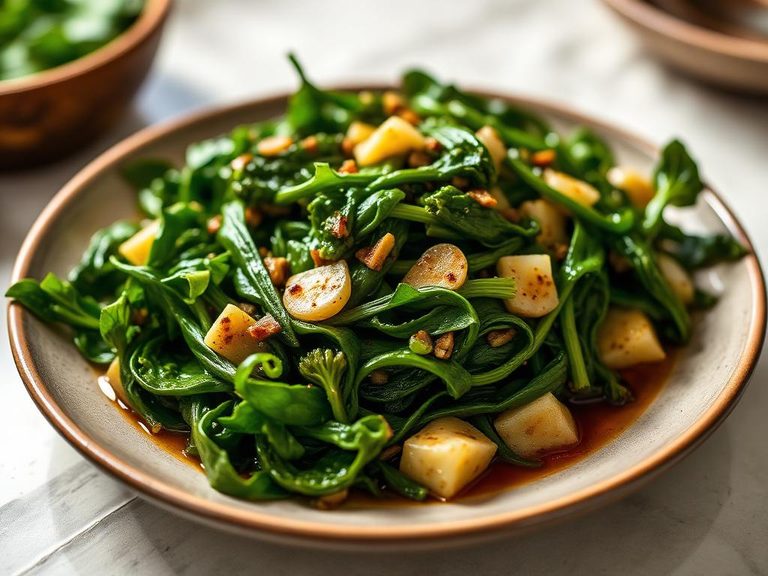
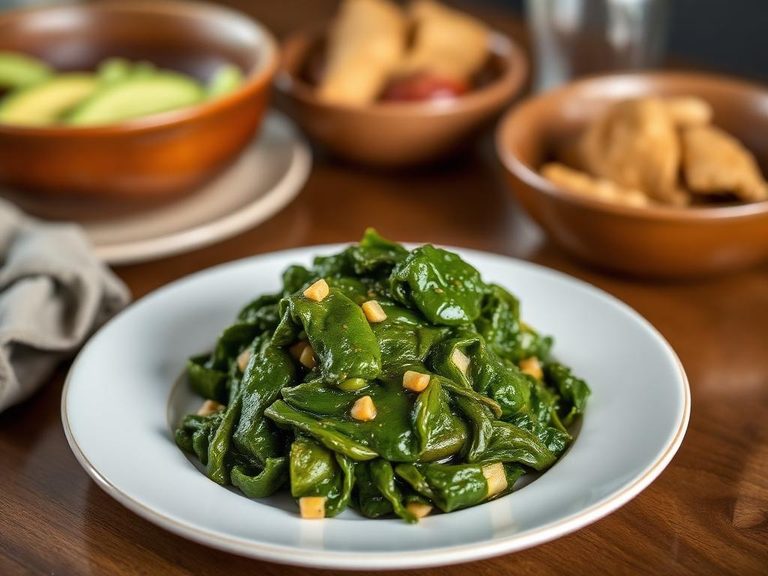
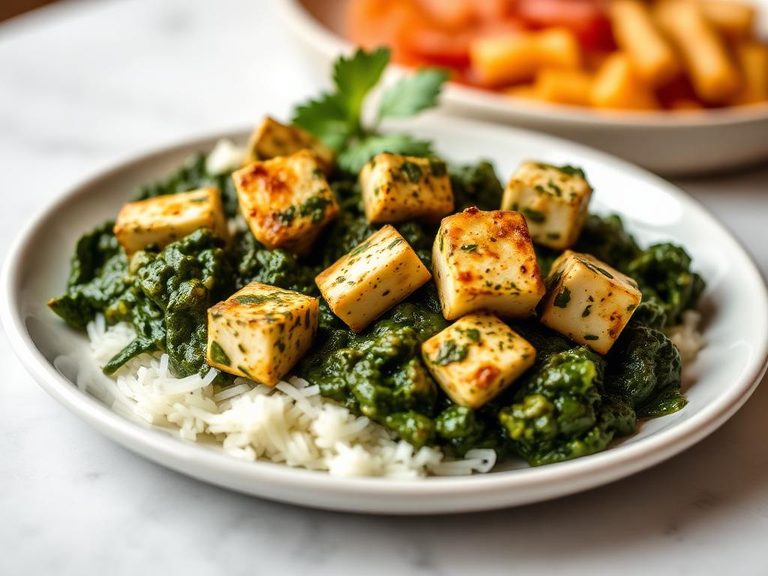
🌍 Where it's eaten
💡 Did you know?
Cooking greens actually increases the bioavailability of certain nutrients like beta-carotene and lutein by breaking down tough cell walls, making them easier for your body to absorb compared to raw.
Full nutrition (USDA data · scales with serving)
| Water | 86.9 g |
| Energy | 58.0 kcal |
| Protein | 2.9 g |
| Total lipid (fat) | 3.4 g |
| Carbohydrate, by difference | 5.0 g |
| Fiber, total dietary | 4.1 g |
| Total Sugars | 0.72 g |
| Calcium, Ca | 228 mg |
| Iron, Fe | 1.1 mg |
| Magnesium, Mg | 31.0 mg |
| Phosphorus, P | 42.0 mg |
| Potassium, K | 294 mg |
| Sodium, Na | 163 mg |
| Zinc, Zn | 0.29 mg |
| Copper, Cu | 0.08 mg |
| Selenium, Se | 1.1 ug |
| Vitamin C, total ascorbic acid | 45.3 mg |
| Thiamin | 0.07 mg |
| Riboflavin | 0.21 mg |
| Niacin | 0.88 mg |
| Vitamin B-6 | 0.17 mg |
| Folate, total | 72.0 ug |
| Folic acid | 0.00 ug |
| Folate, food | 72.0 ug |
| Folate, DFE | 72.0 ug |
| Choline, total | 10.2 mg |
| Vitamin B-12 | 0.00 ug |
| Vitamin B-12, added | 0.00 ug |
| Vitamin A, RAE | 259 ug |
| Retinol | 11.0 ug |
| Carotene, beta | 2956 ug |
| Carotene, alpha | 7.0 ug |
| Cryptoxanthin, beta | 26.0 ug |
| Lycopene | 0.00 ug |
| Lutein + zeaxanthin | 5396 ug |
| Vitamin E (alpha-tocopherol) | 2.0 mg |
| Vitamin E, added | 0.00 mg |
| Vitamin D (D2 + D3) | 0.00 ug |
| Vitamin K (phylloquinone) | 410 ug |
| Alcohol, ethyl | 0.00 g |
| Caffeine | 0.00 mg |
| Theobromine | 0.00 mg |
Fat & fatty acid profile (per 100g)
| Fatty acids, total saturated | 0.75 g |
| SFA 4:0 | 0.02 g |
| SFA 6:0 | 0.01 g |
| SFA 8:0 | 0.01 g |
| SFA 10:0 | 0.02 g |
| SFA 12:0 | 0.02 g |
| SFA 14:0 | 0.07 g |
| SFA 16:0 | 0.44 g |
| SFA 18:0 | 0.14 g |
| Fatty acids, total monounsaturated | 0.94 g |
| MUFA 16:1 | 0.01 g |
| MUFA 18:1 | 0.90 g |
| MUFA 20:1 | 0.01 g |
| MUFA 22:1 | 0.01 g |
| Fatty acids, total polyunsaturated | 1.1 g |
| PUFA 18:2 | 0.79 g |
| PUFA 18:3 | 0.29 g |
| PUFA 18:4 | 0.00 g |
| PUFA 20:4 | 0.00 g |
| PUFA 20:5 n-3 (EPA) | 0.00 g |
| PUFA 22:5 n-3 (DPA) | 0.00 g |
| PUFA 22:6 n-3 (DHA) | 0.00 g |
| Cholesterol | 2.0 mg |
Amino acid profile (per 100g)
Estimated from Beet greens, cooked, boiled, drained, with salt — USDA does not publish this profile for Greens.
| Tryptophan | 0.04 g |
| Threonine | 0.08 g |
| Isoleucine | 0.05 g |
| Leucine | 0.12 g |
| Lysine | 0.07 g |
| Methionine | 0.02 g |
| Cystine | 0.02 g |
| Phenylalanine | 0.07 g |
| Tyrosine | 0.06 g |
| Valine | 0.08 g |
| Arginine | 0.07 g |
| Histidine | 0.04 g |
| Alanine | 0.10 g |
| Aspartic acid | 0.15 g |
| Glutamic acid | 0.31 g |
| Glycine | 0.09 g |
| Proline | 0.06 g |
| Serine | 0.08 g |
FAQ
Why are cooked greens sometimes slimy?
This texture, common in okra, spinach, and some collards, is due to mucilage, a soluble fiber that releases when heated. To reduce it, cook greens quickly at high heat or add an acidic ingredient like lemon juice or vinegar.
Are cooked greens as nutritious as raw ones?
Cooking can reduce heat-sensitive vitamins like vitamin C, but it significantly increases the availability of other nutrients like iron, calcium, and antioxidants. Both forms offer unique benefits.
How can I reduce the bitterness in cooked greens?
Blanching greens in boiling water for a minute before sautéing can remove some bitter compounds. You can also balance bitterness with a pinch of sugar, a splash of vinegar, or a rich, fatty ingredient like bacon or butter.
Nutrient density (calculated · NRF9.3)
Nutrient Rich Foods index: beneficial nutrients (protein, fiber, vitamins, minerals) minus saturated fat, added sugar & sodium, per 100 kcal.
NRF9.3 index — Fulgoni, Keast & Drewnowski, 2009. Computed from USDA nutrients.
Weight-loss friendliness (composite index)
Energy density 0.58 kcal/g · 20% calories from protein · 4.1 g fiber · 0.7 g sugar per 100 g.
Composite of energy density (Rolls et al., 1999), protein & fiber satiety, minus sugar. A calculated heuristic — ranks satiety-per-calorie, not a clinical measure.
Dietary load (calculated from USDA values)
Potential renal acid load. Positive = acid-forming, negative = alkaline-forming.
Sodium-to-potassium ratio: 0.55 (lower is better — aim for ≤ 1)
Sodium:potassium per WHO potassium guidance. Computed from USDA nutrients.