

Green peas, fresh, cooked with oil
Common food
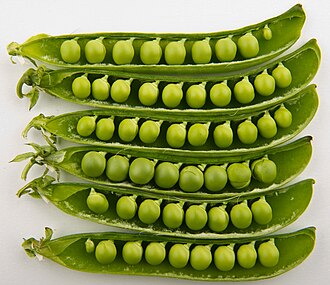
Photo: Wikipedia
These are vibrant, sweet little spheres that pop with a fresh, slightly grassy flavor and a satisfyingly tender-crisp texture when cooked. Nutritionally, they are a standout source of plant-based protein and dietary fiber, offering a substantial energy boost with a moderate calorie count.
Calorie split: 20% protein · 53% carbs · 28% fat
↓ Full nutrition💚 Why it's loved
People adore green peas for their natural sweetness and versatile, mild flavor that complements everything from rich curries to light pasta dishes. They are a beloved staple in cuisines worldwide, evoking a sense of comfort and seasonal freshness.
⚠️ Watch-outs & how to enjoy it better
For some, the high fiber content can cause digestive discomfort like bloating if eaten in large quantities. Those managing blood sugar should be mindful of their carbohydrate content, pairing them with protein or healthy fats (like the oil they're cooked in) to moderate glycemic impact. Additionally, peas contain purines, which individuals with gout may need to limit.
Key benefits
- Excellent source of plant-based protein for muscle maintenance.
- High in dietary fiber to support digestive health and satiety.
- Rich in antioxidants like vitamins C and E.
- Provides essential minerals including iron, manganese, and folate.
- A low-glycemic carbohydrate source for sustained energy.
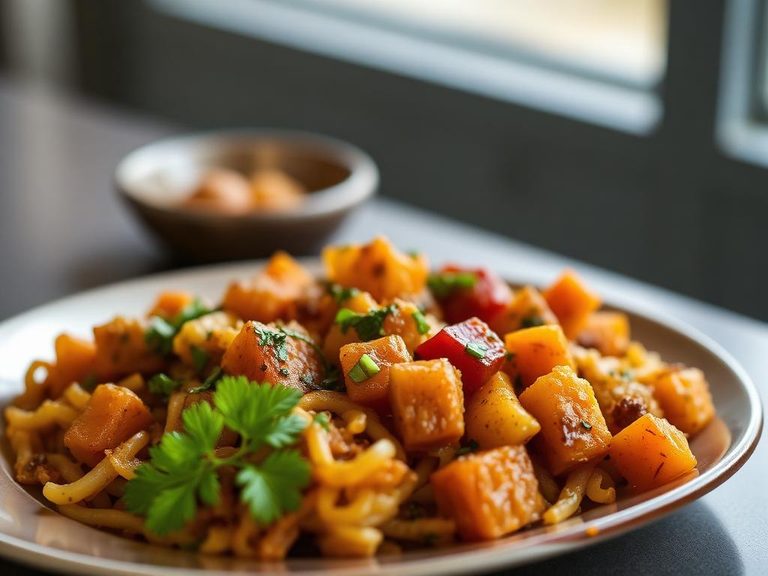
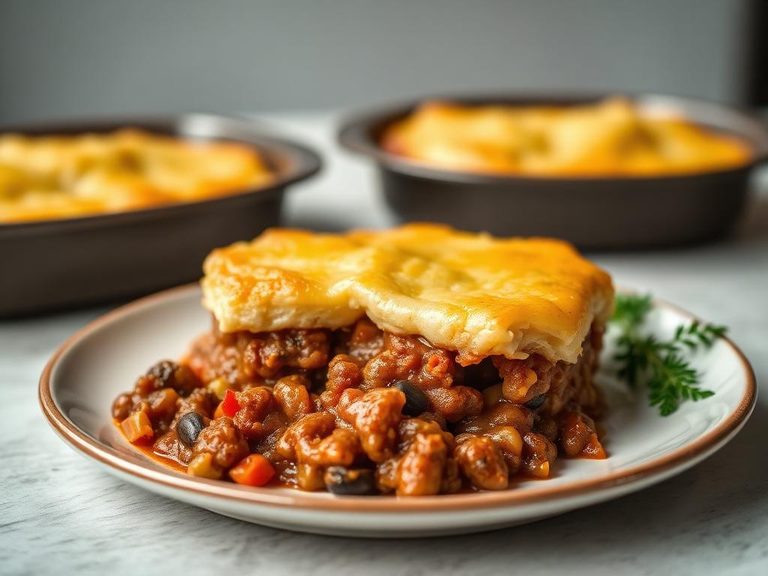
🍽️ Popular dishes

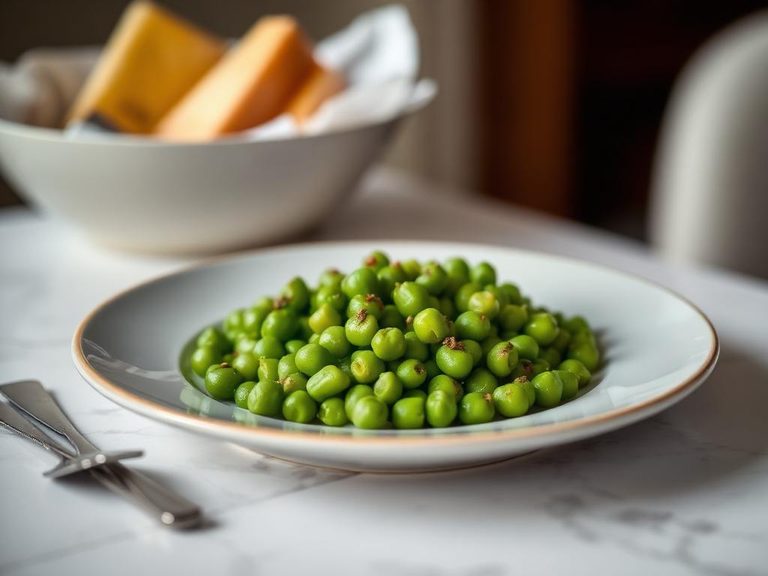
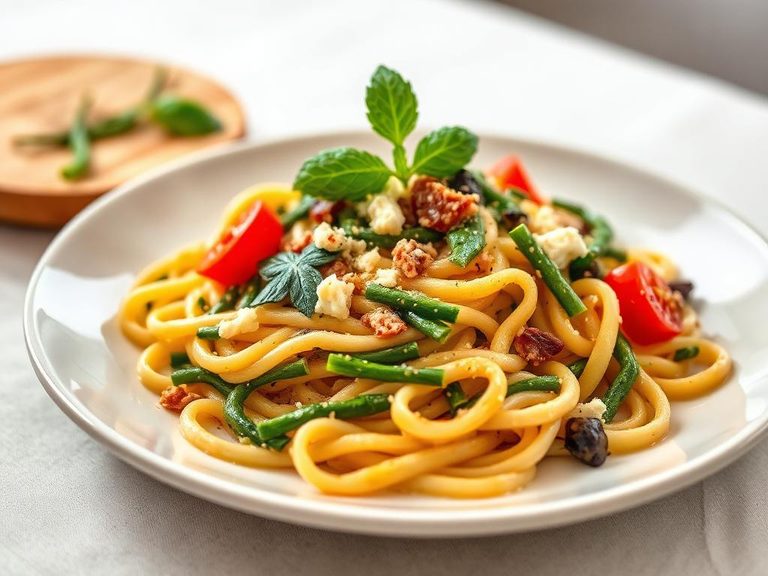
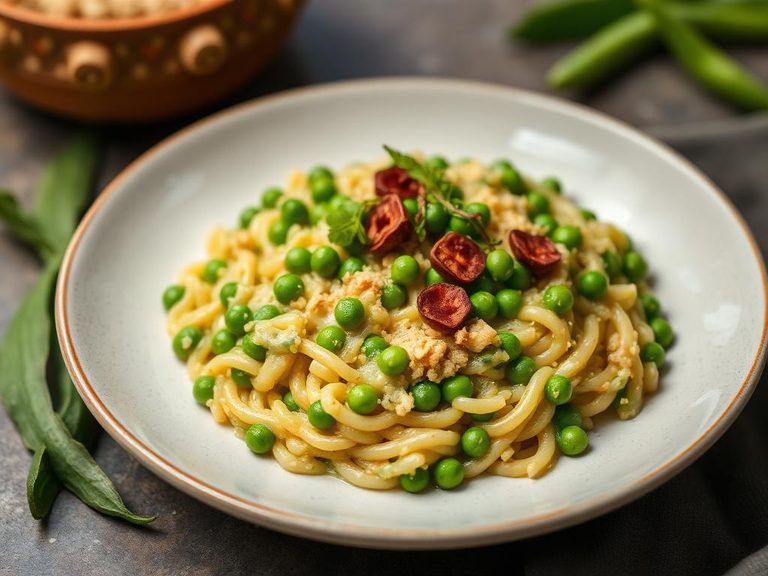
🌍 Where it's eaten
💡 Did you know?
The practice of eating peas 'pod and all'—as popularized by the French dish 'petits pois à la française'—was once considered a bizarre affectation by the English, who strictly shelled them.
Full nutrition (USDA data · scales with serving)
| Water | 75.4 g |
| Energy | 109 kcal |
| Protein | 5.5 g |
| Total lipid (fat) | 3.4 g |
| Carbohydrate, by difference | 14.6 g |
| Fiber, total dietary | 5.7 g |
| Total Sugars | 5.7 g |
| Calcium, Ca | 25.0 mg |
| Iron, Fe | 1.5 mg |
| Magnesium, Mg | 33.0 mg |
| Phosphorus, P | 109 mg |
| Potassium, K | 246 mg |
| Sodium, Na | 122 mg |
| Zinc, Zn | 1.3 mg |
| Copper, Cu | 0.18 mg |
| Selenium, Se | 1.8 ug |
| Vitamin C, total ascorbic acid | 34.3 mg |
| Thiamin | 0.24 mg |
| Riboflavin | 0.13 mg |
| Niacin | 2.0 mg |
| Vitamin B-6 | 0.15 mg |
| Folate, total | 56.0 ug |
| Folic acid | 0.00 ug |
| Folate, food | 56.0 ug |
| Folate, DFE | 56.0 ug |
| Choline, total | 28.6 mg |
| Vitamin B-12 | 0.00 ug |
| Vitamin B-12, added | 0.00 ug |
| Vitamin A, RAE | 36.0 ug |
| Retinol | 0.00 ug |
| Carotene, beta | 430 ug |
| Carotene, alpha | 20.0 ug |
| Cryptoxanthin, beta | 0.00 ug |
| Lycopene | 0.00 ug |
| Lutein + zeaxanthin | 2373 ug |
| Vitamin E (alpha-tocopherol) | 0.71 mg |
| Vitamin E, added | 0.00 mg |
| Vitamin D (D2 + D3) | 0.00 ug |
| Vitamin K (phylloquinone) | 28.0 ug |
| Alcohol, ethyl | 0.00 g |
| Caffeine | 0.00 mg |
| Theobromine | 0.00 mg |
Fat & fatty acid profile (per 100g)
| Fatty acids, total saturated | 0.48 g |
| SFA 4:0 | 0.00 g |
| SFA 6:0 | 0.00 g |
| SFA 8:0 | 0.00 g |
| SFA 10:0 | 0.00 g |
| SFA 12:0 | 0.00 g |
| SFA 14:0 | 0.00 g |
| SFA 16:0 | 0.35 g |
| SFA 18:0 | 0.09 g |
| Fatty acids, total monounsaturated | 1.3 g |
| MUFA 16:1 | 0.01 g |
| MUFA 18:1 | 1.3 g |
| MUFA 20:1 | 0.02 g |
| MUFA 22:1 | 0.00 g |
| Fatty acids, total polyunsaturated | 1.4 g |
| PUFA 18:2 | 1.2 g |
| PUFA 18:3 | 0.17 g |
| PUFA 18:4 | 0.00 g |
| PUFA 20:4 | 0.00 g |
| PUFA 20:5 n-3 (EPA) | 0.00 g |
| PUFA 22:5 n-3 (DPA) | 0.00 g |
| PUFA 22:6 n-3 (DHA) | 0.00 g |
| Cholesterol | 0.00 mg |
Amino acid profile (per 100g)
Estimated from Peas, green (includes baby and lesuer types), canned, drained solids, unprepared — USDA does not publish this profile for Green peas.
| Tryptophan | 0.03 g |
| Threonine | 0.17 g |
| Isoleucine | 0.16 g |
| Leucine | 0.27 g |
| Lysine | 0.26 g |
| Methionine | 0.07 g |
| Cystine | 0.03 g |
| Phenylalanine | 0.17 g |
| Tyrosine | 0.09 g |
| Valine | 0.19 g |
| Arginine | 0.35 g |
| Histidine | 0.09 g |
| Alanine | 0.20 g |
| Aspartic acid | 0.41 g |
| Glutamic acid | 0.61 g |
| Glycine | 0.15 g |
| Proline | 0.14 g |
| Serine | 0.15 g |
FAQ
Are canned or frozen peas as nutritious as fresh?
Frozen peas are often flash-frozen at peak ripeness, preserving nutrients very well. Canned peas may have slightly lower vitamin content due to heat processing and can be higher in sodium, so rinsing is recommended.
Why do some people find peas hard to digest?
Peas contain oligosaccharides, a type of sugar that can be difficult for some to break down, leading to gas. Cooking them thoroughly and starting with smaller portions can help.
Can I eat the pods of fresh peas?
It depends on the variety. Sugar snap peas and snow peas have tender, edible pods. The common garden pea (like those used for 'green peas, cooked') has a tough, fibrous pod that is not typically eaten.
Nutrient density (calculated · NRF9.3)
Nutrient Rich Foods index: beneficial nutrients (protein, fiber, vitamins, minerals) minus saturated fat, added sugar & sodium, per 100 kcal.
NRF9.3 index — Fulgoni, Keast & Drewnowski, 2009. Computed from USDA nutrients.
Weight-loss friendliness (composite index)
Energy density 1.09 kcal/g · 20% calories from protein · 5.7 g fiber · 5.7 g sugar per 100 g.
Composite of energy density (Rolls et al., 1999), protein & fiber satiety, minus sugar. A calculated heuristic — ranks satiety-per-calorie, not a clinical measure.
Dietary load (calculated from USDA values)
Potential renal acid load. Positive = acid-forming, negative = alkaline-forming.
Sodium-to-potassium ratio: 0.50 (lower is better — aim for ≤ 1)
Sodium:potassium per WHO potassium guidance. Computed from USDA nutrients.