

Grapefruit, canned
Common food
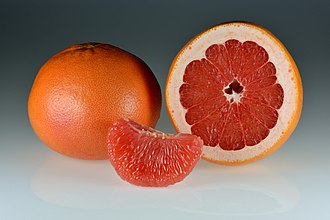
Photo: Wikipedia
Canned grapefruit offers the bright, tangy-sweet flavor of the citrus fruit in a convenient, ready-to-eat format, often preserved in its own juice or a light syrup. The segments are tender and juicy, with a texture softer than fresh grapefruit, making it a quick addition to breakfast or salads. With only 36 kcal per 100g and minimal fat, it's a low-calorie option, though the 8.75g of sugar per serving is primarily from the fruit's natural sugars and any added syrup.
Calorie split: 6% protein · 92% carbs · 2% fat
↓ Full nutrition💚 Why it's loved
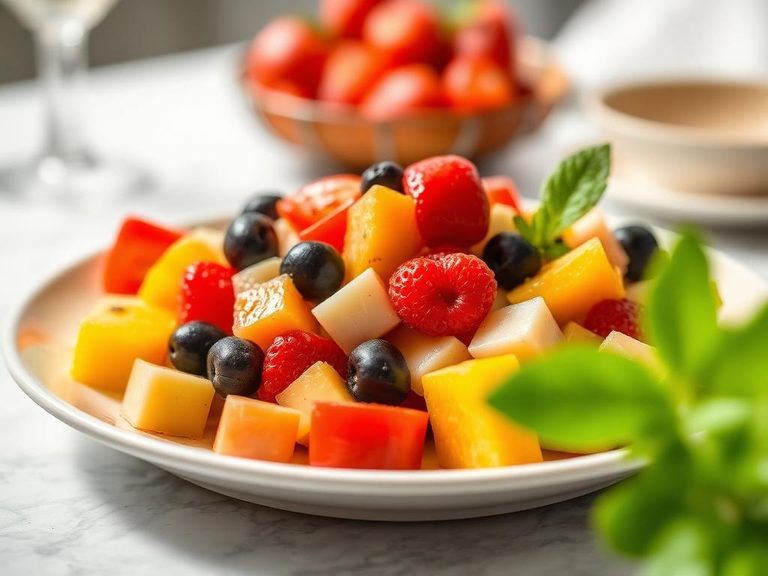
People love canned grapefruit for its sweet-tart flavor that brightens up morning routines, often enjoyed in fruit salads or as a standalone snack. Its cultural association with classic breakfasts and retro desserts makes it a nostalgic comfort food for many.
⚠️ Watch-outs & how to enjoy it better
The high sugar content (8.75g per 100g) can cause blood-sugar spikes, especially if canned in syrup, so pairing with protein or fat (like yogurt or nuts) can help stabilize levels. Some individuals may be sensitive to grapefruit's interaction with certain medications, and the acidic nature can bother those with acid reflux; opting for juice-packed varieties and moderating portions can mitigate these issues.
Key benefits
- Low in calories at 36 kcal per 100g
- Good source of vitamin C, an antioxidant that supports immune function
- Contains dietary fiber (0.4g per 100g) for digestive health
- Hydrating due to high water content
- Convenient and shelf-stable for quick meal prep
🍽️ Popular dishes

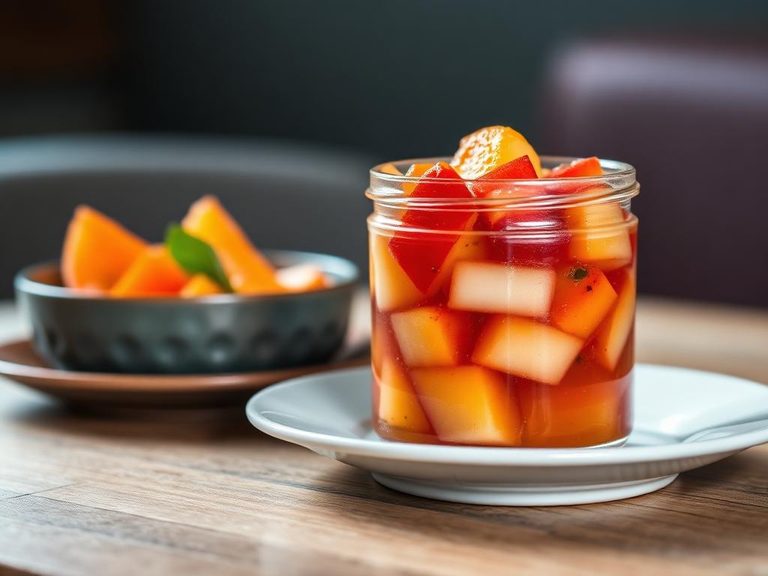
🌍 Where it's eaten
💡 Did you know?
Grapefruit was first documented in Barbados in the 18th century and is believed to be a hybrid of the sweet orange and pomelo, making it one of the few citrus fruits with a relatively recent origin.
Full nutrition (USDA data · scales with serving)
| Water | 89.8 g |
| Energy | 36.0 kcal |
| Protein | 0.58 g |
| Total lipid (fat) | 0.10 g |
| Carbohydrate, by difference | 9.2 g |
| Fiber, total dietary | 0.40 g |
| Total Sugars | 8.8 g |
| Calcium, Ca | 15.0 mg |
| Iron, Fe | 0.41 mg |
| Magnesium, Mg | 10.0 mg |
| Phosphorus, P | 10.0 mg |
| Potassium, K | 132 mg |
| Sodium, Na | 2.0 mg |
| Zinc, Zn | 0.09 mg |
| Copper, Cu | 0.07 mg |
| Selenium, Se | 0.90 ug |
| Vitamin C, total ascorbic acid | 21.8 mg |
| Thiamin | 0.04 mg |
| Riboflavin | 0.02 mg |
| Niacin | 0.25 mg |
| Vitamin B-6 | 0.02 mg |
| Folate, total | 9.0 ug |
| Folic acid | 0.00 ug |
| Folate, food | 9.0 ug |
| Folate, DFE | 9.0 ug |
| Choline, total | 5.1 mg |
| Vitamin B-12 | 0.00 ug |
| Vitamin B-12, added | 0.00 ug |
| Vitamin A, RAE | 0.00 ug |
| Retinol | 0.00 ug |
| Carotene, beta | 0.00 ug |
| Carotene, alpha | 0.00 ug |
| Cryptoxanthin, beta | 0.00 ug |
| Lycopene | 0.00 ug |
| Lutein + zeaxanthin | 0.00 ug |
| Vitamin E (alpha-tocopherol) | 0.09 mg |
| Vitamin E, added | 0.00 mg |
| Vitamin D (D2 + D3) | 0.00 ug |
| Vitamin K (phylloquinone) | 0.00 ug |
| Alcohol, ethyl | 0.00 g |
| Caffeine | 0.00 mg |
| Theobromine | 0.00 mg |
Fat & fatty acid profile (per 100g)
| Fatty acids, total saturated | 0.01 g |
| SFA 4:0 | 0.00 g |
| SFA 6:0 | 0.00 g |
| SFA 8:0 | 0.00 g |
| SFA 10:0 | 0.00 g |
| SFA 12:0 | 0.00 g |
| SFA 14:0 | 0.00 g |
| SFA 16:0 | 0.01 g |
| SFA 18:0 | 0.00 g |
| Fatty acids, total monounsaturated | 0.01 g |
| MUFA 16:1 | 0.00 g |
| MUFA 18:1 | 0.01 g |
| MUFA 20:1 | 0.00 g |
| MUFA 22:1 | 0.00 g |
| Fatty acids, total polyunsaturated | 0.02 g |
| PUFA 18:2 | 0.02 g |
| PUFA 18:3 | 0.01 g |
| PUFA 18:4 | 0.00 g |
| PUFA 20:4 | 0.00 g |
| PUFA 20:5 n-3 (EPA) | 0.00 g |
| PUFA 22:5 n-3 (DPA) | 0.00 g |
| PUFA 22:6 n-3 (DHA) | 0.00 g |
| Cholesterol | 0.00 mg |
Amino acid profile (per 100g)
Estimated from Grapefruit, raw, white, California — USDA does not publish this profile for Grapefruit.
| Tryptophan | 0.01 g |
| Threonine | 0.01 g |
| Isoleucine | 0.01 g |
| Leucine | 0.02 g |
| Lysine | 0.02 g |
| Methionine | 0.01 g |
| Cystine | 0.01 g |
| Phenylalanine | 0.05 g |
| Tyrosine | 0.01 g |
| Valine | 0.02 g |
| Arginine | 0.10 g |
| Histidine | 0.01 g |
| Alanine | 0.03 g |
| Aspartic acid | 0.16 g |
| Glutamic acid | 0.23 g |
| Glycine | 0.02 g |
| Proline | 0.07 g |
| Serine | 0.03 g |
FAQ
Is canned grapefruit as nutritious as fresh?
Canned grapefruit retains most of the vitamin C and fiber but may have added sugar if packed in syrup; choosing juice-packed versions minimizes this difference.
Can I use canned grapefruit in cooking?
Yes, it works well in desserts like sorbets or cakes, and can be added to salads or salsas for a tangy twist.
How should I store opened canned grapefruit?
Transfer to a sealed container and refrigerate; it will keep for 3-5 days.
Nutrient density (calculated · NRF9.3)
Nutrient Rich Foods index: beneficial nutrients (protein, fiber, vitamins, minerals) minus saturated fat, added sugar & sodium, per 100 kcal.
NRF9.3 index — Fulgoni, Keast & Drewnowski, 2009. Computed from USDA nutrients.
Weight-loss friendliness (composite index)
Energy density 0.36 kcal/g · 6% calories from protein · 0.4 g fiber · 8.8 g sugar per 100 g.
Composite of energy density (Rolls et al., 1999), protein & fiber satiety, minus sugar. A calculated heuristic — ranks satiety-per-calorie, not a clinical measure.
Dietary load (calculated from USDA values)
Potential renal acid load. Positive = acid-forming, negative = alkaline-forming.
Sodium-to-potassium ratio: 0.02 (lower is better — aim for ≤ 1)
Sodium:potassium per WHO potassium guidance. Computed from USDA nutrients.