

Garlic bread, with parmesan cheese, from fast food / restaurant
Common food

Photo: Wikipedia
This is a slice of bread, typically a baguette or Italian loaf, generously slathered with a garlic-infused butter or oil and topped with a layer of melted, slightly browned Parmesan cheese. The texture is a study in contrasts: a crisp, golden-brown crust giving way to a soft, airy interior, all coated in a savory, umami-rich layer of garlic and salty cheese. Nutritionally, it's a calorie-dense carbohydrate source, with a significant portion of its energy coming from fats, making it a rich, indulgent side.
Calorie split: 10% protein · 47% carbs · 43% fat
↓ Full nutrition💚 Why it's loved
People love it for the irresistible combination of aromatic garlic, rich butter, and the salty, nutty punch of Parmesan, which transforms simple bread into a flavor-packed treat. It's a universally comforting and versatile side, perfect for soaking up sauces or standing alone as a satisfying snack.
⚠️ Watch-outs & how to enjoy it better
It can be high in sodium, saturated fat, and refined carbohydrates, which may cause blood-sugar spikes and is a consideration for those managing heart health or diabetes. To counteract this, pair it with a protein-rich dish (like grilled chicken or pasta with lean meat) and a large, fiber-rich salad to slow digestion, and practice portion control by sticking to one slice.
Key benefits
- Provides quick energy from carbohydrates
- Contains some protein from the cheese and bread
- Source of calcium from the Parmesan cheese
- Garlic contains allicin, a compound with potential antioxidant properties
- Satisfying savory flavor can enhance a meal
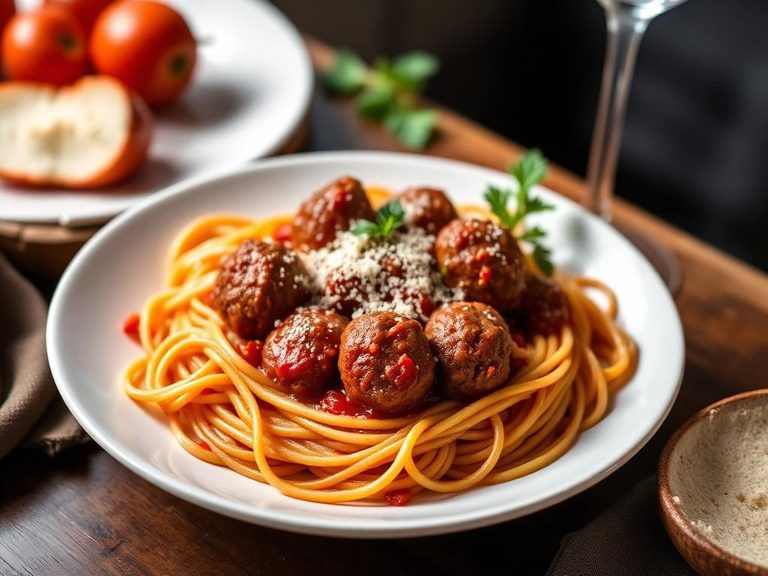
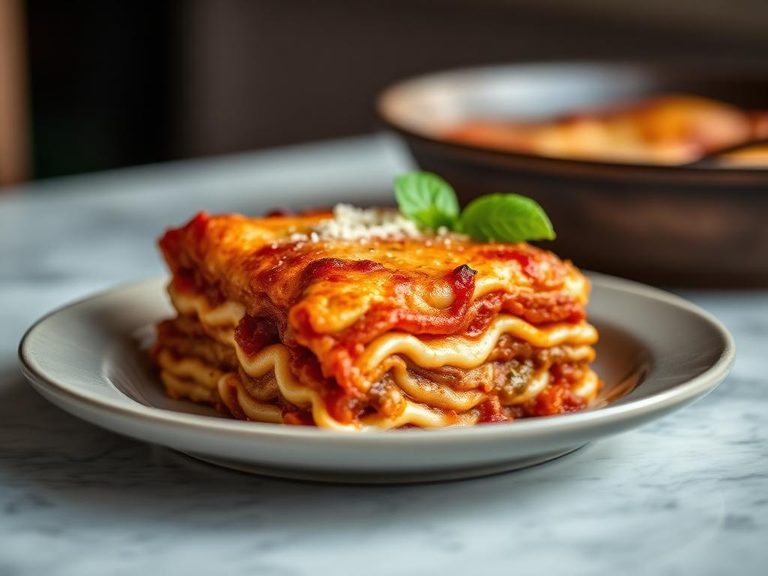
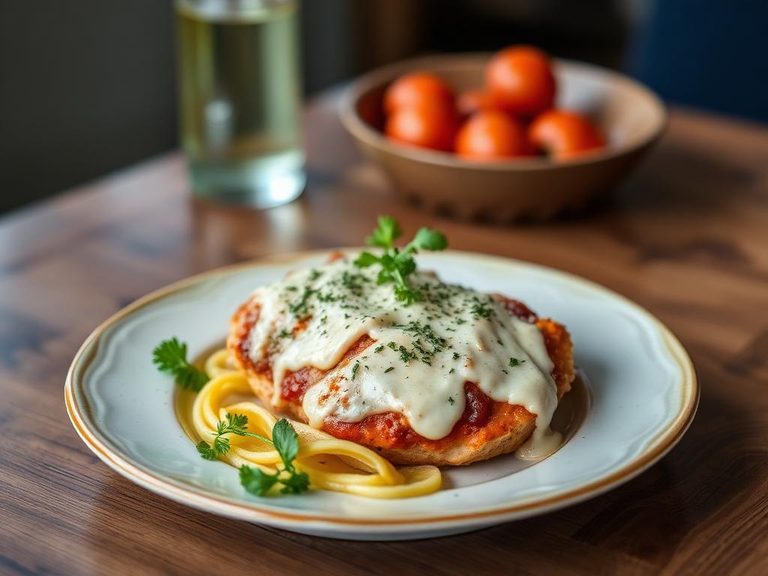
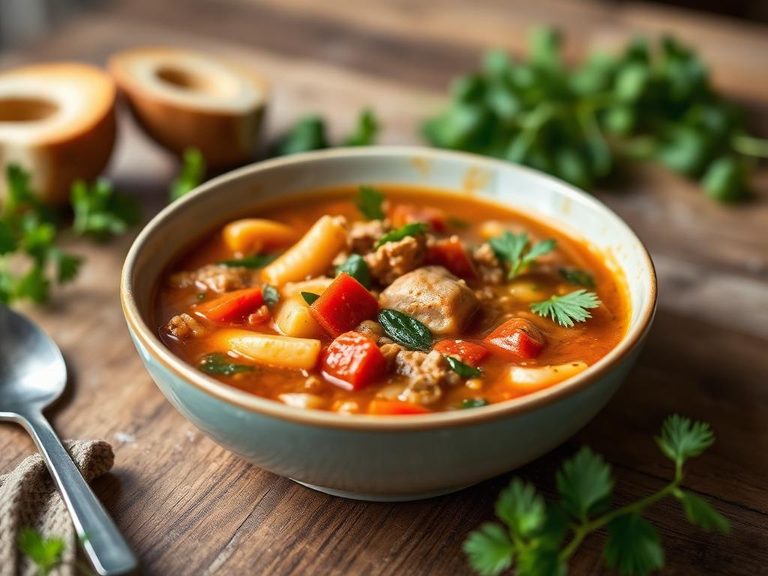
🍽️ Popular dishes
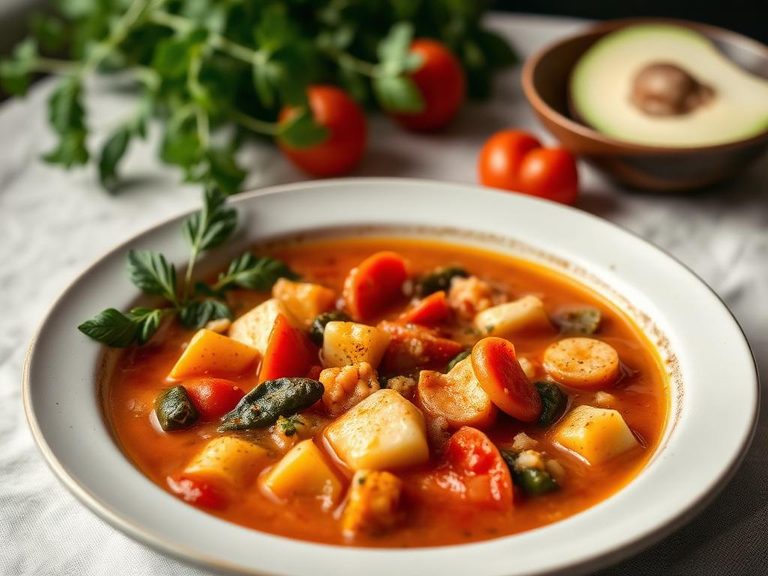
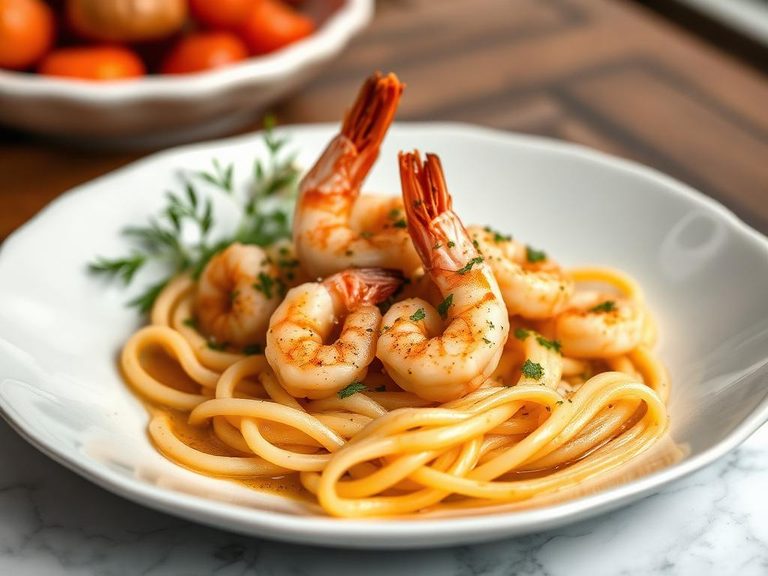
🌍 Where it's eaten
💡 Did you know?
While garlic bread is considered a classic Italian-American invention, its direct ancestor is likely 'fettunta,' a Tuscan dish of grilled bread rubbed with garlic and drizzled with olive oil, often served during the olive harvest.
Full nutrition (USDA data · scales with serving)
| Water | 31.5 g |
| Energy | 351 kcal |
| Protein | 8.8 g |
| Total lipid (fat) | 16.8 g |
| Carbohydrate, by difference | 41.1 g |
| Fiber, total dietary | 2.4 g |
| Total Sugars | 3.6 g |
| Calcium, Ca | 44.0 mg |
| Iron, Fe | 3.0 mg |
| Magnesium, Mg | 23.0 mg |
| Phosphorus, P | 98.0 mg |
| Potassium, K | 104 mg |
| Sodium, Na | 642 mg |
| Zinc, Zn | 0.94 mg |
| Copper, Cu | 0.11 mg |
| Selenium, Se | 16.9 ug |
| Vitamin C, total ascorbic acid | 0.20 mg |
| Thiamin | 0.43 mg |
| Riboflavin | 0.19 mg |
| Niacin | 4.1 mg |
| Vitamin B-6 | 0.08 mg |
| Folate, total | 164 ug |
| Folic acid | 44.0 ug |
| Folate, food | 120 ug |
| Folate, DFE | 195 ug |
| Choline, total | 8.6 mg |
| Vitamin B-12 | 0.10 ug |
| Vitamin B-12, added | 0.00 ug |
| Vitamin A, RAE | 17.0 ug |
| Retinol | 17.0 ug |
| Carotene, beta | 0.00 ug |
| Carotene, alpha | 0.00 ug |
| Cryptoxanthin, beta | 0.00 ug |
| Lycopene | 0.00 ug |
| Lutein + zeaxanthin | 24.0 ug |
| Vitamin E (alpha-tocopherol) | 1.2 mg |
| Vitamin E, added | 0.00 mg |
| Vitamin D (D2 + D3) | 0.20 ug |
| Vitamin K (phylloquinone) | 28.9 ug |
| Alcohol, ethyl | 0.00 g |
| Caffeine | 0.00 mg |
| Theobromine | 0.00 mg |
Fat & fatty acid profile (per 100g)
| Fatty acids, total saturated | 5.5 g |
| SFA 4:0 | 0.02 g |
| SFA 6:0 | 0.01 g |
| SFA 8:0 | 0.03 g |
| SFA 10:0 | 0.05 g |
| SFA 12:0 | 0.65 g |
| SFA 14:0 | 0.37 g |
| SFA 16:0 | 3.4 g |
| SFA 18:0 | 0.77 g |
| Fatty acids, total monounsaturated | 4.7 g |
| MUFA 16:1 | 0.04 g |
| MUFA 18:1 | 3.9 g |
| MUFA 20:1 | 0.72 g |
| MUFA 22:1 | 0.00 g |
| Fatty acids, total polyunsaturated | 5.3 g |
| PUFA 18:2 | 5.3 g |
| PUFA 18:3 | 0.04 g |
| PUFA 18:4 | 0.00 g |
| PUFA 20:4 | 0.00 g |
| PUFA 20:5 n-3 (EPA) | 0.00 g |
| PUFA 22:5 n-3 (DPA) | 0.00 g |
| PUFA 22:6 n-3 (DHA) | 0.00 g |
| Cholesterol | 2.0 mg |
Amino acid profile (per 100g)
Estimated from Garlic bread, frozen — USDA does not publish this profile for Garlic bread.
| Tryptophan | 0.07 g |
| Threonine | 0.19 g |
| Isoleucine | 0.23 g |
| Leucine | 0.41 g |
| Lysine | 0.24 g |
| Methionine | 0.10 g |
| Cystine | 0.10 g |
| Phenylalanine | 0.27 g |
| Tyrosine | 0.19 g |
| Valine | 0.26 g |
| Arginine | 0.23 g |
| Histidine | 0.13 g |
| Alanine | 0.22 g |
| Aspartic acid | 0.33 g |
| Glutamic acid | 1.5 g |
| Glycine | 0.20 g |
| Proline | 0.52 g |
| Serine | 0.27 g |
FAQ
Is garlic bread with Parmesan a good source of protein?
It provides a modest amount of protein (about 8-9g per 100g), primarily from the cheese and bread gluten, but it's not considered a significant protein source compared to meats, legumes, or dairy.
Why does restaurant garlic bread taste so much richer than homemade?
Restaurants often use a higher ratio of butter or oil to bread, and may use clarified butter (ghee) or even mix in mayonnaise for extra richness and browning. They also tend to be more generous with the salt and cheese.
Can I make a lighter version at home?
Yes. Use a whole-grain bread base, mix minced garlic with a small amount of olive oil and herbs instead of butter, and sprinkle lightly with Parmesan. Toasting it in an air fryer or oven can achieve crispness with less fat.
Nutrient density (calculated · NRF9.3)
Nutrient Rich Foods index: beneficial nutrients (protein, fiber, vitamins, minerals) minus saturated fat, added sugar & sodium, per 100 kcal.
NRF9.3 index — Fulgoni, Keast & Drewnowski, 2009. Computed from USDA nutrients.
Weight-loss friendliness (composite index)
Energy density 3.51 kcal/g · 10% calories from protein · 2.4 g fiber · 3.6 g sugar per 100 g.
Composite of energy density (Rolls et al., 1999), protein & fiber satiety, minus sugar. A calculated heuristic — ranks satiety-per-calorie, not a clinical measure.
Dietary load (calculated from USDA values)
Potential renal acid load. Positive = acid-forming, negative = alkaline-forming.
Sodium-to-potassium ratio: 6.17 (lower is better — aim for ≤ 1)
Sodium:potassium per WHO potassium guidance. Computed from USDA nutrients.