

Fish sandwich, NFS
Common food
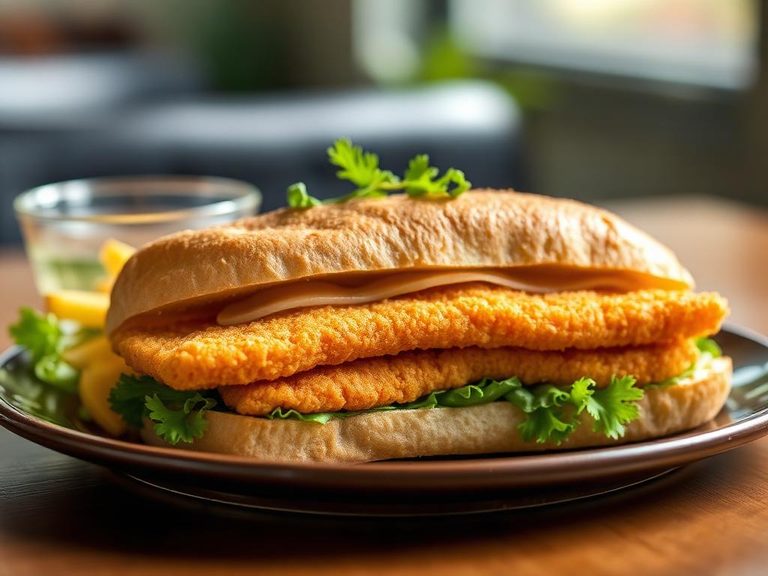
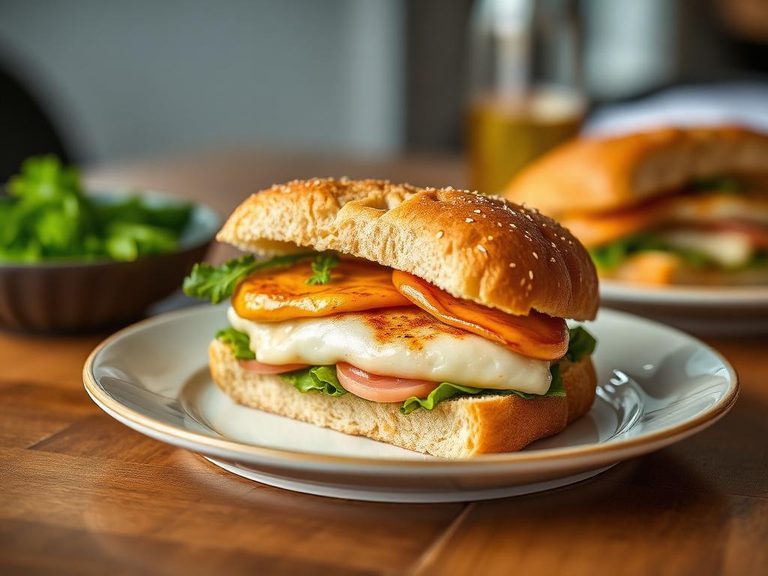
A fish sandwich, often called a fish finger or fish stick sandwich, features a crispy, breaded fish patty nestled in a soft bun, offering a satisfying crunch and mild, flaky white fish. Nutritionally, it provides a solid protein boost with moderate carbs from the breading and bun, making it a quick, energy-dense meal. The texture contrast between the crunchy coating and tender fish is its signature appeal.
Calorie split: 24% protein · 36% carbs · 39% fat
↓ Full nutrition💚 Why it's loved
People love it for the nostalgic, comforting combination of crispy fish and soft bread, reminiscent of childhood favorites and seaside takeaways. Its mild flavor and familiar format make it a crowd-pleaser, especially in fast-food and casual dining cultures.
⚠️ Watch-outs & how to enjoy it better
The breading and bun can contribute to blood-sugar spikes, and the frying method may add unhealthy fats. Those watching sodium or gluten intake should be cautious. To counteract, opt for baked or air-fried versions, choose whole-grain buns, and pair with a side salad or vegetables to add fiber and slow digestion.
Key benefits
- Good source of lean protein for muscle maintenance
- Provides quick energy from carbohydrates
- Contains some essential minerals like phosphorus and selenium from fish
- Convenient and portable meal option
- Often fortified with omega-3s if using fatty fish like pollock or cod
🍽️ Popular dishes

🌍 Where it's eaten
💡 Did you know?
The popular Filet-O-Fish sandwich was invented in 1962 to cater to Catholic customers who avoided meat on Fridays during Lent.
Full nutrition (USDA data · scales with serving)
| Water | 49.1 g |
| Energy | 252 kcal |
| Protein | 15.3 g |
| Total lipid (fat) | 10.9 g |
| Carbohydrate, by difference | 22.9 g |
| Fiber, total dietary | 0.80 g |
| Total Sugars | 3.1 g |
| Calcium, Ca | 187 mg |
| Iron, Fe | 1.7 mg |
| Magnesium, Mg | 25.0 mg |
| Phosphorus, P | 239 mg |
| Potassium, K | 218 mg |
| Sodium, Na | 537 mg |
| Zinc, Zn | 0.90 mg |
| Copper, Cu | 0.06 mg |
| Selenium, Se | 27.1 ug |
| Vitamin C, total ascorbic acid | 0.50 mg |
| Thiamin | 0.26 mg |
| Riboflavin | 0.21 mg |
| Niacin | 3.6 mg |
| Vitamin B-6 | 0.17 mg |
| Folate, total | 50.0 ug |
| Folic acid | 26.0 ug |
| Folate, food | 24.0 ug |
| Folate, DFE | 68.0 ug |
| Choline, total | 43.7 mg |
| Vitamin B-12 | 1.1 ug |
| Vitamin B-12, added | 0.00 ug |
| Vitamin A, RAE | 45.0 ug |
| Retinol | 44.0 ug |
| Carotene, beta | 11.0 ug |
| Carotene, alpha | 0.00 ug |
| Cryptoxanthin, beta | 1.0 ug |
| Lycopene | 0.00 ug |
| Lutein + zeaxanthin | 8.0 ug |
| Vitamin E (alpha-tocopherol) | 0.98 mg |
| Vitamin E, added | 0.00 mg |
| Vitamin D (D2 + D3) | 0.80 ug |
| Vitamin K (phylloquinone) | 10.4 ug |
| Alcohol, ethyl | 0.00 g |
| Caffeine | 0.00 mg |
| Theobromine | 0.00 mg |
Fat & fatty acid profile (per 100g)
| Fatty acids, total saturated | 4.3 g |
| SFA 4:0 | 0.08 g |
| SFA 6:0 | 0.07 g |
| SFA 8:0 | 0.04 g |
| SFA 10:0 | 0.10 g |
| SFA 12:0 | 0.12 g |
| SFA 14:0 | 0.37 g |
| SFA 16:0 | 1.7 g |
| SFA 18:0 | 1.7 g |
| Fatty acids, total monounsaturated | 2.8 g |
| MUFA 16:1 | 0.08 g |
| MUFA 18:1 | 2.8 g |
| MUFA 20:1 | 0.04 g |
| MUFA 22:1 | 0.00 g |
| Fatty acids, total polyunsaturated | 2.6 g |
| PUFA 18:2 | 2.3 g |
| PUFA 18:3 | 0.18 g |
| PUFA 18:4 | 0.00 g |
| PUFA 20:4 | 0.01 g |
| PUFA 20:5 n-3 (EPA) | 0.02 g |
| PUFA 22:5 n-3 (DPA) | 0.01 g |
| PUFA 22:6 n-3 (DHA) | 0.05 g |
| Cholesterol | 42.0 mg |
Amino acid profile (per 100g)
Estimated from BURGER KING, Premium Fish Sandwich — USDA does not publish this profile for Fish sandwich.
| Tryptophan | 0.08 g |
| Threonine | 0.36 g |
| Isoleucine | 0.39 g |
| Leucine | 0.80 g |
| Lysine | 0.66 g |
| Methionine | 0.23 g |
| Cystine | 0.15 g |
| Phenylalanine | 0.48 g |
| Tyrosine | 0.34 g |
| Valine | 0.46 g |
| Arginine | 0.49 g |
| Histidine | 0.21 g |
| Alanine | 0.38 g |
| Aspartic acid | 0.71 g |
| Glutamic acid | 2.5 g |
| Glycine | 0.41 g |
| Proline | 0.71 g |
| Serine | 0.49 g |
| Hydroxyproline | 0.00 g |
FAQ
What type of fish is typically used in a fish sandwich?
Common choices include mild white fish like cod, pollock, haddock, or tilapia, selected for their flaky texture and neutral flavor that pairs well with breading and sauces.
Is a fish sandwich considered healthy?
It can be part of a balanced diet, offering protein and some nutrients, but the nutritional value depends on the cooking method (fried vs. baked) and ingredients like the bun and sauces. Baked versions with whole-grain buns are healthier options.
How can I make a fish sandwich at home?
Use fresh or frozen fish fillets, coat them in breadcrumbs or batter, bake or pan-fry until crispy, and serve on a bun with lettuce, tartar sauce, and lemon for a quick, homemade meal.
Nutrient density (calculated · NRF9.3)
Nutrient Rich Foods index: beneficial nutrients (protein, fiber, vitamins, minerals) minus saturated fat, added sugar & sodium, per 100 kcal.
NRF9.3 index — Fulgoni, Keast & Drewnowski, 2009. Computed from USDA nutrients.
Weight-loss friendliness (composite index)
Energy density 2.52 kcal/g · 24% calories from protein · 0.8 g fiber · 3.1 g sugar per 100 g.
Composite of energy density (Rolls et al., 1999), protein & fiber satiety, minus sugar. A calculated heuristic — ranks satiety-per-calorie, not a clinical measure.
Dietary load (calculated from USDA values)
Potential renal acid load. Positive = acid-forming, negative = alkaline-forming.
Sodium-to-potassium ratio: 2.46 (lower is better — aim for ≤ 1)
Sodium:potassium per WHO potassium guidance. Computed from USDA nutrients.