

Egg, whole, fried, NS as to fat type
Common food

Photo: Wikipedia
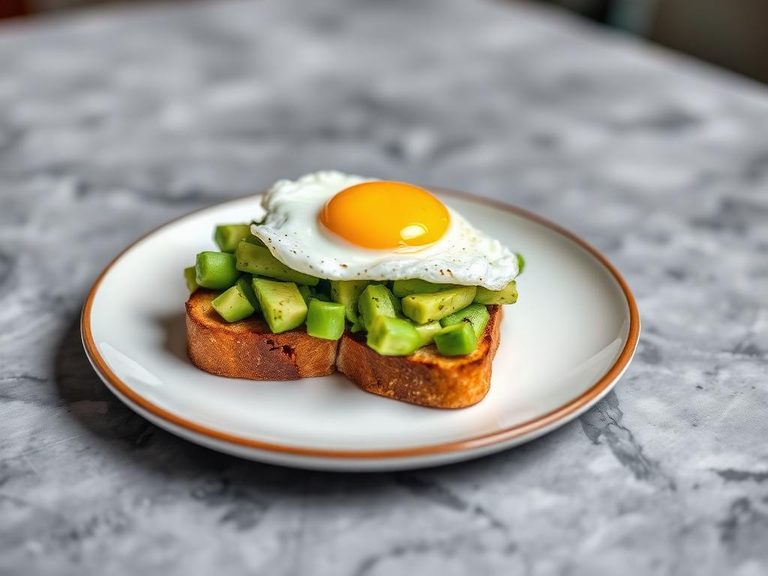
A whole egg fried in a pan, with the yolk and white cooked together until the edges are crisp and the center is set. The flavor is rich and savory, with a creamy yolk and a slightly chewy, golden-brown white. It's a protein-packed staple, delivering over 11 grams of high-quality protein per 100 grams.
Calorie split: 25% protein · 2% carbs · 73% fat
↓ Full nutrition💚 Why it's loved
People adore its satisfying, savory flavor and the textural contrast between the crisp edges and tender center. It's a universal comfort food, ready in minutes and endlessly versatile as a standalone meal or a topping for countless dishes.
⚠️ Watch-outs & how to enjoy it better
The primary concern is the high cholesterol and saturated fat content from the yolk, which may be a consideration for those managing heart health. To mitigate, consider using just one egg yolk with extra whites, or pair it with fiber-rich vegetables like spinach or tomatoes to balance the meal. Those with egg allergies must avoid it entirely.
Key benefits
- Excellent source of complete protein for muscle maintenance.
- Rich in choline, essential for brain and liver health.
- Contains vitamins A, D, E, and B12.
- Provides selenium and phosphorus for immune and bone function.
- The yolk is a natural source of lutein and zeaxanthin for eye health.
🍽️ Popular dishes
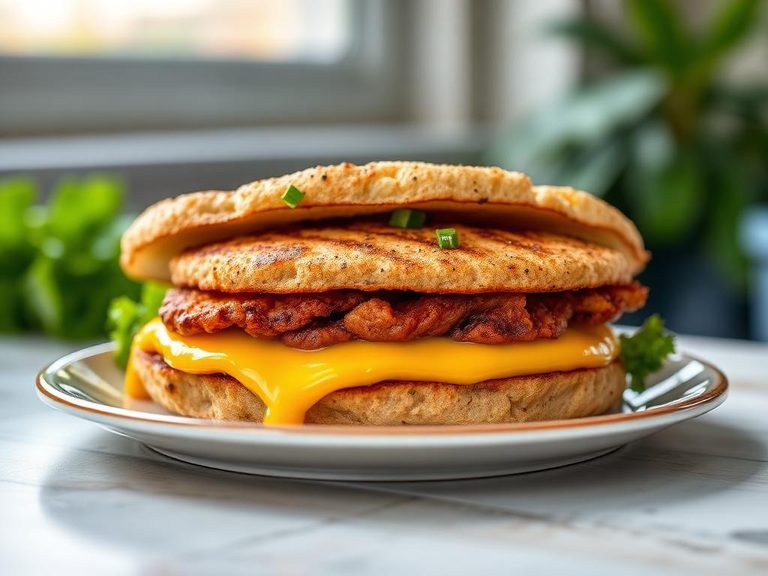
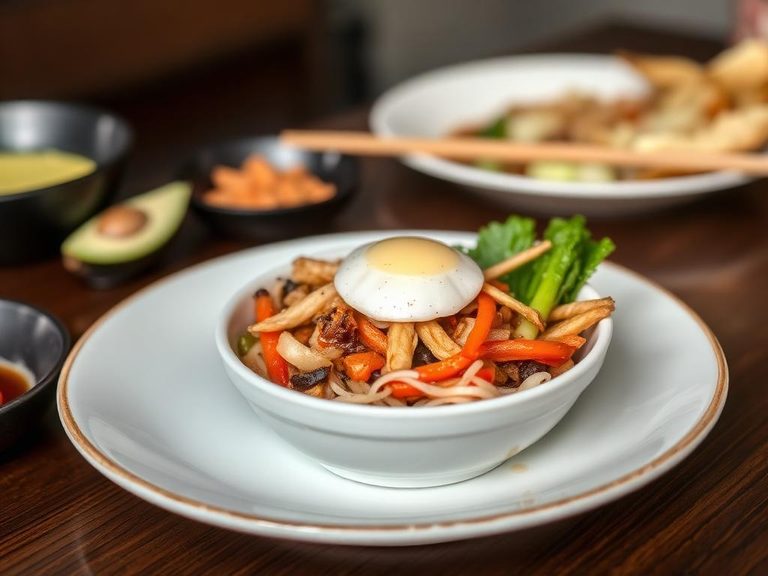

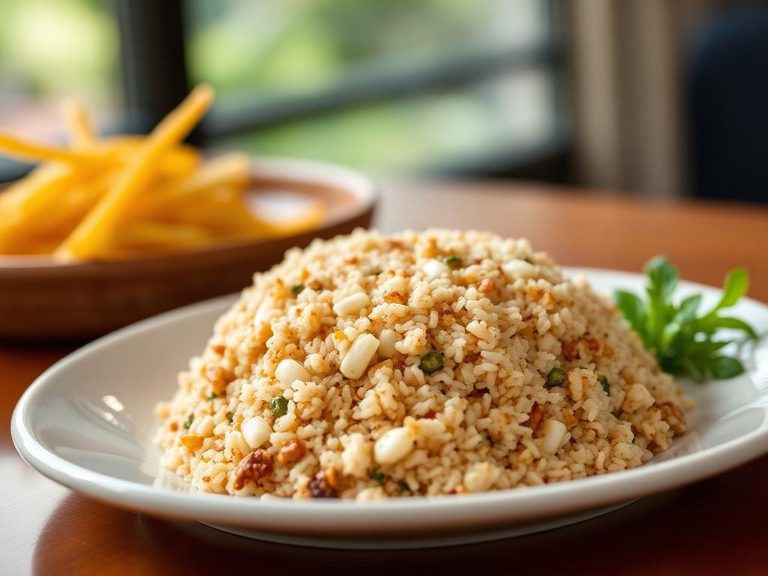
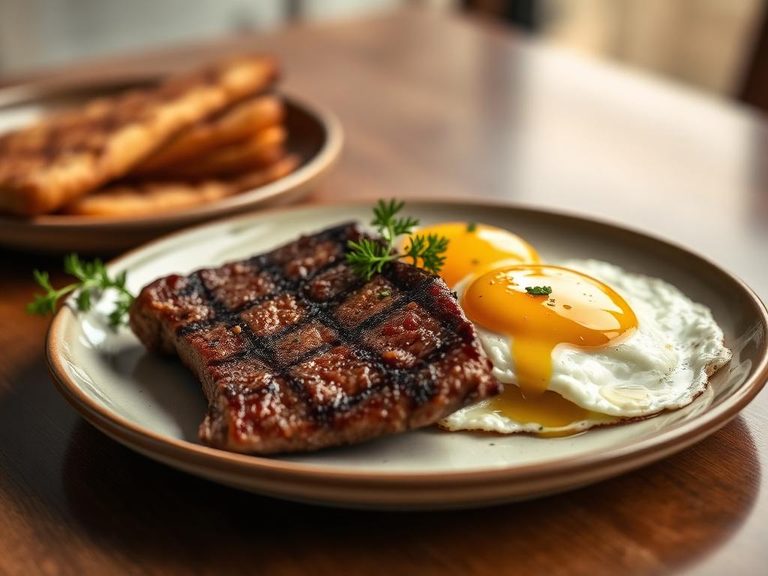
🌍 Where it's eaten
💡 Did you know?
The sound of an egg hitting hot oil—the initial sizzle—is caused by the water in the egg white instantly vaporizing, which is what creates those coveted crispy, lacy edges.
Full nutrition (USDA data · scales with serving)
| Water | 71.4 g |
| Energy | 185 kcal |
| Protein | 11.6 g |
| Total lipid (fat) | 15.0 g |
| Carbohydrate, by difference | 0.91 g |
| Fiber, total dietary | 0.00 g |
| Total Sugars | 0.20 g |
| Calcium, Ca | 46.0 mg |
| Iron, Fe | 1.6 mg |
| Magnesium, Mg | 10.0 mg |
| Phosphorus, P | 172 mg |
| Potassium, K | 124 mg |
| Sodium, Na | 248 mg |
| Zinc, Zn | 1.2 mg |
| Copper, Cu | 0.00 mg |
| Selenium, Se | 29.0 ug |
| Vitamin C, total ascorbic acid | 0.00 mg |
| Thiamin | 0.06 mg |
| Riboflavin | 0.37 mg |
| Niacin | 0.00 mg |
| Vitamin B-6 | 0.09 mg |
| Folate, total | 50.0 ug |
| Folic acid | 0.00 ug |
| Folate, food | 50.0 ug |
| Folate, DFE | 50.0 ug |
| Choline, total | 250 mg |
| Vitamin B-12 | 0.76 ug |
| Vitamin B-12, added | 0.00 ug |
| Vitamin A, RAE | 193 ug |
| Retinol | 191 ug |
| Carotene, beta | 11.0 ug |
| Carotene, alpha | 0.00 ug |
| Cryptoxanthin, beta | 12.0 ug |
| Lycopene | 0.00 ug |
| Lutein + zeaxanthin | 469 ug |
| Vitamin E (alpha-tocopherol) | 1.8 mg |
| Vitamin E, added | 0.00 mg |
| Vitamin D (D2 + D3) | 2.4 ug |
| Vitamin K (phylloquinone) | 5.0 ug |
| Alcohol, ethyl | 0.00 g |
| Caffeine | 0.00 mg |
| Theobromine | 0.00 mg |
Fat & fatty acid profile (per 100g)
| Fatty acids, total saturated | 4.5 g |
| SFA 4:0 | 0.04 g |
| SFA 6:0 | 0.03 g |
| SFA 8:0 | 0.02 g |
| SFA 10:0 | 0.04 g |
| SFA 12:0 | 0.04 g |
| SFA 14:0 | 0.17 g |
| SFA 16:0 | 3.0 g |
| SFA 18:0 | 1.1 g |
| Fatty acids, total monounsaturated | 5.4 g |
| MUFA 16:1 | 0.25 g |
| MUFA 18:1 | 5.1 g |
| MUFA 20:1 | 0.03 g |
| MUFA 22:1 | 0.00 g |
| Fatty acids, total polyunsaturated | 3.3 g |
| PUFA 18:2 | 2.8 g |
| PUFA 18:3 | 0.19 g |
| PUFA 18:4 | 0.00 g |
| PUFA 20:4 | 0.00 g |
| PUFA 20:5 n-3 (EPA) | 0.00 g |
| PUFA 22:5 n-3 (DPA) | 0.00 g |
| PUFA 22:6 n-3 (DHA) | 0.00 g |
| Cholesterol | 388 mg |
Amino acid profile (per 100g)
Estimated from Fish, whitefish, eggs (Alaska Native) — USDA does not publish this profile for Egg.
| Tryptophan | 0.28 g |
| Threonine | 1.0 g |
| Isoleucine | 1.1 g |
| Leucine | 1.6 g |
| Lysine | 1.6 g |
| Methionine | 0.56 g |
| Cystine | 0.23 g |
| Phenylalanine | 0.90 g |
| Tyrosine | 0.76 g |
| Valine | 1.3 g |
| Arginine | 1.1 g |
| Histidine | 0.53 g |
| Alanine | 1.6 g |
| Aspartic acid | 1.6 g |
| Glutamic acid | 2.2 g |
| Glycine | 0.50 g |
| Proline | 1.1 g |
| Serine | 1.2 g |
FAQ
What does 'NS as to fat type' mean?
It stands for 'Not Specified as to fat type,' meaning the nutrition data is an average for eggs fried in various common fats (butter, oil, lard), so the exact fat content can vary based on what you use.
How do I get a runny yolk without a raw white?
Cook on medium-low heat. For a 'sunny-side up' egg, cover the pan for the last 30 seconds to steam the top of the white. For 'over-easy,' carefully flip it and cook for only 10-15 seconds.
Is the brown, crispy edge less healthy?
The browned edge is the Maillard reaction, which adds flavor. While very high-heat cooking can create some compounds, a lightly browned edge is not a significant health concern for most people. It's more about personal taste.
Nutrient density (calculated · NRF9.3)
Nutrient Rich Foods index: beneficial nutrients (protein, fiber, vitamins, minerals) minus saturated fat, added sugar & sodium, per 100 kcal.
NRF9.3 index — Fulgoni, Keast & Drewnowski, 2009. Computed from USDA nutrients.
Weight-loss friendliness (composite index)
Energy density 1.85 kcal/g · 25% calories from protein · 0.0 g fiber · 0.2 g sugar per 100 g.
Composite of energy density (Rolls et al., 1999), protein & fiber satiety, minus sugar. A calculated heuristic — ranks satiety-per-calorie, not a clinical measure.
Dietary load (calculated from USDA values)
Potential renal acid load. Positive = acid-forming, negative = alkaline-forming.
Sodium-to-potassium ratio: 2.00 (lower is better — aim for ≤ 1)
Sodium:potassium per WHO potassium guidance. Computed from USDA nutrients.